Palazzo Simoneschi: A Seventeenth-Century Palace in Pisa
Site at a Glance
- Popularity
- Very Low
- Country
- Italy
- Primary era
- Early Modern
- Eras represented
- Early Modern
- Civilizations
- Grand Duchy of Tuscany
- Site type
- Domestic
- Remains
- Elite Residence
On this page6 sections
History
Palazzo Simoneschi is a seventeenth-century palace in Pisa, Italy, commissioned by the Mecherini family. The Simoneschi family purchased it from the Mecherini toward the end of the nineteenth century.
Ottavio Simoneschi and his collection
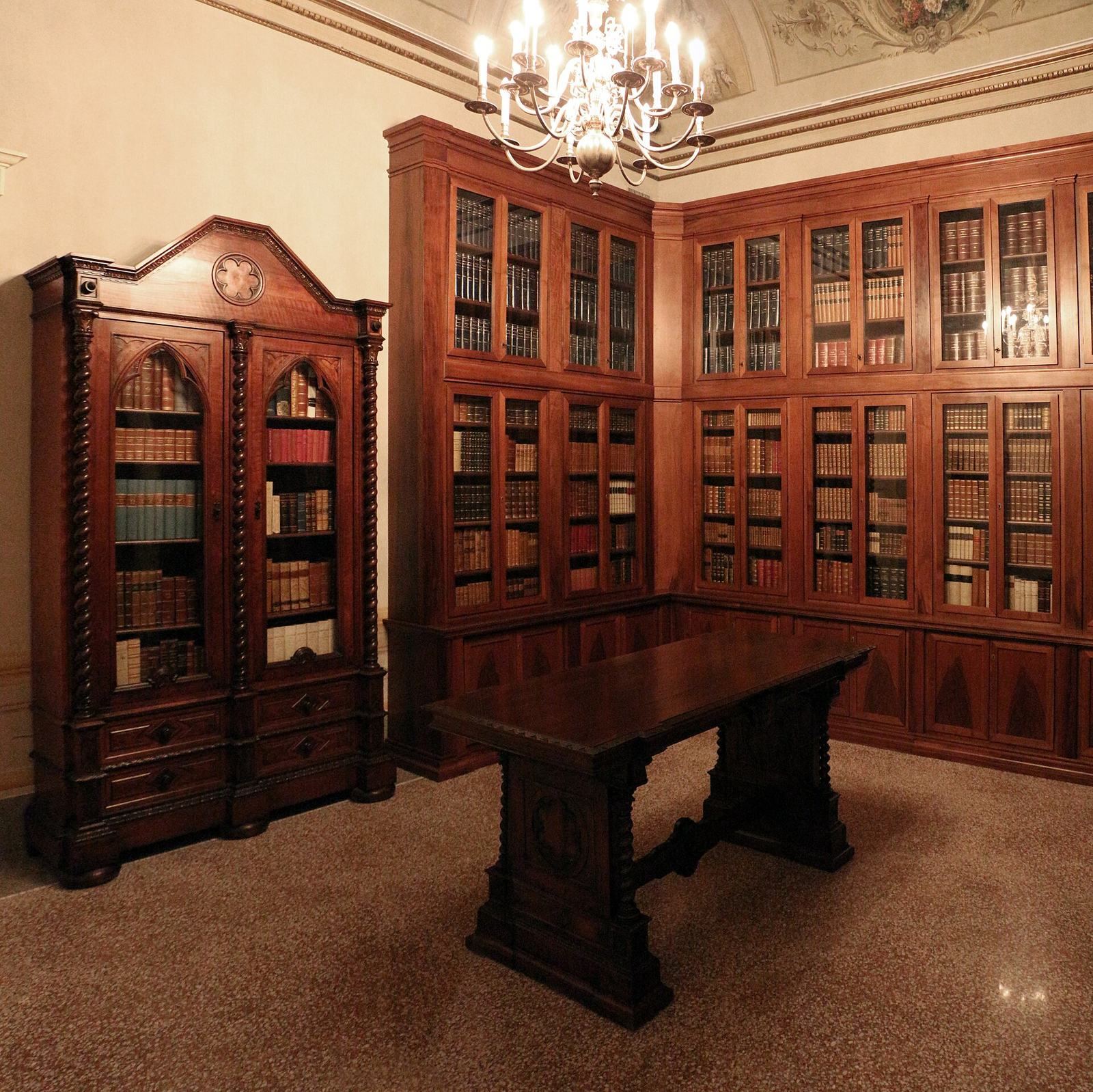
Ottavio Simoneschi, born in Pisa in 1890, lived in the palace. An aristocrat and collector, he gathered paintings, books, furnishings, decorative objects, and coins, and furnished the building with pieces later used in the rooms of Palazzo Blu, a museum and exhibition venue in Pisa. His coin and medal collection numbered more than 3,300 pieces, including Greek, Etruscan, Roman, medieval, and early-modern Italian examples.
Several years before his death in 1960, Simoneschi decided to make his collection public. The transfer of his assets to the State faced obstacles, and about three decades later Fondazione Pisa, a local philanthropic foundation, acquired them. Paintings, bronzes, books, and coins once kept in the palace are now at Palazzo Blu.
War damage and restoration
Palazzo Simoneschi suffered heavy damage during the Second World War. Much of its façade was later restored, while work to recover the interior frescoes proceeded. Renovation of the exterior and some interior rooms was underway in 2020.
Remains
Façade and connected buildings
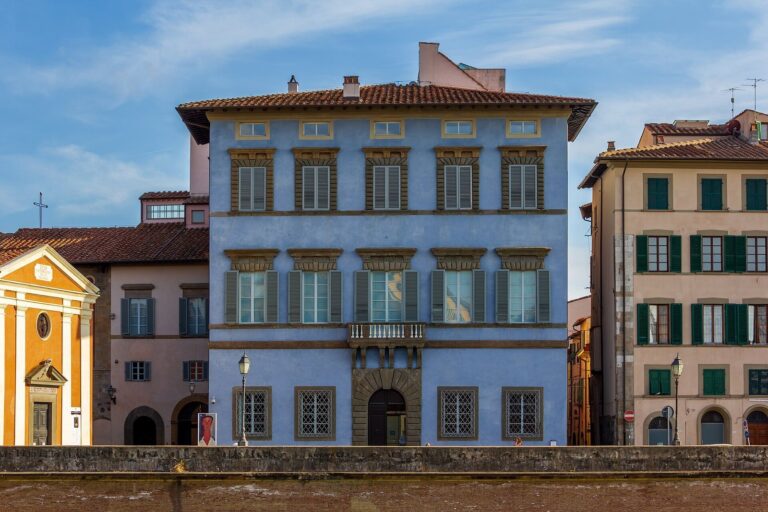
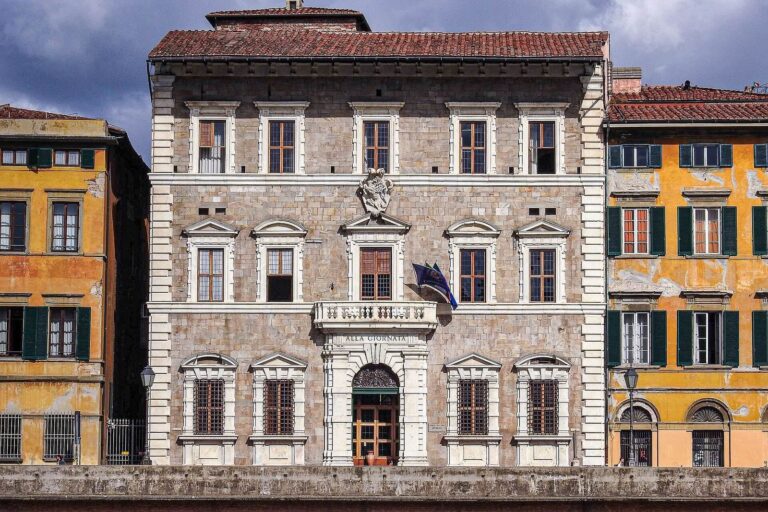
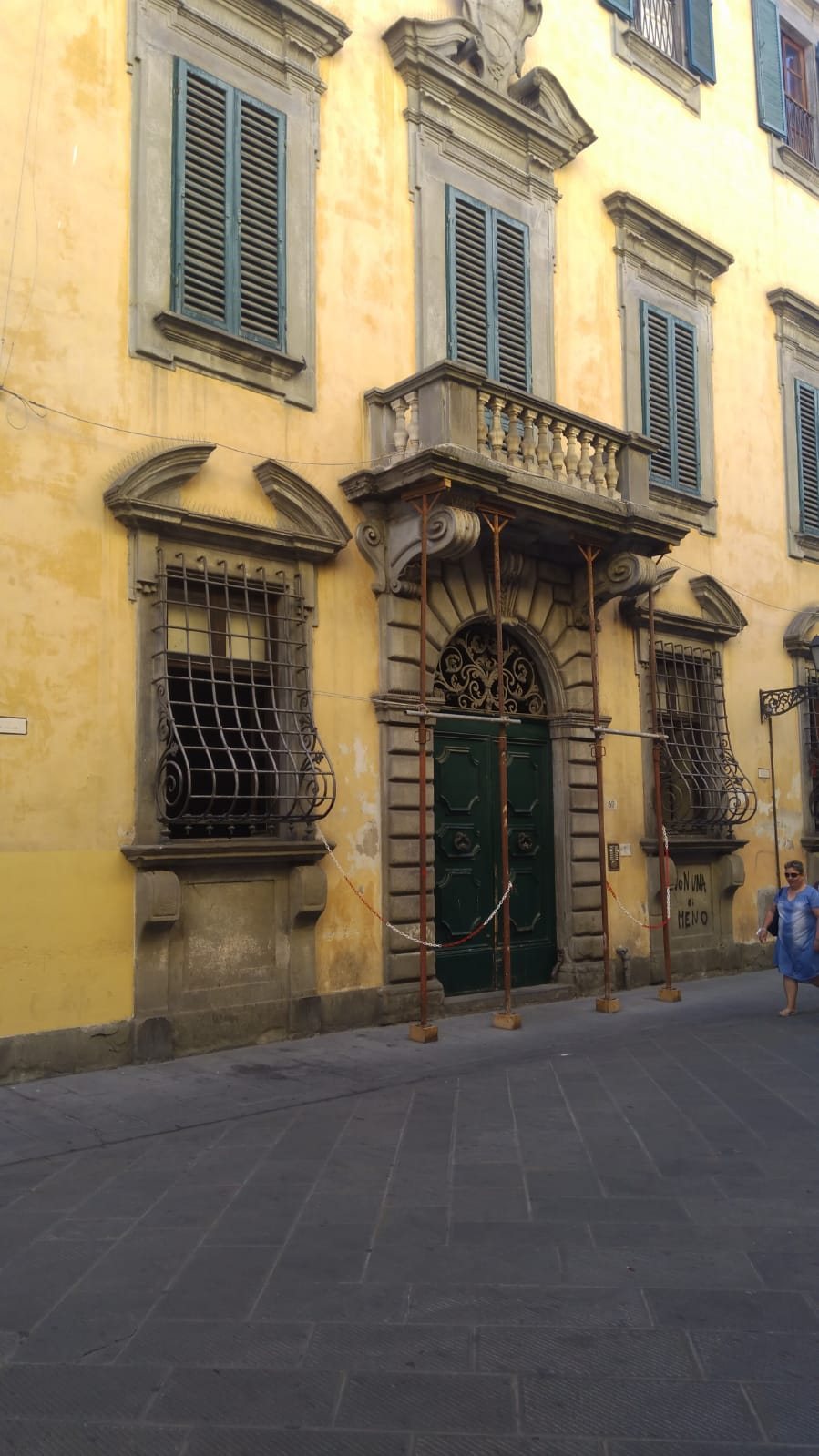
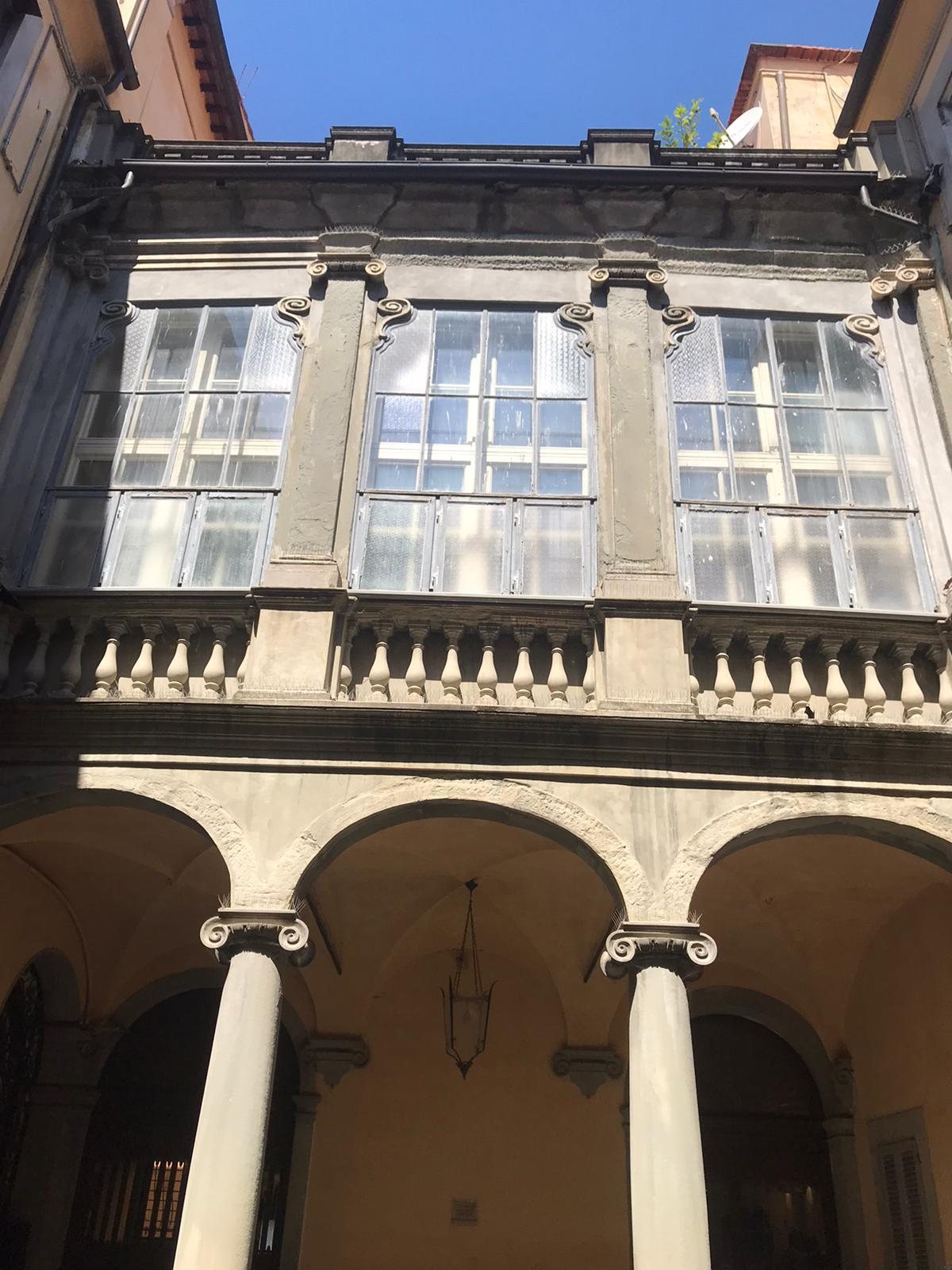
The palace has three storeys, with five openings on each level of its façade, and stands opposite Palazzo Mastiani. Its windows have finely worked stone surrounds, and a small terrace has a stone railing with marble uprights. One façade opening is topped by a broken pediment, an architectural crown interrupted at its center, with a volute, or scroll-shaped curve. This uncommon feature in Pisa is associated with early eighteenth-century Baroque design, an ornate style that flourished in Europe from the late sixteenth century into the eighteenth. On the ground floor, sculpted brackets, projecting bands, and curved broken pediments frame kneeling windows, whose projecting sills rest on brackets and whose surrounds extend down their sides. The Simoneschi coat of arms appears on the façade. A passage on Via della Pera connects the main palace to another building erected in a large garden, and bears the Mecherini arms.
Courtyard and frescoed interiors
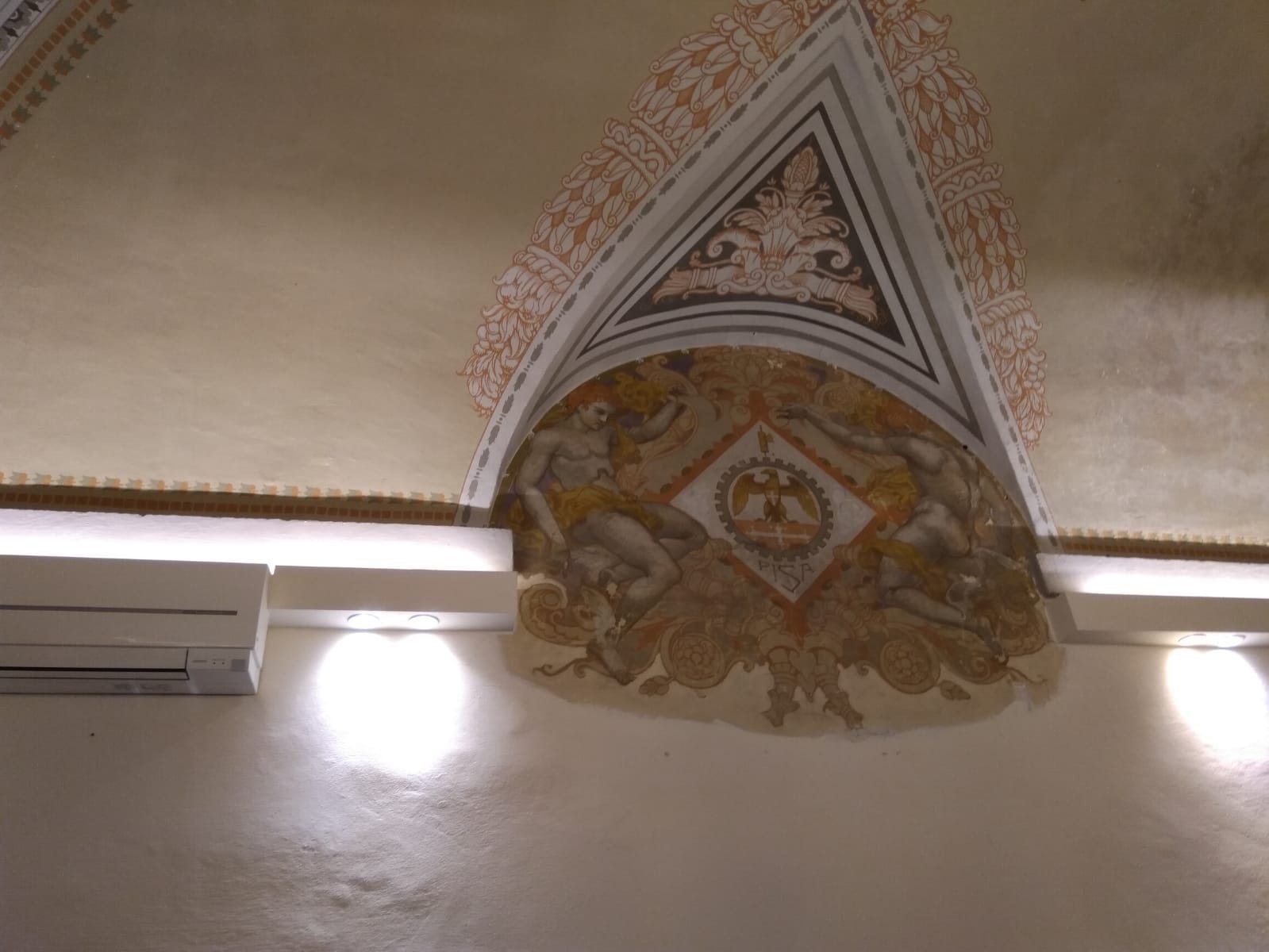
Inside, a seventeenth-century courtyard forms part of the palace. A staircase has a ceiling fresco painted by the Melani brothers, a family of painters active in Tuscany. Frescoes also survive in several other spaces: the former stables, now a clothing shop, retain their original ceiling paintings, while a private residence and a storehouse in the palace also contain period frescoes.