Cathedral of St. John the Baptist: Ukrainian Greek Catholic Cathedral in Przemyśl
Site at a Glance
- Popularity
- Medium
- Country
- Poland
- Primary era
- Early Modern
- Eras represented
- Early Modern, Modern
- Civilizations
- Polish–Lithuanian Commonwealth
- Site type
- Religious
- Remains
- Cathedral
On this page9 sections
History
Before the Jesuit church
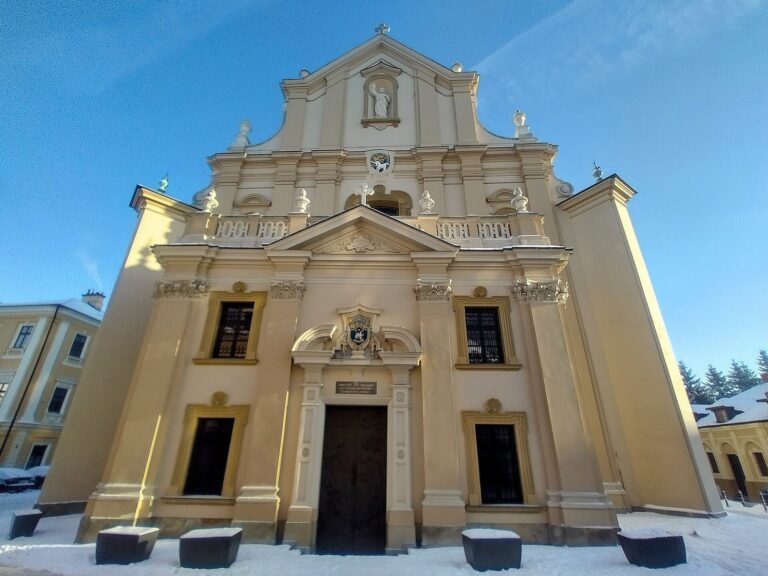
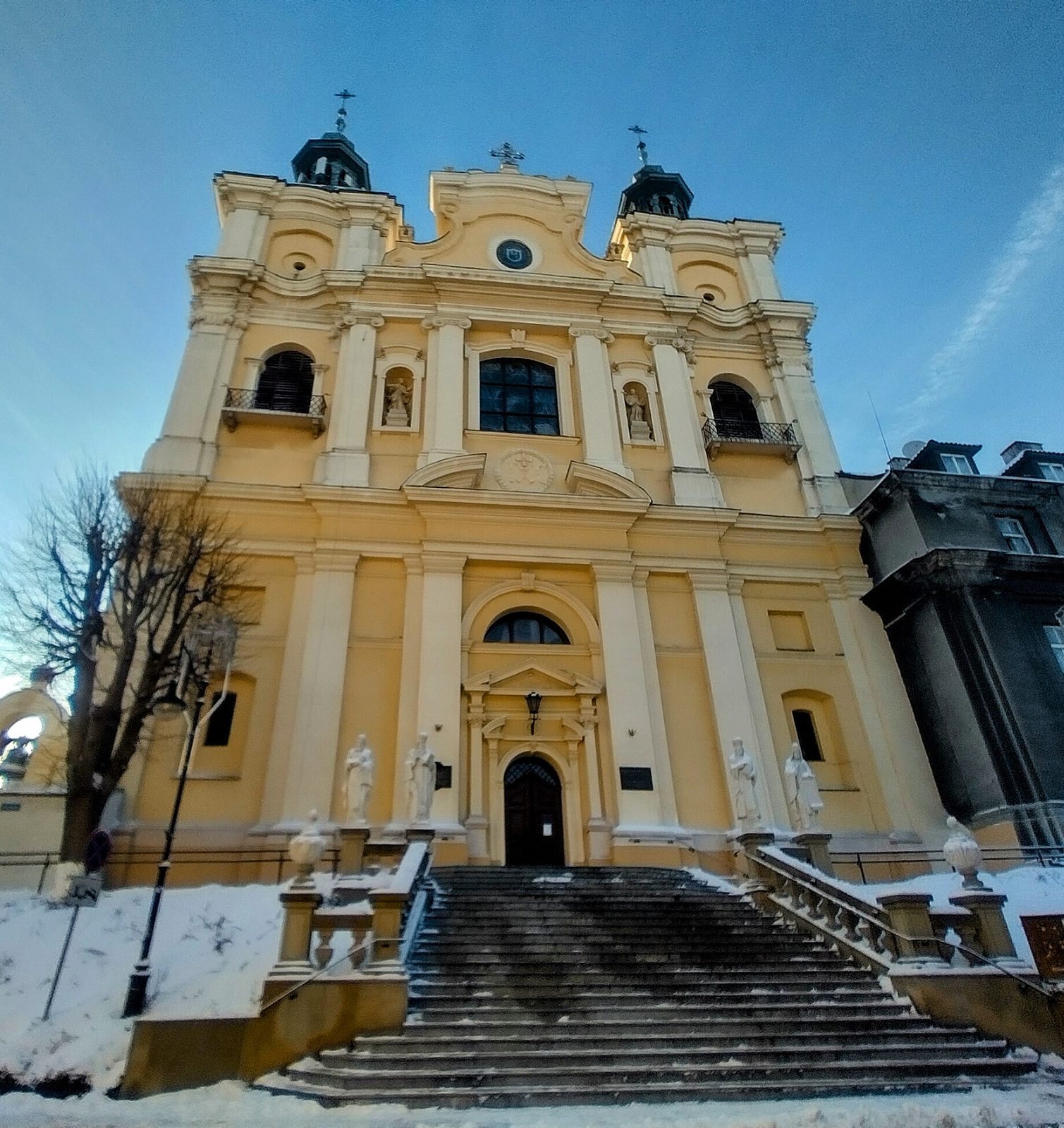
The Cathedral of St. John the Baptist is a Ukrainian Greek Catholic cathedral in Przemyśl, Poland. Construction began in 1626 for the Jesuits, members of the Catholic Society of Jesus, and the church was built in the Baroque style, a European architectural style that flourished from the late sixteenth through the eighteenth centuries. It now serves as the mother church of the Ukrainian Greek Catholic Archeparchy of Peremyshl-Warsaw, an Eastern Catholic jurisdiction comparable to an archdiocese.
An Orthodox church dedicated to Saints Peter and Paul stood on the site before the Jesuit building. It was destroyed in 1377.
Jesuit foundation and decline
Anna z Tyrawskich Ulińska, the wife of a local official known as a castellan, was the church’s principal founder. Jakub Maksymilian Fredro and Michał Wolski also contributed. The Jesuit church was dedicated to St. Ignatius Loyola, the order’s founder.
A restoration plan was prepared in 1691, but the work remained unfinished before the partitions of Poland, the eighteenth-century divisions of Polish territory among neighboring powers. Przemyśl subsequently came under Austrian rule, and the Jesuit order was suppressed in 1773. The church deteriorated. Emperor Joseph II proposed that Greek Catholics, an Eastern Catholic community in communion with Rome that follows the Byzantine liturgical tradition, use it as their cathedral. They were given a former Carmelite church instead, leaving the Jesuit building without pastoral care.
Secular use and renewed worship
In 1787 the church was adapted as a gymnasium and accommodated Przemyśl’s only German-language school. The school closed in 1820, after which the building served as a military storehouse until 1885. It then stood empty for several years. In 1891 a Jewish entrepreneur was commissioned to dismantle its towers, but residents and Vienna’s monument-protection commission protested. The church was returned to the clergy.
Reconstruction began in 1903 under Przemyśl architect Stanisław Majerski. The restored church reopened for Catholic worship in 1904 and was reconsecrated as the Church of the Sacred Heart of Jesus. It also became a garrison church, serving military personnel.
Ukrainian Greek Catholic cathedral
After the Second World War, the church continued in its role as a garrison church. From 1957 it also hosted Eastern-rite services, including weekly Byzantine-rite Masses for Ukrainian Catholics whose church had been closed by the Communist government.
In 1991 the Latin Church transferred the building to the Ukrainian Greek Catholic community for use as the cathedral of the Archeparchy of Peremyshl-Warsaw. The transfer, personally overseen by Pope John Paul II, was made in exchange for the Carmelite Church of St. Teresa. That church had served as the Greek Catholic cathedral before the war and was returned to the Carmelites after the Second World War.
Local Polish nationalists blockaded the cathedral entrance and began a hunger strike in protest. After several weeks of debate and negotiation, they ended the action. The cathedral is dedicated to St. John the Baptist.
Remains
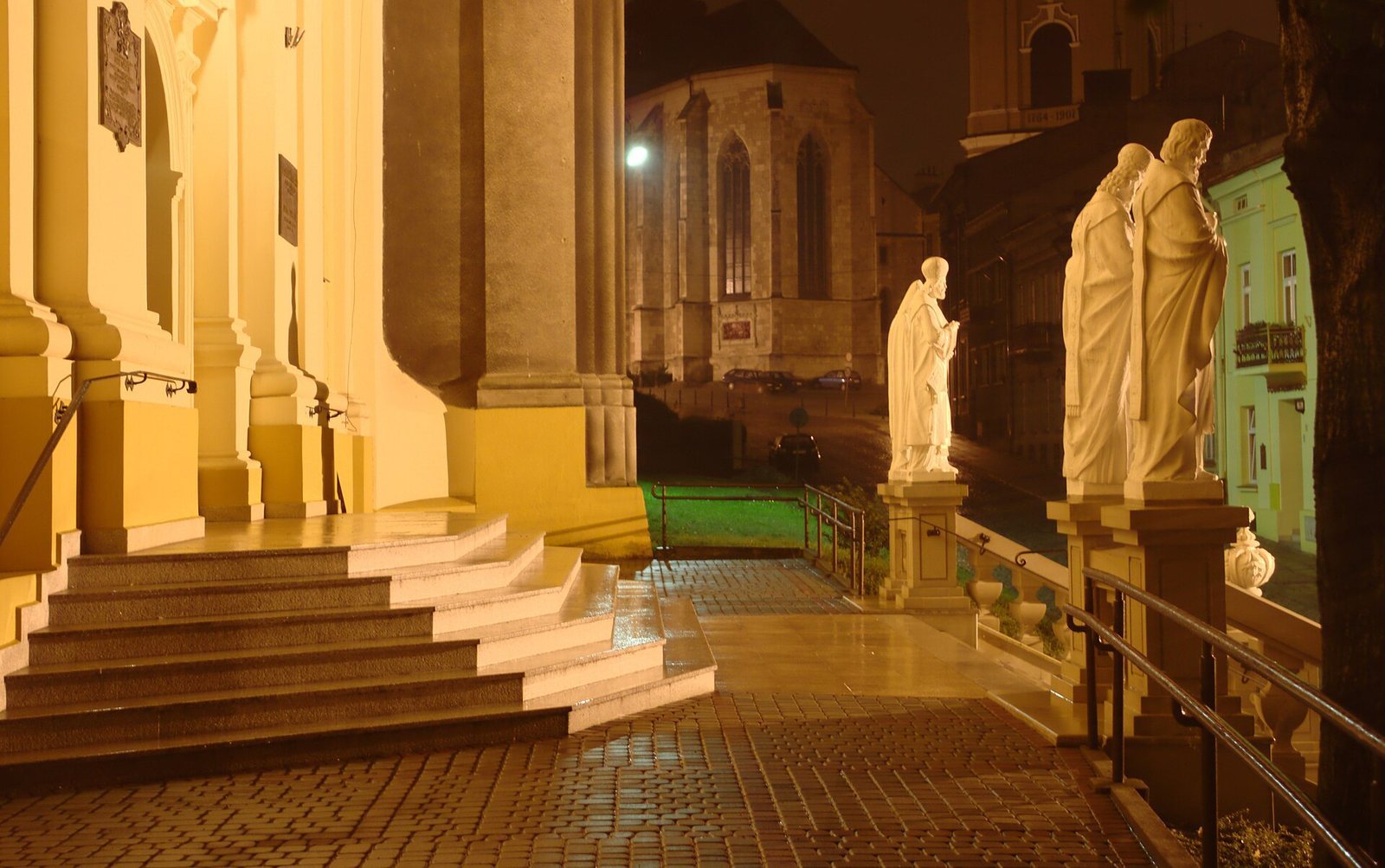
The brick church stands in historic Przemyśl on Ulica Katedralna, near the Franciscan church and the Latin cathedral. Its Baroque design has three naves and two towers. The surviving complex also includes a screen-like belfry and buildings of the former Jesuit monastery.
Church and belfry
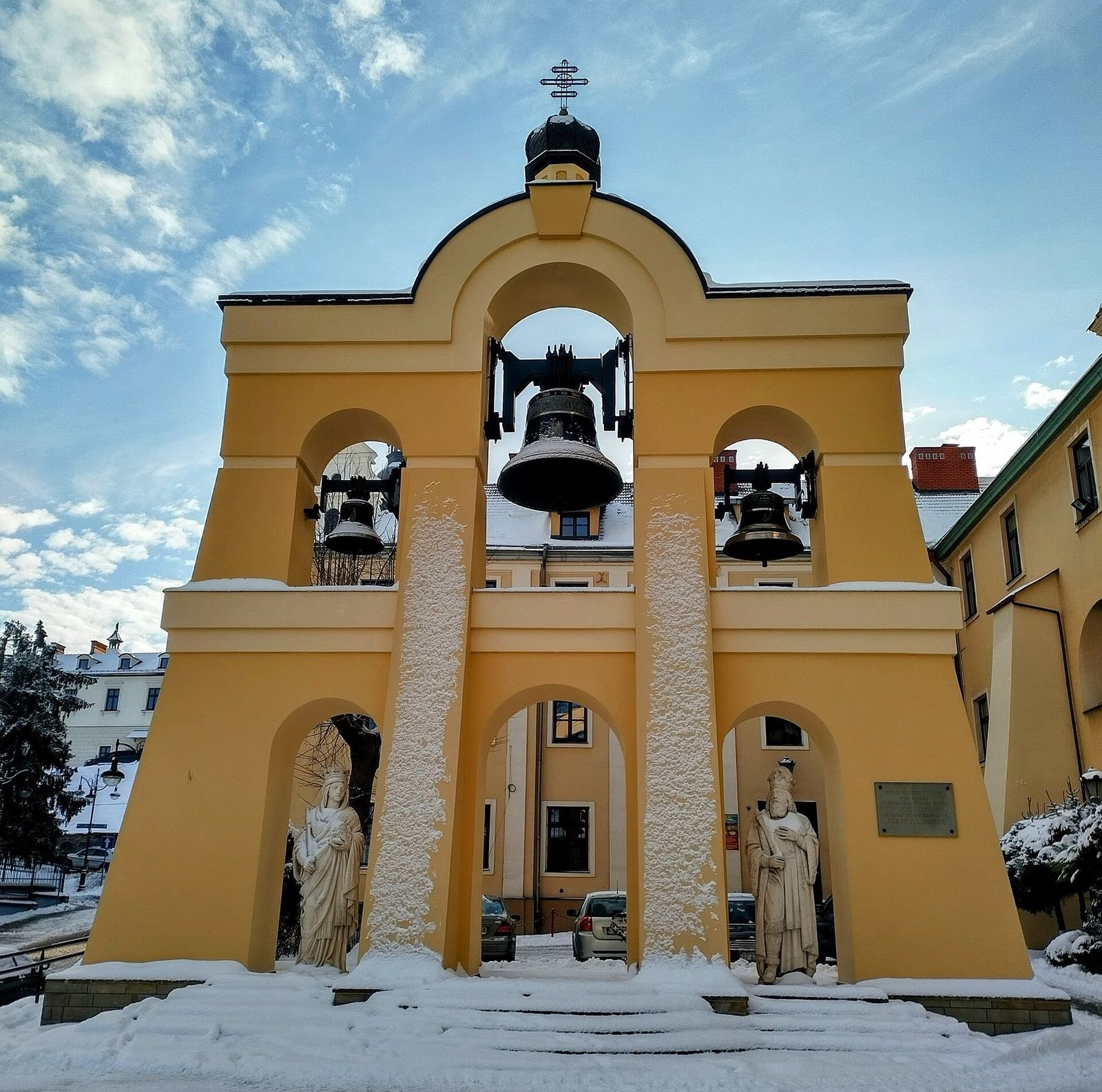
A screen-type belfry, a wall-like structure with openings for bells, is associated with a bell called John the Baptist. The bell dates to 1936 and weighs 7,500 kilograms. A plaque is attached to the belfry.
Interior furnishings and memorials
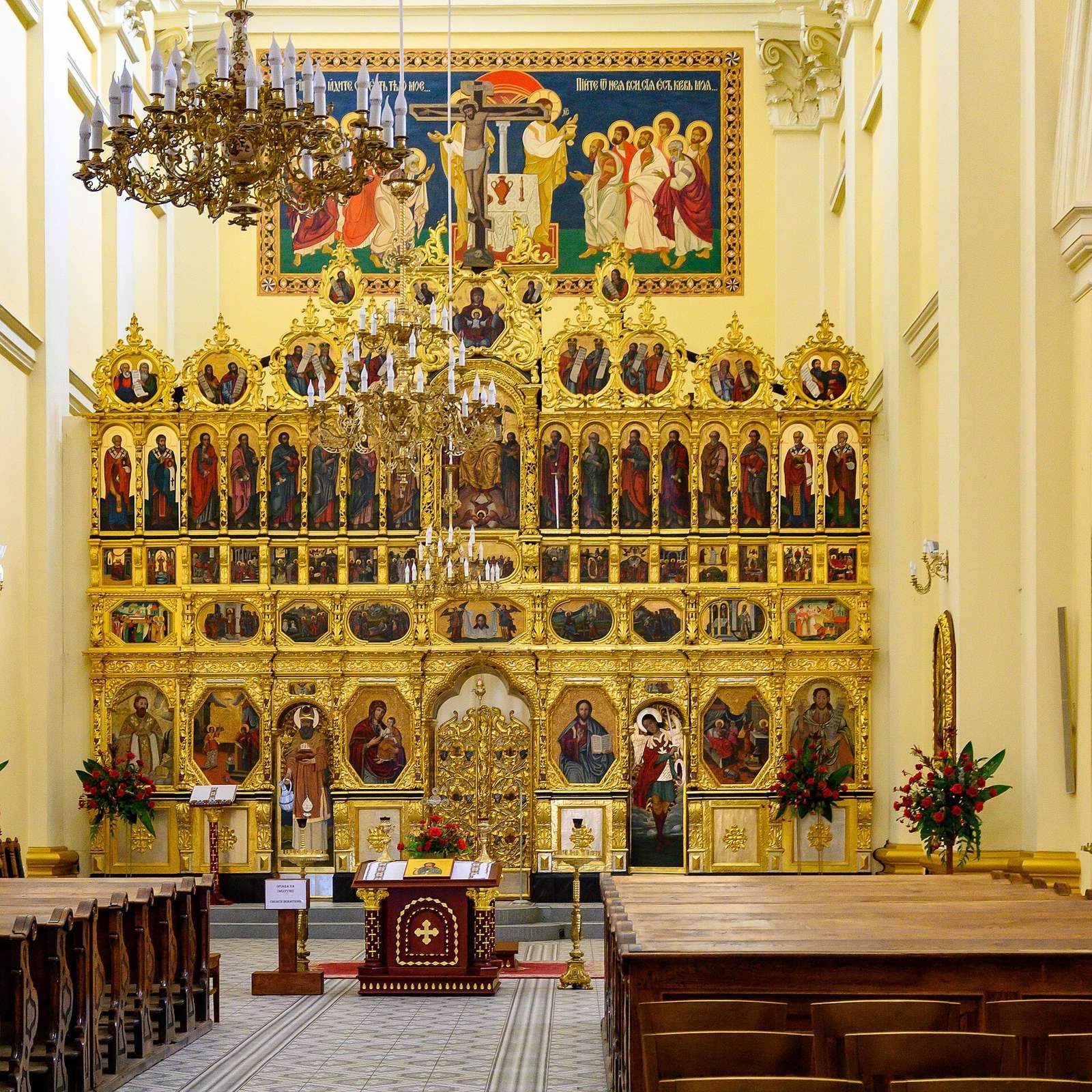
Before the main altar stands an iconostasis, an icon-bearing screen separating the sanctuary from the main area of an Eastern Christian church. Made in the 1680s in the western Ukrainian church-painting tradition, it was first created for a monastery church in Szczepłoty near Krakowiec. After the monastery closed in 1788, it was moved to the wooden Church of St. Nicholas in Lubaczów, and later to that town’s new masonry church. It entered the Lubaczów Museum in 1979 and was installed in the cathedral in 1993. An image of the Archangel Michael appears on its deacon doors.
The cathedral also contains a plaque commemorating the transfer to the Greek Catholic diocese, another memorial plaque, and a memorial to the victims of the Holodomor, the devastating famine in Soviet Ukraine in 1932–33.
Former monastery
The buildings of the former Jesuit monastery house the Archdiocesan Museum.