San Nicola da Tolentino Church: A Roman Catholic Parish in Genoa
Site at a Glance
- Popularity
- Low
- Country
- Italy
- Primary era
- Early Modern
- Eras represented
- Early Modern, Modern
- Civilizations
- Genoese, Italian
- Site type
- Religious
- Remains
- Church
On this page11 sections
History
San Nicola da Tolentino Church is a Roman Catholic church in Genoa, Italy, dedicated to Nicholas of Tolentino, a medieval Augustinian friar who became a Catholic saint. The Discalced Augustinians, a branch of the Augustinian order following a stricter form of religious observance, built the church between 1597 and 1601. It opened for worship in 1602 and is now an active parish in the Archdiocese of Genoa, a major Catholic administrative territory, within the Castelletto vicariate, a subdivision of the archdiocese. Its liturgical feast is observed on 10 September.
Foundation and early disputes
In 1595, the Genoese nobleman Giovanni Moneglia gave the Augustinians land for a church and monastery. A notarial deed followed in 1596, and work preparing the site began the next year. Andrea Ceresola, known as Vannone, designed the church, while Cipriano Bianco da Coldrerio directed its construction. The young Bartolomeo may have contributed on a small scale to the friars’ dormitory.
The relationship between the monks and their benefactor became contentious. They accepted Moneglia’s protection but did not recognize his claim to patronage. Disputes continued with his heir, Agostino Salvago, who tried to take the monastery by force.
Monastic changes and parish life
In 1810, Napoleon’s suppression of religious orders compelled the monks to leave the monastery. They returned in 1818, but an Italian parliamentary law forced them to depart again in 1859. In 1921, Professor Giulio Marchi and the monks founded an institution called San Nicola, described as a college or a retirement home. Cardinal Pietro Boetto, a senior Catholic official, established a parish at the church in 1939.
Wartime destruction and rebuilding
Before the wartime destruction, major works included a 1908 restoration of the façade and interior. Bombing on 7 November 1942 largely destroyed the church and badly damaged the monastery. The church was rebuilt between 1945 and 1950, enlarged from 1964 to 1970, and given a new façade in 1976–1977. Cardinal Giuseppe Siri consecrated it on 7 June 1980.
Remains
Church fabric and layout
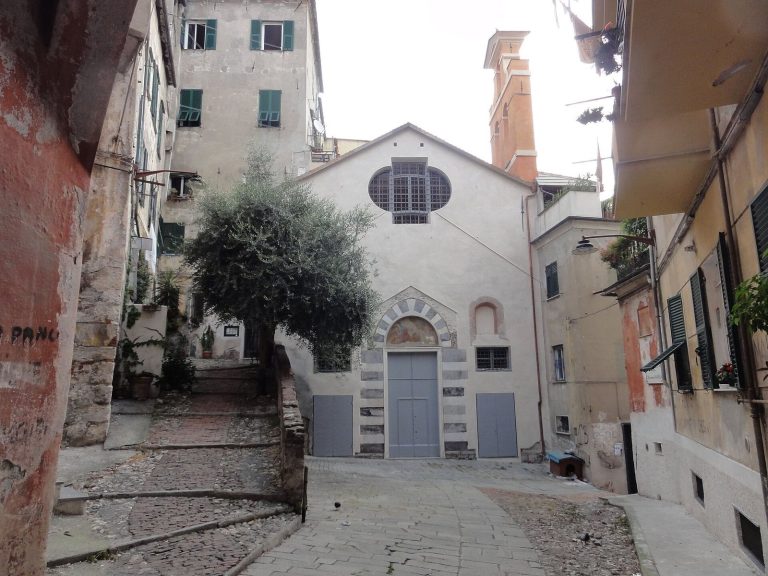
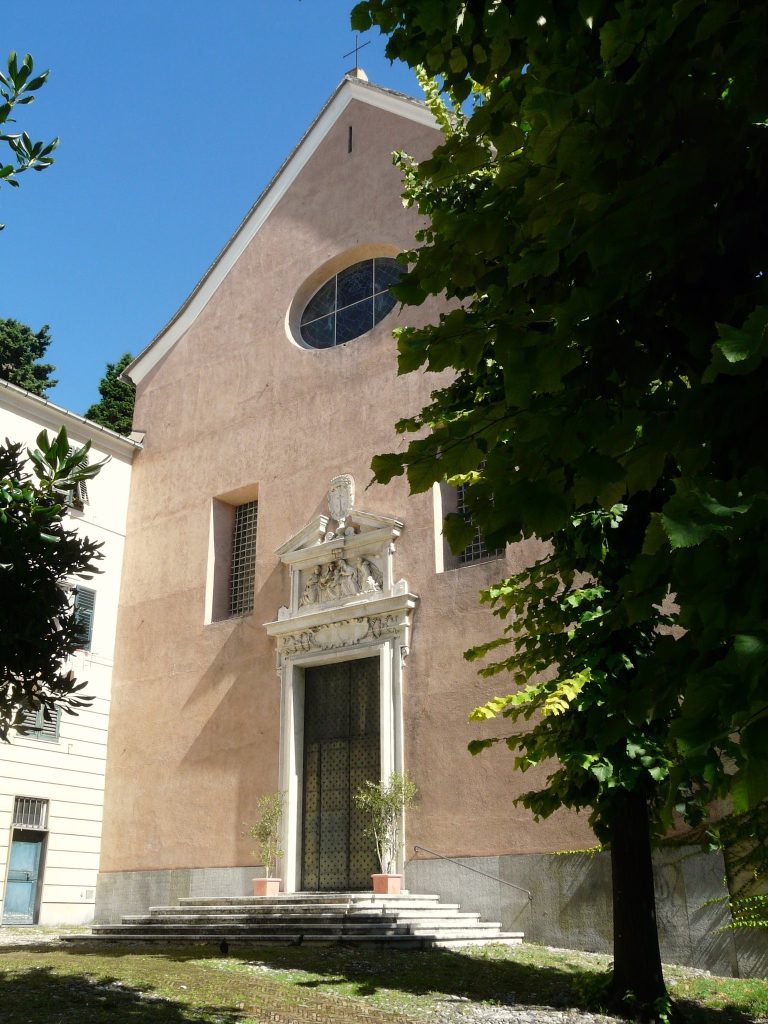
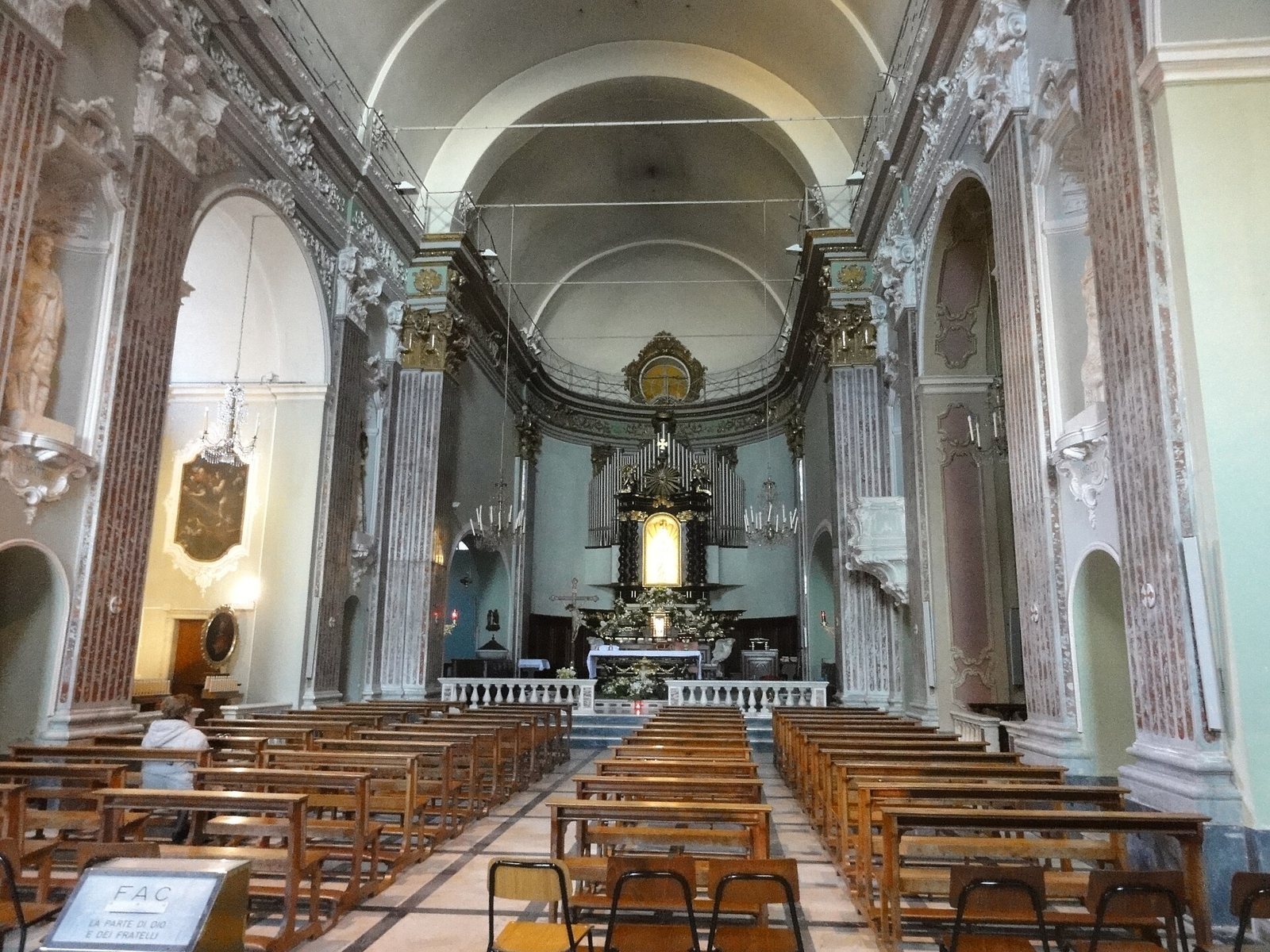
The brick church has a single nave, or main interior space, with large side chapels. Its exterior and interior combine a straightforward overall plan with decorated architectural details.
Façade
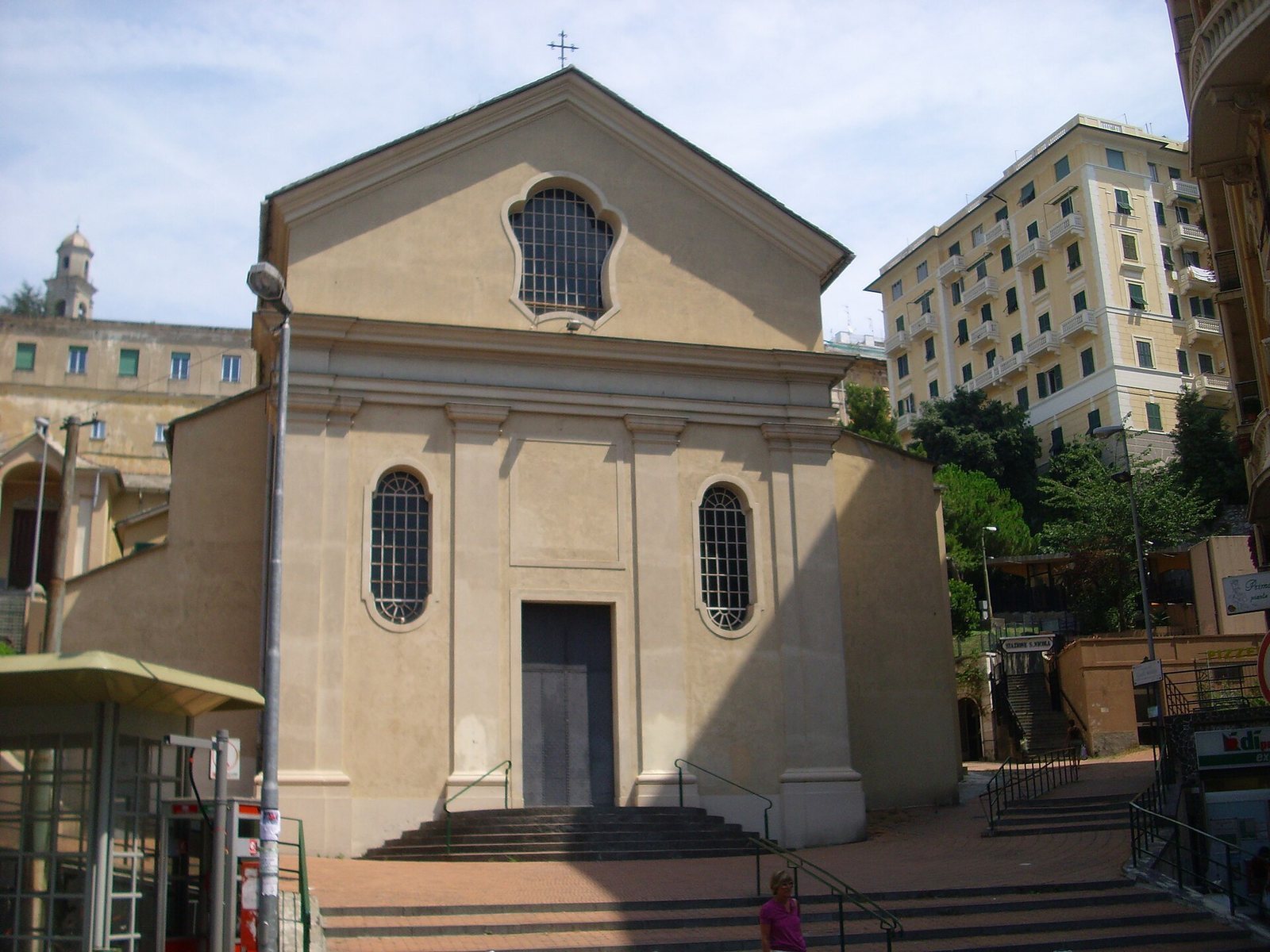
The gabled façade is divided into two levels by a horizontal entablature, the band of architectural elements above the lower wall. Pilasters, shallow column-like projections, frame the lower level. Its central entrance is flanked by two tall, narrow windows, while one irregularly shaped window sits at the centre of the upper level. A fresco by Lazzaro Tavarone is on the façade’s interior face.
Nave, chapels, and presbytery
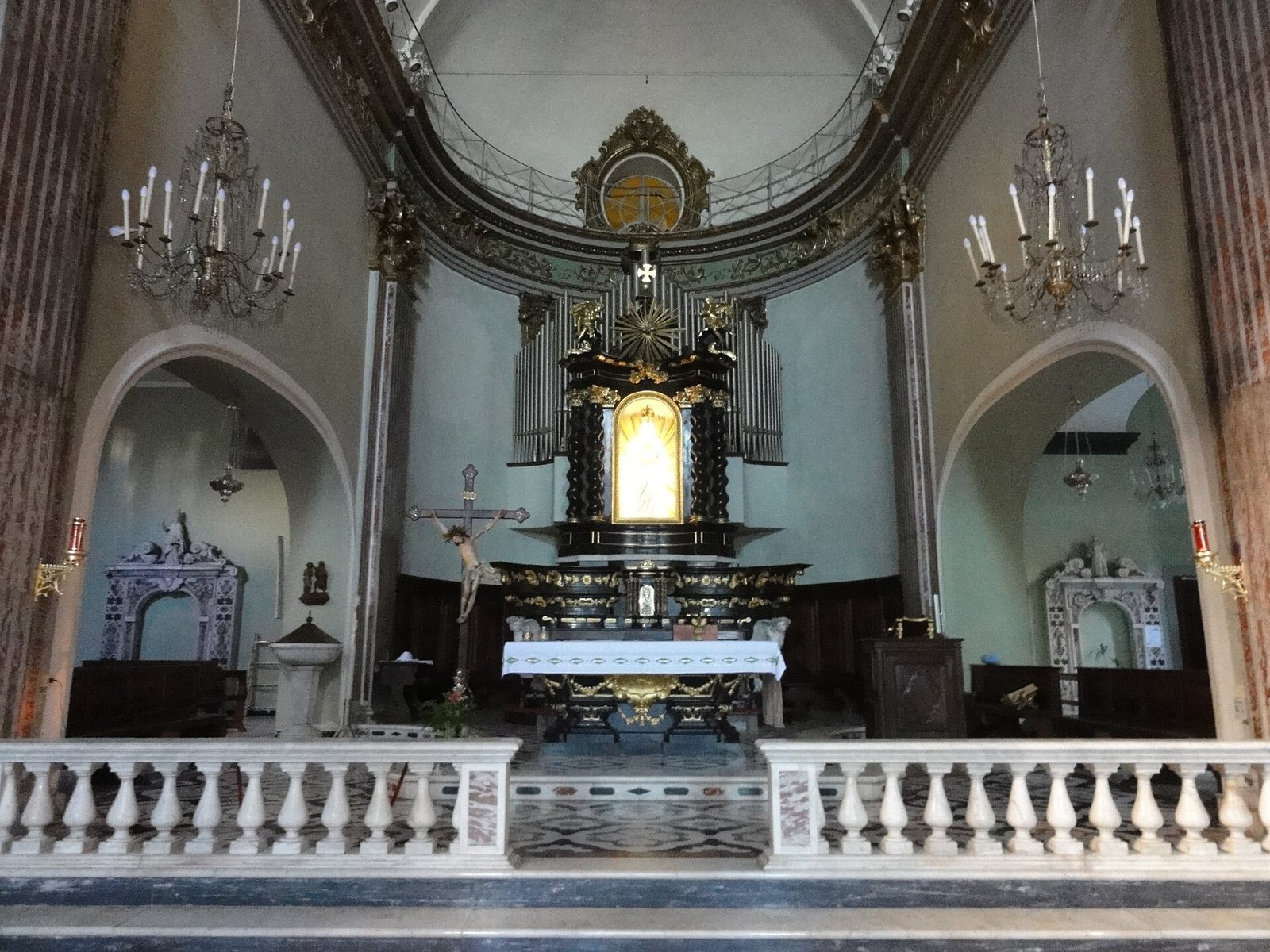
A continuous arched ceiling, or barrel vault, covers the nave. Rococo stucco decoration, an ornate style that developed in the eighteenth century, embellishes the interior, and the side chapels have elaborate marble details. At the far end, the presbytery, the area around the main altar, terminates in a curved apse. Inlaid marble portals dated 1656 stand beside the presbytery.
Artworks and burials
Sculpture and paintings
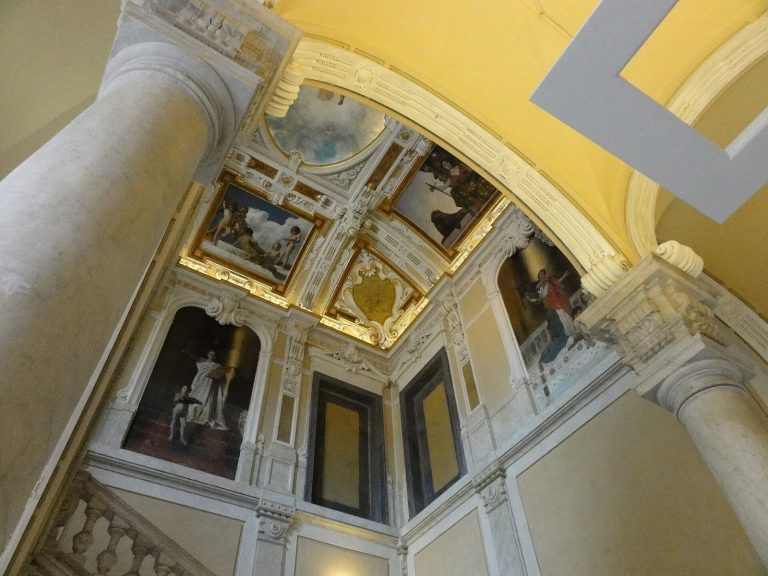
A wooden group by Pasquale Navone depicts Saint Nicholas with the Madonna, a title for Mary, and souls in purgatory, understood in Catholic teaching as undergoing purification after death. A statue known as the Madonna of Childbirth is attributed to Tommaso Orsolino, and Taddeo Carlone made a statue of the Madonna of Mercy. Paintings include Giovanni Battista Paggi’s The Profaners of the Temple and The Wedding at Cana, and Bartolomeo Guidobono’s Our Lady of Consolation. A panel of the Martyrdom of Saint Lawrence, by an unknown sixteenth-century painter, is also located beside the presbytery.
Burials
People buried in the church include the sculptor Nicolò Stefano Traverso; Giacomo Mazzini, father of the Italian nationalist and republican thinker Giuseppe Mazzini; Nicolò Maria Serafino, an army officer and civic official; and the military officer Ferdinando Alessandro, who received the Order of Military Merit of Savoy.