Santa Anastasia Abbey: A Monastery and Wine Estate in Italy
Site at a Glance
- Popularity
- Very Low
- Country
- Italy
- Primary era
- Medieval
- Eras represented
- Medieval
- Civilizations
- Norman
- Site type
- Religious
- Remains
- Monastery
On this page8 sections
History
Santa Anastasia Abbey is a former monastery in Italy, believed to have been founded around 1100 by Roger I of Sicily, a Norman ruler who established Norman rule on the island. The abbey’s architecture belongs to the Norman Sicilian tradition, which developed under Norman rule and drew on multiple cultural influences. Roger established a winery at the site.
The community may first have included Basilian monks, followers of Saint Basil’s monastic rule, before the Theatines, a Catholic religious order, and Benedictines, who followed the Rule of Saint Benedict. Wine made by the monks became known among nobles and bishops in the province of Messina. The abbey grew into an active center in the Madonie until the foundation of Castelbuono.
Turrisi Colonna’s model farm
The Benedictines left in March 1851. The estate’s new owner, Baron Nicolò Turrisi Colonna, later a senator and mayor of Palermo, developed it as a model farm for livestock and agriculture. He introduced artificial meadows, direct management, accounting, and mechanized methods, while also renewing wine production with techniques associated with the monks.
The estate received agronomists, botanists, geologists, and mountaineers. Turrisi Colonna employed campieri, rural estate guards, who were linked to the Mafia, an organized criminal network originating in Sicily. His protégé Rosario Bruno regularly sheltered criminals at the abbey. In 1874, police raided the estate while searching for fugitives; Turrisi Colonna protested the action as political persecution.
Lena’s wine estate and legal proceedings
Francesco Lena bought the former abbey and its estate in 1980. He replanted old vines and trained new ones using the Guyot method, a vine-pruning and training system, with the aim of improving wine quality through international and local grape varieties. He began marketing the wines in the mid-1980s, during a revival of Sicilian winemaking. Wine specialist Giacomo Tachis advised the estate from 1994, followed by Riccardo Cotarella from 1999.
Lena brought his son Gianfranco and daughter Stefania into the business, with Leonello Anello also involved as the estate adopted biodynamic farming from 2005. Biodynamic farming combines organic practices with attention to ecological cycles. The estate has farmed all its vineyards organically since 2003. It produces 200,000 bottles a year across 16 wines, about two-thirds of them red.
In 2010, Lena was arrested on allegations that he had acted as a front for prominent Sicilian Mafia figures Salvatore Lo Piccolo and Bernardo Provenzano, and had bought the abbey with illegally acquired funds. His assets were seized, and the estate came under judicial administration, first by Cappellano Seminara and then by Alessandro Scimeca. Both administrators were implicated in a favoritism case that led to the fall of Silvana Saguto, head of the Palermo court’s preventive-measures section.
Lena was acquitted at trial and on appeal, and the Court of Cassation confirmed the acquittal in 2014. His assets were returned seven and a half years after their seizure, and he received €53,000 in compensation in 2020. In 2018, he denounced an attempted intimidation by the San Mauro Castelverde clan. Domenico and Giuseppe Farinella, respectively the son and grandson of Giuseppe Farinella, were arrested and convicted in 2022. Lena had earlier needed Giuseppe Farinella’s “mediation” to buy the abbey.
Remains
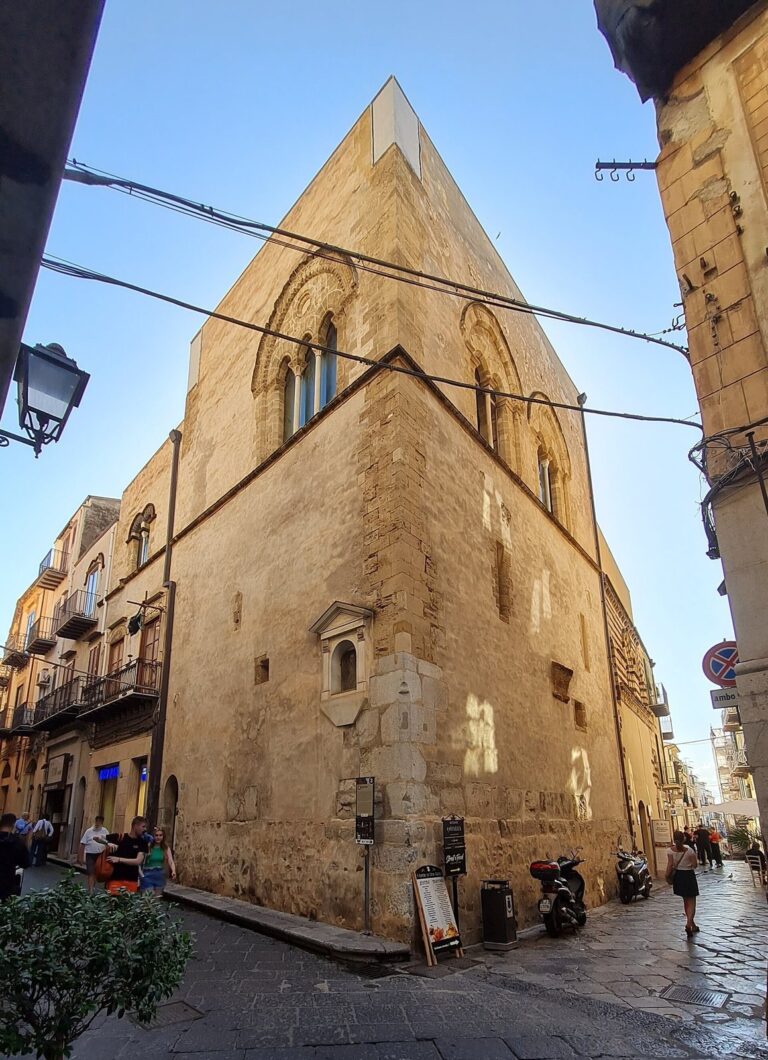
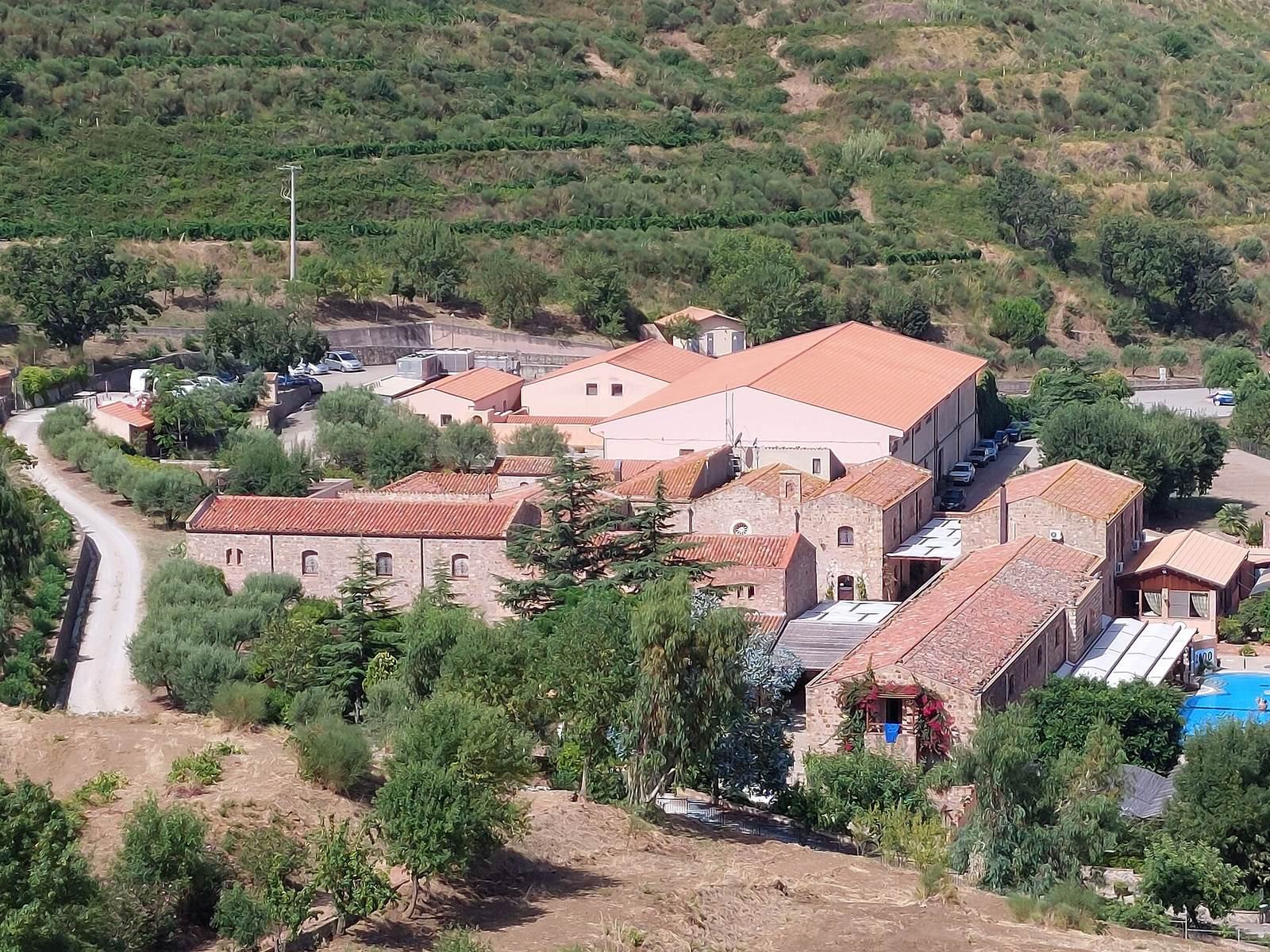
The complex brings together monastic and agricultural buildings within a 300-hectare estate. Its dominant architectural tradition is Norman Sicilian, shaped by multiple cultural influences. The estate’s vineyards cover 65 hectares at elevations of 250 to 450 metres.
Monastic and agricultural buildings
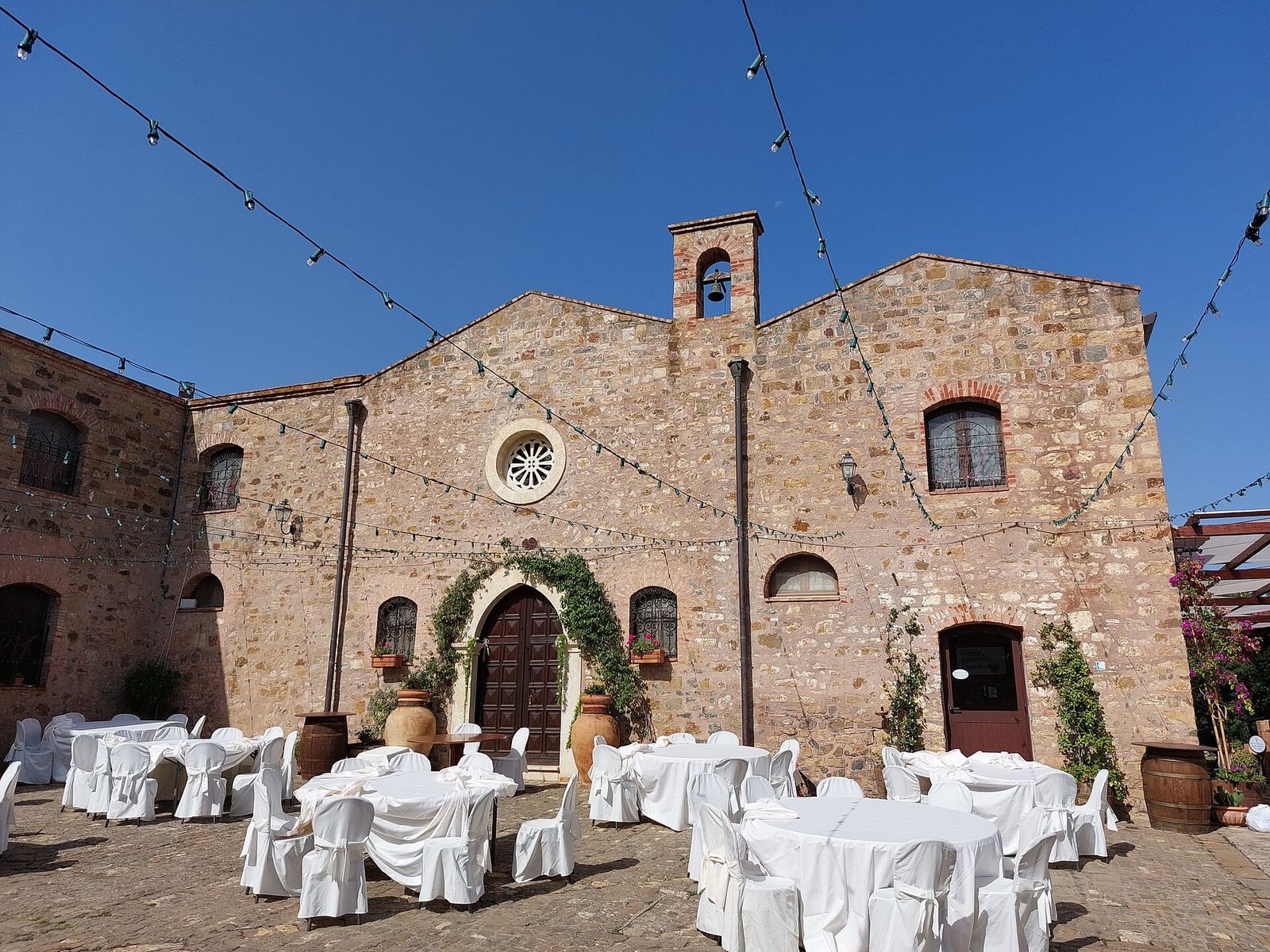
Chapel and reception areas
The abbey complex includes a chapel and reception tables.
Farm buildings
Stables, farm buildings, a barn, a hayloft, and other agricultural structures form part of the estate. They were renovated as the property developed into a model farm.
Former convent
Beginning in 2000, the former convent buildings were converted for use as a five-star hotel.