Church of the Dormition of the Theotokos at Melyotovo: A Medieval Pskov Orthodox Church
Site at a Glance
- Popularity
- Medium
- Country
- Russia
- Primary era
- Medieval
- Eras represented
- Medieval, Early Modern
- Civilizations
- Pskov Republic, Russian
- Site type
- Religious
- Remains
- Church
On this page8 sections
History
Construction and frescoes
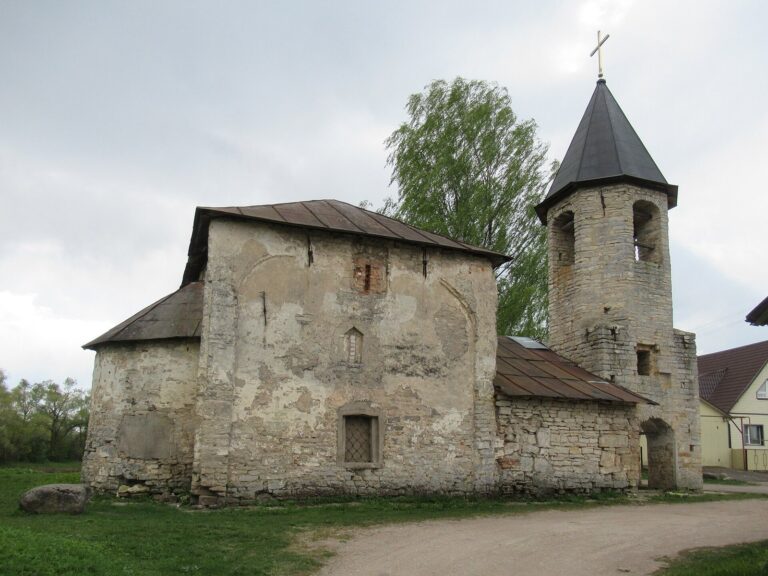
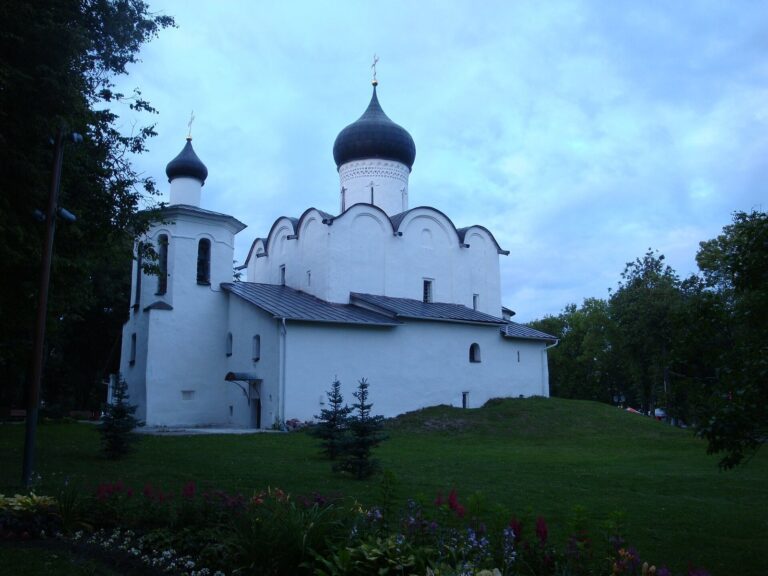
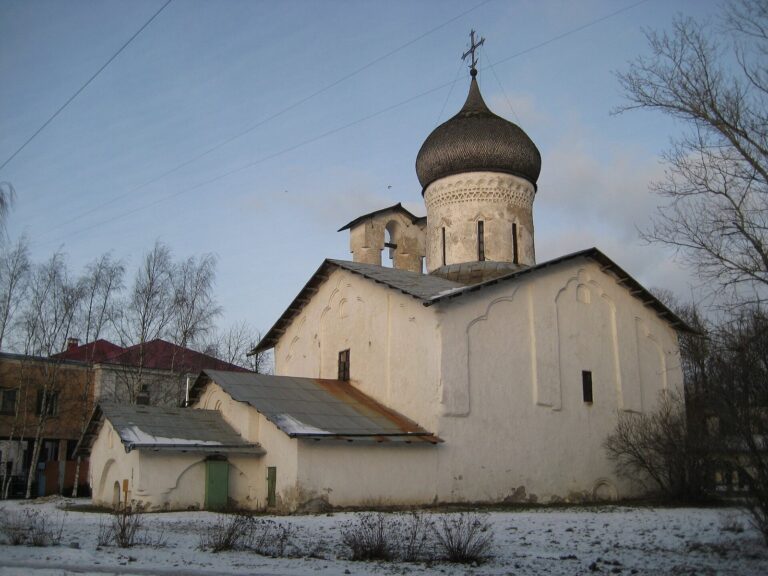
The Church of the Dormition of the Theotokos at Melyotovo is an Orthodox church in Russia, built in 1462 in the regional Pskov architectural tradition. The Pskov Republic was a medieval polity centered on Pskov. Theotokos is a title for Mary, the mother of Jesus, and the Dormition commemorates her death in Christian belief.
An inscription above the western entrance identifies posadnik Ya. I. Krotov as the church’s commissioner. A posadnik was a senior civic official. In 1465, Pskov masters painted the church’s frescoes at the direction of Krotov and another posadnik, Z. Puchkov, together with boyars. Their imagery reflected the political and ideological currents of the Pskov veche republic. A veche was an assembly associated with civic decision-making.
Later additions and preservation
A side chapel was added in the late sixteenth century. In 1798, a bell tower was built onto the church’s entrance vestibule, funded by the landowner of Vygolovo, parishioners, and the church.
Restoration took place in 1933 and 1949, followed by a larger campaign in 1965–1967 led by a team headed by D. E. Bryagin. An inspection in late 2016 found damage that threatened the church’s stability. Work in 2017 focused on the most endangered frescoes, while broader restoration was delayed by administrative obstacles. A restoration program under the Russian Ministry of Culture began in 2019.
The church is no longer used for worship. It operates as a museum display site and a branch of the Pskov State Historical-Architectural and Art Museum-Reserve. Russia protects it as a cultural heritage site of federal significance.
Remains
Building and additions
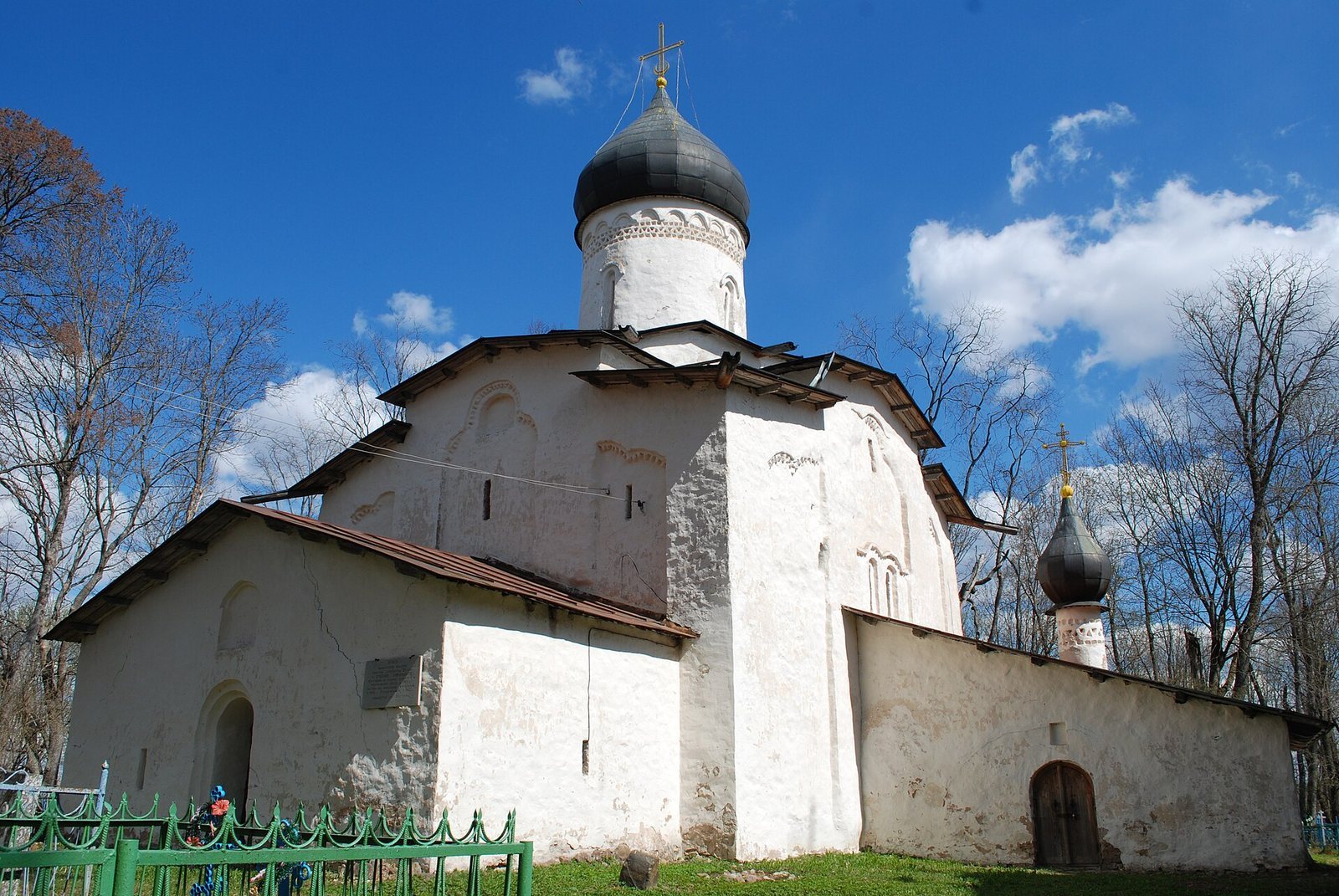
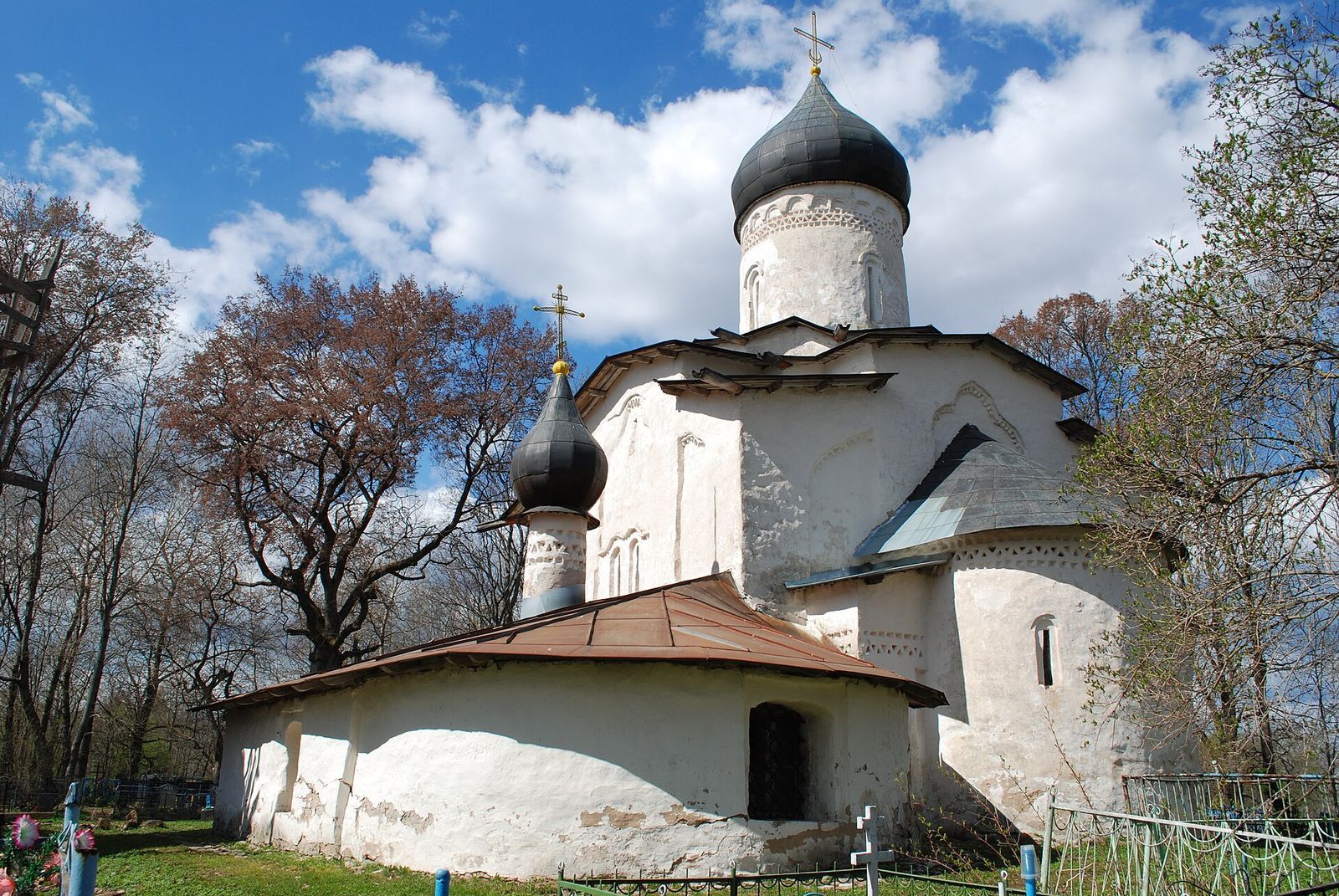
The surviving complex comprises the main church, a side chapel, an entrance vestibule, and an attached bell tower.
Main church and side chapel
The main church is a classic example of medieval architecture associated with the Pskov school. The church and side chapel are built of stone slabs. The chapel is dedicated to St. Nicholas, a Christian saint and bishop traditionally called the Wonderworker.
Entrance vestibule and bell tower
The entrance vestibule is made of brick, as is the bell tower attached to it. The tower contains five bells; the largest weighs 62 poods, a historical unit of about 16.4 kilograms.
Frescoes
Frescoes, wall paintings made on wet plaster, survive inside the church. Their unusual imagery includes subjects drawn from Pskov chronicles as well as religious themes, and some scenes have no known parallels in Old Russian or Byzantine art. One painting shows a jester punished for mocking the Virgin Mary: he has lost his hands and feet, while Mary bends over him. Interpretations of the scene vary, and the subject is otherwise unknown in Old Russian painting. In the 1980s, Alexander Krylov, a professor at the St. Petersburg Academy of Arts, and his students made copies of the frescoes. The Pskov museum holds the copies, which were exhibited in Pskov in 2017 to draw attention to the preservation of the originals.