Palazzo Barberio Toscano: An Aristocratic Family Palace in San Giovanni in Fiore
Site at a Glance
- Popularity
- Very Low
- Country
- Italy
- Primary era
- Early Modern
- Eras represented
- Early Modern, Modern
- Civilizations
- Kingdom of Naples
- Site type
- Domestic
- Remains
- Elite Residence
On this page7 sections
History
The Barberio family’s rise
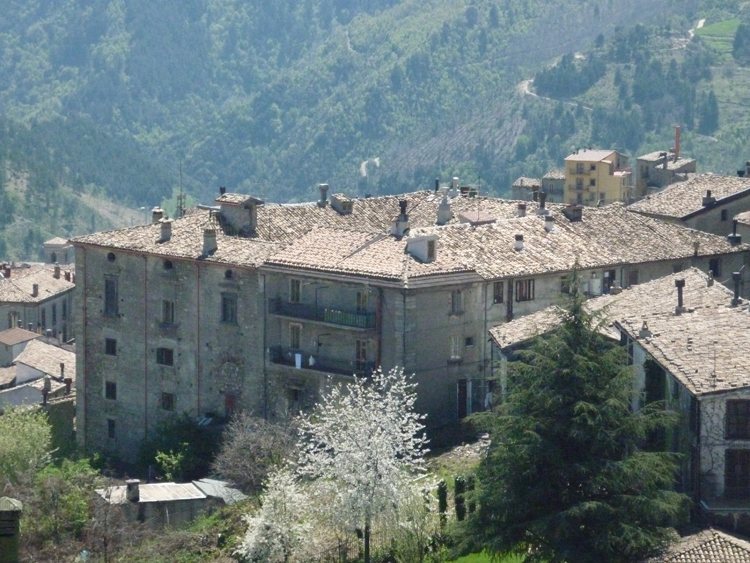
Palazzo Barberio Toscano is an eighteenth-century family palace in San Giovanni in Fiore, Italy. Commissioned by Nicola Barberio and built between 1735 and 1740, it has a simple design described as Renaissance in character. The palace was intended to display the family’s growing standing in the town and surrounding region.
The Barberio family came from the Pre-Sila foothills near Cosenza and settled in San Giovanni in Fiore in 1600. Its patriarch, Andrea, established three branches of the family, but only one remained in the town into the early twentieth century. After Andrea’s death, his children inherited extensive estates in the Sila uplands, including Cagno, Ferolia and Macchia di Tuono. The family first lived in the old Catoja district, then used its growing wealth to gain influence in local social and administrative affairs.
Andrea’s son Salvatore led the family branch in San Giovanni in Fiore and acquired farms in the Sila and the Marchesato Crotonese, a historic district centered on Crotone. Salvatore’s son Andrea inherited the holdings, married Laura Toscano of Rogliano, and had five children. Nicola was the last male heir of that generation.
Nicola Barberio Toscano and local office
In 1760, Nicola married Teresa Oliverio, whose substantial dowry added to the family’s wealth. He adopted the compound surname Barberio Toscano, drawing on his maternal line to strengthen the family’s aristocratic standing. After Teresa’s death, he married Rosa Cosentino of Celico. In 1774, he became procurator, or representative, of the abbey chamber, an administrative office associated with an abbey, and auditor of the leaseholder’s accounts.
Nicola’s civic and administrative responsibilities grew. In 1780 he was entrusted with administering the municipality of Savelli, and in 1782 he became royal leaseholder of the fief of Verzino, a territorial holding governed through feudal rights. He bought the Zinga estate in 1801 and thereby acquired the title of baron. The abolition of feudalism in 1806 ended that title. Nicola died in 1818 and left his holdings to his son Andrea. Andrea’s death in 1828 without male descendants brought the Barberio Toscano dynasty in San Giovanni in Fiore to an end. The palace’s rooms also hosted meetings of supporters of the Bourbon royal dynasty.
School use and later division
Around the middle of the nineteenth century, the municipality rented the palace for use as an elementary school. Later, family descendants living away from San Giovanni in Fiore divided and sold the building. These changes altered its original plan and architecture.
Remains
Setting and exterior
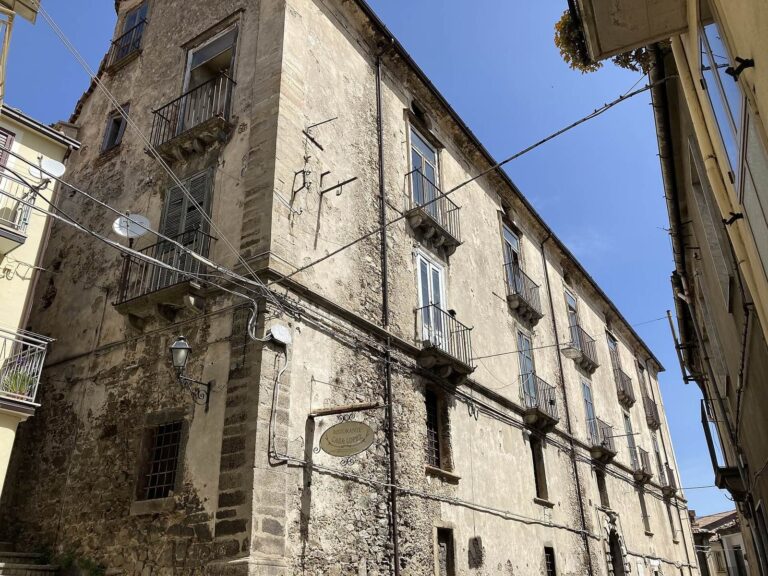
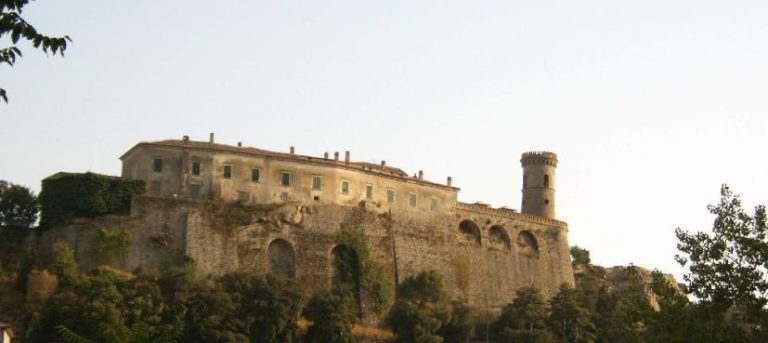
The massive, square palazzo stands on a rocky spur above the Filippa district, east of a Capuchin convent, belonging to a branch of the Franciscan order. The convent is nearby and about 15 metres higher than the palace. Its position above the historic centre gives the building a castle-like outline, set against the smaller houses below. The design is described as straightforward, with smooth façades pierced by numerous windows and a few balconies. Subdivision and later alterations affected all four façades, adding windows and balconies, some without authorization.
Courtyard and interior
A courtyard occupies the centre of the building. Broad stairs made from local Sila granite rise from it to the upper floors. The many rooms have a plain character, while recollections by older residents associate frescoes with some of them.