Asine: An Ancient Coastal City in Argolis, Greece
Site at a Glance
- Popularity
- Medium
- Country
- Greece
- Primary era
- Classical
- Eras represented
- Bronze Age, Iron Age, Classical, Medieval, Early Modern, Modern
- Civilizations
- Ancient Greek, Byzantine, Italian, Kingdom of Macedon, Mycenaean, Roman, Venetian
- Site type
- City
On this page22 sections
History
Asine was an ancient city on the coast of Argolis in the northeastern Peloponnese, Greece. Human activity in the area dates to around 6000 BC, and settlement grew during the Bronze Age around Kastraki and the Lower Town. Finds from its early communities point to connections with places across the Aegean.
Prehistoric and Mycenaean Asine
Neolithic pottery found at the foot of Barbouna Hill dates to the fifth millennium BC. In the Early Bronze Age, settlement spread across the Lower Town, parts of the acropolis, the high sector of the settlement, and Barbouna’s northern slope. Pottery, tools, bronze objects, seals, and imported pottery from the Cyclades and Troy reflect a broad network of exchange.
Asine continued to grow in the Middle and Late Bronze Ages. During the Mycenaean period, a palace-centered Late Bronze Age culture, the city prospered through trade with Argive palaces and centers beyond the Aegean. Homer’s Iliad, an epic describing the legendary Greek expedition to Troy, includes Asine among the Argive cities that sent ships under Diomedes. This is a literary account of the city’s participation.
Destruction and relocation
In the late eighth century BC, Asine supported Sparta’s invasion of Argive territory, led by the Spartan king Nicander. After the Spartan army returned home, the Argives besieged and razed the city, sparing the sanctuary of Apollo Pythaeus. Apollo Pythaeus was a local title for Apollo, a major Greek god; Asine’s inhabitants escaped by sea.
Following the First Messenian War, an early conflict between Sparta and neighboring Messenia, the Spartans granted the displaced inhabitants land in Messenia. There they founded another city named Asine, identified with modern Koroni. Activity at the original settlement declined sharply, although some occupation continued into the fourth century BC. Thucydides states that offerings continued at the sanctuary until 419 BC. In the second century AD, Pausanias described the temple as still visible, apparently in ruin.
Hellenistic settlement and later occupation
Around 300 BC, Macedonian ruler and commander Demetrios Poliorketes resettled Asine and built a fortification. The settlement revived during the Hellenistic period, the era following Alexander the Great’s conquests. Little is known about its history before Rome conquered Greece in 146 BC, though fishing and farming may have formed part of its economy.
In the early first century AD, Strabo described Asine as a village. Pausanias saw ruins there in the second century. The Lower Town was occupied again in the fourth and early fifth centuries AD, when new houses covered earlier Hellenistic buildings and sometimes incorporated parts of them. Eight west-facing graves from this later occupation have been interpreted as evidence of Christianity at Asine.
Later activity is less clear. Some repairs or changes to the walls, particularly in the northwest, may date to the Byzantine period, under the Eastern Roman Empire. Wall construction is also associated with Byzantine times and with Venetian rule from 1690 to 1715.
Excavation and wartime use
Swedish archaeological work began in 1922, following an initiative by Crown Prince Gustav Adolf in 1920. Led first by Axel W. Persson and later with Otto Frödin, the expedition was the first major Swedish archaeological investigation in Greece. Excavation campaigns took place in 1922, 1924, 1926, and 1930, and their results appeared in 1938. The Second World War interrupted fieldwork.
Italian forces fortified the acropolis in 1941 and 1942 in preparation for an anticipated Allied invasion of the Peloponnese. They abandoned the position in 1943 after Italy’s forces surrendered. German aerial photographs taken before the expected invasion later helped archaeologists interpret the earlier Swedish excavations. The wartime works disturbed and damaged older remains.
Excavation resumed in 1970 after development threatened the site. Work under the Swedish Institute at Athens continued in 1970-1974, 1976-1978, and 1989-1990, with further excavation in 1985. Underwater archaeological work began in 2020.
Remains
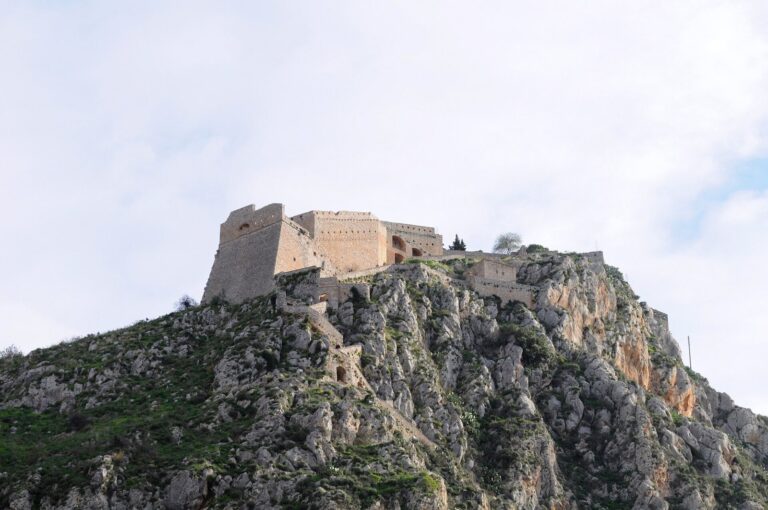
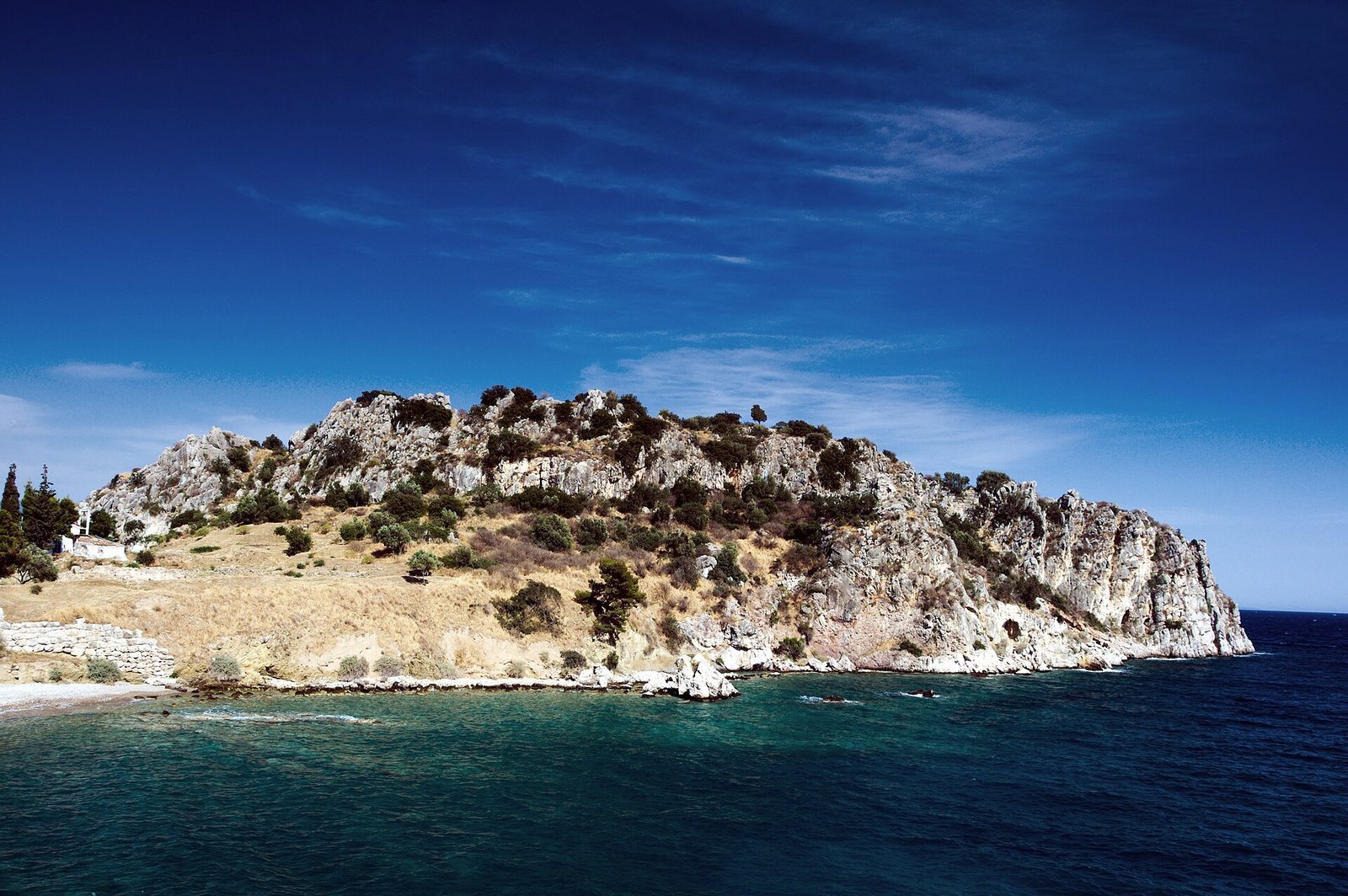
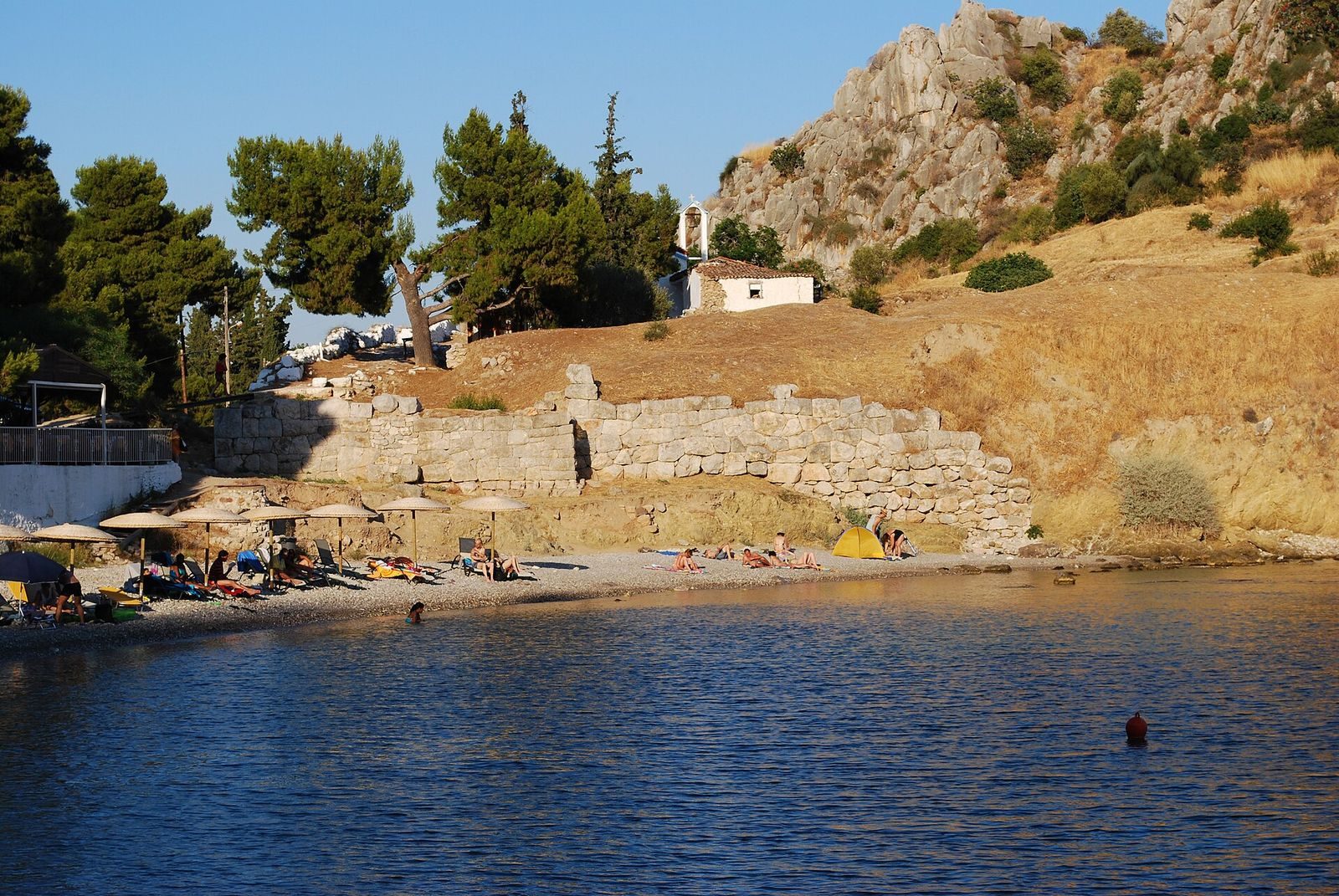
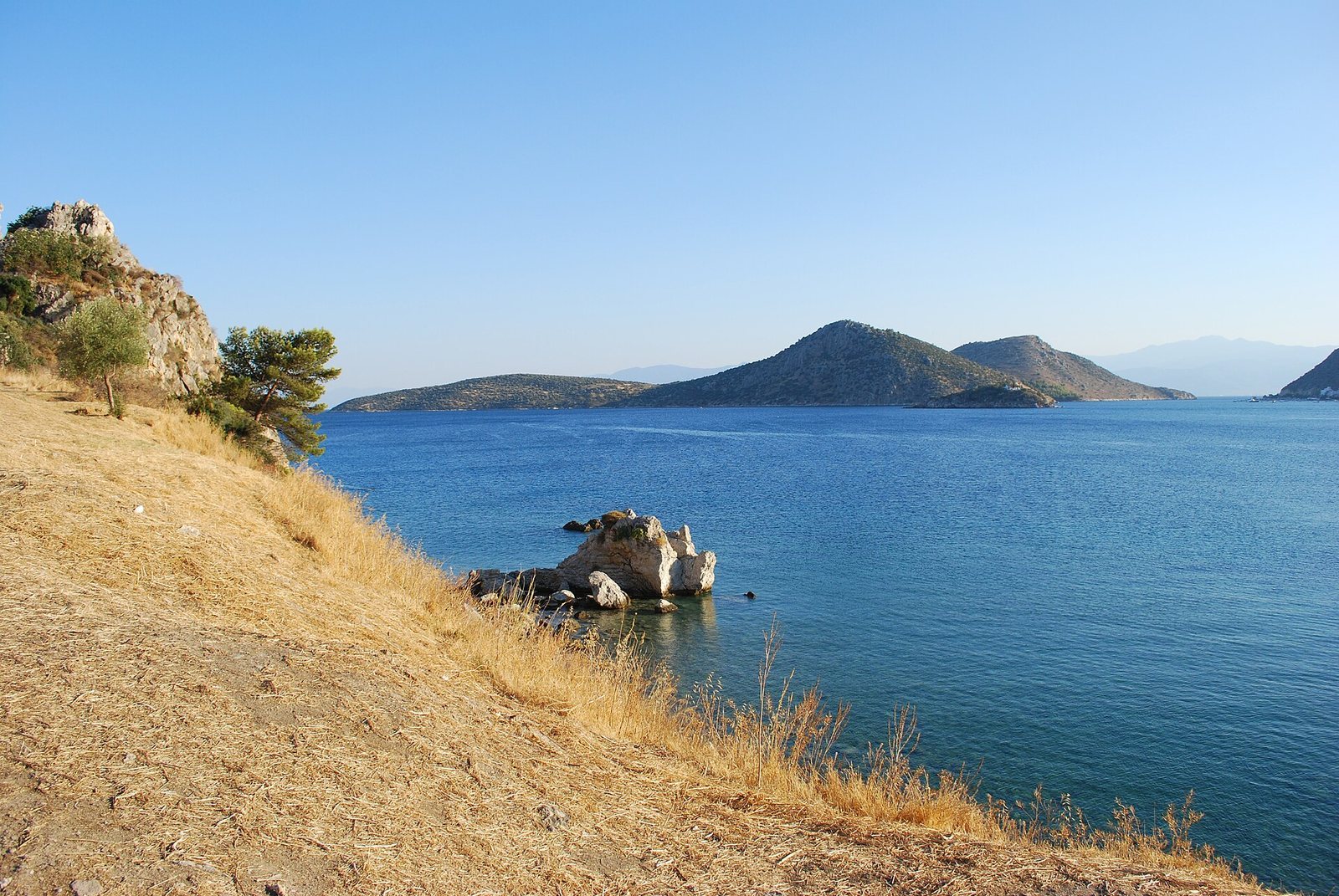
Asine occupies Kastraki, also known as Paliokastro, a rocky promontory about 330 metres long and 150 metres wide, rising 52 metres above sea level into the Argolic Gulf. Its sheltered natural harbor contributed to the city’s development, while Barbouna Hill lies to the north. Archaeological remains extend across the acropolis, the Lower Town, a field northeast of the acropolis, and Barbouna Hill. Walls with towers enclosed the acropolis and Lower Town.
Bronze Age settlement
Early and Middle Bronze Age remains
Houses and burial places from the Early Bronze Age have been found on the acropolis, in the Lower Town, and on Barbouna’s northern slope. The finds include roof tiles, pottery, tools, bronze objects, seals, and imported pottery from the Cyclades and Troy. In the Middle Bronze Age, settlement extended from the northern acropolis to Barbouna’s southern slope. Stone-lined graves lay beneath mounds, and a cemetery east of Kastraki was arranged around a circular mound built of stone.
Late Bronze Age homes and burials
Late Bronze Age remains include chamber tombs on Barbouna’s eastern side and two Mycenaean cemeteries on its eastern and southern slopes. Houses were freestanding and rectangular, with no single shared plan. Burials occurred inside and around homes, including between walls and beneath floors. Men were more numerous among burials in the eastern cemetery. A burial mound there was enclosed by a wall that marked it in the landscape. Excavated chamber tombs contained human remains and grave goods.
Geometric-period remains and sanctuary
Settlement and cemetery
During the Geometric period, an early Greek era named for its characteristic geometric decoration, the Lower Town was used as a cemetery. Settlement extended east of the promontory and onto Barbouna’s southeastern slopes. Excavated walls and terraces include examples on the hill’s northern slope.
Barbouna sanctuary
Remains of a small sanctuary, probably dedicated to Apollo Pythaeus, stand on Barbouna’s summit. Its earliest building, Building B, had a curved end and was probably destroyed around 720 BC. Building A replaced it about twenty years later. A roof-edge molding associated with Building A dates to the sixth century BC and points to later alterations.
Mycenaean buildings
House G and the Lower Town
Late Mycenaean House G had a megaron plan, a large hall-centered layout, and at least nine rooms, including an anteroom and a central hall with pillars. A stone bench in the hall’s northeast corner held objects used in worship. These included a terracotta figurine head nicknamed the “Lord of Asine,” later interpreted as representing a woman. Other excavated Lower Town features include House T, Terrace III, and the forecourts of Houses D and B.
Hellenistic and Roman remains
Fortifications and entrance
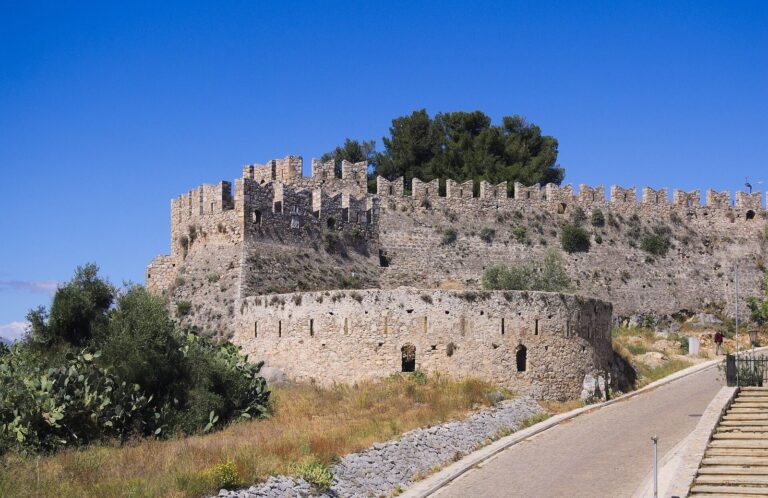
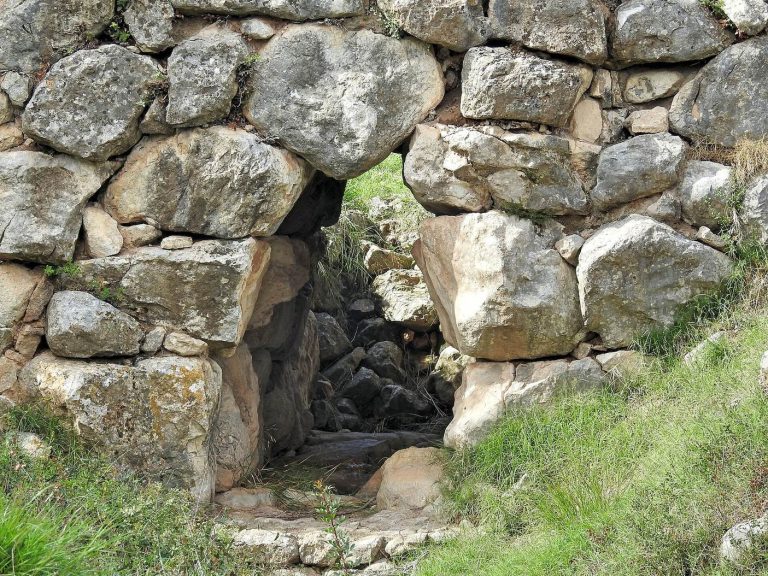
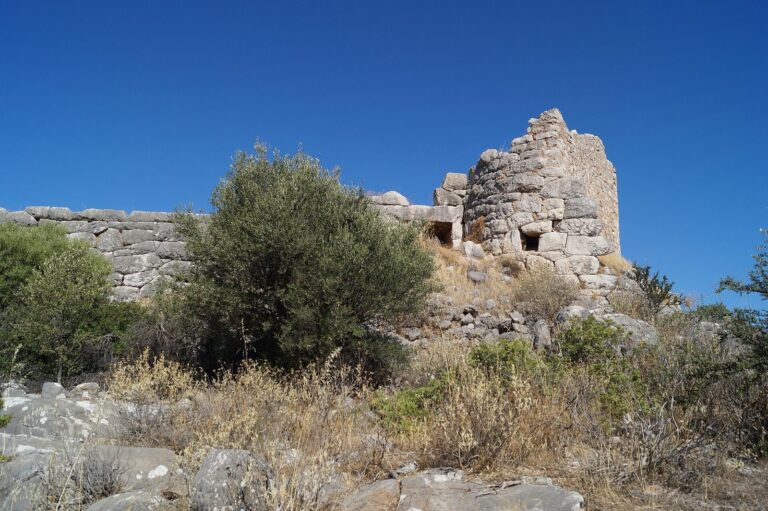
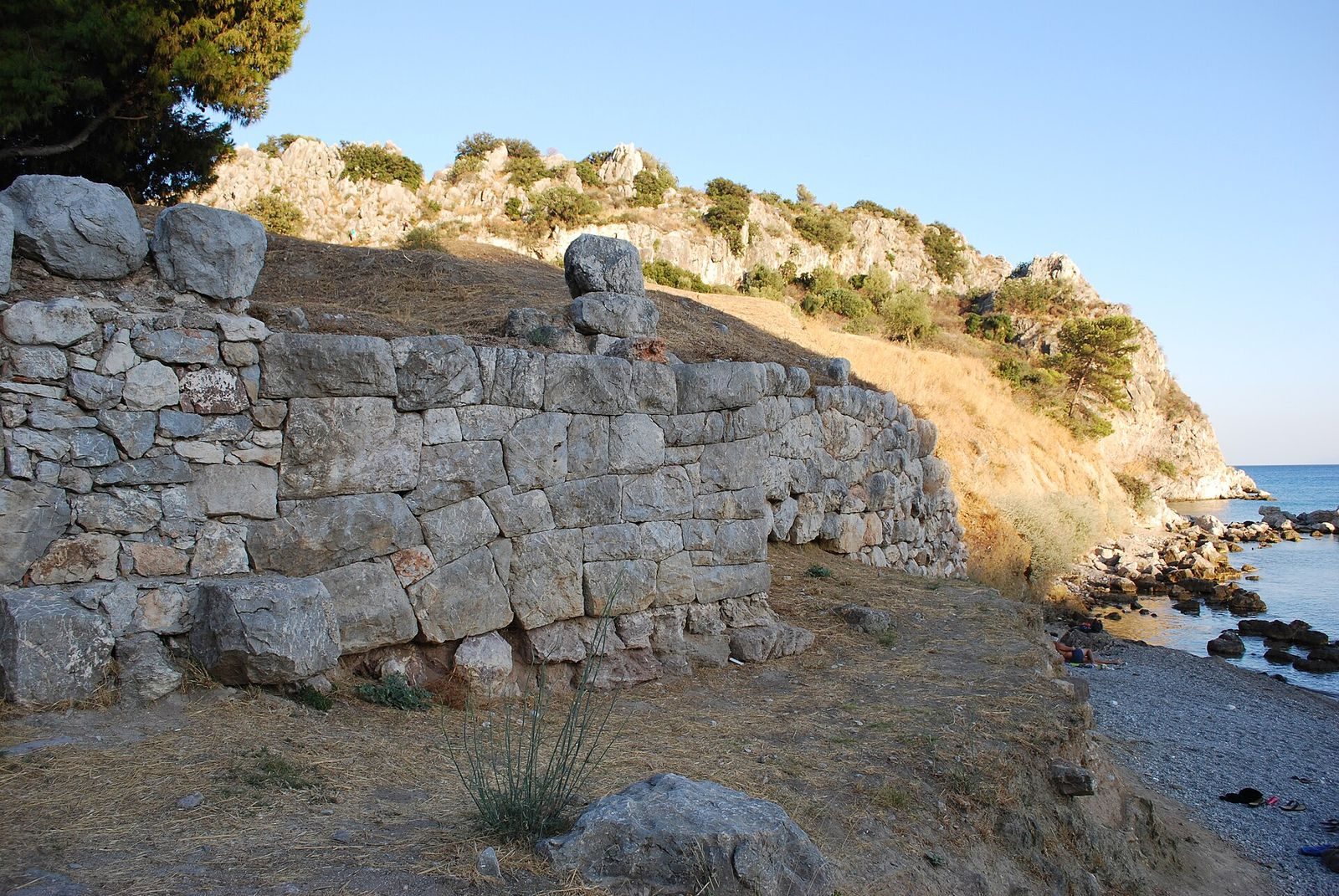
The acropolis wall uses Cyclopean masonry, made from very large, roughly fitted stones, and was substantially altered in the Hellenistic period. Hellenistic fortifications enclosed both the acropolis and Lower Town. The main gate into the Lower Town was remodeled in Roman and Venetian times, while its paving may date to the early Byzantine period.
Houses, presses, and reservoir
Hellenistic houses and other buildings have been found on the acropolis and in the Lower Town. Olive-oil or wine presses stood either independently or within houses. Sloped working surfaces channelled liquid into square or circular tanks set into the floor. Two presses retain raised surfaces for fruit and stone bases with holes used to secure wooden presses. A large reservoir may date to either the Hellenistic or Roman period.
Acropolis and Barbouna features
The acropolis contains a Hellenistic bastion, a projecting defensive structure, and a press used for olives or grapes. Hellenistic graves, walls, and terraces have also been found on Barbouna.
Late antique, harbor, and wartime remains
Bath complex
A Roman bath complex in the eastern Lower Town dates to the fourth or early fifth century AD. Its surviving rooms include pools for cold, warm, and tepid water, a changing room, and a heated room. Marble decoration gave the bath an elaborate finish. The complex was built over earlier structures and damaged them.
Ancient harbor
Underwater archaeological work begun in 2020 identified remains of a large ancient harbor.
Italian defenses
The Italian defenses reused ancient walls and strengthened them with dry-stone additions. They also included temporary buildings, lookout towers, trenches, blockhouses, machine-gun positions, and roads connecting defenses along the acropolis’s eastern coast. Some building material came from the Lower Town, Hellenistic stone-lined graves, and other excavated remains.