Oratory of Saint Anthony the Abbot: A Romanesque Church in Staviglio
Site at a Glance
- Popularity
- Very Low
- Country
- Italy
- Primary era
- Medieval
- Eras represented
- Medieval, Early Modern, Modern
- Civilizations
- Italian, Venetian
- Site type
- Religious
- Remains
- Chapel
On this page10 sections
History
Foundation and pastoral use
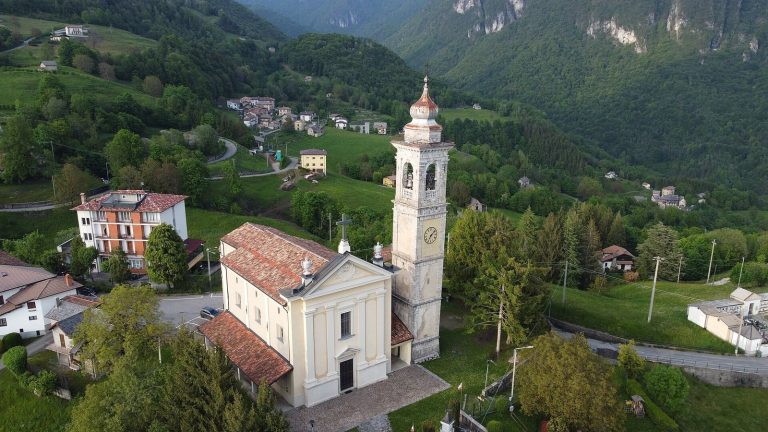
The Oratory of Saint Anthony the Abbot is a Romanesque church, a medieval European architectural style, in Staviglio, an alpine pasture near Pizzino in Taleggio, Italy. Built and consecrated in 1483, it was funded by a bequest from Andreina Vitali, daughter of Filippo, who left her possessions for its construction. Dedicated to Saint Anthony the Abbot, it became the principal Catholic place of worship in Staviglio.
The church follows the Ambrosian rite, a Catholic liturgical tradition historically associated with Milan and its surrounding region. It is a subsidiary church of the parish of Saint Ambrose the Doctor in Pizzino and belongs to the Diocese of Bergamo. For centuries, herdsmen descended from the surrounding pastures to attend summer Mass at the oratory, which stood outside the inhabited center.
Decoration and later changes
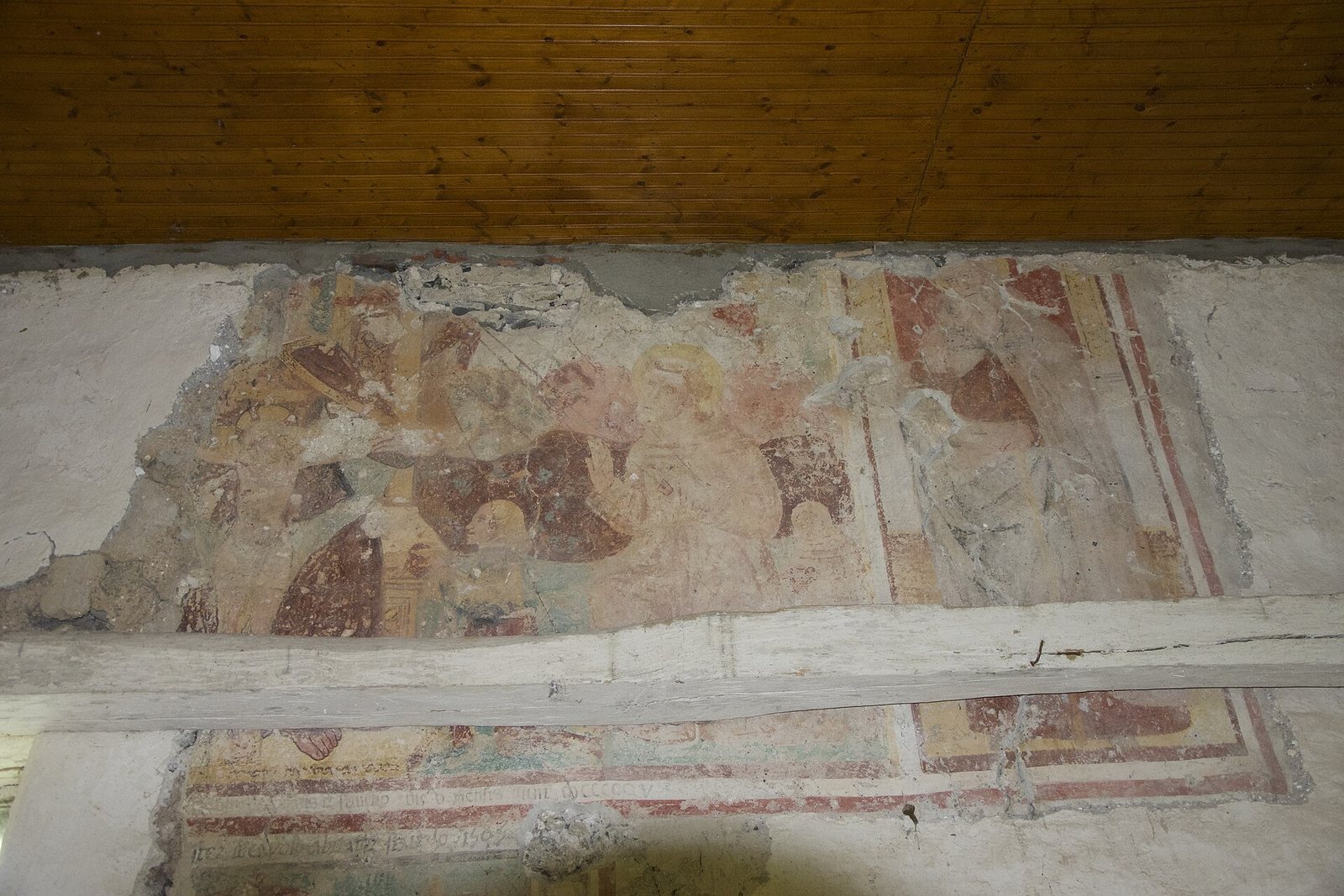
In 1505, the interior received frescoes attributed to the Baschenis, a family of painters from Averara in the Bergamo area. During the plague in Val Taleggio in the first half of the seventeenth century, the church’s decorations were covered with lime as a measure traditionally used against disease. A silk Stations of the Cross, acquired in the eighteenth century, was later lost after being irreparably damaged through neglect.
Repairs and rediscovery
Heavy snowfall weakened the roof, leading to its reconstruction in 1972. The work brought parts of the church’s first fresco cycle to light. In 1996, the floor, pews, and altar table were renewed.
Remains
Exterior and bell
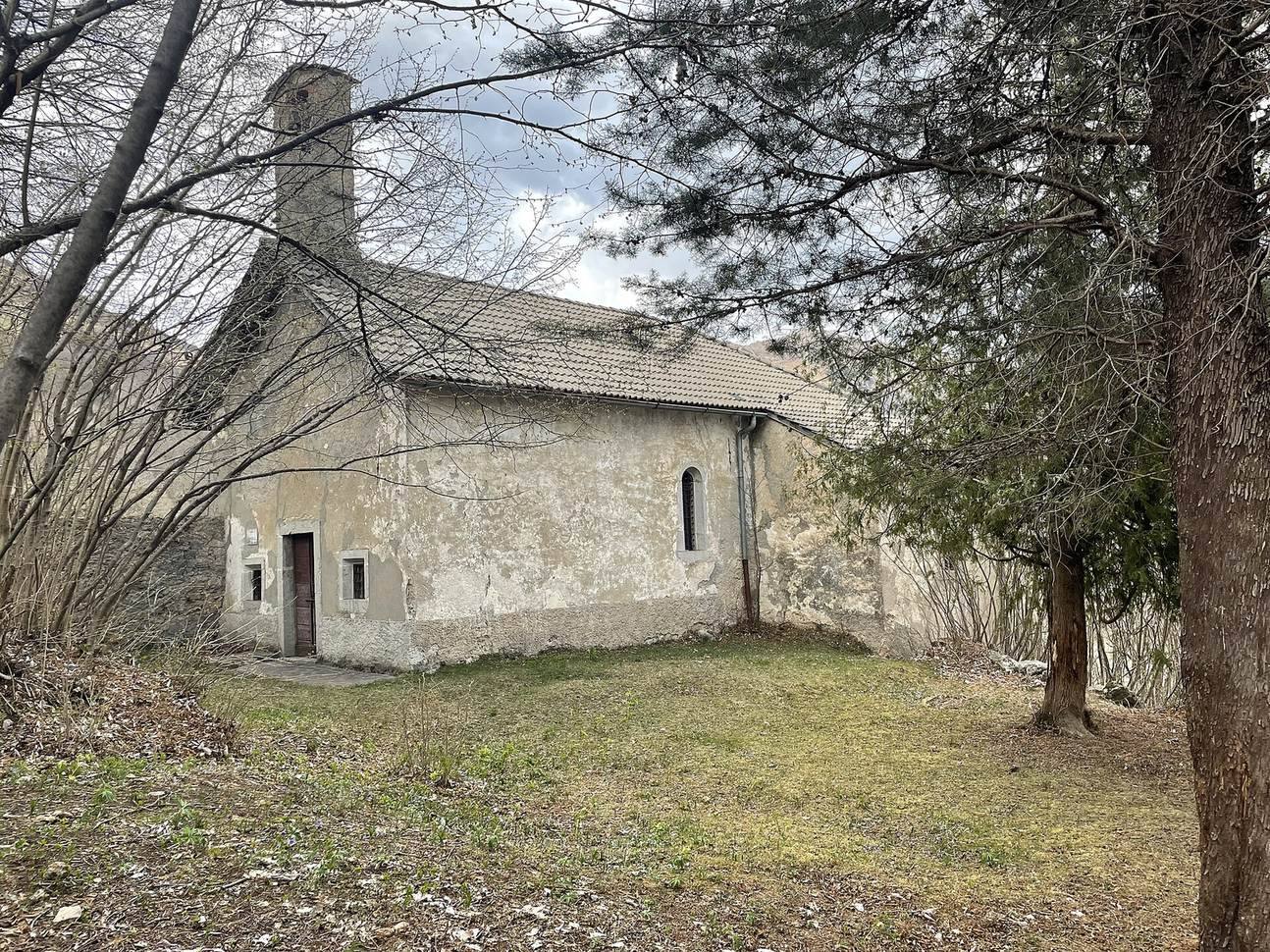
A grassy forecourt fronts the church, with a path of porphyry, a hard igneous rock, running before the façade. The plastered front rests on a rough-textured base and has a two-pitched roof. Its central doorway is flanked by two square windows with stone surrounds and protective grilles. The timber roof is covered with stone slabs and roof tiles. At the ridge, a bell gable, a wall-like structure with an opening for a bell, holds a bell cast in 1482 by an unidentified maker. It is the oldest bell in Val Brembana.
Interior
Main space and altar area
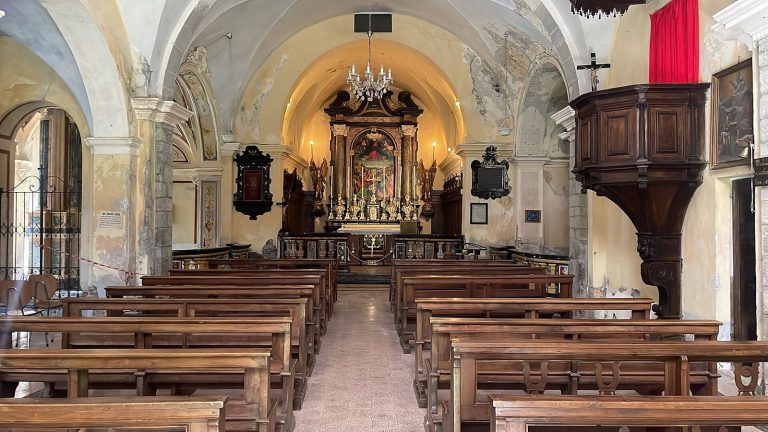
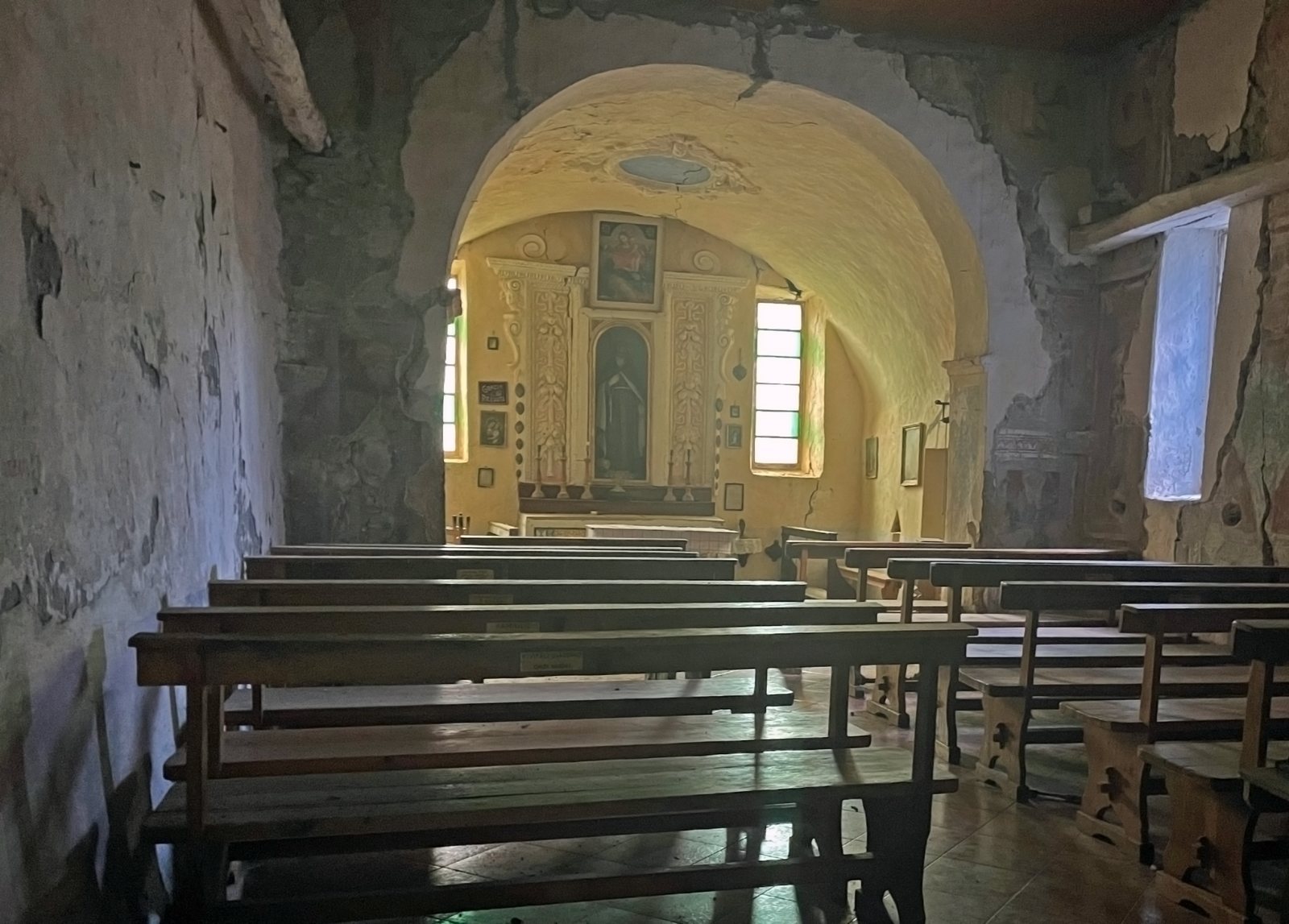
The interior has a single central worship space beneath a modern ceiling of wooden slats. A baptismal font and a walnut confessional stand to the right of the inner entrance, while an arched window opens in the right-hand wall. A low arch separates the main space from the presbytery, the part of a church around the altar. Both areas have the same width. The presbytery is rectangular and has a barrel vault, a continuous arched ceiling. A door in its right wall leads to the sacristy, whose roof is joined to the church roof.
Frescoes
Faint surviving frescoes on the side walls include the Glory of Saint Francis, Pope Innocent VIII, and several images of Saint Anthony. The Annunciation appears to the right of the arch between the main space and presbytery, with the wings of the Archangel Gabriel visible to its left. Two male figures dressed in Renaissance-era clothing appear faintly above these scenes.
Altar and devotional furnishings
The altar stands against the rear wall of the presbytery. Its niche holds a wood-and-plaster statue of Saint Anthony, made in 1929 and donated by the Danelli family, Vitale, and Angelo Ghilardi. The seventeenth-century altarpiece is molded and painted plaster, ornamented with festoons and fruit. Two sculpted female figures, called caryatids, support its upper section, and a painting of the Madonna and Child is set above it. The altar table has geometric patterns in masonry finished to resemble marble. A local-stone holy-water basin also dates to the seventeenth century. The surviving portable altar frontal, a decorative covering for an altar’s front, is made of leather and silk and has a central medallion depicting Saint Anthony.