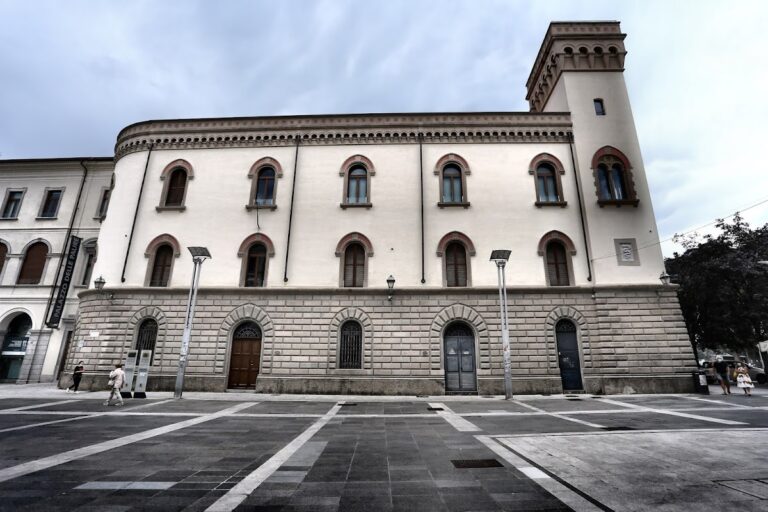
Palazzo Manzoni: Historic Family Residence and Town Hall in Barzio, Italy


Site at a Glance
- Rating
- 4.5
- Popularity
- Very Low
- Country
- Italy
- Primary era
- Early Modern
- Eras represented
- Early Modern, Modern
- Civilizations
- Duchy of Milan, Habsburg, Spanish
- Site type
- Civic
- Remains
- Palace
On this page15 sections
History
Palazzo Manzoni is a historic late-seventeenth-century building in Barzio, Italy, and the first residence of the Manzoni family in the town. Its family history reaches back to Giacomo Maria, the progenitor of the Barzio branch, who lived there during the final years of the sixteenth century. The palace is also connected with the ancestry of Alessandro Manzoni, the nineteenth-century Italian writer best known for The Betrothed.
The Manzoni family residence
Giacomo Maria named his sons Giovanni Angelo, Pasino, and Pompeo as heirs in a will drawn up on 13 June 1586 by Porfirio Arrigoni of Esino. A codicil dated 28 October 1604 altered the inheritance arrangements. It replaced the deceased Pasino with his sons Giacomo Maria, Pomponio, and Giovanni Maria, while Angelo Michele was excluded because he had been condemned to banishment.
Pietro Antonio, Giacomo Maria’s grandson and the grandfather of Pietro, who would become the father of Alessandro Manzoni, continued to live in the palace until 1798. That year he moved with his family to their villa at Caleotto in Lecco.
From private palace to civic building
During the first half of the nineteenth century, the Baruffaldi family of Cortenova acquired the palace. In the 1960s, the family leased one room to the municipality, providing space for Barzio’s first municipal headquarters.
The Baruffaldi family transferred the building to the parish in 1973. In 1982, the parish exchanged it with the Municipality of Barzio for the parish house. The municipality then carried out restoration work with the collaboration of architect Bruno Bianchi. Following the restoration, Palazzo Manzoni became the town hall. The municipal offices occupy the first floor, while the civic library, established in the building at its inauguration in 1975, was moved from the ground floor to the upper floor in 1994.
Palazzo Manzoni has been designated a National Monument since 1930. It remains owned by the Municipality of Barzio and continues to accommodate the municipal offices and civic library.
Remains
Palazzo Manzoni retains a historic facade, an internal courtyard with seventeenth-century features, several decorated rooms, and an enclosed garden behind the building. Its spaces preserve elements associated with both the Manzoni and Baruffaldi families, as well as later cultural uses.
Facade and courtyards
Entrance portal and commemorative medallion
The facade includes an eighteenth-century portal framed by moulded stone. It also bears a bronze medallion by Francesco Confalonieri, a professor at Brera, the historic Milanese academy of fine arts. The medallion depicts Tranquillo Baruffaldi, who lived from 1839 to 1897.
Seventeenth-century courtyard
The internal courtyard has a seventeenth-century appearance. A carved Manzoni coat of arms forms one of its defining features, while a well is topped by a classically styled pediment. A portico with cross-vaulted roofing, formed by the intersection of two barrel vaults, is carried on pillars. Several rooms open onto a smaller courtyard.
Decorated interiors
Sala Civica
The Sala Civica contains decoration associated with the Baruffaldi intervention. Its late-Baroque-style frescoed vault is accompanied by painted doors and a coat of arms carved into a seventeenth-century marble fireplace. Fragments of earlier wall decoration survive in the room. Fresco portraits of Manzoni family members remained there until the middle of the twentieth century. Today, ground-floor rooms are used by Barzio associations and for cultural events.
Painted ceilings and Lucia fresco
The first floor contains three elegantly painted ceilings from different periods. A fresco depicting the Abduction of Lucia was formerly located on this level.
Sala Consiliare and earlier remains
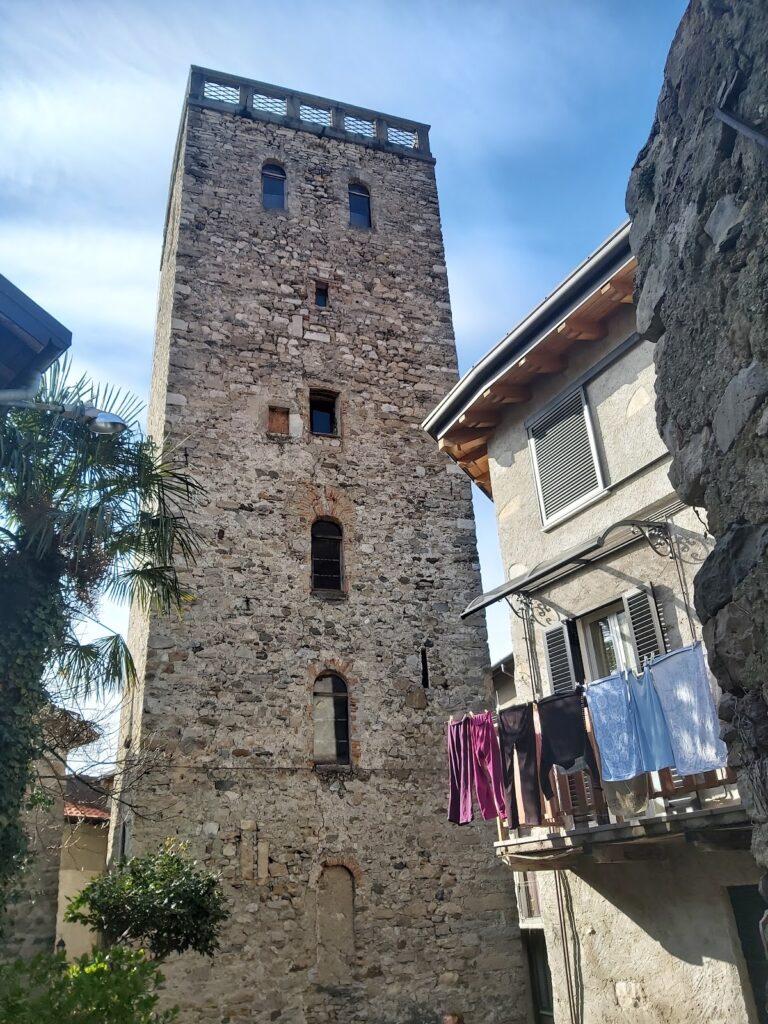
In the eastern part of the palace, the Sala Consiliare preserves fragments of possibly eighteenth-century frescoes. It also contains a stone slab formerly decorated with inlaid, plant-based designs and several squared stones. These elements suggest that the palace may have been built over an earlier medieval tower.
Library, exhibition space, and garden
Biblioteca Civica
The upper floor houses the Biblioteca Civica in four rooms, including the Sezione Manzoniana. Don Alfredo Comi assembled its collection of approximately 1,300 texts related to Alessandro Manzoni.
Spazio Medardo Rosso
The Spazio Medardo Rosso contains a permanent exhibition of panels on the sculptor’s life and work. Its only decorative element predating the twentieth-century works is a small painted faux-marble panel on the wall.
Enclosed garden
Behind the palace, an enclosed garden is surrounded by stone walls. A wooden sculpture by the sculptor Pietro Arnoldi formerly stood there before being removed. The garden is now used for events and as a reading area.