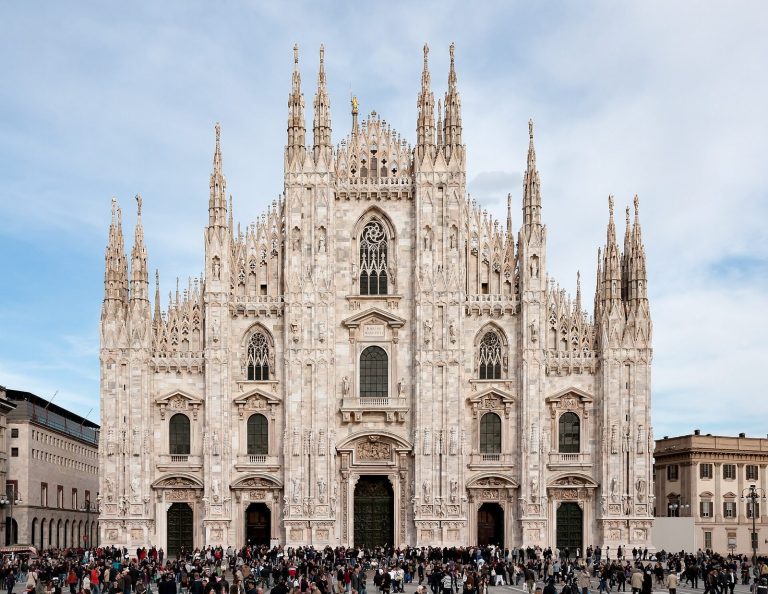
Church of Santa Maria Annunciata in Camposanto: A Chapel within Milan Cathedral’s Palace
Site at a Glance
- Popularity
- Medium
- Country
- Italy
- Primary era
- Early Modern
- Eras represented
- Early Modern, Modern
- Civilizations
- Austrian Empire, Duchy of Milan, Habsburg, Holy Roman Empire, Italian, Spanish
- Site type
- Religious
- Remains
- Church
On this page9 sections
History
Origins and the cathedral cemetery
The Church of Santa Maria Annunciata in Camposanto is a Catholic church in Milan, Italy, whose origins date to the fifteenth century. It began as a church dedicated to the Virgin Mary beside a cemetery established in 1395 near the apse of Milan Cathedral. After a miraculous healing became associated with an Annunciation relief in the cemetery, the church took its present name.
In the sixteenth century, a service building for work on the cathedral was added to the church. When the cemetery closed, the church became a chapel for workers of the Veneranda Fabbrica del Duomo, the institution responsible for work on Milan Cathedral.
Rebuilding and continuing use
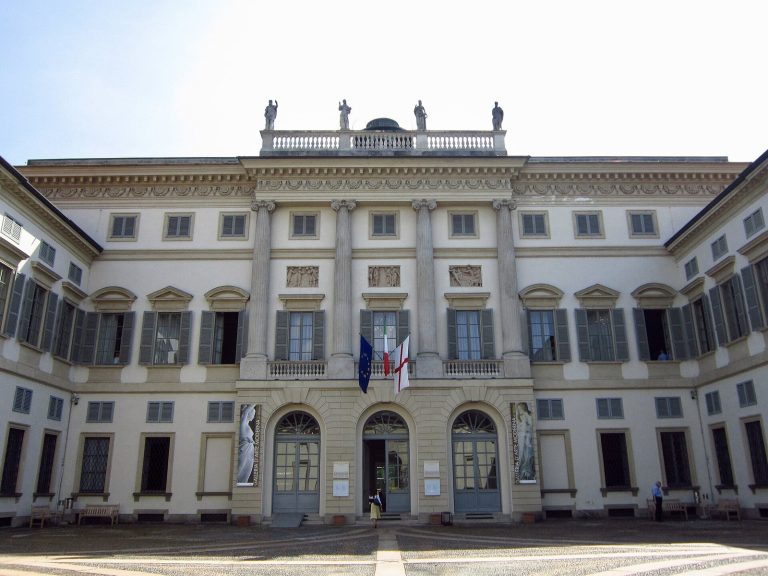
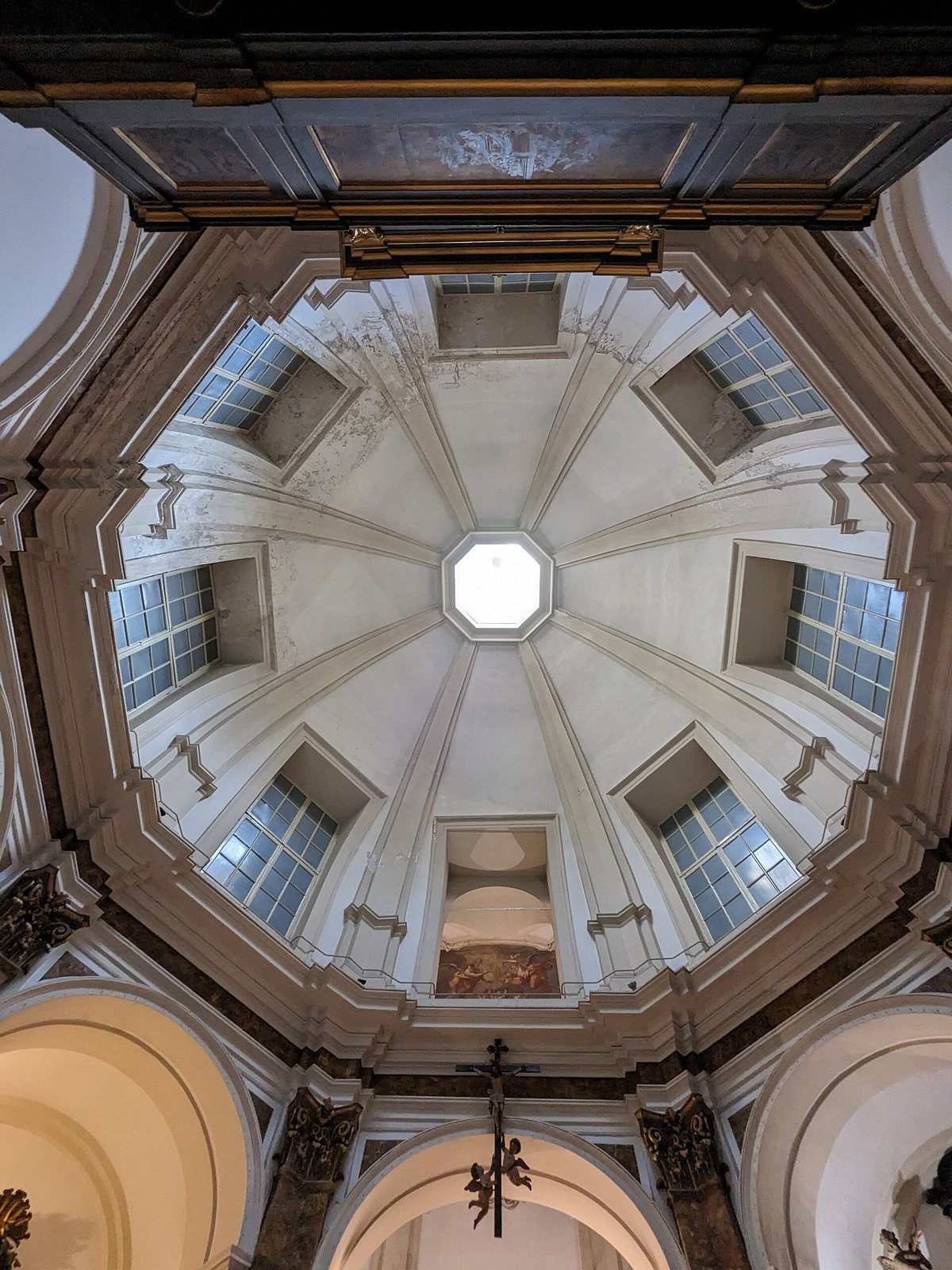
At the request of Federico Borromeo, cardinal and archbishop of Milan, a complete rebuilding began in 1616. The architect and benefactor Aurelio Trezzi helped bring the project to completion. Further changes in 1740 included the construction of the dome, and in 1846 the church was incorporated into the palace of the Veneranda Fabbrica del Duomo.
The church follows the Ambrosian rite, the Catholic liturgical tradition associated with the Archdiocese of Milan. It belongs to the parish of Santa Tecla at Milan Cathedral and serves as the seat of Milan’s Japanese chaplaincy.
Remains
Plan and access
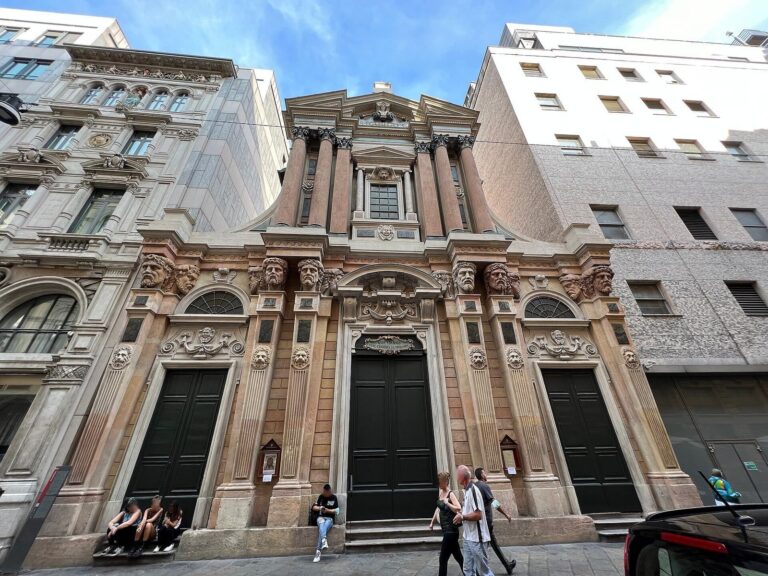
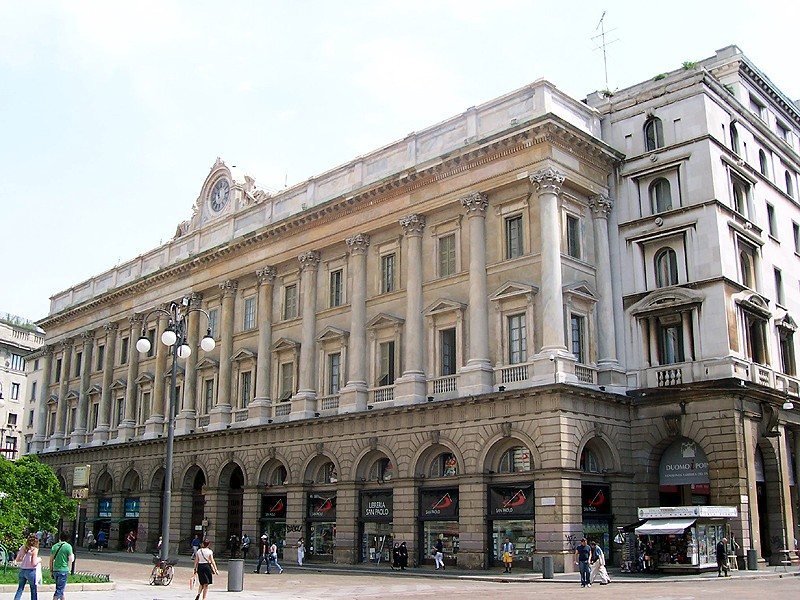
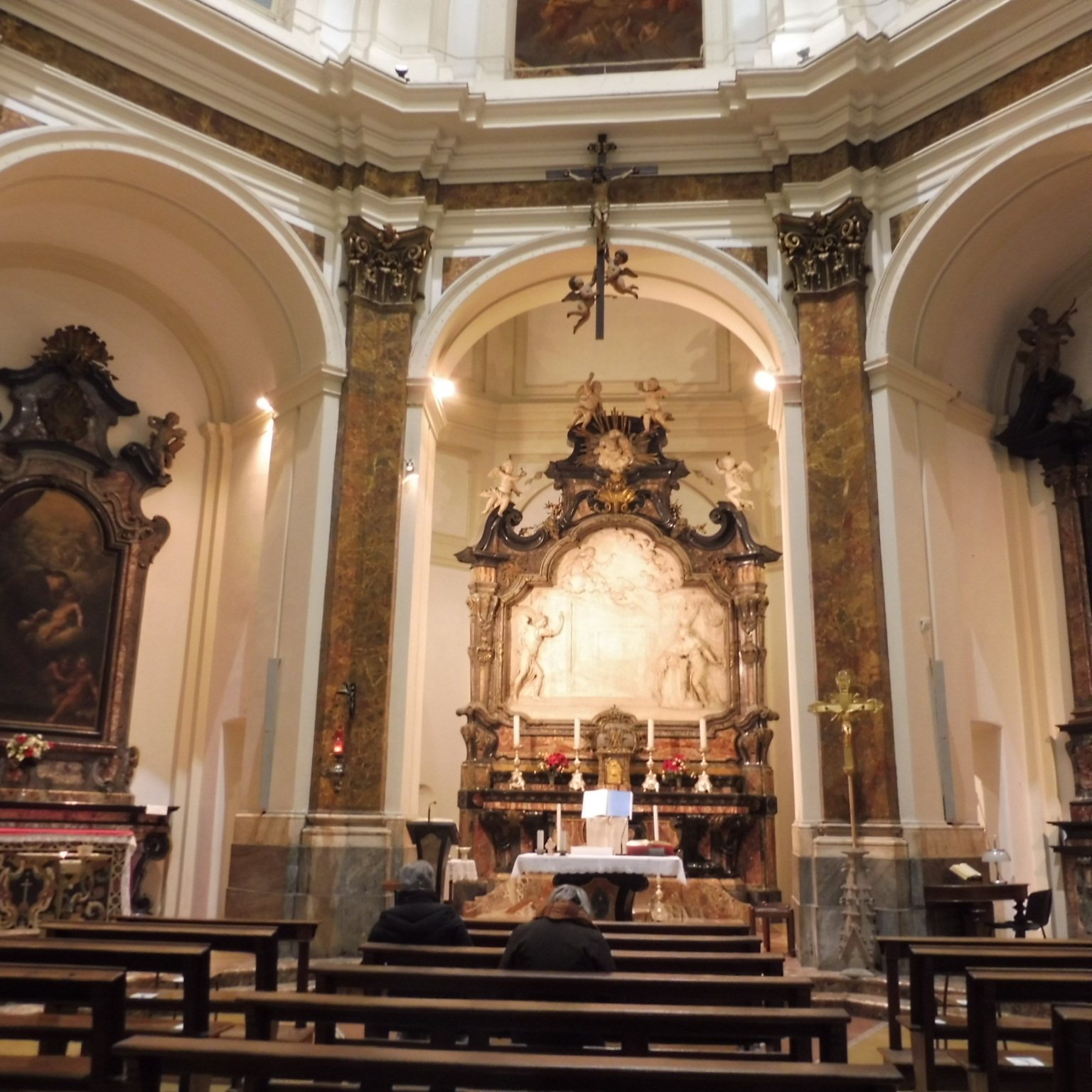
Enclosed within the palace of the Veneranda Fabbrica del Duomo behind Milan Cathedral, the church has no separate facade of its own. Its entrance is through a portico of three arches behind the cathedral’s apse, the sanctuary end of a church. Inside, two octagonal spaces form the church: a larger nave, with side chapels and a dome lit by large windows, and an apse preceded by a round arch. The palace facade’s clock recalls one formerly on the church, which was also known as Relogii, meaning “of the clock.”
Interior furnishings
Annunciation altar
The main altar holds a large marble relief, a sculpted image raised from a flat surface, depicting the Annunciation, when the angel Gabriel told Mary she would bear Jesus. Federico Borromeo commissioned the work for a curved panel above a side entrance to Milan Cathedral. The space intended for it is now occupied by the altar of Madonna dell’Albero. The relief is regarded as miraculous because tradition says a man with a disability was healed while praying before it.
Side altars
Two altars stand beside the apse. The one on the right is dedicated to Saints Nabor and Felix, early Christian martyrs venerated in Milan; the one on the left is dedicated to Saint Anthony of Padua, a Franciscan preacher and saint.
Organ
A Mascioni pipe organ, opus 327, stands on the choir loft against the entrance wall. Built in 1914, it has pneumatic action, which uses air pressure to transmit the player’s movements to the pipes, and is enclosed in a case with shutters that regulate sound. Its nine stops select sets of pipes; its two manuals are hand-operated keyboards, and its pedal is operated by foot.