Ospedale dei Pazzerelli: An Early Hospital for Mental Illness in Turin
Site at a Glance
- Popularity
- Very Low
- Country
- Italy
- Primary era
- Early Modern
- Eras represented
- Early Modern
- Civilizations
- Kingdom of Sardinia
- Site type
- Civic
- Remains
- Hospital
On this page9 sections
History
The Ospedale dei Pazzerelli was a Baroque hospital for people with mental illness built in Turin, Italy, in 1729 by the Confraternity of the Most Holy Shroud. It was the first hospital for people with mental illness in the Savoy state, a pre-unification realm ruled by the House of Savoy, and in Italy.
Foundation and construction
The Confraternity of the Most Holy Shroud, a religious association whose members joined devotional and charitable work, was founded in 1598 with authorization from Archbishop Carlo Broglia and Duke Carlo Emanuele I of Savoy. In the early eighteenth century, Duke Vittorio Amedeo II directed the city’s confraternities to organize their charitable work more formally. He assigned Count Marc’Antonio Ceveris, Count of Burolo, to arrange the project.
The royal treasury offered land in the Sant’Isidoro block and 10,000 lire in return for the confraternity’s management of a charitable institution. The Company of Saint Paul, a charitable and financial institution, contributed a further 10,000 lire, alongside smaller donations. The confraternity chose to care for people with mental illness, for whom treatment and rehabilitation facilities were lacking. Vittorio Amedeo II approved the project in 1728, and the confraternity entrusted the design to its member, engineer Ignazio Mazzone.
Hospital care and administration
Within ten years of its establishment, the hospital housed 61 patients with mental illness. In 1781, its residents included 55 men and five boys. Each patient had a bell intended to identify their condition. Patients could leave the institution, and the bells were meant to help others recognize them and guide them back.
The confraternity petitioned for a rule requiring a doctor’s declaration before a person could be admitted. A royal order dated 24 June 1760 reserved the appointment of the confraternity’s council members to the king as a measure to protect the hospital.
Closure and later uses
During the Napoleonic period, when Napoleon’s rule and influence extended across Europe, the confraternity was suppressed. Duke Vittorio Emanuele I later restored it. Following a dispute with the government over reform of charitable institutions, the confraternity separated its assets from those of the asylum and returned the palace to the city administration.
The nearby Royal Asylum opened in 1836, and the hospital’s patients were transferred there. The building then became a boys’ educational institution. In 1919, it was converted into a university boarding house called Augustinianum, named for Agostino Richelmy, then archbishop of Turin. It remained in this use until around the 1970s.
After a period of abandonment, the complex was restored in 1994 and became the headquarters of the travel group Francorosso-Alpitour. Société Générale later occupied the building, which subsequently fell into abandonment again. It is protected by the Italian heritage authority.
Remains
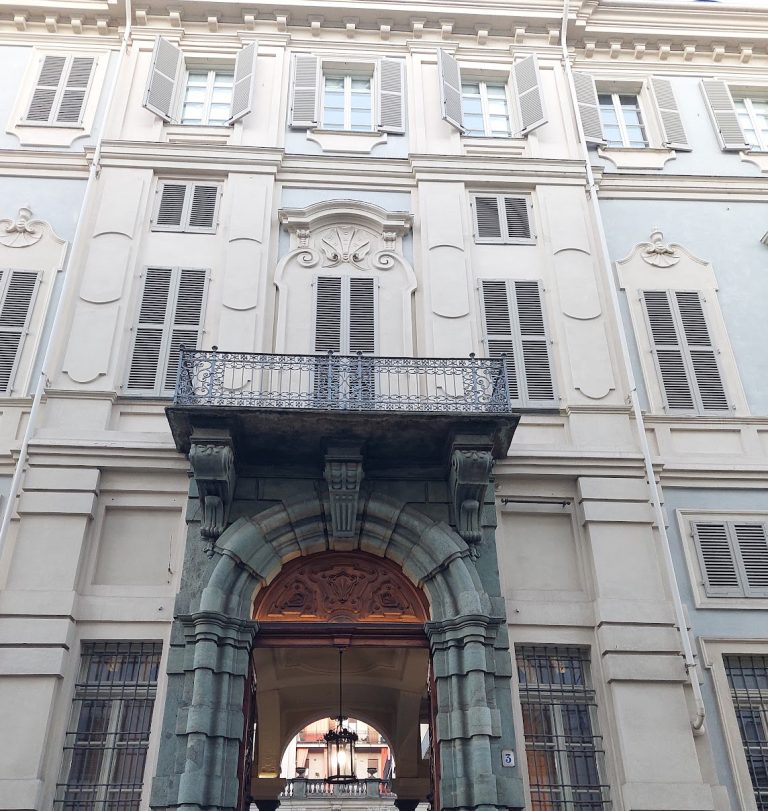
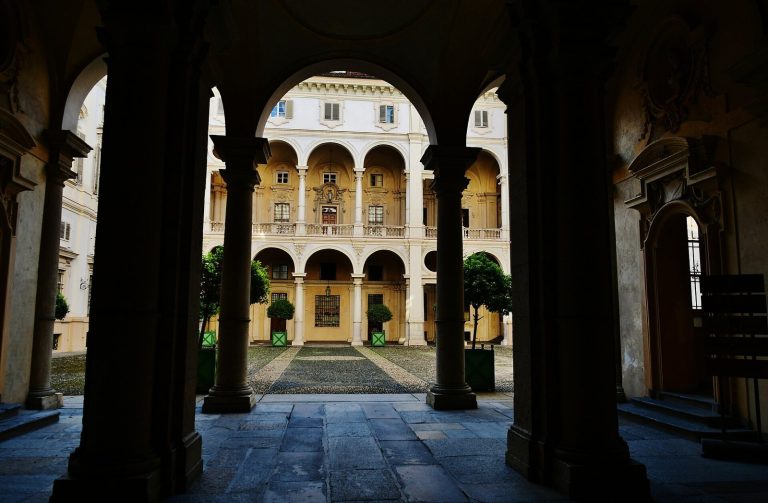
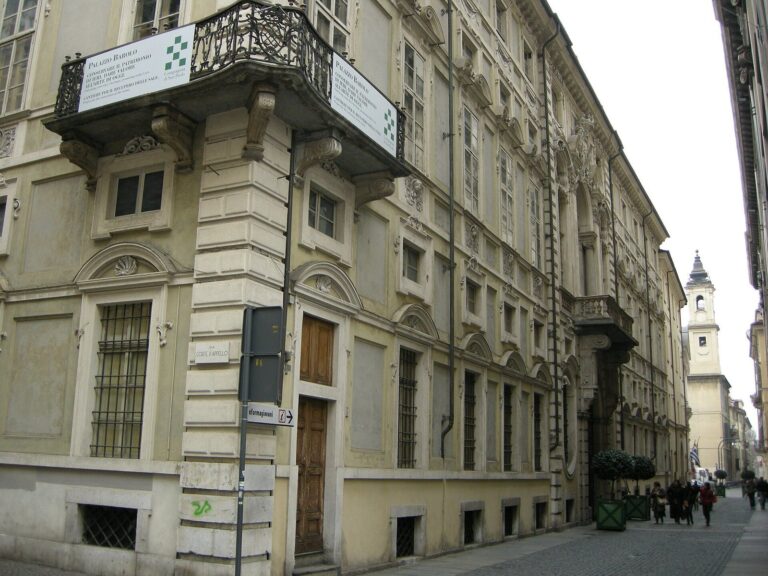
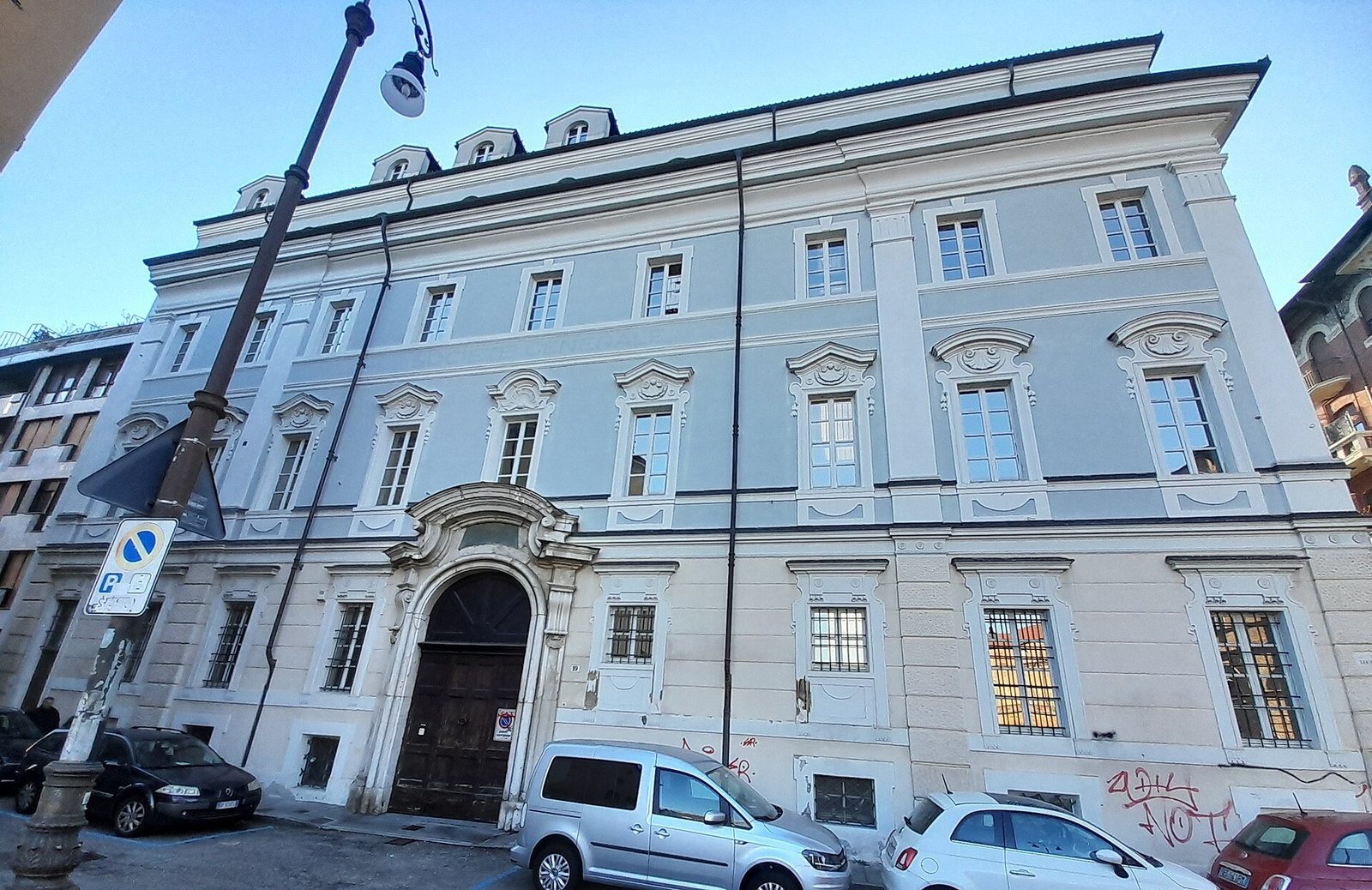
The Baroque building has a quadrangular plan, with four wings around a large inner courtyard. It has four storeys above ground, as well as a basement and an attic, and a total area of 4,812 square metres.
Hospital building
Courtyard and circulation
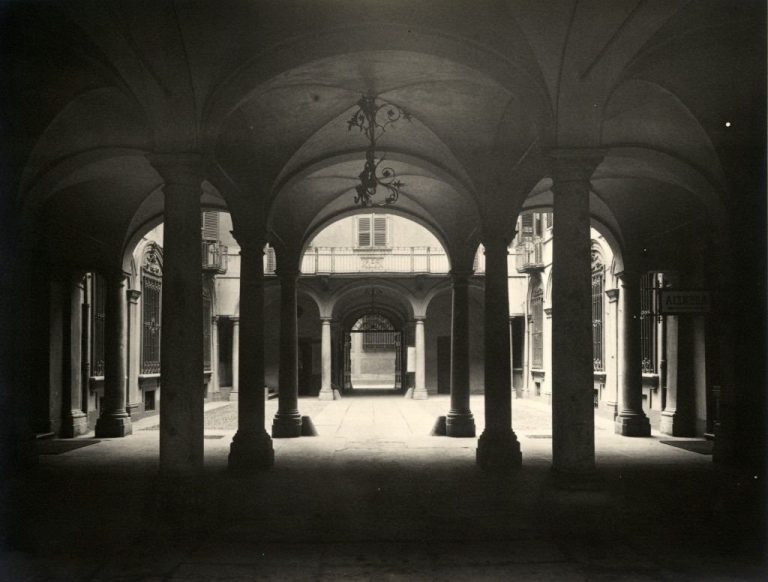
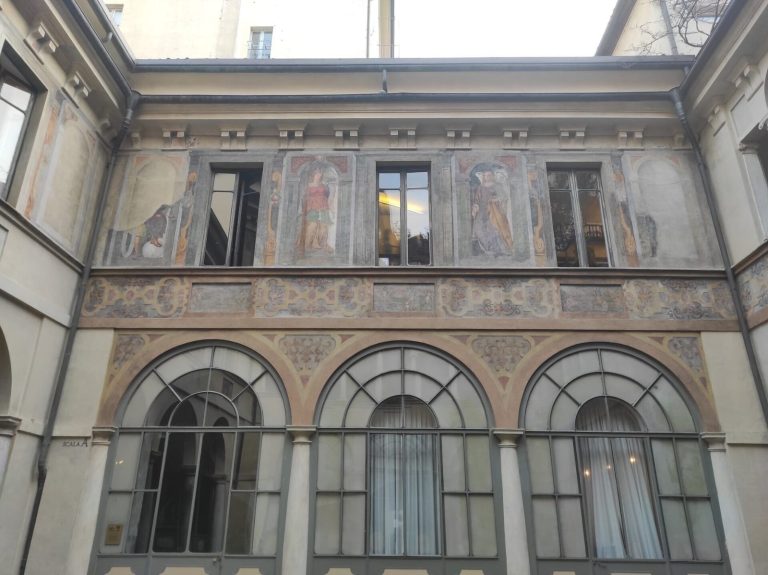
A covered walkway and an open-sided gallery run along two sides of the courtyard, which is used for parking. The circulation route faces the street, while rooms face inward in a C-shaped arrangement. Continuous galleries extend along each floor.
Bell decorations
Bell motifs appear in the window surrounds on the raised ground floor, on both façades. The decoration recalls the bells used to identify the hospital’s patients.
Chapel
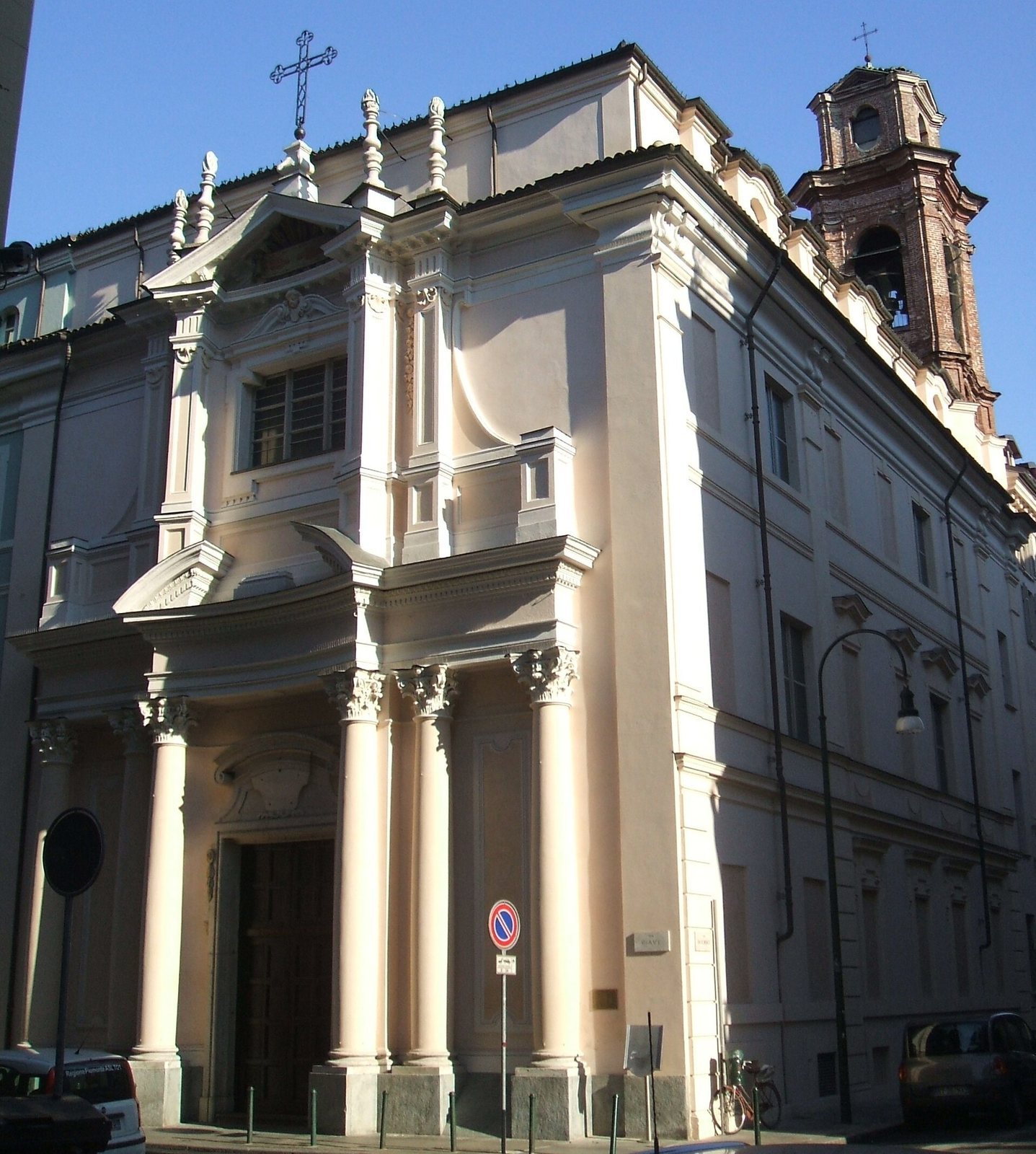
The hospital chapel was built in 1734 and formed the basis of the present Church of the Holy Shroud. At first, it could be entered only from the hospital. A separate entrance onto nearby Via San Domenico was added in 1764.