Parke’s Castle: A Fortified Manor House in County Leitrim
Site at a Glance
- Popularity
- Medium
- Country
- Ireland
- Primary era
- Early Modern
- Eras represented
- Early Modern, Modern
- Civilizations
- British, English, Irish
- Site type
- Military
- Remains
- Castle
On this page13 sections
History
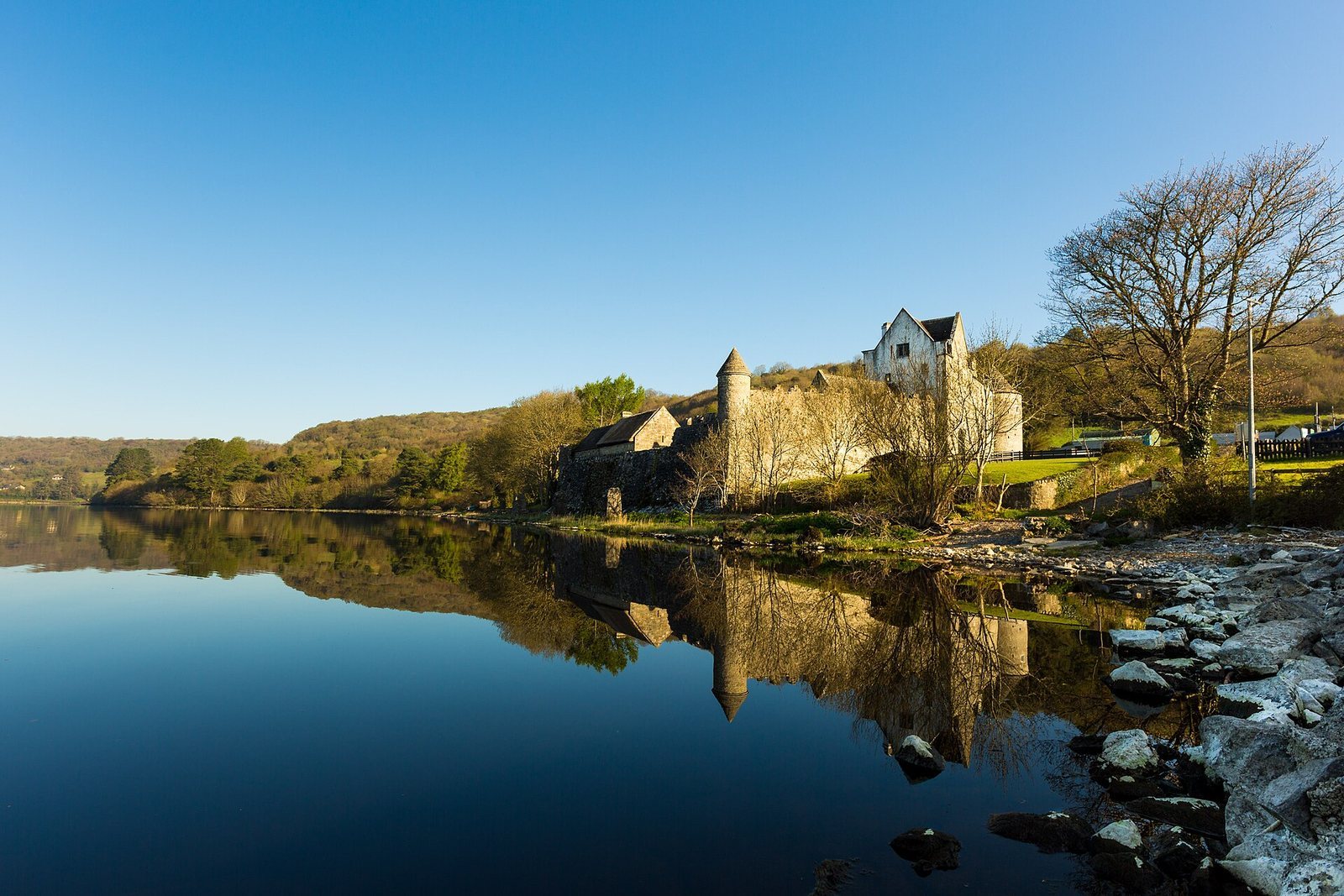
Parke’s Castle is a fortified manor house beside Lough Gill in County Leitrim, Ireland. English planter Robert Parke redeveloped an earlier O’Rourke stronghold here during the 1630s. The predecessor was a tower house, probably dating to the mid-16th century, and an O’Rourke castle at Newtowne is first recorded in 1546.
The O’Rourke stronghold
Brian O’Rourke became head of his family and Lord of West Breifne in 1566. During his conflict with English rule, he dismantled his castles at Newtowne and Dromahair in 1581 to keep them from English occupation. In 1588, after shipwreck survivors from the Spanish Armada, the fleet sent against England, reached Ireland, Brian sheltered about 80 of them. Spanish officer Francisco de Cuéllar stayed at the Newtowne tower and met Brian. Richard Bingham, the English governor of Connacht, planned an attack there, but Brian escaped.
Brian was later arrested in Scotland, sent to London, convicted of high treason and executed on 3 November 1591. The Crown then confiscated the O’Rourke lands.
Plantation and Parke’s rebuilding
The Plantation of Leitrim began in 1620. This settlement scheme transferred confiscated Gaelic Irish lands to English and Scottish colonists. Land at Newtowne was first granted to Sir William Irving and later passed to Sir John Spottiswood. The exact date Parke acquired the castle property is uncertain. In 1628 he received permission to hold a weekly market and two annual fairs at Newtowne. By then he also held a mortgage involving 1,000 acres associated with Con O’Rourke. Parke leased and redeveloped the site in the 1630s as part of the plantation of former O’Rourke lands.
Parke gained thousands of acres in Sligo and Leitrim after the Cromwellian conquest, Parliament’s mid-17th-century campaign in Ireland. The Act of Settlement redistributed land in its aftermath. Parke served as a Justice of the Peace and became an MP for Roscommon in 1641. His estate employed both Irish and English workers.
Rebellion and military occupation
During the Irish uprising of 1641, Parke attempted to remain neutral. In spring 1642, planter and military commander Sir Frederick Hamilton burned Newtowne village, suspecting Parke of helping the rebels. Their cattle had grazed near the castle’s fortified enclosure, and they had passed the site carrying provisions. Hamilton arrested Parke in July and took him, along with some of his soldiers, on a raid against Sligo. Parke was then held at Manorhamilton Castle for nearly two years. He was released after his father-in-law petitioned on his behalf.
Troops fighting for Parliament held Newtowne Castle in 1649 before handing it to Royalist forces, supporters of the monarchy, on 10 July. In May 1652 the Royalists surrendered the castle to Parliamentarian troops led by Sir Charles Coote. Whether Parke lived there during either occupation is uncertain, but he appears to have returned after this period and resumed his public career. He served as Leitrim’s High Sheriff, a senior county official, in 1656 and 1668.
Abandonment and archaeological work
Parke died in autumn 1671. The castle passed to the Gore family through his surviving daughter Ann, who was married to Sir Francis Gore, and was abandoned soon afterward. Protestant forces briefly garrisoned it in 1688 during the Williamite Wars, conflicts over succession to the English and Irish crowns in the late 17th century. The manor house then remained unoccupied for close to two centuries, while local people used the fortified enclosure as a farmyard and for stabling into the early 20th century.
The Irish Free State acquired the property in 1935, and it remains in State care. Excavations began in the early 1970s and continued for four seasons, revealing the earlier tower house beneath the courtyard and yielding more than 1,000 objects from the 16th to 19th centuries. Finds from the 18th and 19th centuries point to later use of the site. The Office of Public Works restored the castle, which is now a National Monument.
Remains
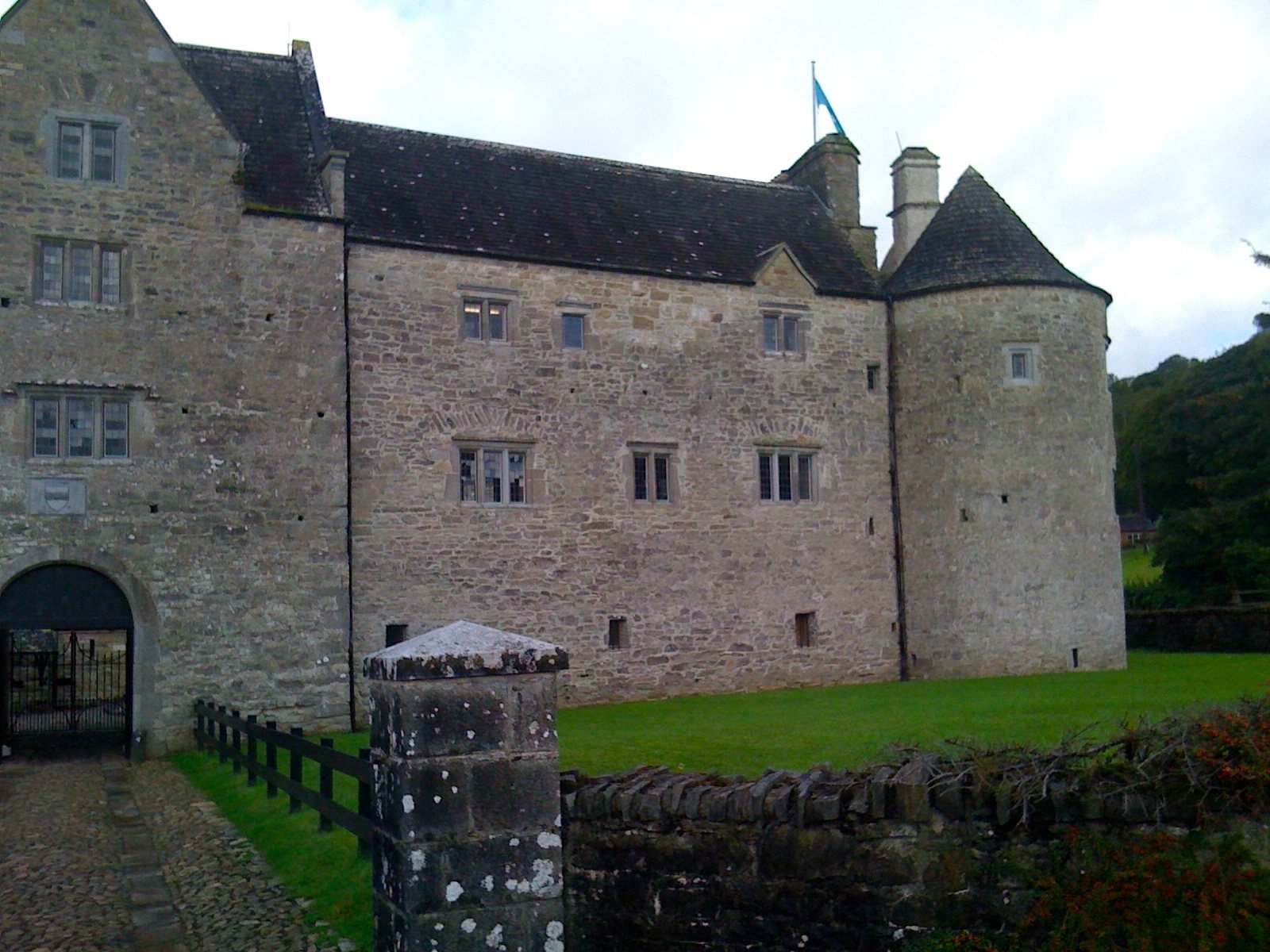
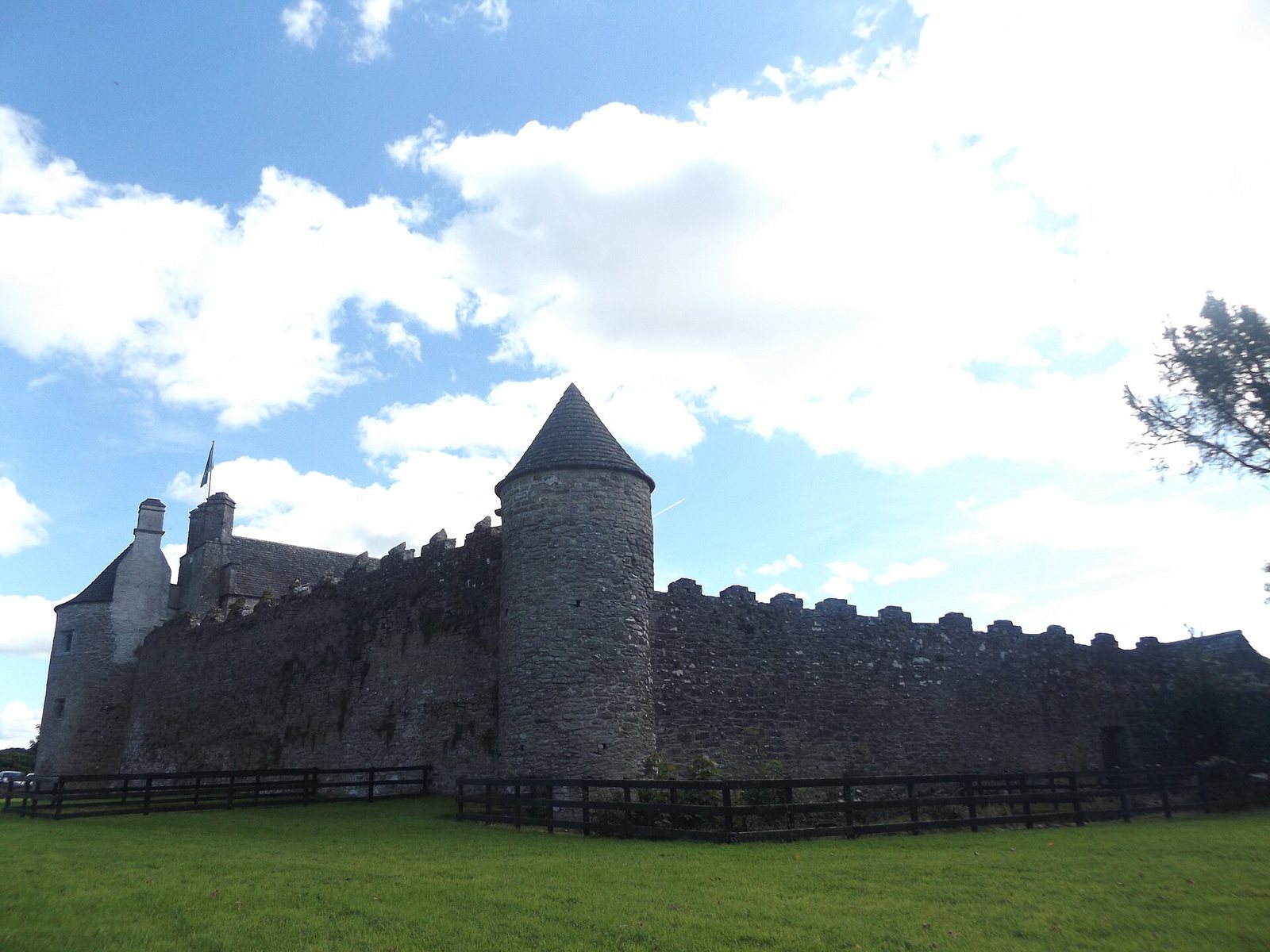
The complex is organized around a fortified courtyard, with a residential building and defensive features set within its perimeter. Much of the earlier walling was reused and strengthened during the 17th-century rebuilding.
Enclosure and defenses
The enclosure has five sides. A gatehouse was built first, followed by round defensive towers at the northwest and northeast corners. One guards the northern wall, while the other protects the approach to the main building. Two smaller sentry towers and a small secondary gate, also used as a water gate, were added to the southern wall. The wall tops were strengthened with raised sections and openings for firearms.
Manor house and courtyard
Manor house
The three-storey manor house occupies the eastern side of the enclosure. Its rebuilding included new chimneys and windows. During restoration, wooden wall panelling was fitted on the upper floors of both the manor house and gatehouse. The restored internal roofs are made of oak, using mortise-and-tenon joints, in which projecting wood pieces fit into matching slots.
Courtyard features
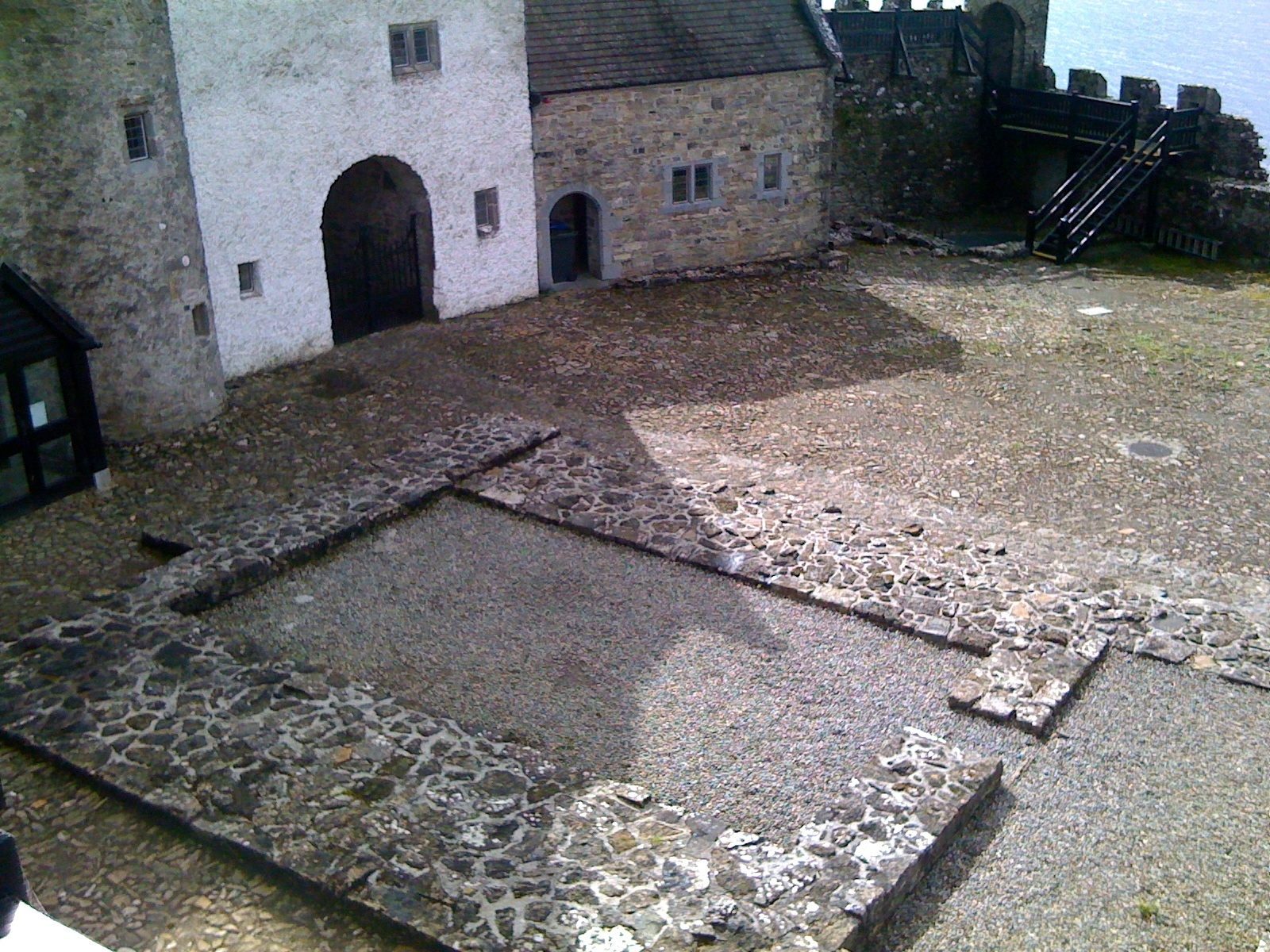
Stone buildings and a covered well stand within the courtyard. Its cobbled surface was laid during Parke’s rebuilding, covering traces of the earlier Gaelic castle. Excavation exposed the foundations of O’Rourke’s tower house beneath the paving, and these can now be viewed. Foundations of other courtyard features include a well, a possible metalworking area and a mortar pit. Excavations also recovered substantial quantities of animal remains.
Lake and secondary buildings
Waterfront and moat
In the 17th century, Lough Gill’s water stood about three metres above its present level, bringing the lake close to the castle walls. The lake was linked to the moat around the enclosure, and a rear gate leads toward the water. Excavated sections of the moat outside the enclosure are fenced off.
Reconstructed structures
A smithy or forge has been reconstructed beside the southern wall, and the 19th-century stables have been rebuilt along the western wall. A sweathouse, a small heated structure used to induce sweating, was reconstructed at the far end of the lawn. A 1791 illustration by Sir Thomas Cocking depicts the castle in a ruinous condition.