Monastery of Saint George at Asprovalta: A Former Monastery with an Active Church
Site at a Glance
- Popularity
- Very Low
- Country
- Greece
- Primary era
- Early Modern
- Eras represented
- Early Modern
- Civilizations
- Ottoman
- Site type
- Religious
- Remains
- Church
History
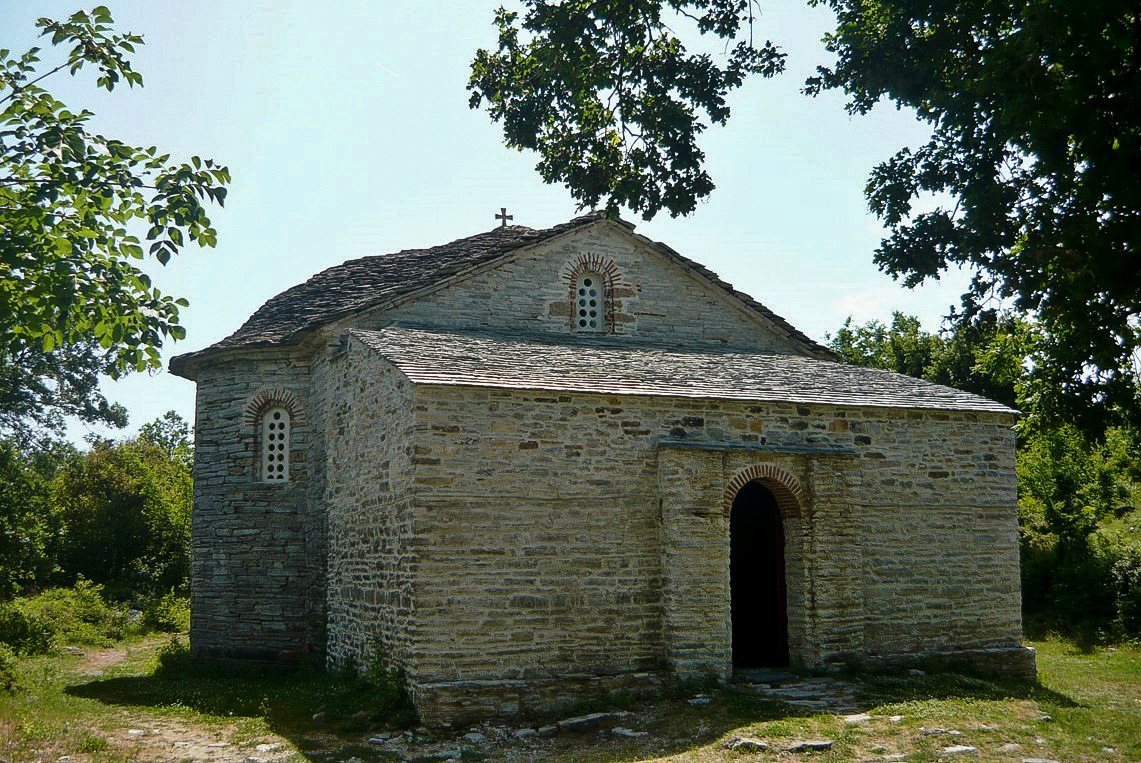
The Monastery of Saint George at Asprovalta is a former monastery in Greece. Its church follows an Athonite architectural type, a form associated with Mount Athos and its monastic traditions. The monastery’s architectural and painted features place it in the second half of the sixteenth century, although written sources do not record its foundation.
The monastery has often been mistakenly identified with a Saint George dependency mentioned in a decree issued in 1259 by Byzantine emperor Michael VIII Palaiologos, who ruled from 1259 to 1282. That reference does not establish the foundation date of this monastery.
The monastery was probably subordinate to Esphigmenou Monastery on Mount Athos, since the surrounding area belonged to Esphigmenou in the post-Byzantine period. Today, it is affiliated with the Metropolis of Serres and Nigrita, an Eastern Orthodox church jurisdiction within the Ecumenical Patriarchate, based in Constantinople, and with the Asprovalta Archpriesthood, a church subdivision overseen by an archpriest. The monastery is no longer functioning as a monastery, but its church remains active. The church was declared a cultural monument in 1979.
Remains
The church is the sole surviving part of the monastery. It stands high on Orsova (Kerdylio) Mountain, several kilometres northwest of Asprovalta, overlooking the Strymonian, or Orfan, Gulf. Most of its painted decoration is damaged. Among the surviving frescoes is the Lamentation of Christ, a scene showing mourners grieving over Christ’s body after his crucifixion. The surviving paintings are stylistically close to works by Antony, a painter active on Mount Athos and in western Aegean Macedonia in the late sixteenth century.