Church of the Assumption of Mary: Parish Church of Grumello de’ Zanchi, Italy
Site at a Glance
- Popularity
- Very Low
- Country
- Italy
- Primary era
- Modern
- Eras represented
- Modern
- Civilizations
- Italian
- Site type
- Religious
- Remains
- Church
On this page10 sections
History
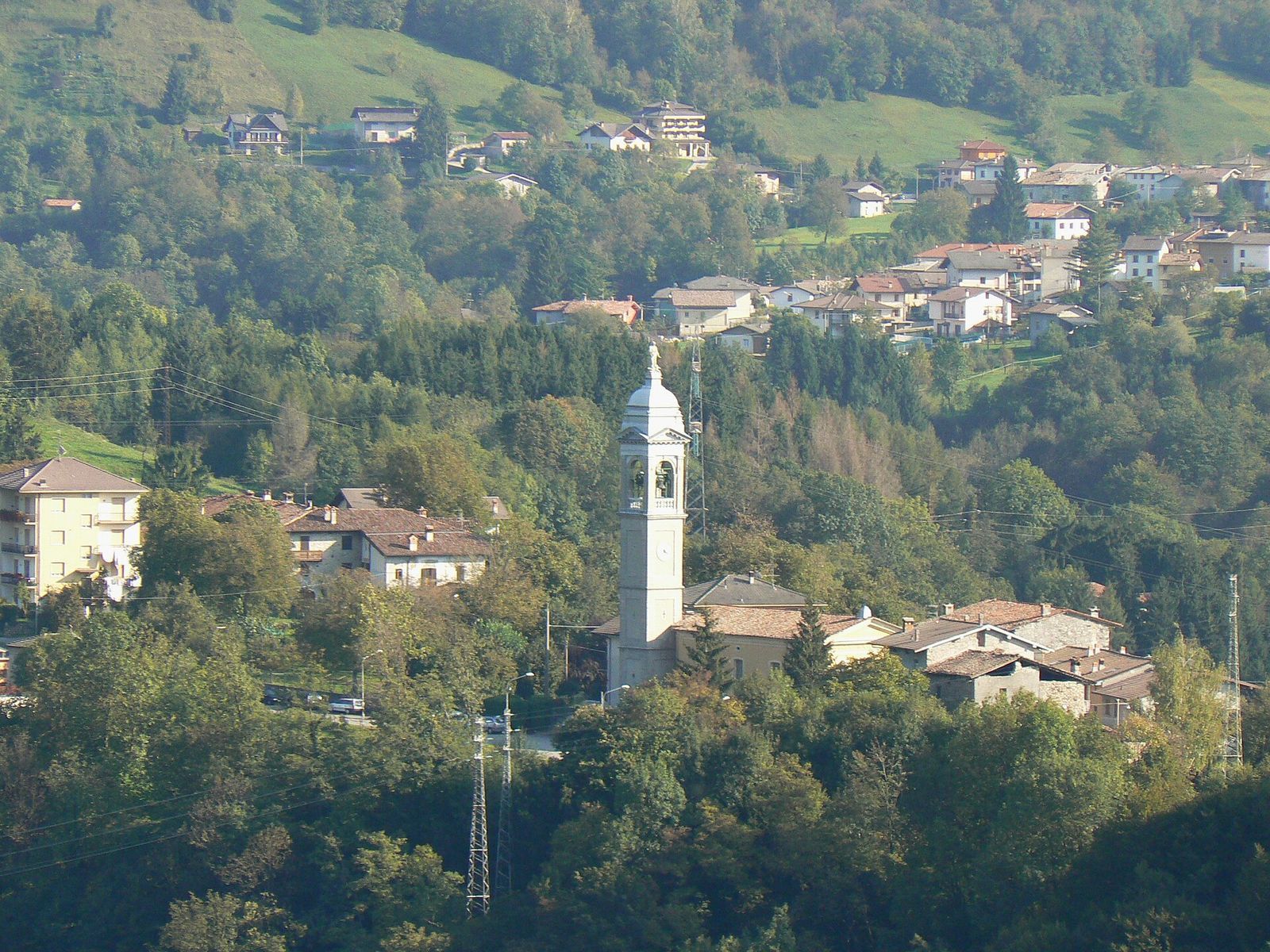
The Church of the Assumption of Mary is the principal Roman Catholic church in Grumello de’ Zanchi, a hamlet of Zogno in Italy. Dedicated to the Assumption, the Catholic belief that Mary was taken bodily into heaven at the end of her earthly life, it served a community whose church and parish status developed over several centuries.
Parish formation
Grumello de’ Zanchi belonged to the territory of Sorisole and the episcopal fief of Bergamo. In 1249, its church separated from the church of Poscante, although the local community remained part of the same vicinia, or neighborhood body, until the fifteenth century. The church then became nullius plebis, meaning it stood outside the jurisdiction of a parish church and was subject to the diocesan curia. A consecration is dated to 1448. Bishop Giovanni Paolo Dolfin’s pastoral report gives 1453 as the year it became a parish, and that year also appears on the side entrance portal.
Ecclesiastical administration, 16th–18th centuries
On 24 September 1575, Carlo Borromeo, Archbishop of Milan and later a saint, visited the church. It then belonged to the ecclesiastical district of Seriate and had separated from that of Poscante. The separation brought it an annual income, but it had no parish priest of its own and remained subject to the diocesan curia. Parish appointments were controlled by the bishop of Bergamo; priests without a salary required confirmation every six months.
A later visitation by Gregorio Barbarigo, also later canonized, places the church in the rural vicariate of Santa Croce, a subdivision of a diocese. Local residents administered its income, and a parish priest served with assistance from a cleric. Lay trustees managed the local devotional associations dedicated to the Rosary and the Blessed Sacrament.
A 1666 listing names the church under the invocation of the Assumption of the Blessed Virgin Mary. The devotional groups, then called schools, cared for the high altar and their own altar, respectively. The church also had an association for Christian Doctrine, while the district included the charitable institution of the Misericordia Maggiore. In 1673 the church entered the vicariate of Villa d’Almè. Bishop Dolfin visited again on 29 June 1780, when the two devotional associations were noted.
Expansion and later changes
In 1862, the church was judged too small for its needs and enlarged at the sanctuary end. Bishop Pietro Luigi Speranza consecrated the new high altar on 12 August 1865. In 1901, Bishop Gaetano Camillo Guindani visited and consecrated new altars. Twentieth-century work included maintenance and modernization, among it the installation of an altar facing the congregation to meet liturgical requirements. By a decree of 27 May 1979, Bishop Giulio Oggioni assigned the parish to the vicariate of Brembilla-Zogno.
Remains
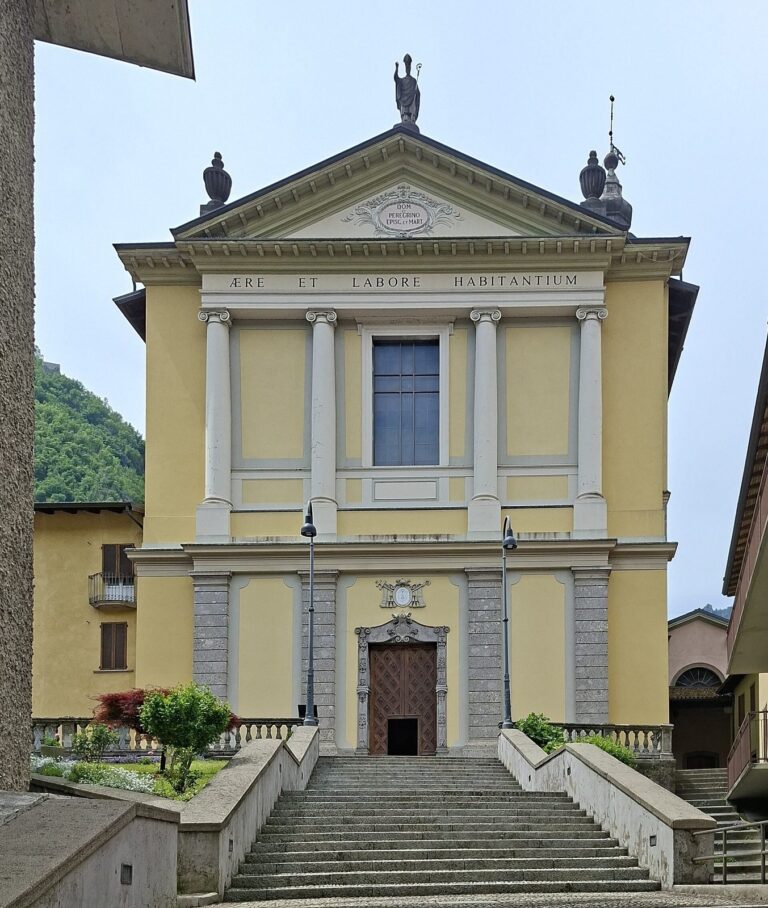
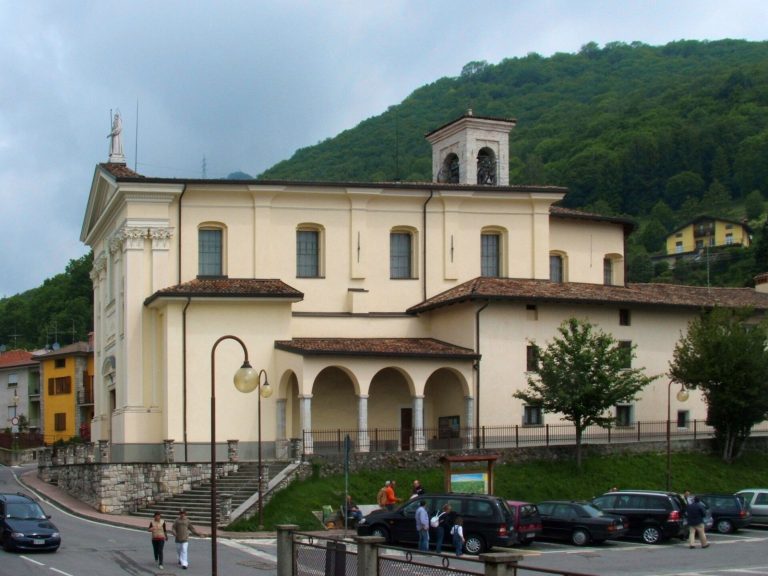
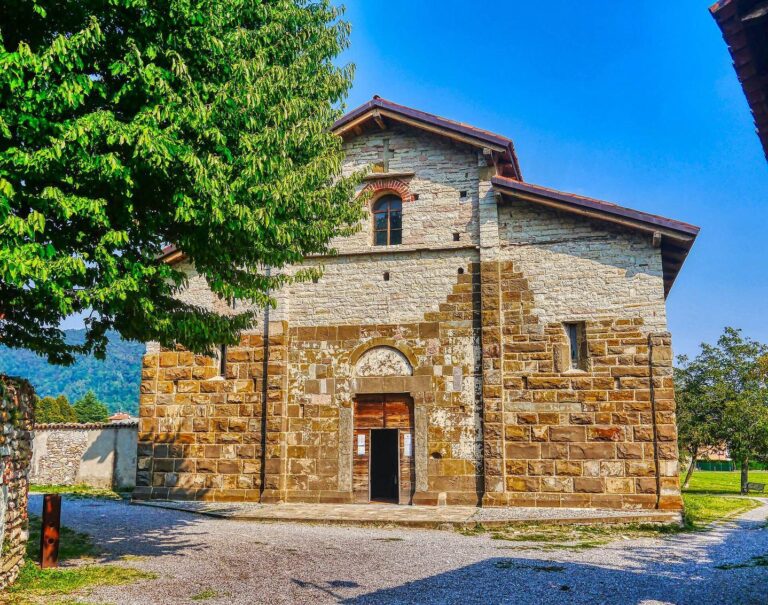
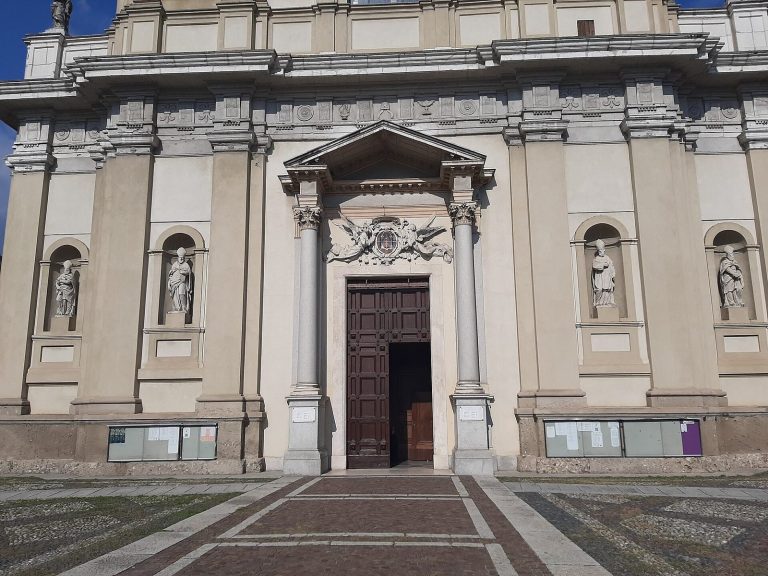
The church stands at the center of the locality and follows the traditional liturgical orientation. Its single-nave plan is expressed in a neoclassical exterior, with Baroque features at the central entrance. A forecourt paved with river cobbles lies before the facade, while a columned portico extends along the left side.
Exterior
Pilasters, shallow supports resembling columns, divide the facade and rise from bases to simple capitals. They support the horizontal structure above them and a triangular pediment. At the main entrance, pilasters and a lintel frame a molded, interrupted pediment, crowned by a central element bearing a bishop’s coat of arms. A molded window above the doorway lights the nave. Four niches at the sides contain torch-shaped ornaments made of bush-hammered cement. Along the church’s left side, stone columns divide the portico into ten bays, each formed by a round arch.
Interior
Nave and chapels
The nave, the main worship space, is divided into five bays, or sections between supports, by stuccoed pilasters decorated with marble. A high marble base runs along its walls. Corinthian capitals, decorated with acanthus leaves, support the entablature and cornice; a barrel vault, a continuous arched ceiling, rises above them. The baptismal font occupies the first bay on the left, opposite a large canvas depicting the Deposition of Mary. The third bay contains the side entrance to the portico. In the fourth bay, one chapel is dedicated to the Madonna and Saint Joseph, opposite a chapel of Saint Anthony. Large paintings of Saint Paul and Saint Peter occupy the fifth bay.
Presbytery and altars
Three steps lead beneath a triumphal arch into the presbytery, the area around the altar. Its ceiling is a circular cup-shaped vault, and the choir at its far end is covered by a conch vault, or half-dome. The high altar consecrated in 1865 combines marble from Florence, French red marble, and Bardiglio, a blue-gray Italian marble. The later altars are dedicated to the Holy Family and Saint Anthony. Their altar tables contain relics of Saints Clement, Felix, and Pellegrino.
Paintings and sacristy
The church houses a multi-panel altarpiece, or polyptych, by Venetian Renaissance painter Vittore Carpaccio. Executed in 1496, it was commissioned by migrants living in Venetian territory. The painting on the high altar, by Leandro Bassano, depicts the Madonna of the Rosary. A wall painting by Vincenzo Angelo Orelli survives on the vaulted ceiling of the sacristy, the room used to store liturgical objects and vestments.