Church of the Dormition of the Theotokos in Veshnyaki: A Russian Orthodox Church
Site at a Glance
- Popularity
- High
- Country
- Russia
- Primary era
- Early Modern
- Eras represented
- Early Modern, Modern
- Civilizations
- Russian
- Site type
- Religious
- Remains
- Church
On this page9 sections
History
The Church of the Dormition of the Theotokos in Veshnyaki, Russia, is a Russian Orthodox church built by Fyodor Ivanovich Sheremetev in 1644–1646 as the fulfillment of a vow. The Dormition commemorates Mary’s death, and Theotokos means “God-bearer.” Veshnyakovo, an estate associated with the Sheremetev family and neighboring Kuskovo, appears in records from the sixteenth century. Sheremetev was a senior statesman who retired in 1646 and entered monastic life at Kirillo-Belozersky Monastery in 1649, taking the name Feodosy.
Seventeenth-century foundations
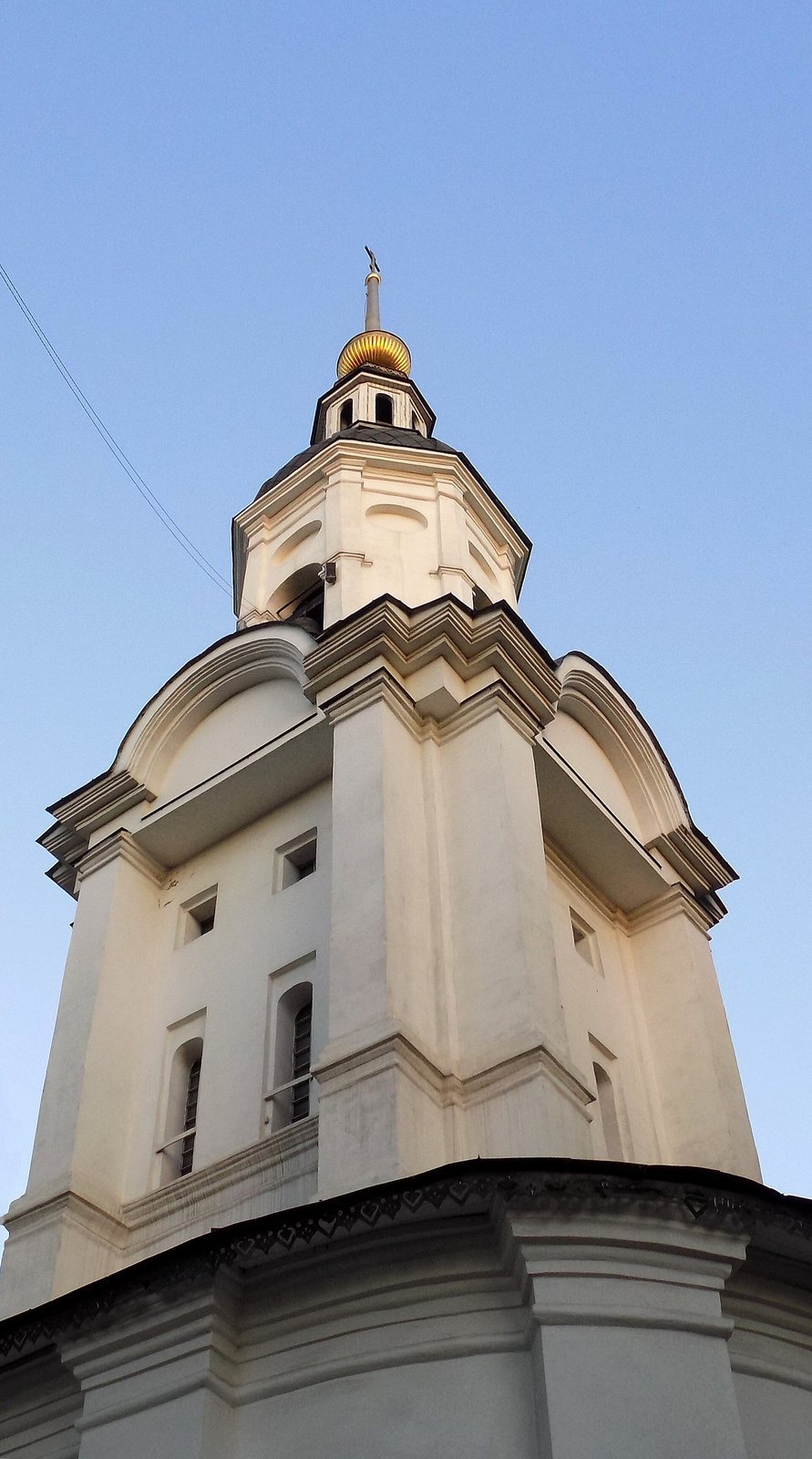
Several years after the church’s main construction, symmetrical side chapels were planned. In 1655, Patriarch Nikon’s building charter specified rounded rather than pointed domes for them. Nikon, head of the Russian Orthodox Church, opposed tent-roofed churches and directed that new churches should have one, three, or five domes. A bell tower was added to the complex late in the seventeenth century.
Estate connections and later repairs
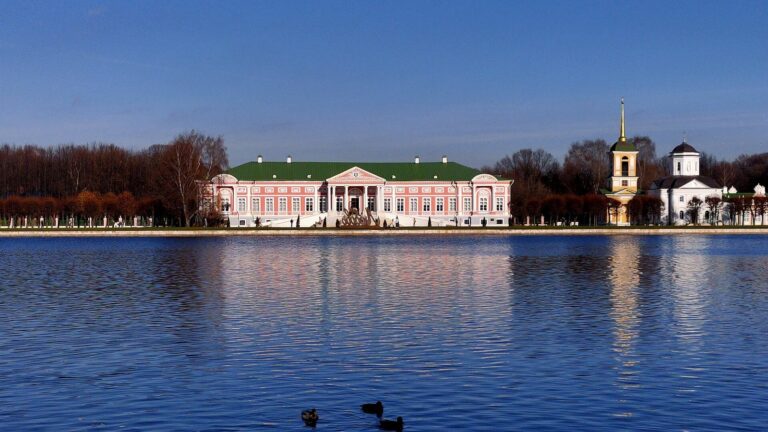
In 1732–1734, the church was replastered and painted burgundy. In 1734, during Prince Alexei Mikhailovich Cherkassky’s tenure, the bell tower was raised and given a spire with permission from the Holy Synod. Cherkassky’s daughter, Varvara, married Count Pyotr Borisovich Sheremetev in 1743, bringing Veshnyakovo back to the Sheremetev family as her dowry. As Pyotr began developing the Kuskovo estate in the 1740s and 1750s, one of its main avenues ended at a square centered on the church, then known as the Veshnyakovo Church of the Resurrection. The bell tower gained a high spire in 1759, and a full church repair was completed in 1761. During Count Dmitry Nikolayevich Sheremetev’s ownership, the upper church’s central icon screen was restored.
Nineteenth-century restoration and growth
The church was repainted throughout and reconsecrated in 1848. The Ryazan railway line, built in 1880, helped Veshnyakovo grow gradually into a large suburban settlement. That year the upper church underwent major restoration and was reconsecrated; the lower church followed in 1888.
Persecution, closure, and renewed worship
On 22 May 1922, Bolshevik authorities removed many church treasures, including chalices, vessels, a tabernacle, altar crosses, and a Gospel. Archpriest Ioann Yanushev, a senior Orthodox priest, served there from 1935 until his arrest on 19 November 1937. He was executed at the Butovo firing range near Moscow on 8 December that year. In 2002, he was canonized for veneration throughout the Russian Orthodox Church as one of the New Martyrs of Russia, Christians recognized as martyrs for deaths during periods of persecution.
The church closed in 1940 and was used during the Second World War as a military warehouse and repair workshops. After the war, authorities allowed it to reopen under the name Church of the Resurrection of the Word, a dedication commemorating the Church of the Resurrection in Jerusalem. Services resumed in the lower Dormition church on 25 January 1947, the feast of Saint Tatiana. Some old icons had been saved, while others stored in the bell tower were badly damaged by damp and temperature changes. In 1948, the upper church’s Saint Nicholas chapel was restored and its other chapel was dedicated to the Prophet Elijah. The previously unheated upper church was adapted for winter worship.
Recent repairs and status
A repair campaign begun in 2003 under rector Nikon (Mironov) strengthened the foundations, covered the roof with copper, renewed the church paintings, and added a newly cast set of bells. The church belongs to the Russian Orthodox Church’s Moscow Diocese, an area overseen by a bishop, and Nativity Deanery, a grouping of parishes. It is a federal-level cultural heritage monument of the Russian Federation.
Remains
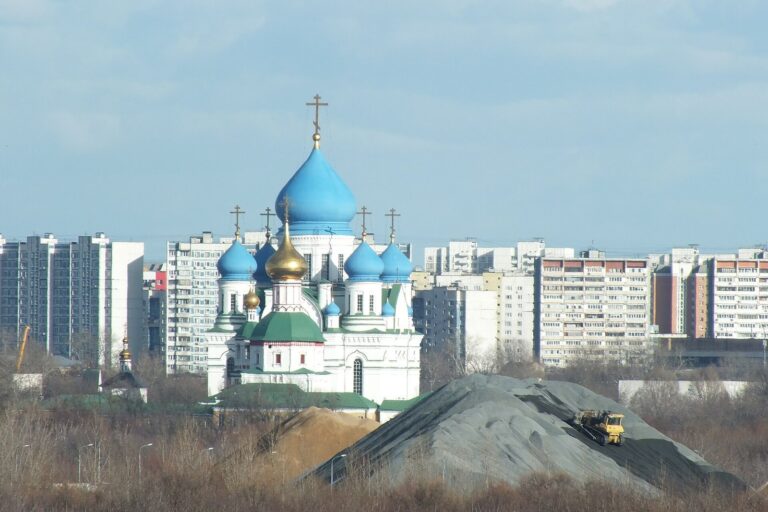
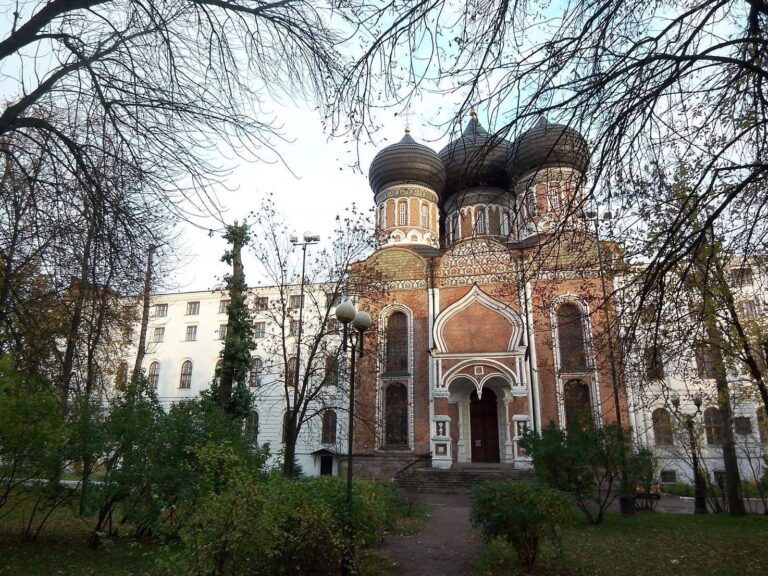
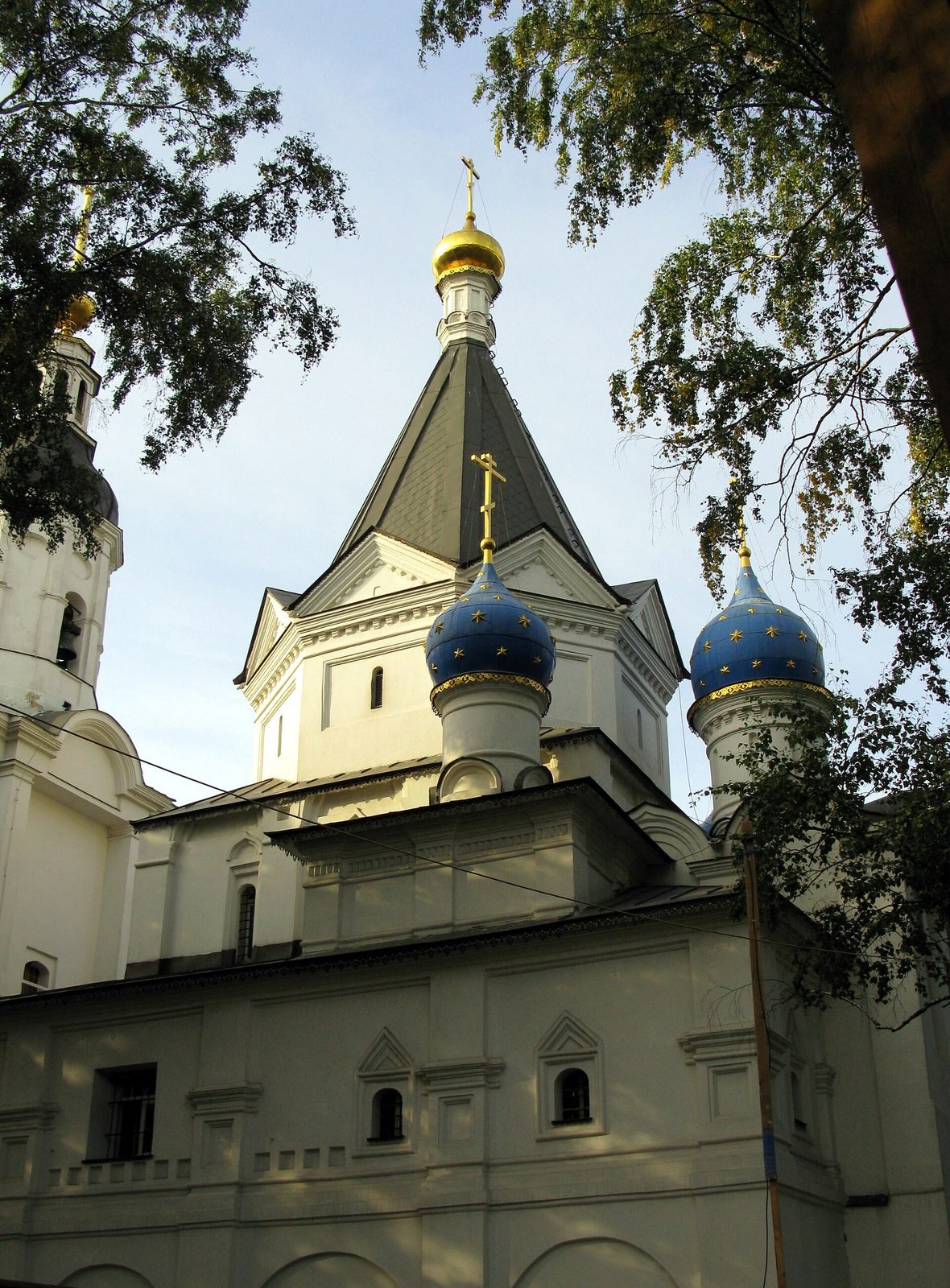
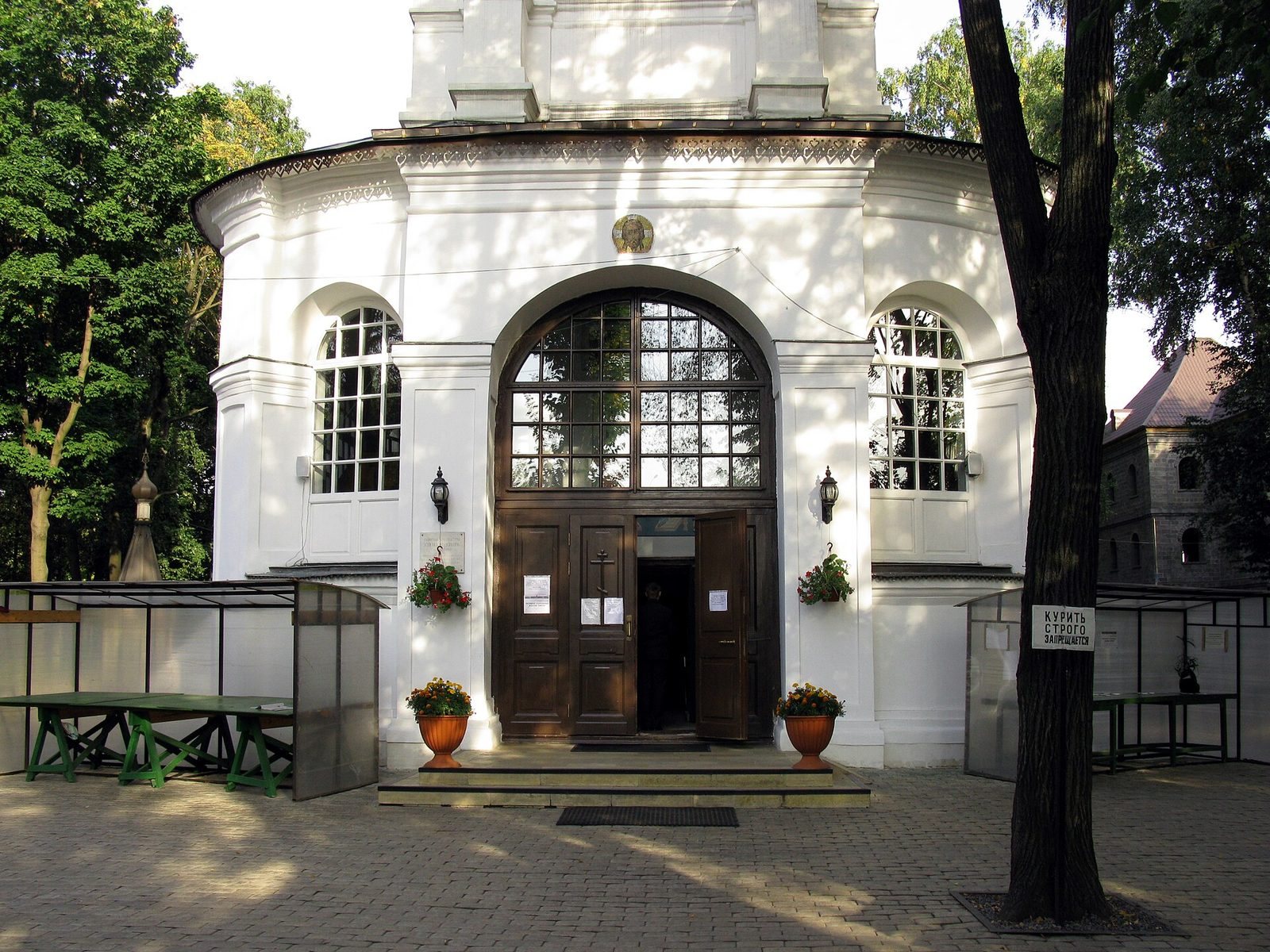
The church stands on a high basement. An originally open gallery ran around three sides of the building. Its main structure and symmetrical side chapels have steep, tent-shaped roofs in place of conventional domes.
Church levels and furnishings
The lower church’s main altar is dedicated to the Dormition, with a side chapel for Sergius of Radonezh. Its white Italian-marble iconostasis, a screen of icons separating the sanctuary from the worship space, was installed in 1888. The upper church’s main altar is dedicated to the Resurrection of the Word. Its south chapel is dedicated to Nicholas the Wonderworker, its north chapel to the Prophet Elijah, and another chapel to Saint Tatiana. A section of the exterior wall has nine layers of ochre and three layers of oil paint; recorded colors include burgundy, red, emerald, and dark and light yellow.
Bell tower and parish grounds
The bell tower forms part of the church complex. After repairs, a cup with a spire was installed at its top in 1951. An old parish cemetery surrounds the church. Those buried there included residents of Kuskovo, Veshnyakovo, Vykhino, and Vyazovka, as well as people from the later local community.