Palazzo Medici-Soderini: A Florentine Palace and Former Hotel
Site at a Glance
- Popularity
- Low
- Country
- Italy
- Primary era
- Early Modern
- Eras represented
- Early Modern, Modern
- Civilizations
- Grand Duchy of Tuscany
- Site type
- Domestic
- Remains
- Elite Residence
On this page10 sections
History
The Palazzo Medici-Soderini is a palace in central Florence, Italy, probably first built in the early seventeenth century by a branch of the Medici family. It later became one of Florence’s most highly regarded hotels, welcoming travelers and distinguished guests during the nineteenth century.
Early ownership and enlargement
The palace occupies a site where houses belonging to the Soderini, Di Nello, and other families had stood. In 1728, Tommaso Gaetano de’ Medici acquired three houses owned by the Catani. Around 1765, those properties were joined to the existing building, substantially enlarging it.
The nineteenth-century hotel
Antonio Schneiderff bought the palace in 1802 and converted it into an inn in 1805. He acquired adjoining properties extending as far as Piazza Nazario Sauro and reorganized the interiors for hotel use. The establishment was divided into apartments and quarters, with roughly 180 rooms and halls, perhaps more. During the first half of the nineteenth century it ranked among Florence’s most highly regarded hotels. A guide published in 1845 called it one of Europe’s first hotels.
Guests included German composer Felix Mendelssohn Bartholdy, French novelist Stendhal, British writer and art critic John Ruskin, and writers Anna Brownell Jameson and Harriet Campbell. Johann Wolfgang Goethe may also have stayed there. The hotel’s address appears beside the names of Charles John Gardiner, Earl of Blessington; American politician and writer Richard Henry Wilde; British historian and politician Thomas Babington Macaulay; and American sculptor Benjamin Paul Akers in the membership register of the Florentine Scientific-Literary Cabinet G.P. Vieusseux, a cultural institution and reading society. Akers is listed for 1851 to 1854.
Later uses
Ownership passed to the Clark family and then to Madame Molini, Mrs. Clark’s sister. In 1865, the palace passed to Molini’s daughter, Madame Barbensi. The building continued as a hotel into the early twentieth century under the name Hotel Clark Molini Barbensi. American writer Constance Fenimore Cooper stayed there in 1886.
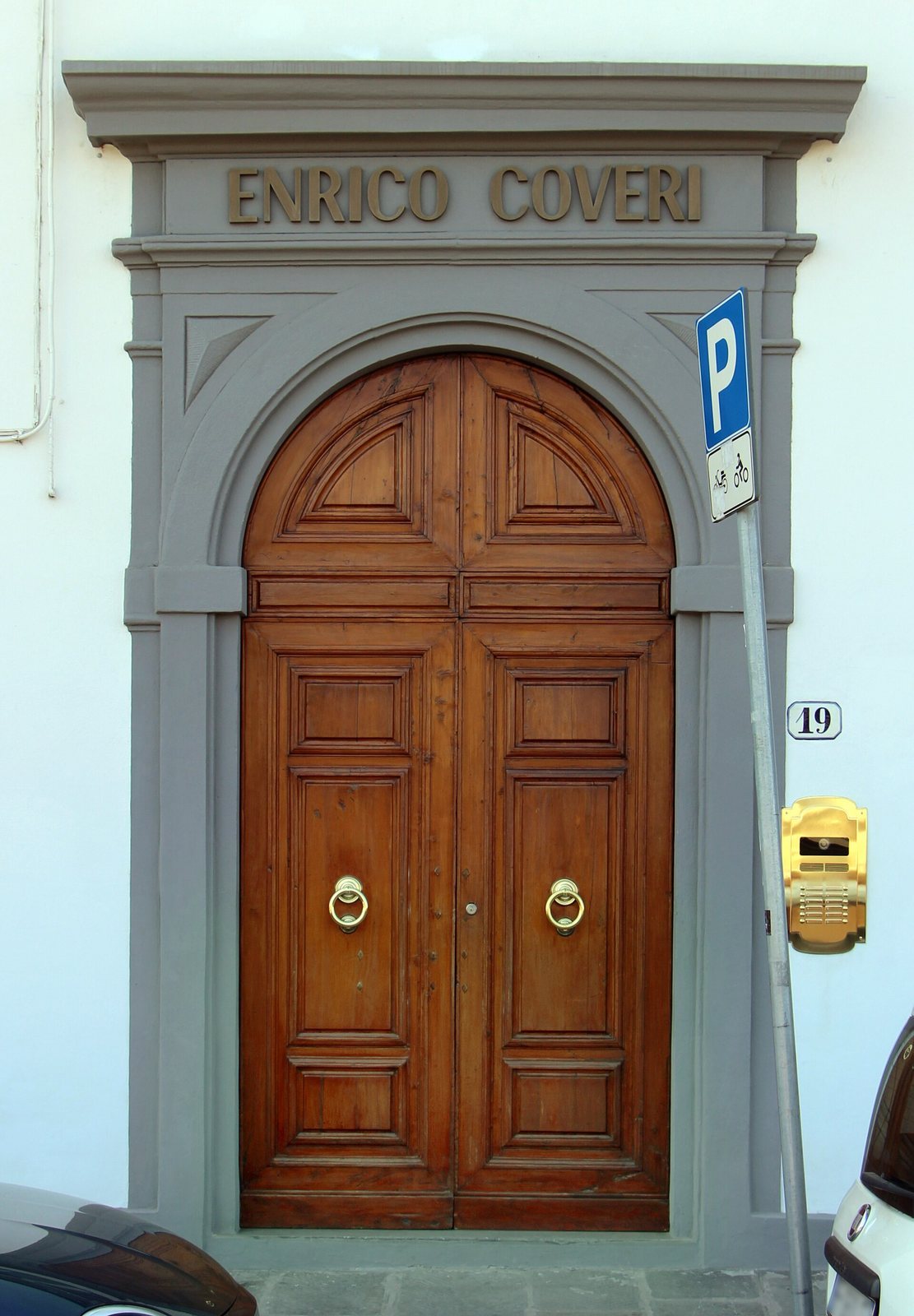
After its hotel years, the building housed the headquarters of the Provincial Union of Fascist Industrial Syndicates. Today, part of the palace is occupied by the Enrico Coveri fashion company, while the remainder contains offices and private residences.
Remains
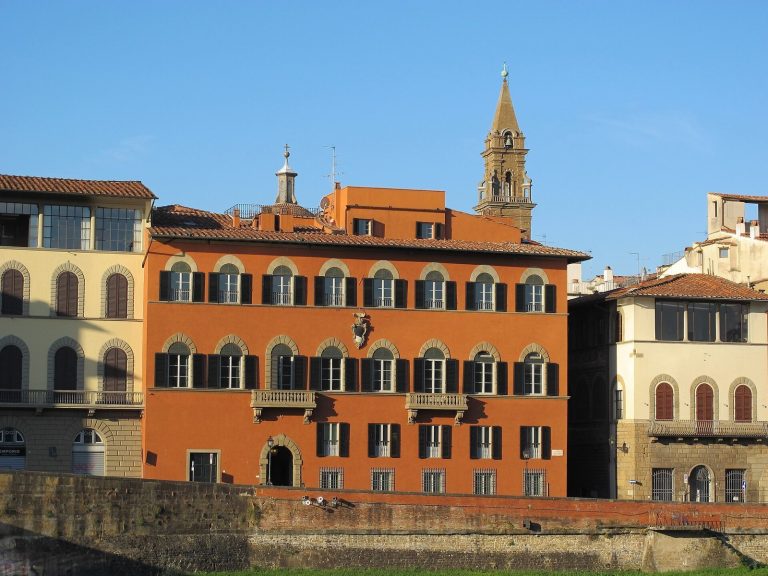
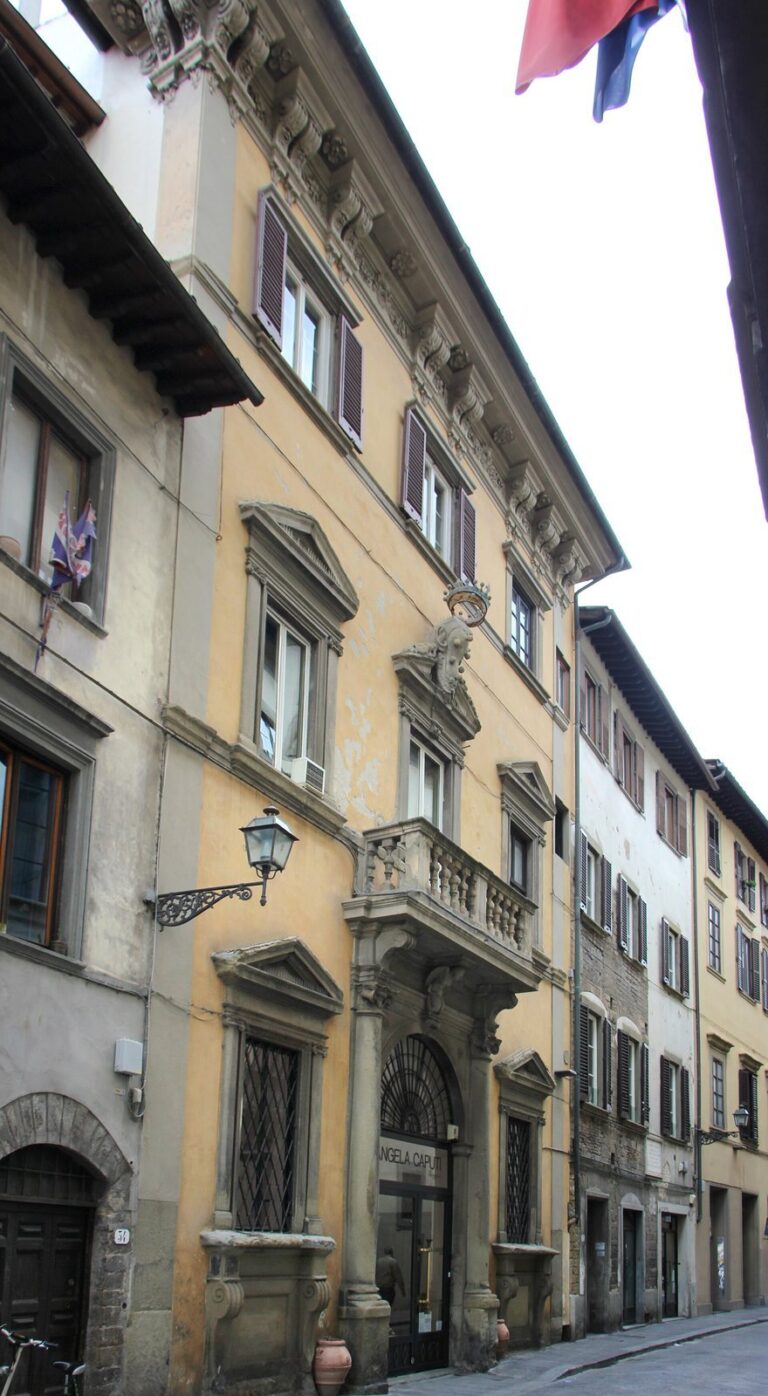
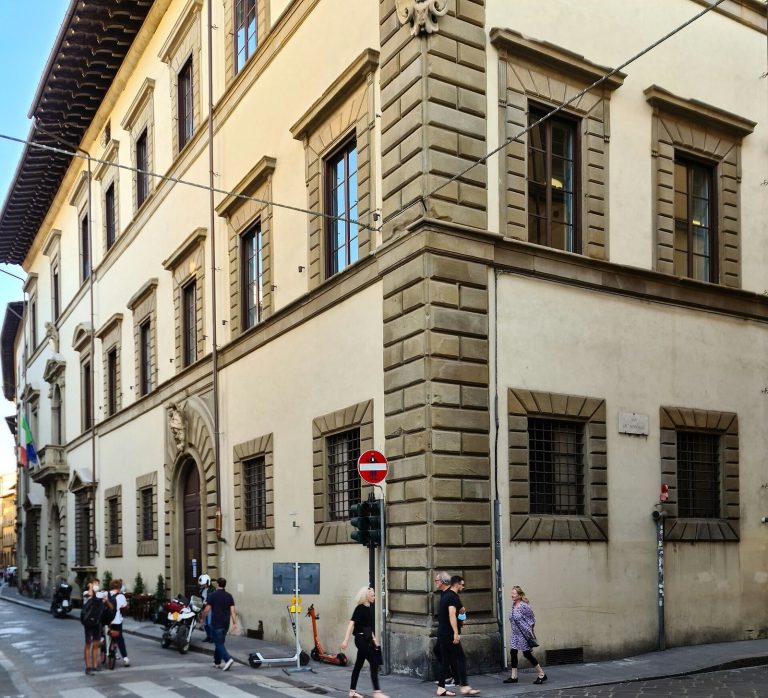
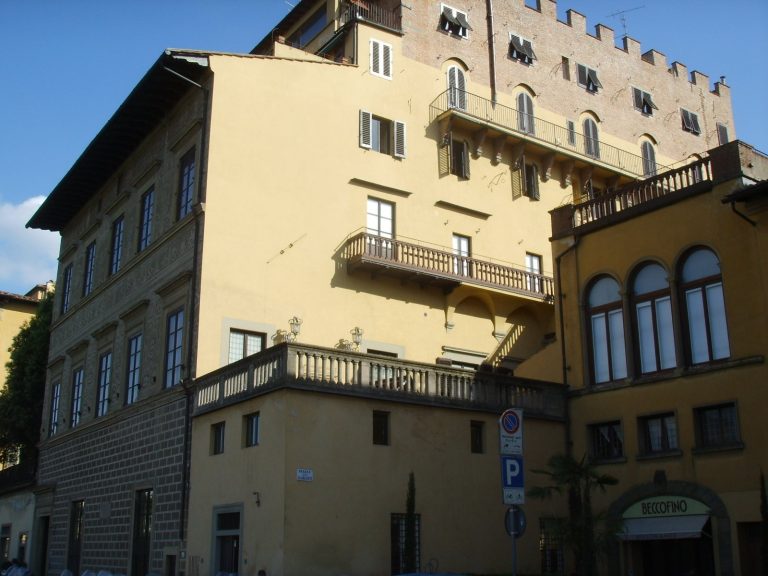
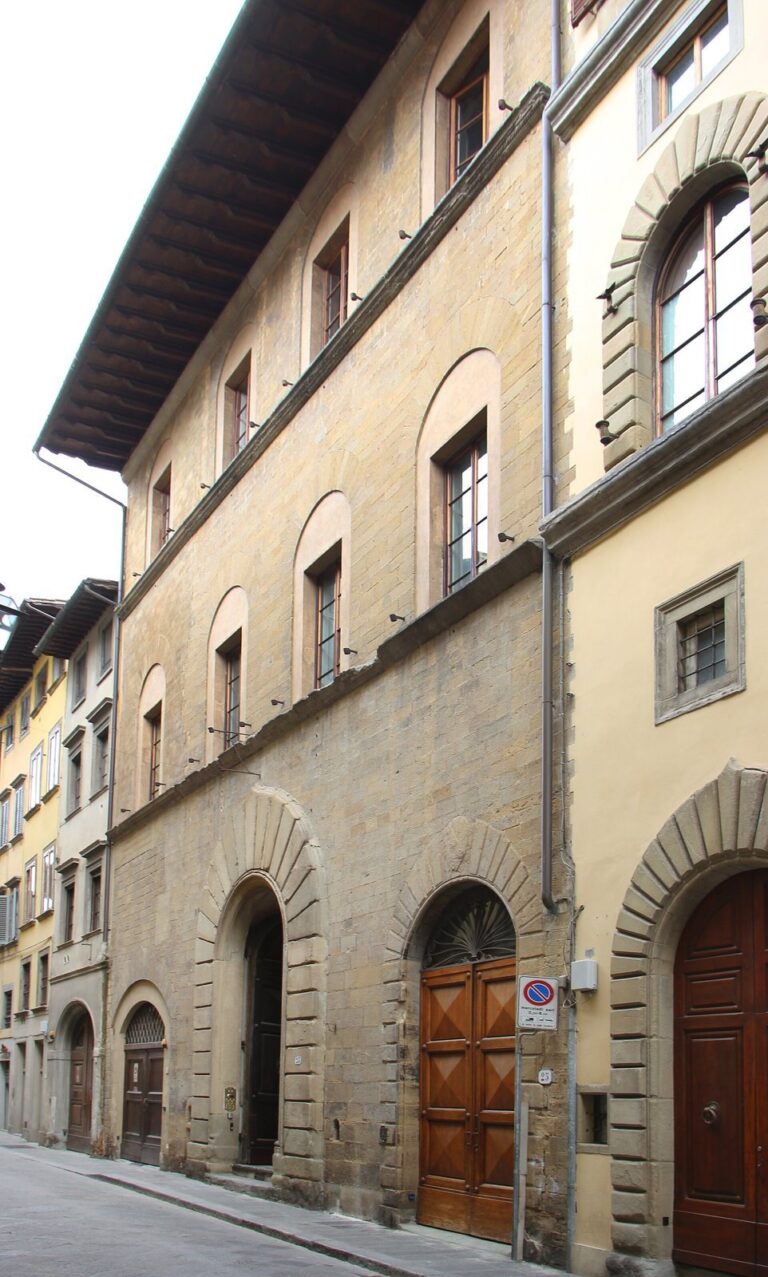
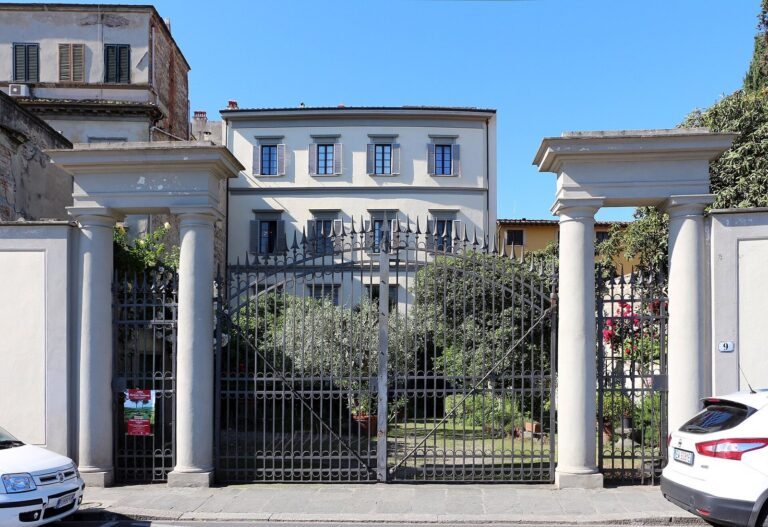
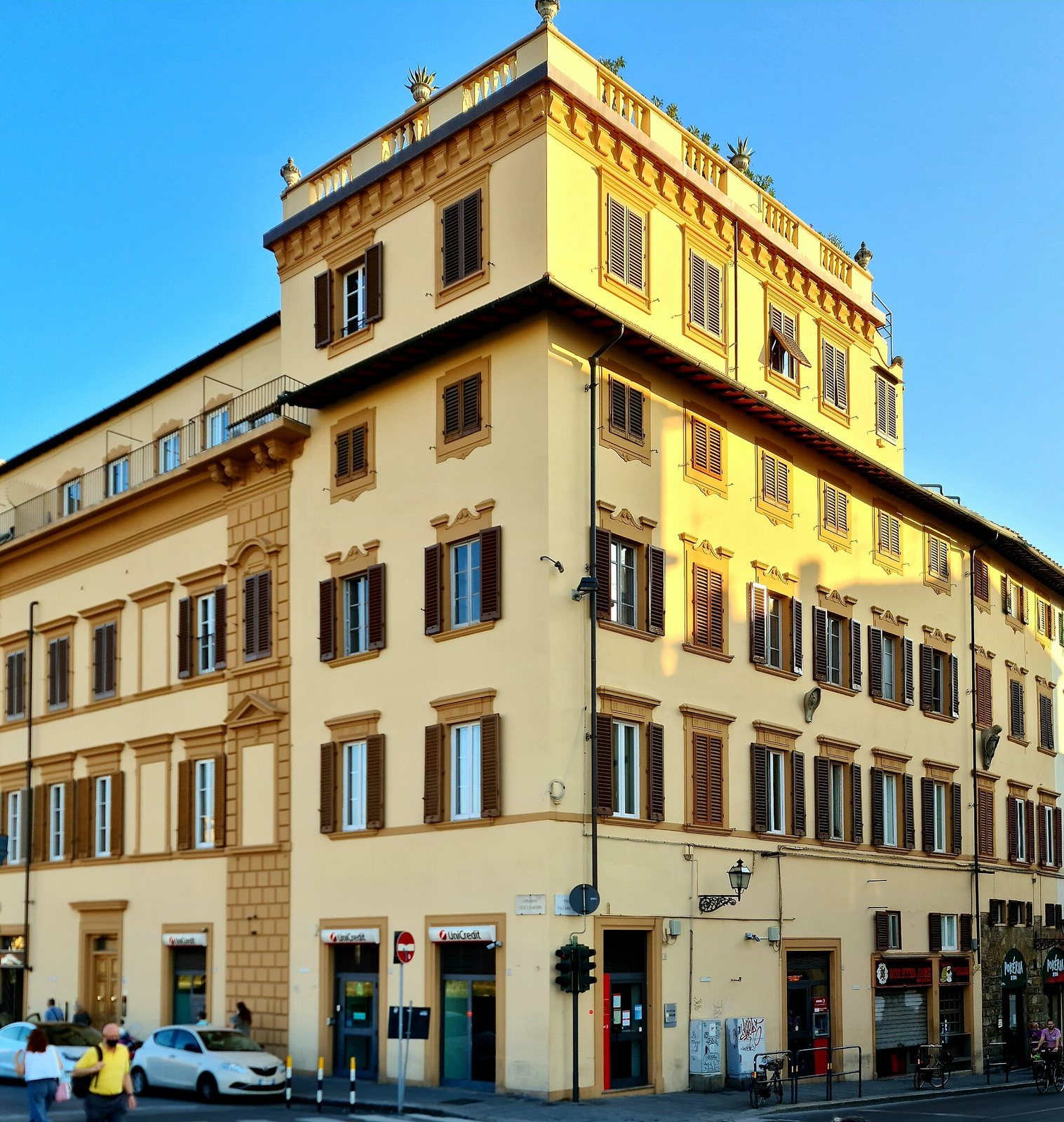
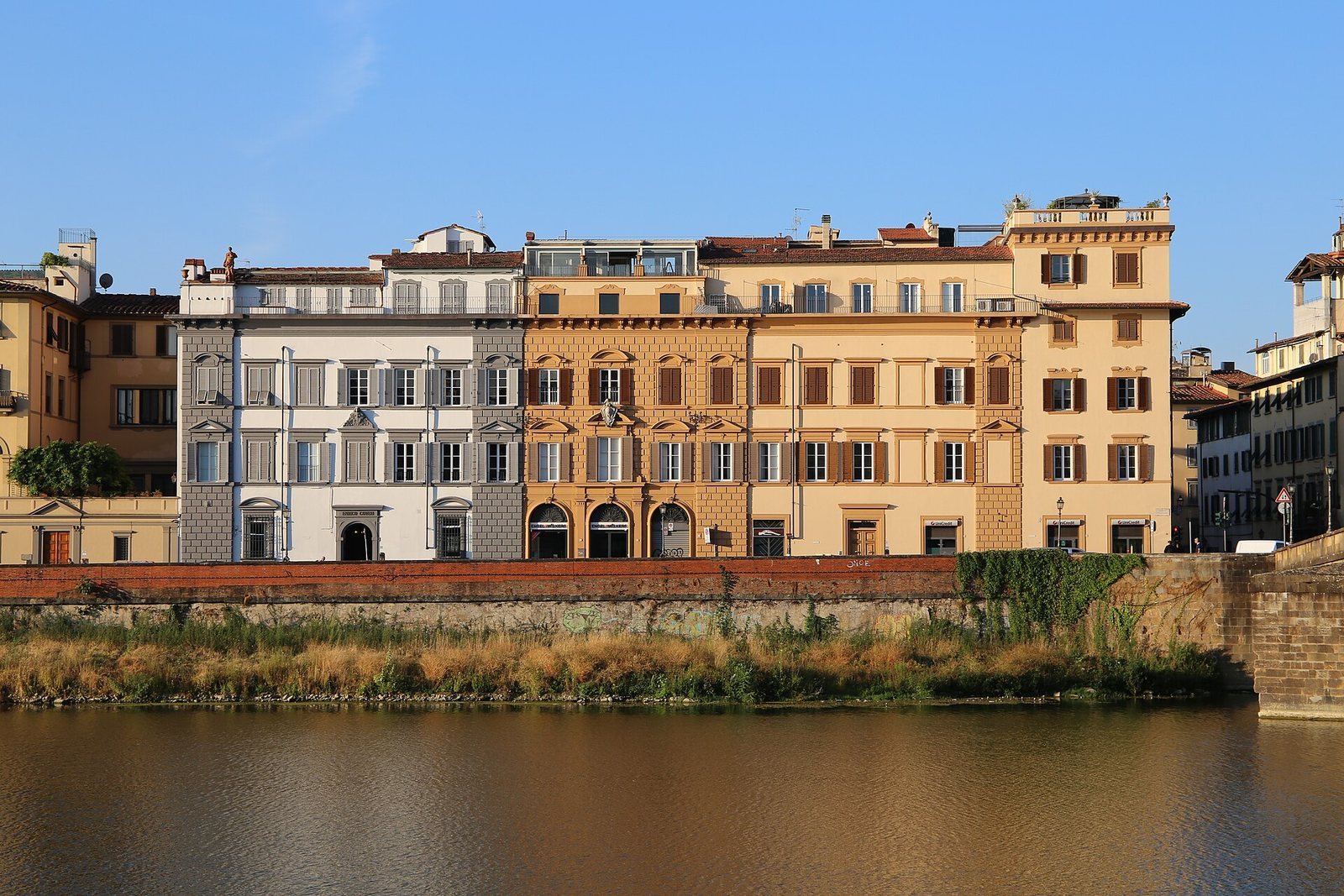
The palace’s river-facing frontage is an irregular assembly of sections with different paint finishes, making its overall composition difficult to discern. The building has three floors, a raised upper section, and seventeen vertical alignments of openings. Its surviving features include heraldic shields, a vestibule inscription, and interior wall paintings.
Facade and interior features
River frontage
The frontage faces Lungarno Guicciardini. A repainting in 2014 further changed the appearance of one section, at civic number 19. The palace may once have been connected internally to a smaller Medici palace behind it, whose entrance was on Via Santo Spirito.
Heraldic shields
Two shields on the facade display the Schneiderff arms. One sits on the central axis and the other on the left-hand section. Each shows an armored, natural-colored right arm holding an upright silver sword with a gold hilt, set against red, beneath a blue upper panel bearing three eight-pointed gold stars. The left-hand shield also bears the motto Virtus omnia vincit, meaning “Virtue conquers all.”
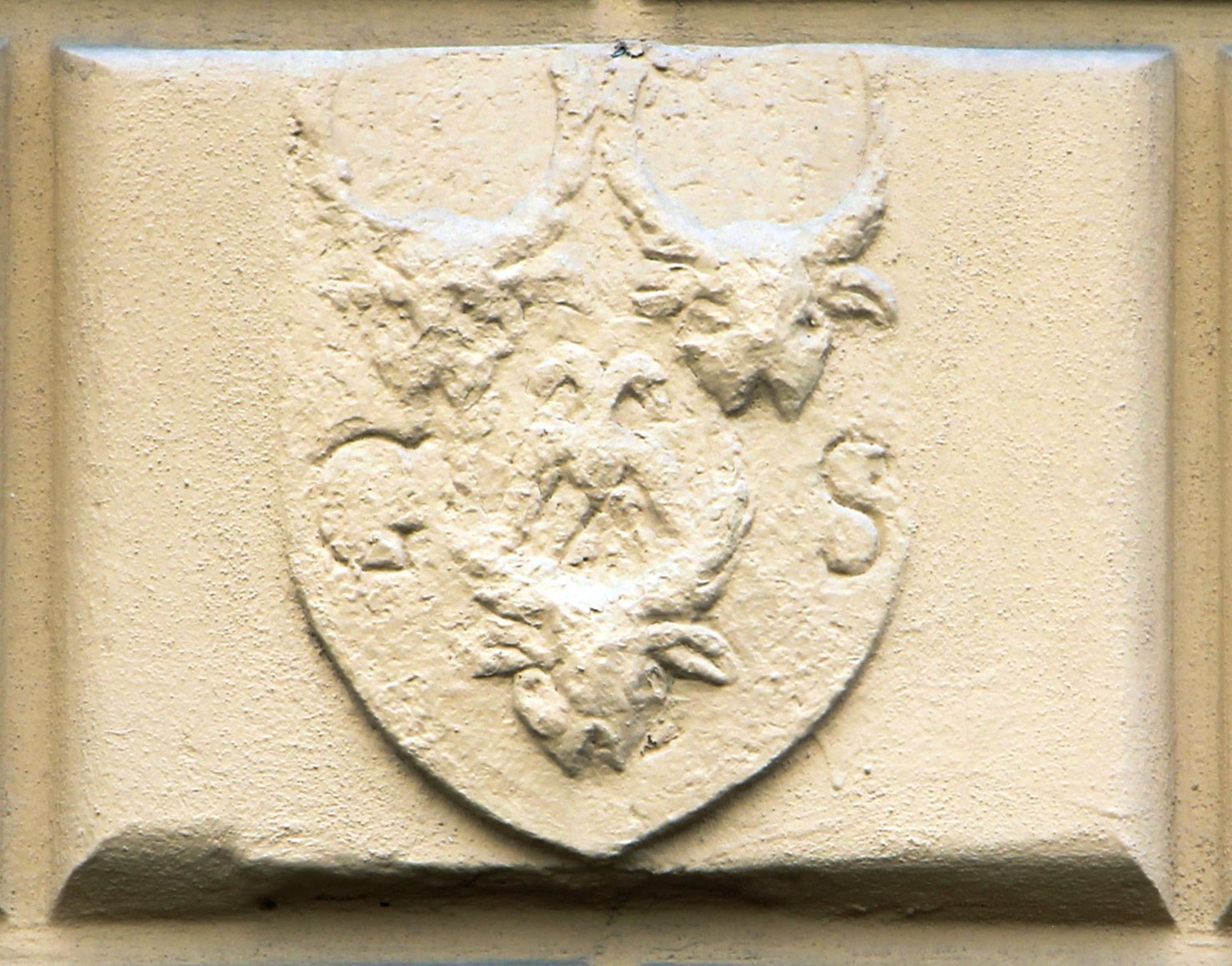
At red street number 29, a smaller shield displays the Soderini arms, three silver emblems arranged two above one, and the initials GS. Florence’s red numbers belong to a separate series commonly used for commercial addresses. This is the only Soderini shield visible on a public street in Florence, following the suppression of the family’s public memory after the definitive end of the Florentine Republic.
Entrance vestibule
An inscription at number 21 credits the Soderini with building and inhabiting the palace. It places Catherine of Siena’s stay there in 1377, on her return from Avignon, and describes her as a vigorous advocate of peace between Pope Gregory II and Florence’s republican government. The inscription also names Renaissance painter Raphael, French emperor Napoleon I, Scottish writer Walter Scott, and English poet Lord Byron as later temporary lodgers.
Interior paintings
The section at civic number 19 corresponds to the former Catani properties. A room there retains wall paintings attributed to Alessandro Gherardini, a Florentine Baroque painter.