Church of Saint Nicholas in Saburovo: A Russian Orthodox Parish Church
Site at a Glance
- Popularity
- Medium
- Country
- Russia
- Primary era
- Modern
- Eras represented
- Modern
- Civilizations
- Russian
- Site type
- Religious
- Remains
- Church
On this page9 sections
History
The Church of Saint Nicholas in Saburovo is a Russian Orthodox church in Saburovo, Russia. Its first wooden church is dated to 1592 or 1595, and the present church took shape through a major rebuilding completed in 1865.
Settlement and early churches
In 1571, Evdokia Saburova married one of the sons of Ivan IV, known as Ivan the Terrible. Her father received land beside the Moscow River, where Saburovo developed as a settlement associated with the village of Kolomenskoye. The first church there was wooden. A clerical register from 1830 credited the peasant Illarion Andreyev with building a stone church in 1595, but that attribution is considered mistaken.
A wooden church with a chapel dedicated to the Prophet Elijah is described for 1675–1677. It had a porch and two doors, with three bells carried on a support made from a single post. A stone church is thought to have been built in 1693–1695 and was standing by 1710. This small, square building had a simple vaulted ceiling and one dome. Its six windows included three in the altar area, and the floor was paved with Pekhra stone slabs. Curved, gable-like forms were divided by a cornice, while the dome and cross were gilded.
Estate and parish
During the reign of Peter I, also known as Peter the Great, Saburovo belonged to Dmitry Kantemir, a Moldavian prince and adviser to the ruler, who had an estate there. Around the time of the stone church, the church held about 14.5 hectares of land, including property across the Moscow River. By 1822 its landholding had grown to 52.2 hectares. The parish then included 167 households and about 700 people, and its clergy houses were wooden.
Nineteenth-century rebuilding
French forces looted the church in 1812. The icon screen, which separates the sanctuary from the main worship space, and the icons survived, but their metal coverings were taken. An old wooden icon of the Prophet Elijah with a silver covering also survived. The church was later restored.
The earlier stone church was demolished in 1861. Moscow merchant patrons from the Tarasov family funded a replacement, which was consecrated in 1864 and completed by 1865. The work enlarged the refectory and added chapels dedicated to the Prophet Elijah and the Iveron Icon of the Mother of God, as well as a new bell tower. Emperor Alexander II visited the church.
Closure, damage, and restoration
Installation of a hot-air heating system beneath the floor began in 1912. In 1916, the collection plate brought in 1,000 rubles, while 17 hectares of church land were leased to Saburovo peasants for 1,600 rubles a year. After the 1917 Revolution, Soviet authorities confiscated church property, including the clergy house, although the parish was allowed to use the church and items required for worship. The church was taken from the Orthodox Church in 1939 and closed the following year.
In mid-1941, the upper part of the church and the top of its bell tower were removed for defensive reasons. After the war, the building served first as a garage, then as a mechanical workshop in the 1960s and a fine-wire processing plant in the 1970s. The Elijah chapel was destroyed in 1986. Volunteers began restoration in 1989; the church returned to the Russian Orthodox Church in spring 1990, and services resumed in 1991. It is now an active church in the Moscow City Diocese and Danilov Deanery, and is designated a cultural heritage monument of federal significance. An annual bell-ringing festival is held on the feast of the Prophet Elijah.
Remains
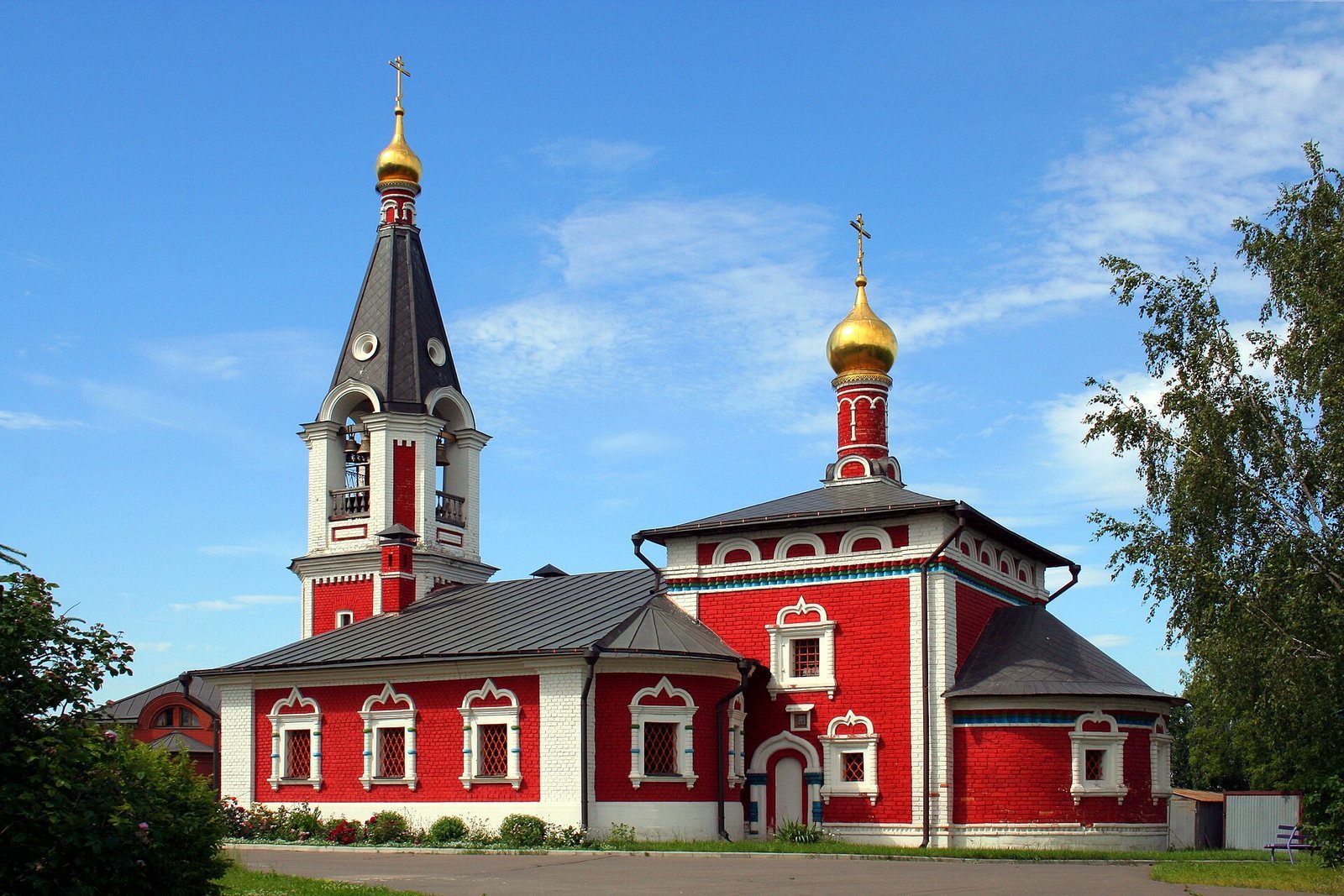
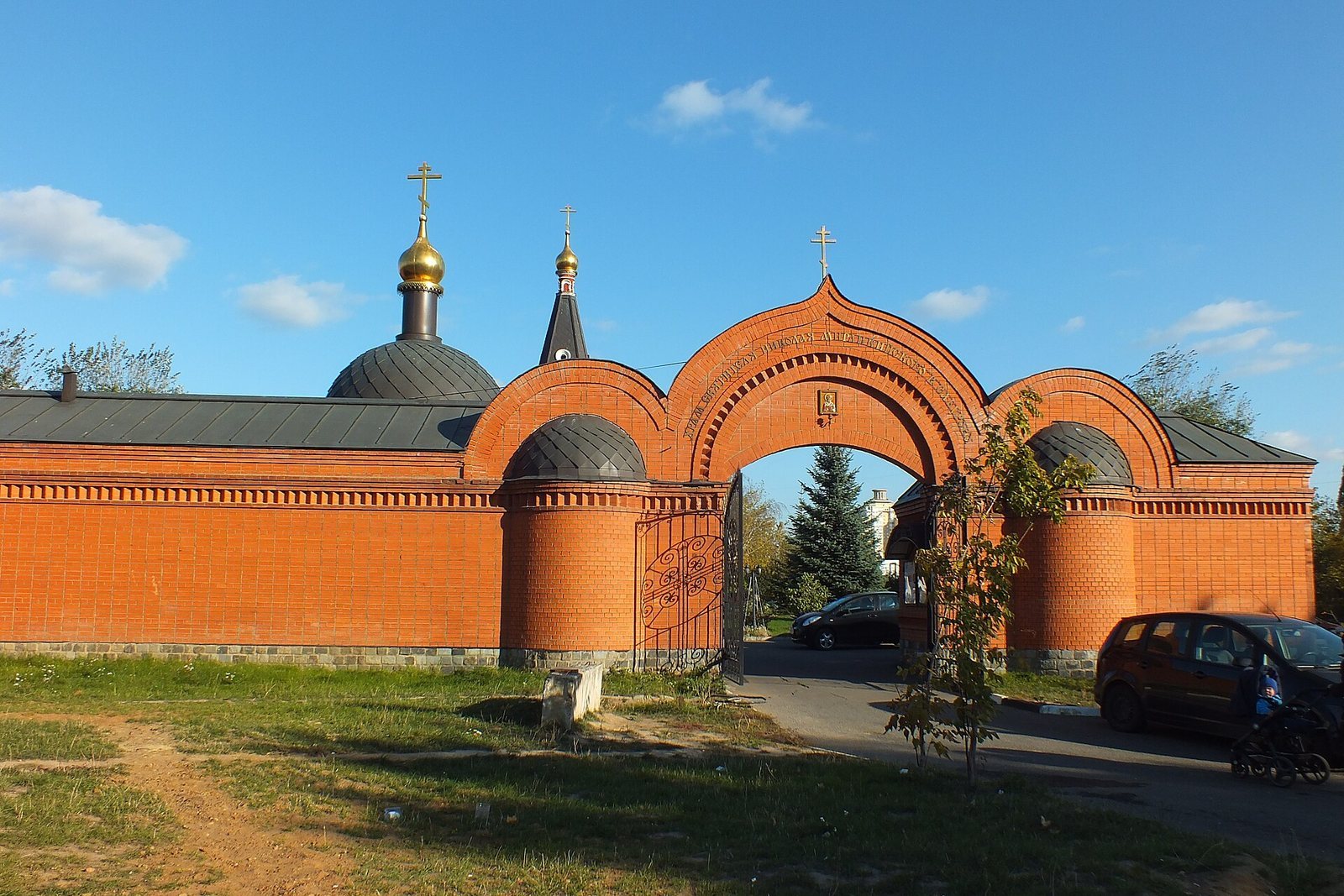
The present complex centers on the brick church rebuilt in the 1860s, with side chapels and a bell tower. The chapel and tower have undergone later restoration, while the surviving building retains features of the nineteenth-century rebuilding.
Main church and interior
The church is built of brick on white-stone foundations, with white-stone base courses and cornices. Its interior was plastered and decorated with frescoes, and two tiled stoves provided heat. The building has three altars: the main altar is dedicated to Saint Nicholas of Myra, while the side altars honor the Prophet Elijah and the Iveron Icon of the Mother of God.
Chapels and bell tower
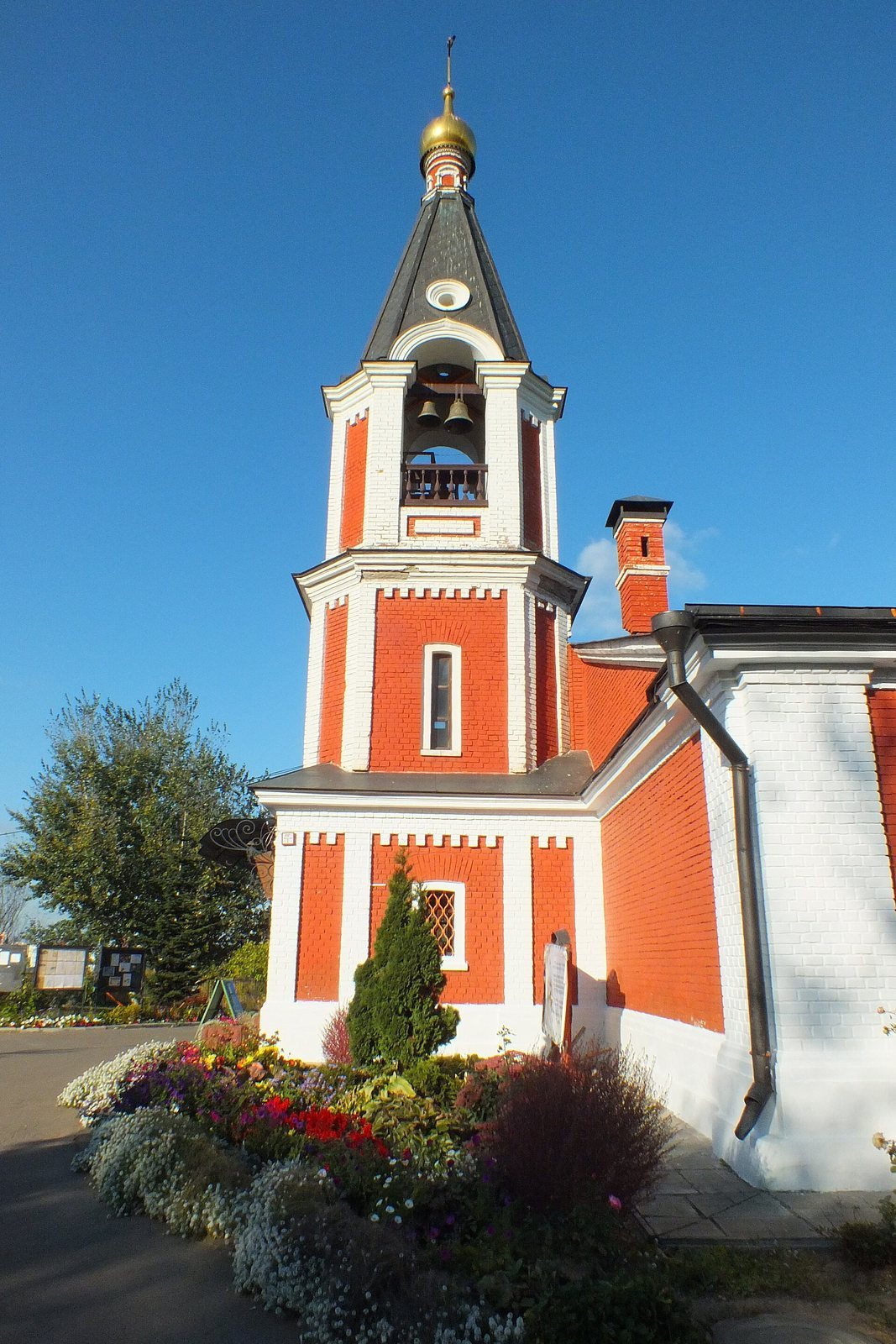
The rebuilt church had two small gilded cupolas with crosses and an iron roof painted green. Its three-tier bell tower carried six copper bells. The Elijah chapel was rebuilt in 1994, and the bell tower was restored in 1998.
Associated icons
Icons associated with the church include an image of Saint Nicholas of Myra containing a fragment of his relics, an icon of Saint Sophia of Suzdal with a fragment of her relics, and a venerated image of the Mother of God known as the Iveron icon.