Tintern Abbey: A Cistercian Monastery in County Wexford
Site at a Glance
- Popularity
- Medium
- Country
- Ireland
- Primary era
- Medieval
- Eras represented
- Medieval, Early Modern, Modern
- Civilizations
- British, Norman
- Site type
- Religious
- Remains
- Monastery
On this page7 sections
History
Tintern Abbey is a Cistercian monastery on the Hook Peninsula in County Wexford, Ireland, founded around 1200 by William Marshal, an Anglo-Norman magnate and Earl of Pembroke. The Cistercians were a Catholic monastic order that originated at Cîteaux Abbey in Burgundy.
Foundation and monastic community
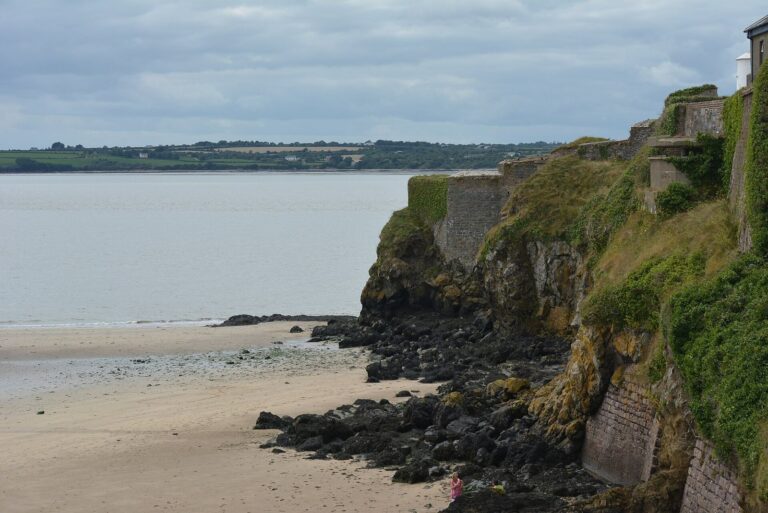
Marshal established the abbey after making a vow during a violent storm at sea. His ship reached Bannow Bay, and he founded the monastery there. The precise foundation date is uncertain. A charter issued on 3 December 1200 was proposed as the foundation date by historian J. H. Bernard in 1917.
The first monks came from the Cistercian house of Tintern in Monmouthshire, Wales, which Marshal also patronized. The Irish abbey belonged to the Cîteaux lineage, an institutional network of Cistercian houses, and was the only Irish house in that lineage, though not Ireland’s first Cistercian foundation. Dedicated to the Virgin Mary, it belonged to the Diocese of Ferns, the Catholic jurisdiction covering County Wexford and nearby areas. It founded no daughter houses. The monastery was also called Tintern Minor or Tintern de Voto, meaning “Tintern of the vow,” to distinguish it from its Welsh mother house, sometimes called Tintern Major.
Tintern Abbey acquired extensive lands and, when it was dissolved, ranked as Ireland’s third-wealthiest Cistercian monastery, after St Mary’s in Dublin and Mellifont.
Dissolution and conversion to a residence
The abbey was suppressed in 1537 during the dissolution of the monasteries under Henry VIII. The king’s break with the Catholic Church led to the closure of monastic houses in territories under his rule. The abbey and its grounds had been granted to Sir James Croft in 1536, then passed to Anthony Colclough, a Staffordshire soldier in Henry VIII’s army. The Colclough family extensively altered the complex for use as a private residence.
State ownership and conservation
Lucey Marie Biddulph Colclough, the family’s last resident, left in 1959. The Irish state took ownership in 1963, and conservation and consolidation work followed. From 1982 to 2007, the National Monuments Service of the Office of Public Works carried out excavations and further heritage work. Tintern Abbey is a National Monument of Ireland, a site protected by the state for its archaeological or historical importance.
Remains
Monastic layout
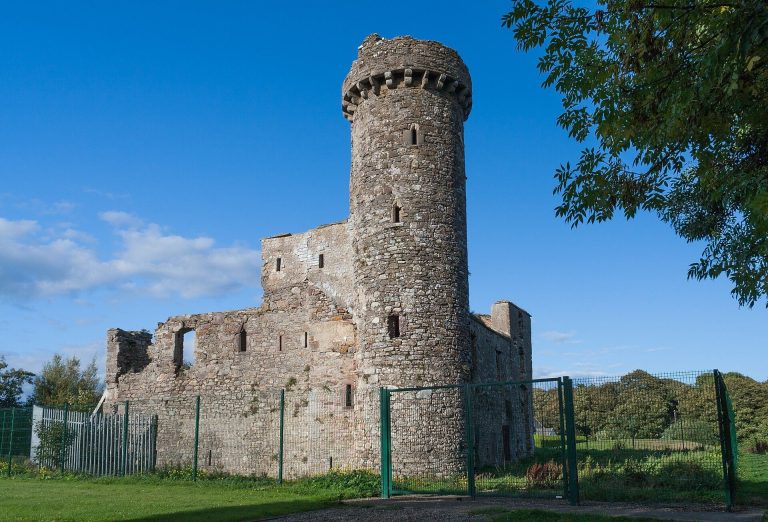
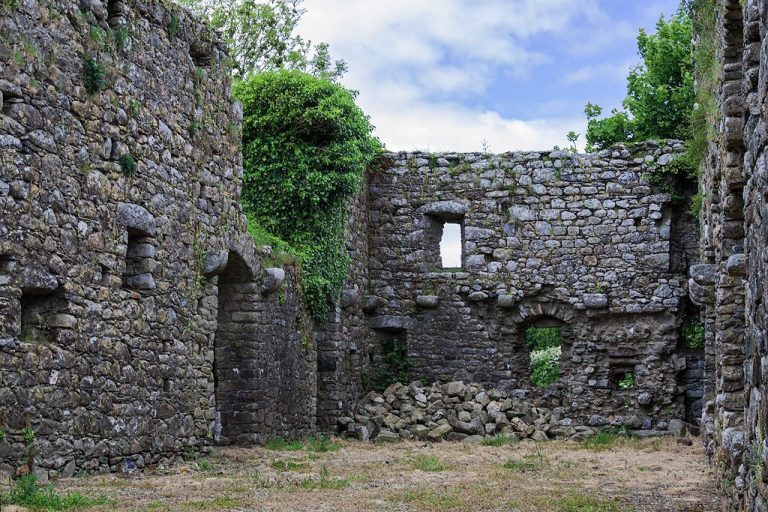
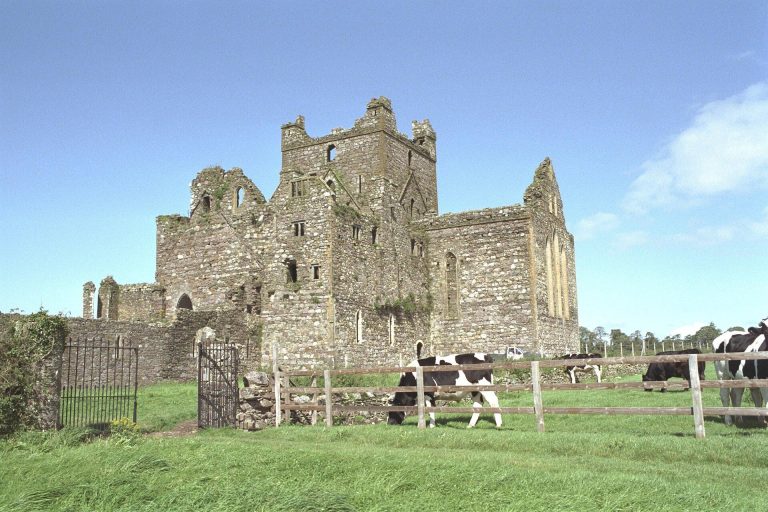
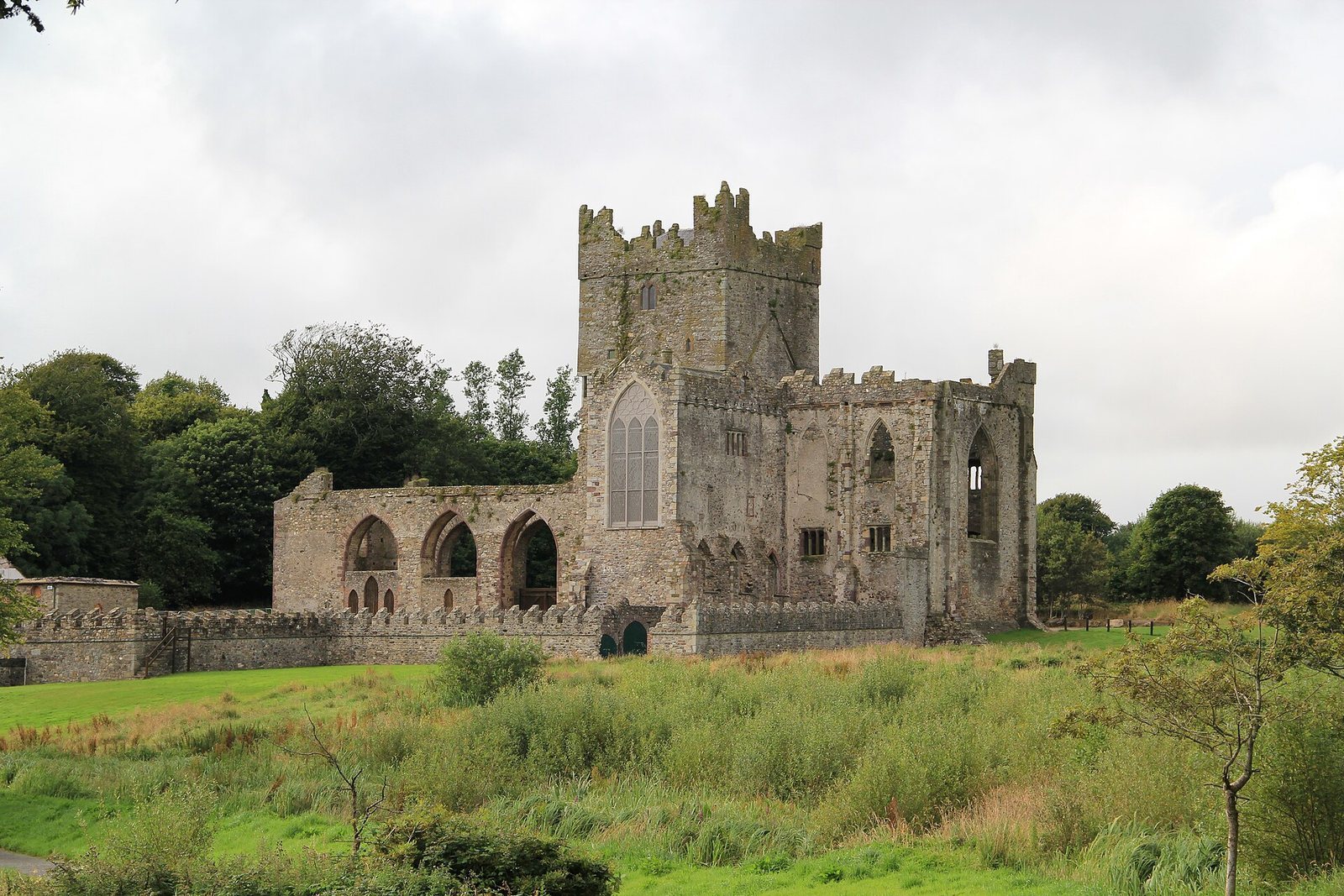
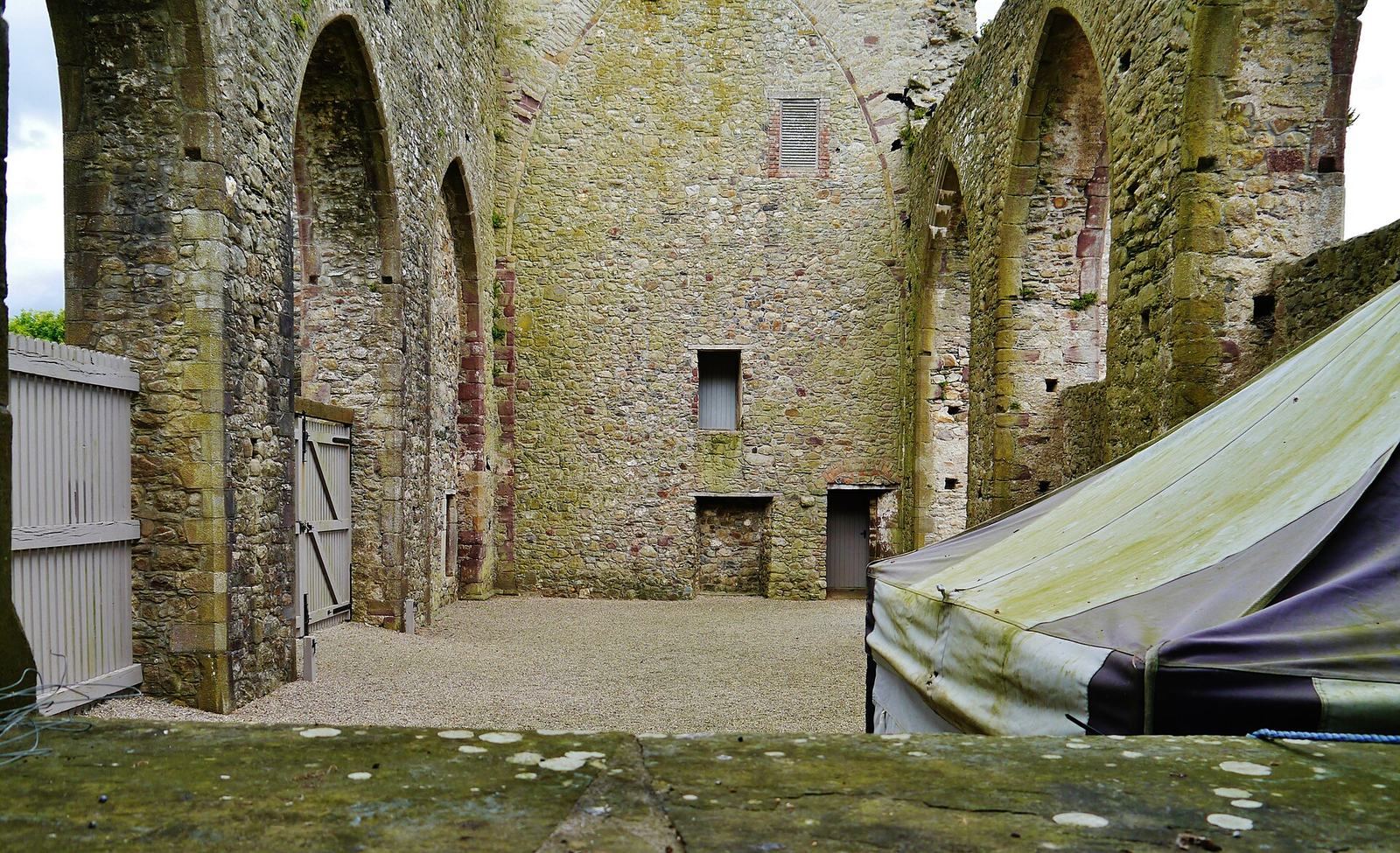
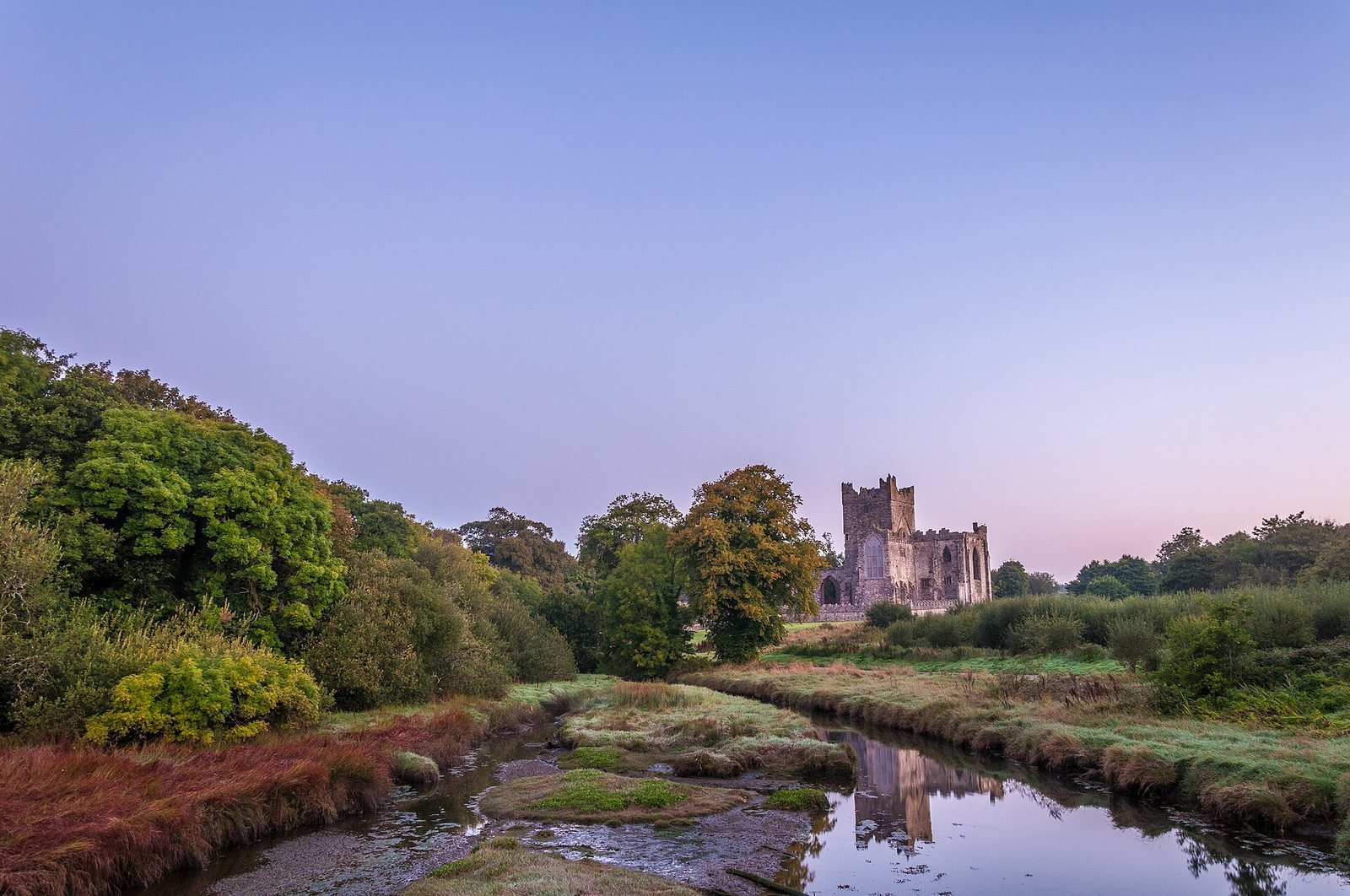
The abbey stands on the left bank of the Tintern River, which flows into Bannow Bay. Its Bernardine plan, a layout associated with Cistercian monasteries, places the church north of the cloister. A tower stood above the church crossing, where its main parts meet. The abbey is now in ruins, with some parts restored.
Residential and defensive features
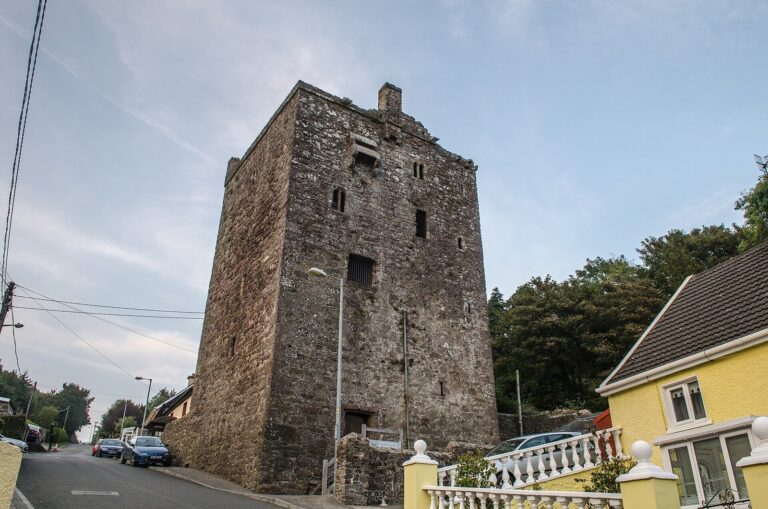
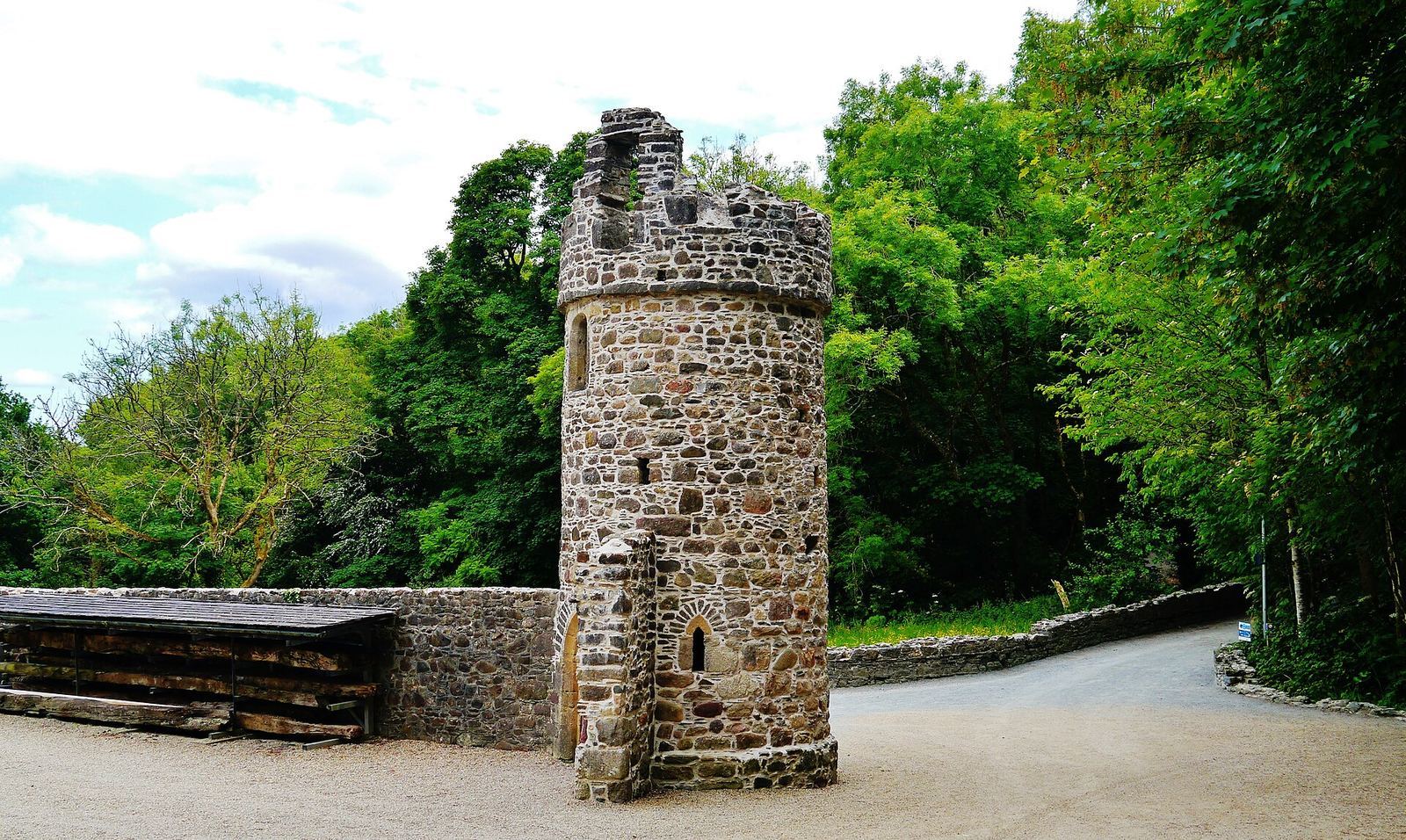
Around 1790, the church nave was adapted as a private residence in the Gothic Revival style. A defensive wall enclosed both the abbey and the surrounding estate. Anthony Colclough replaced an earlier, simpler bridge with a crenellated bridge, meaning one with alternating raised blocks and gaps, to help defend the residence. A fire in 2012 damaged part of the nineteenth-century outbuildings on the grounds.