Palazzo Bartolommei-Buschetti: A Historic Palace in Florence
Site at a Glance
- Popularity
- Low
- Country
- Italy
- Primary era
- Early Modern
- Eras represented
- Medieval, Early Modern, Modern
- Civilizations
- Grand Duchy of Tuscany, Italian, Republic of Florence
- Site type
- Domestic
- Remains
- Elite Residence
On this page16 sections
History
The buildings before the palace
Palazzo Bartolommei-Buschetti is a palace in Florence, Italy, assembled in 1640 from earlier houses, towers, and a guild building. Before its creation, the site included houses associated with the Lamberteschi, whose name was given to the street, as well as Gherardini family homes and their thirteenth-century tower. Another tower belonged to the Girolami, and the wine-sellers’ guild had a residence nearby.
The Gherardini also owned the Rigaletti tower, which stood opposite their own. The last Girolami descendant married Count Covoni, and her heirs later sold the Girolami tower to Marquis Girolamo Bartolommei. He incorporated it into the palace while retaining both it and the neighboring Gherardini tower. The guild residence, built around 1350 opposite the alley called Chiasso del Buco, followed a different path. After the 1534 reform consolidated Florentine trade guilds to reduce their political influence, the building passed to the duke and served as a sales office. It was later owned by the Niccolini family before passing to the Bartolommei.
Assembly and nineteenth-century changes
In 1640, Anton Maria Bartolommei acquired the group of buildings and had them joined as one palace. Its design is traditionally attributed to Ferdinando Tacca, a Florentine architect and sculptor who was also entrusted with work on the neighboring church of Santo Stefano al Ponte.
In the early nineteenth century, architect Giuseppe Del Rosso directed restoration of the palace and its towers. The staircase is also attributed to his work. In 1901, the palace was included in Italy’s national list of monumental buildings regarded as part of the country’s artistic heritage.
Political activity and later residents
The palace became a center of activity during the Risorgimento, the nineteenth-century movement for Italian unification. Ferdinando Bartolommei helped prepare the bloodless revolution that led Tuscany’s reigning Grand Duke Leopold II to leave Florence on 27 April 1859. During the conspiratorial period, the palace was closely watched and searched. Bartolommei was imprisoned and exiled, but later returned to Florence and resumed his political work.
By the late nineteenth century, the palace was home to American art historian and collector Charles Alexander Loeser and his wife, German pianist Olga Lebert Kaufmann.
Wartime destruction and rebuilding
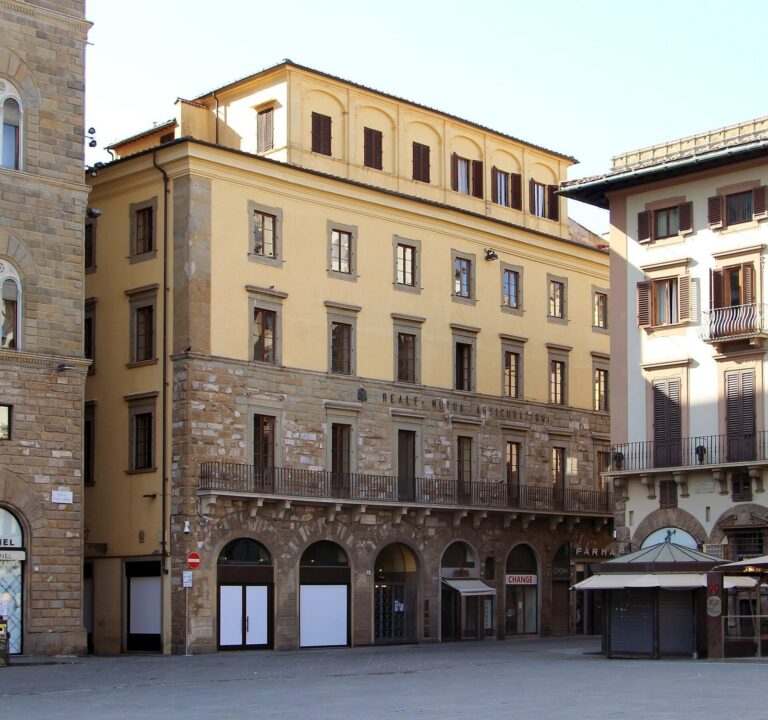
In August 1944, retreating German forces demolished approaches to the Ponte Vecchio, including Via Por Santa Maria, leaving rubble to hinder access to the bridge. The palace was heavily damaged up to approximately the horizontal stone band at first-floor level, and both medieval towers collapsed. The Girolami tower was not reconstructed because none of it remained and rebuilding was judged to be an arbitrary new creation.
Postwar reconstruction gave the palace essentially its present form. Architects Stefano Nardini and Raffaella Melucci led a restoration from 2003 to 2015, renewing residential areas and shared parts of the building.
Remains
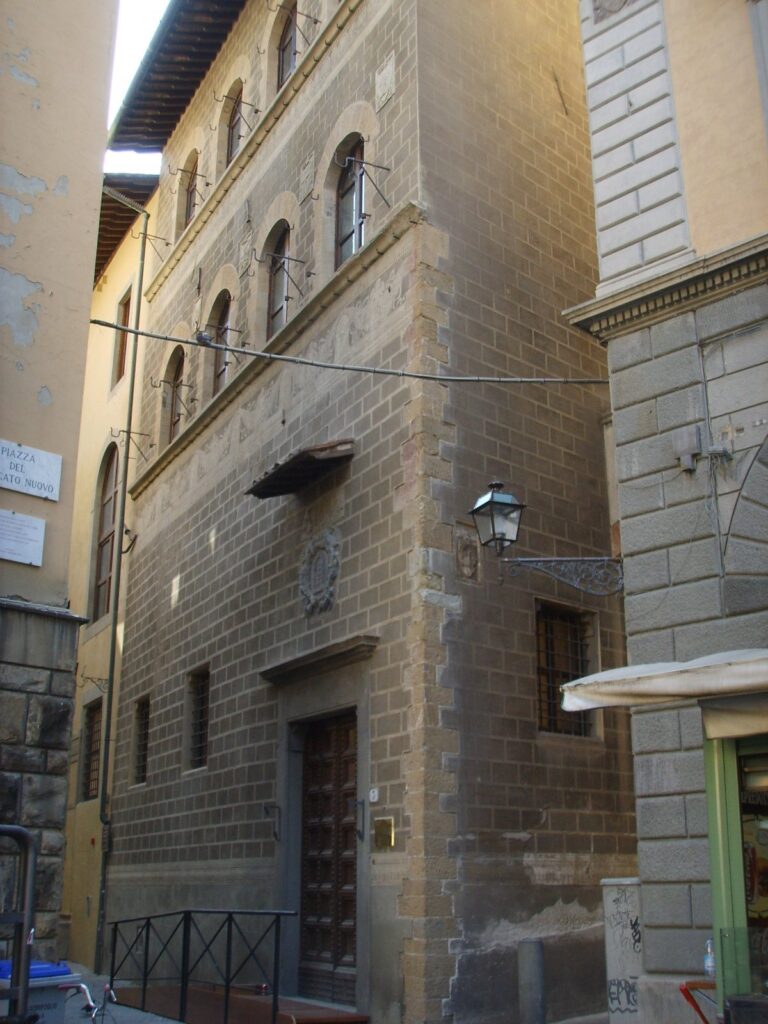
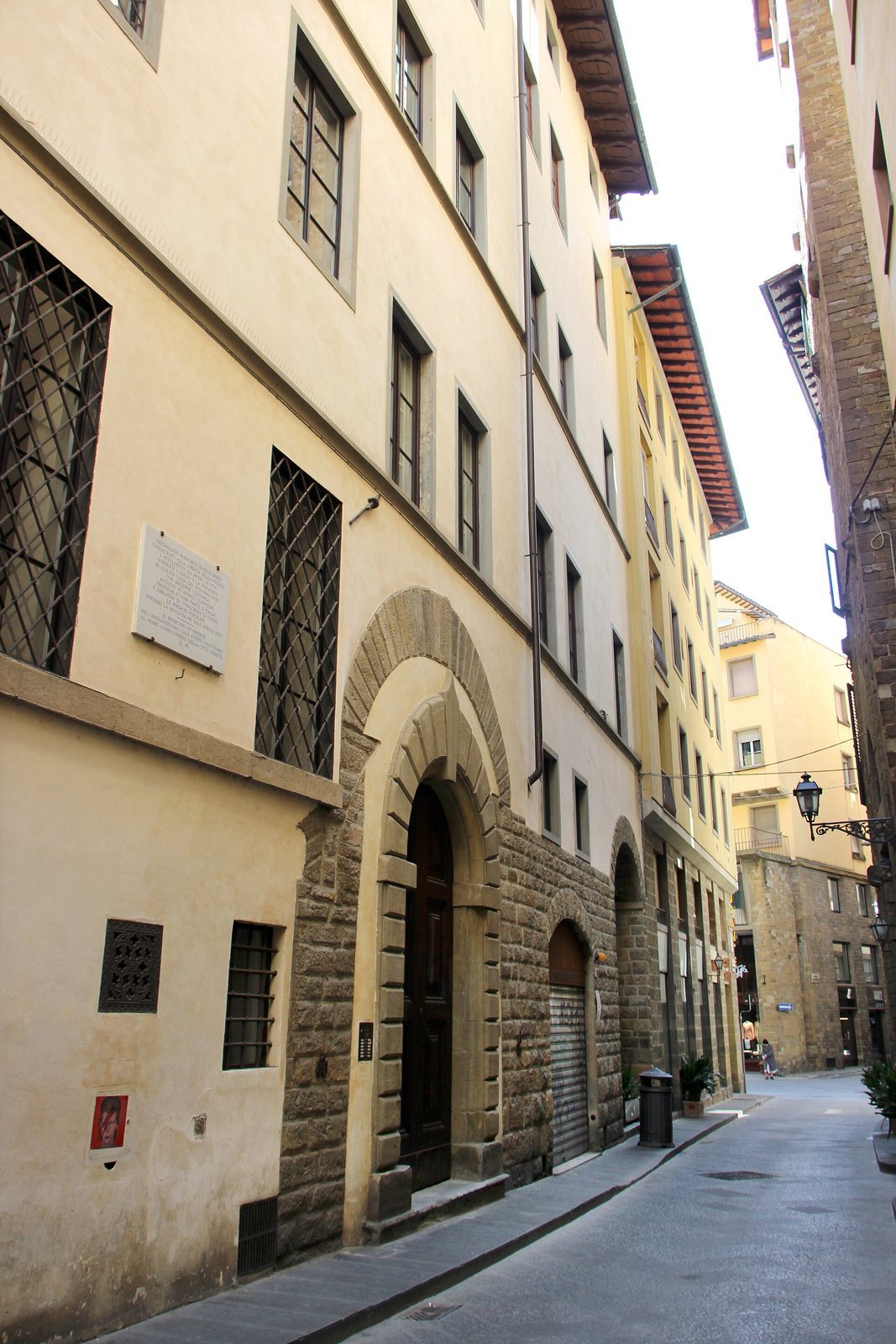
The palace stands on Via Lambertesca, with its rear facing Piazza di Santo Stefano beside the church of Santo Stefano al Ponte. Its straightforward street frontage, entrance hall, and upper rooms form the main surviving architectural sequence. A vaulted passage links Via Lambertesca with the piazza.
Exterior and entrance
Façade and passage
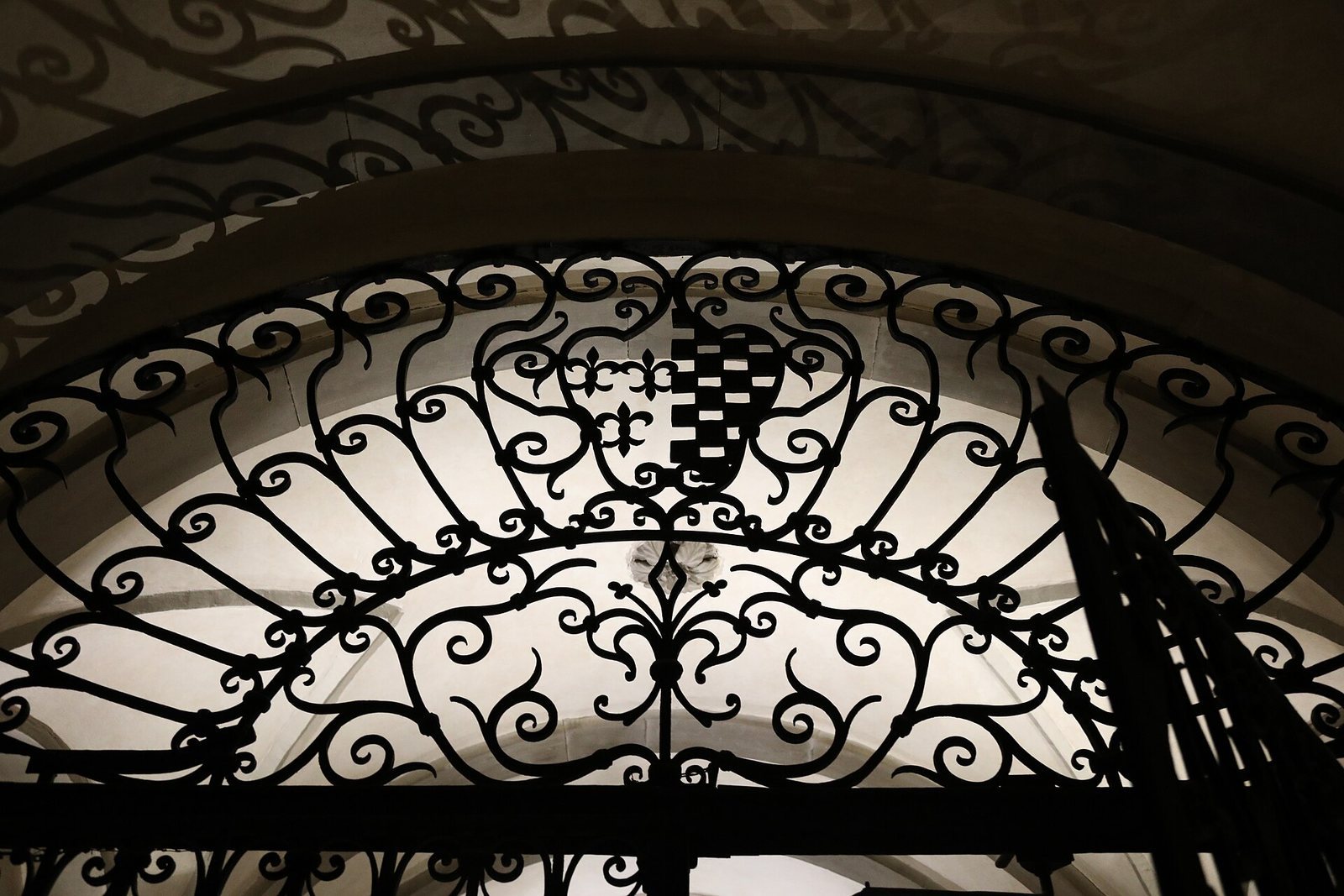
The simple façade uses pietraforte, a Florentine sandstone, to emphasize the ground floor, particularly around its two portals. Parts of the earlier exterior remain in rough-faced stonework and medieval ground-floor arches. The main seventeenth-century portal opens through a wrought-iron gate into the entrance hall. The later vaulted passage connects the street side of the building with Piazza di Santo Stefano.
Entrance hall
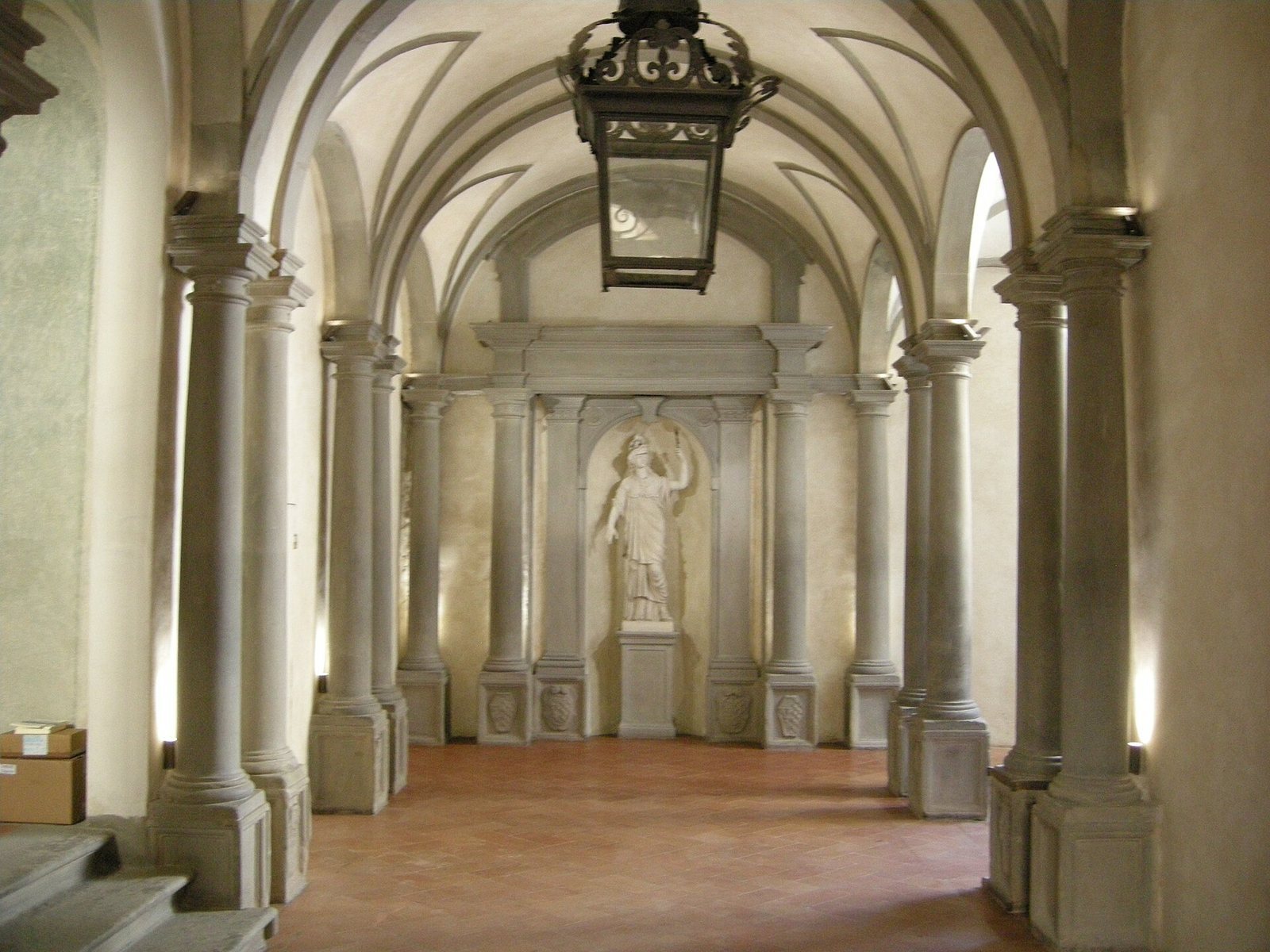
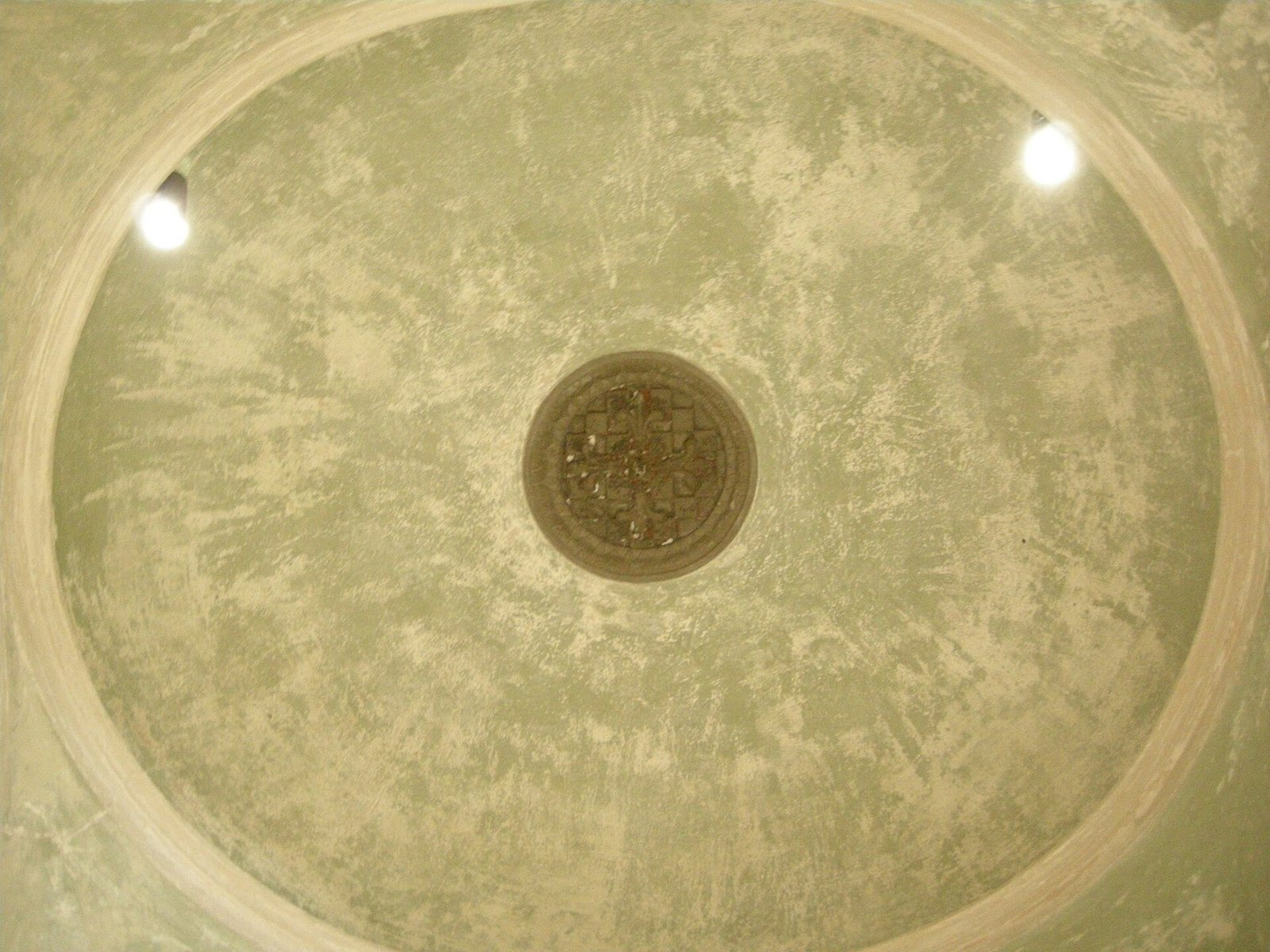
Shallow arches made of pietra serena, another Florentine sandstone, and paired columns with Doric-style tops shape the entrance hall. Niches contain statues, including a plaster figure of Minerva. The paired-column arrangement was considered unusual among Florentine palaces of the period. The Bartolommei arms appear on the gate, on a small vault before the staircase, and carved on the column bases. The shield is divided between three gold lilies on red and a gold-and-red checkerboard pattern.
Staircase and upper rooms
An irregular staircase leads to upper floors with stone decoration and rooms whose ceilings curve in barrel-like vaults. The principal floor includes a room devoted to the “Glories of Amerigo Vespucci,” the Italian navigator whose name became associated with the Americas. Its paintings are by Gasparo Martellini, and its shallow relief sculptures by Giuseppe Grazzini. The early nineteenth-century decorations relate to Girolamo Bartolommei’s epic poem America, written in Vespucci’s honor.
Earlier towers and guild features
Gherardini and Girolami towers
The Gherardini tower rose higher than the Girolami tower and had a terrace on its uppermost floor. The Girolami tower had a solid, palace-like form, with a projecting gallery carried on stone supports and battlements on its street-facing side. Recent buildings occupy the former Girolami tower site.
Wine-sellers’ guild portal and emblem
The former wine-sellers’ guild portal and a stone emblem are associated with the guild’s residence. Once mounted on the portal, the emblem bears the guild’s arms and now stands near the opening of Chiasso del Buco. Its surface is worn, leaving the design illegible.
Commemorative features
Saint Zenobius relief
A relief of Saint Zenobius in prayer, accompanied by the Girolami arms, once stood on the family tower. Zenobius was a bishop of Florence and is venerated as a saint. Tradition held that a member of the Girolami family, Saint Zenobius, had lived in the tower; flowers were placed on the relief for his feast day. Recovered from the rubble after the 1944 destruction, it was moved to Palazzo Vecchio. Its inscription assigned half the tower’s annual income to an offering to the saint at the cathedral on 26 January and half to the Girolami chapel at Santo Stefano al Ponte. If the family died out, the Company of Saint Zenobius, a lay religious confraternity, was to make the offering and maintain the chapel.
Ferdinando Bartolommei plaque
A plaque on the façade commemorates Ferdinando Bartolommei. The municipality installed it in 1909 and renewed it after the 1944 destruction. It recalls his political activity and names him as Florence’s first gonfaloniere, a senior civic magistrate, after the 1859 revolution.