Church of Saints Flora and Lucilla: A Medieval Catholic Church in Torrita di Siena
Site at a Glance
- Popularity
- Low
- Country
- Italy
- Primary era
- Medieval
- Eras represented
- Medieval
- Civilizations
- Republic of Siena
- Site type
- Religious
- Remains
- Church
On this page9 sections
History
The Church of Saints Flora and Lucilla is a Catholic place of worship in Torrita di Siena, Italy. Construction began in the 12th century and was completed in the 15th, in a Romanesque style, a medieval architectural tradition characterized by round arches and substantial masonry.
Later alterations preserved the church’s Romanesque layout. Dedicated to Saints Flora and Lucilla, it follows the Roman Rite, the Catholic liturgical tradition associated with Rome, and belongs to the Diocese of Montepulciano-Chiusi-Pienza, a territorial district of the Catholic Church under a bishop.
From 1988 to 2020, the church housed an 1833 pipe organ, opus 231, formerly in the Church of the Santissima Annunziata in Torrita di Siena. It was replaced by an organ made in 1965 by Werner Bosch.
Remains
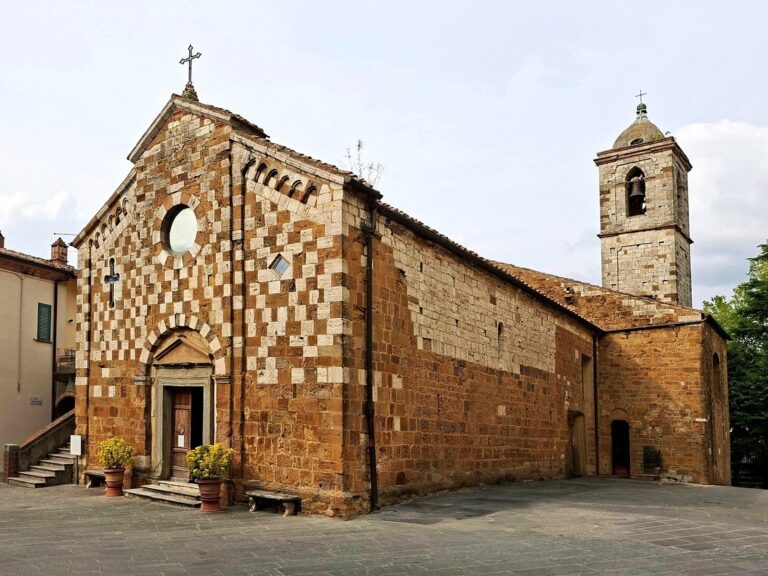
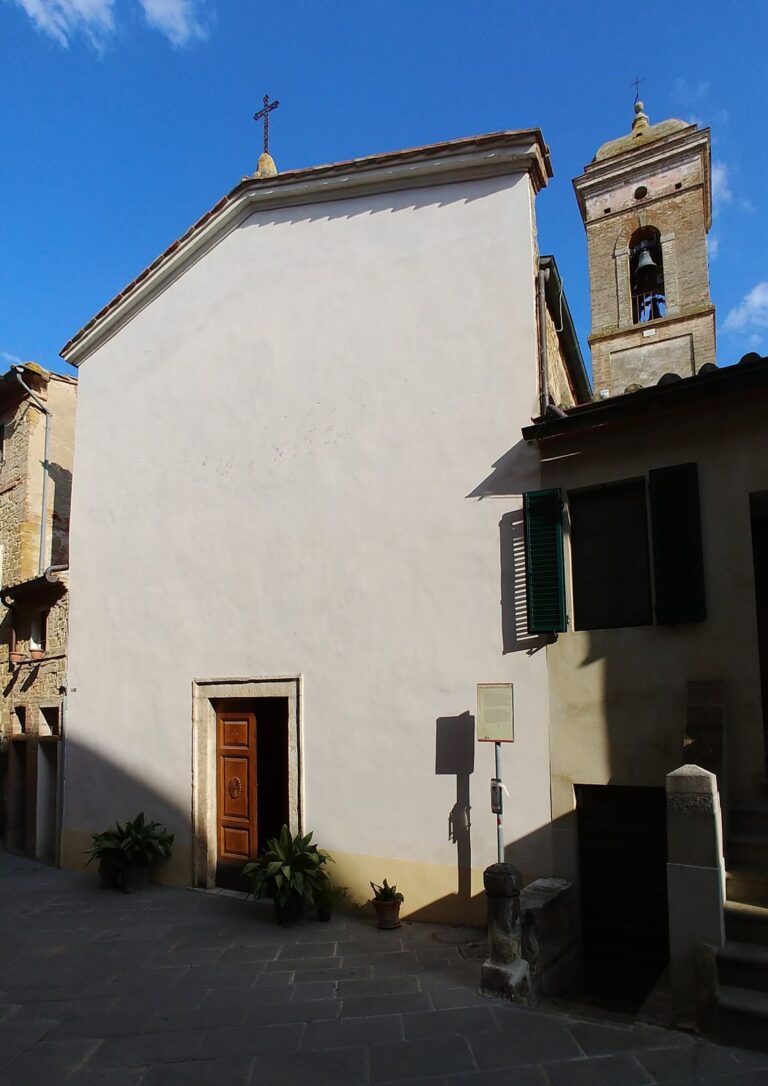
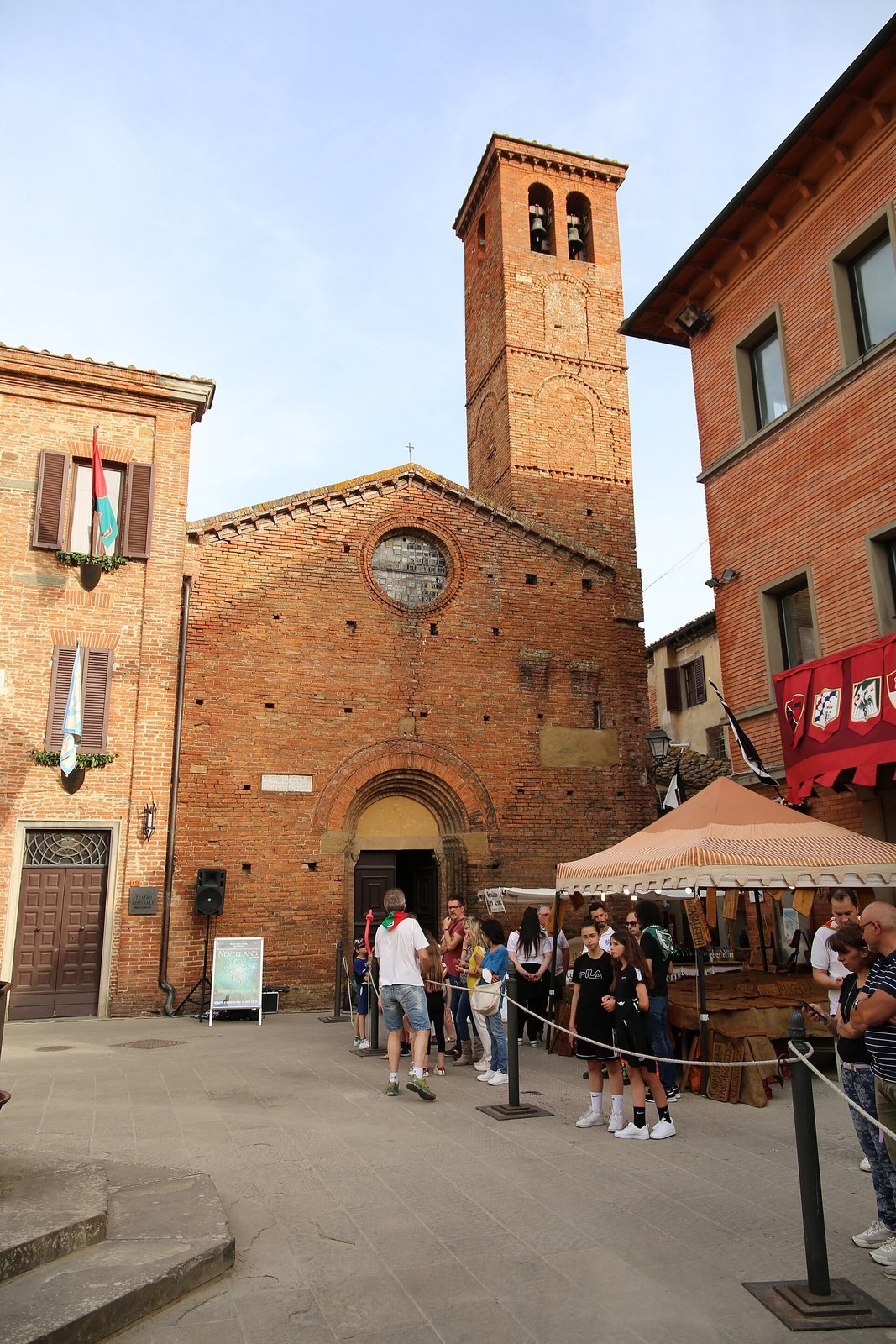
The church stands in the main square of Torrita di Siena’s medieval settlement, to the right of the town hall. Its single nave leads to a square apse, while the exterior is built of brick.
Exterior
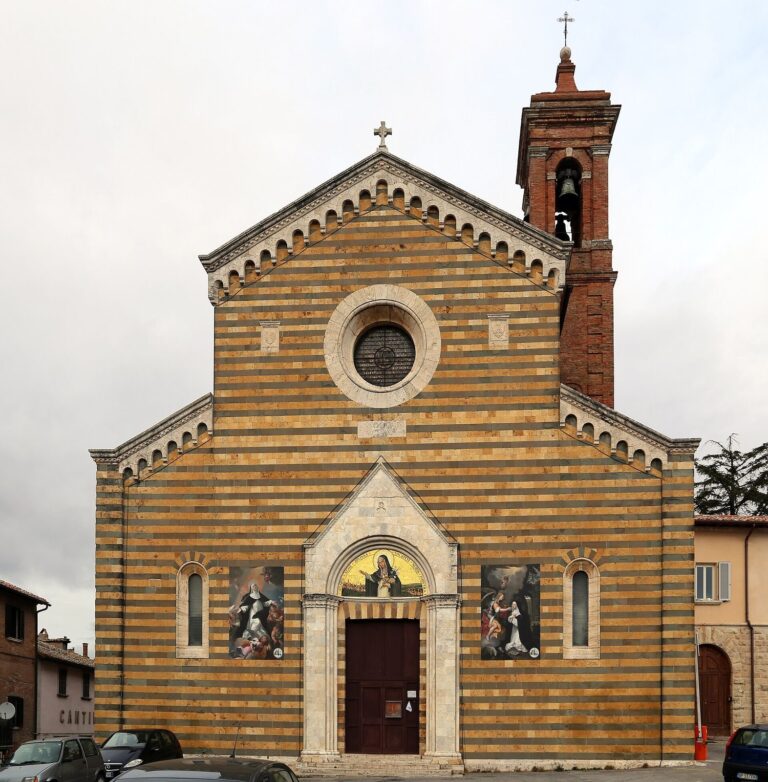
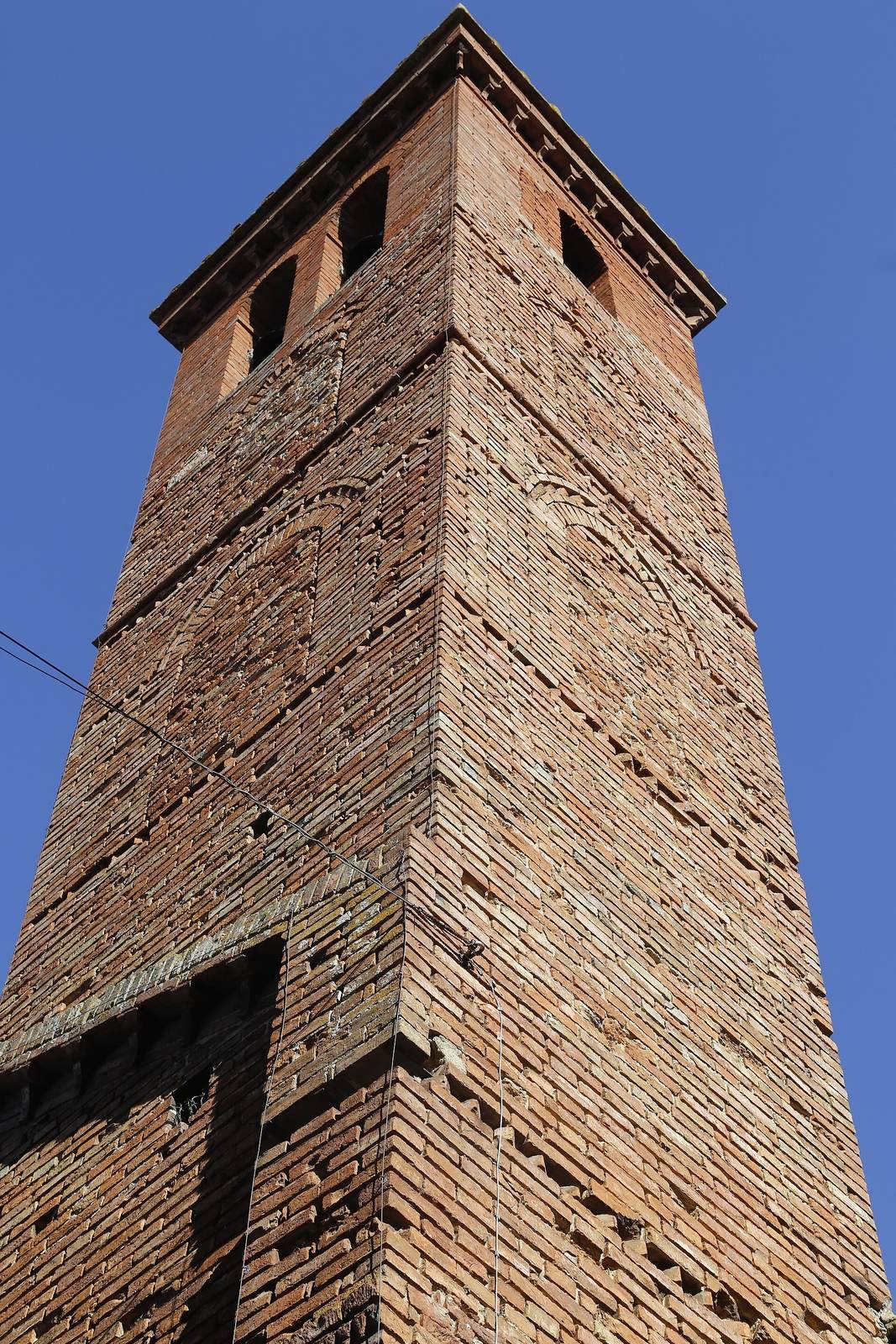
The façade has a gabled outline, with a round-arched entrance that widens toward the outside and aligns with a circular rose window above. Small projecting supports decorate the double-pitched roofline. A square bell tower stands to the right of the façade, with round-arched openings in its bell chamber.
Interior
Nave and altars
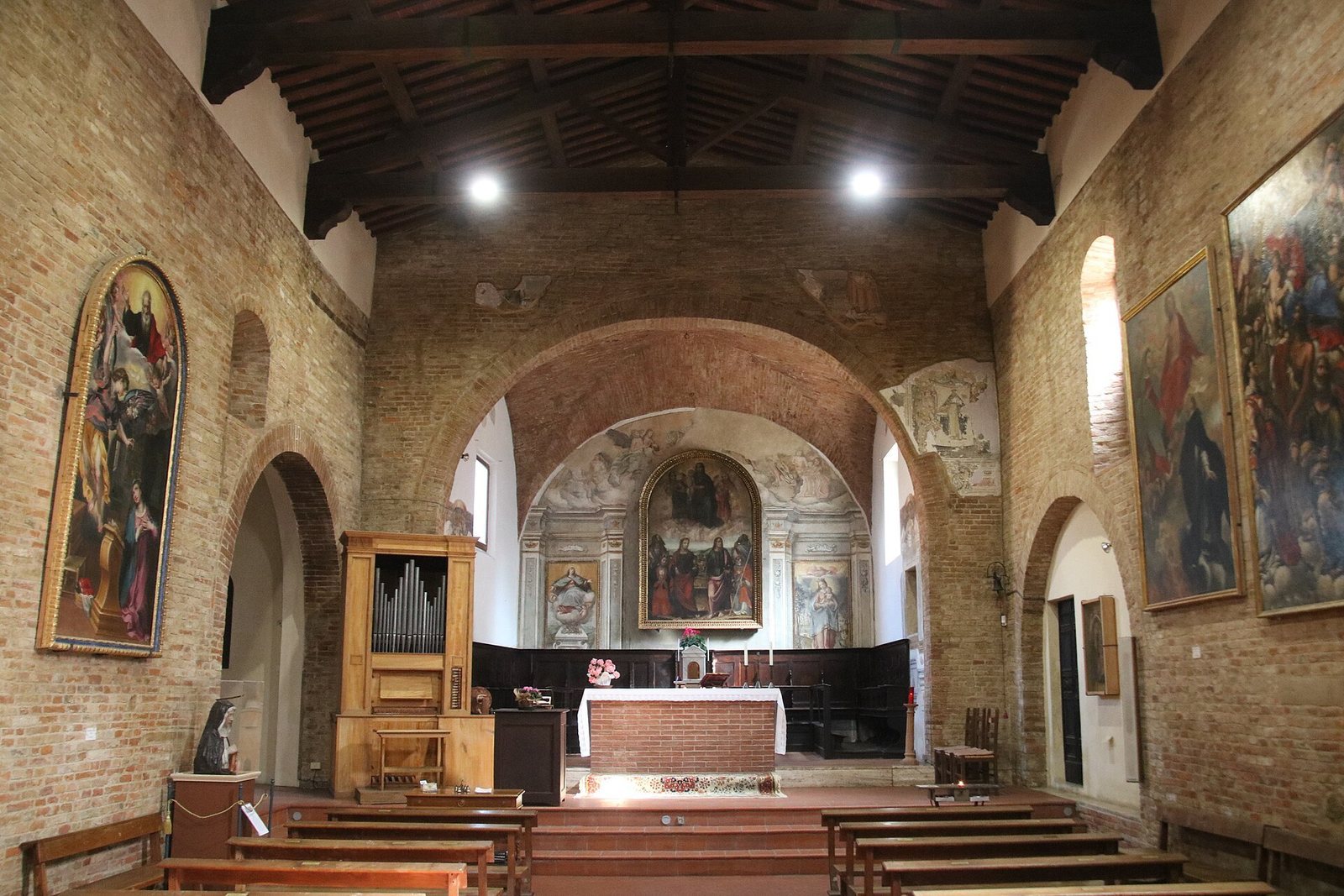
The nave has a timber-beam ceiling supported by triangular roof frames. At its midpoint, two side altars each hold a three-panel altarpiece. The left altar has Bartolo di Fredi’s Nativity of Jesus with Saints Anthony the Abbot and Augustine, painted in the late 14th century by the Sienese artist. The right altar holds the Crucifixion between Saints Bartholomew and Augustine, attributed to the 15th-century Italian painter Michele di Matteo and dated 1444. Benvenuto di Giovanni’s Madonna and Child Enthroned with Saints Andrew and John, dated 1497, is also in the nave.
Side chapel
A chapel opens from the left wall at the end of the nave. Its marble altar holds a brightly painted statue of Saint Lucy.
Apse and presbytery
The nave ends at a square apse covered by a brick cross vault, formed where two barrel-shaped vaults intersect. The raised presbytery, the area around the main altar reserved for clergy, contains the altar and tabernacle. Painted architectural decoration on the rear wall creates an illusion of built forms around an altarpiece from the workshop of Sodoma, the Renaissance painter Giovanni Antonio Bazzi. It depicts the Madonna and Child among angels and saints, with the Assumption of Mary fresco to the left and the Coronation of Mary to the right. Wooden choir stalls line the apse walls.
The Blood of Christ relief
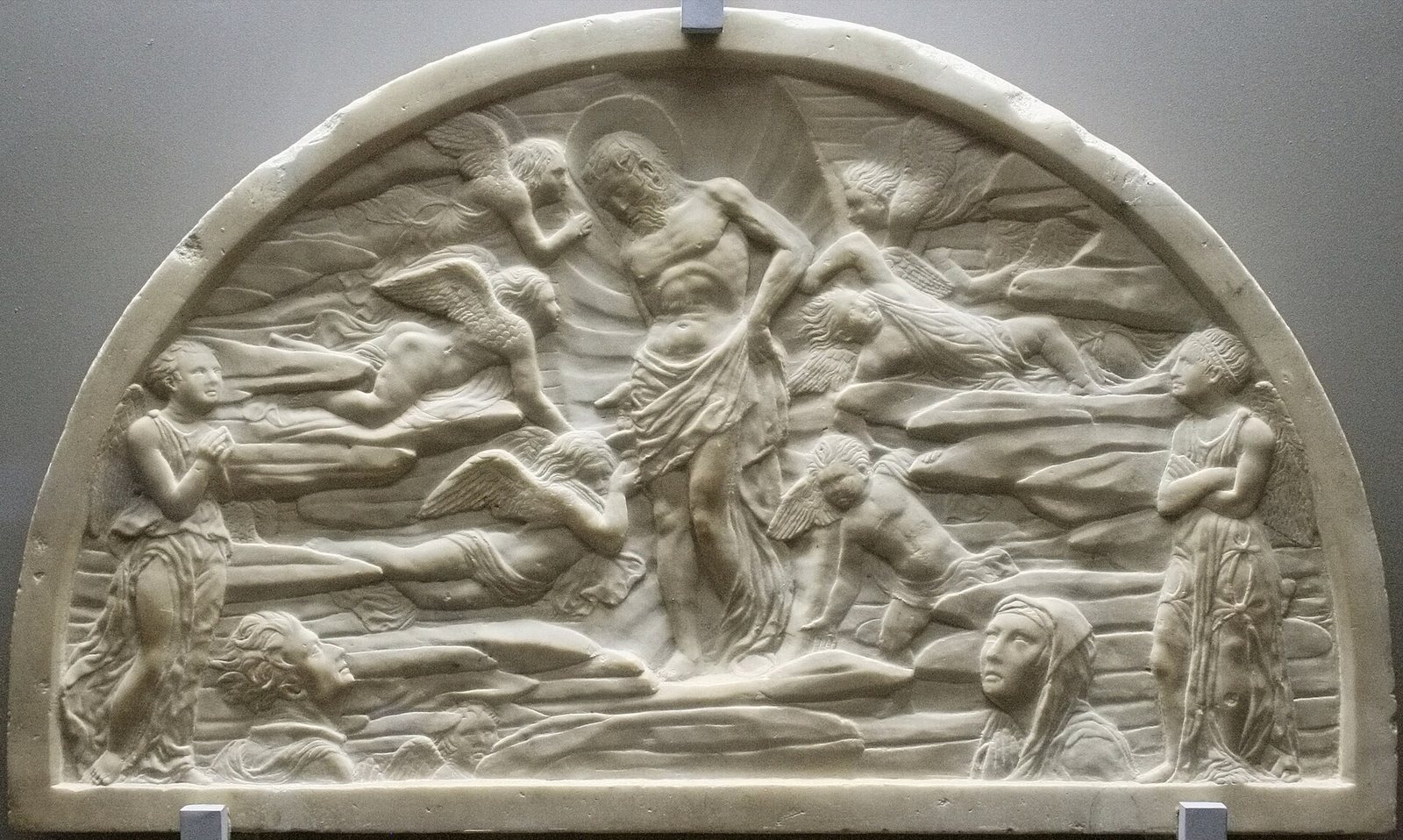
To the right of the entrance, a marble semicircular panel with a bas-relief of the Blood of Christ is kept in a case. The relief is attributed to Donatello, a major Italian Renaissance sculptor, and probably dates to about 1429-1430. A copy made in 1926 by Sienese artist Fulvio Corsini accompanies the original. It was created in anticipation of a sale that did not take place.
Pipe organ
The church’s Bosch organ, opus 449, has mechanical action, so its keys operate the pipes through mechanical linkages. It has five stops, which select sets of pipes to produce different sounds, as well as one keyboard and a pedalboard. The pipes are enclosed in a simply designed wooden case with geometric decoration.