Santuario di Santa Maria degli Angeli: A Marian Sanctuary in Basella, Italy
Site at a Glance
- Popularity
- Medium
- Country
- Italy
- Primary era
- Medieval
- Eras represented
- Medieval
- Civilizations
- Holy Roman Empire, Venetian
- Site type
- Religious
- Remains
- Sanctuary
On this page13 sections
History
The apparition tradition and the 1356 foundation
The Santuario di Santa Maria degli Angeli, also known as the Madonna della Basella, is a Roman Catholic sanctuary in Basella, a hamlet of Urgnano, Italy. Dedicated to the Virgin Mary, it was founded in 1356 after a tradition of Marian apparitions that drew the Visconti rulers of Milan and, later, the Colleoni family into its history.
Tradition places the first apparition on the morning of 8 April 1356. Marina, a farmer’s daughter, was distressed when frost covered the young shoots in her family’s field. A well-dressed woman carrying a child reassured her that the crop would survive and yield well. Eight days later, the woman returned, identified herself as the Mother of God, and directed Marina to uncover an earlier place of Marian worship. Excavation revealed the remains of an old church dedicated to Mary. Alberico, the church treasurer, wrote an account of the events on parchment, which was kept in the parish archive and later lost.
On 1 May 1356, Bishop Lanfranco de Saliverti laid the first stone of a new church. Bernabò Visconti followed the building work and gave 100 gold florins, a medieval gold coin, on 11 June. His brother Galeazzo II visited on 2 July, prayed with Marina, and kept vigil overnight. The following morning, he said that he felt cured of gout.
Colleoni patronage and Dominican life
In 1460, the military commander Bartolomeo Colleoni enlarged the church, judging it too small for the many pilgrims who came. The church also became a family burial place. Colleoni’s 15-year-old daughter Medea, who died of pneumonia, was buried there; her remains were later moved to the Colleoni Chapel in Bergamo, where her father was also buried.
Colleoni invited the Dominican friar Saint Girolamo della Porta, from Bergamo’s Santo Stefano monastery, to send friars to lead religious services. Pope Pius II authorized the new community’s union with the Dominican community in Bergamo. Dom Martino da Chiari became vicar, or deputy, of its religious chapter, and Fra Bernardino da Pavia served as its first rector.
The Martinengo family and the transfer of remains
Colleoni’s nephew Alessandro Martinengo Colleoni continued the family’s devotion to the sanctuary. He died in 1517 and was buried in the Dominican church of Santo Stefano in Bergamo, wearing Dominican clothing beneath the altarpiece he had commissioned. When Santo Stefano was demolished in 1561 to make way for Bergamo’s Venetian walls and Porta San Giacomo, the altarpiece was moved to San Bartolomeo. Alessandro’s remains and those of his wife, Bianca, were transferred to the sanctuary.
Suppression and later religious use
In 1784, the Republic of Venice suppressed the Dominican order, and the convent rooms were left uninhabited. The counts Martinengo sold the property to the Venini family of Milan in 1808. In 1875, Urgnano’s parish priest, Don Locatelli, acquired it. Members of the Congregation of the Passion of Jesus Christ, commonly known as the Passionists, occupied the convent from 1920. In 1921, the statue of the Virgin was crowned in a ceremony attended by Angelo Roncalli, who later became Pope John XXIII.
Remains
The church
Façade and adjoining complex
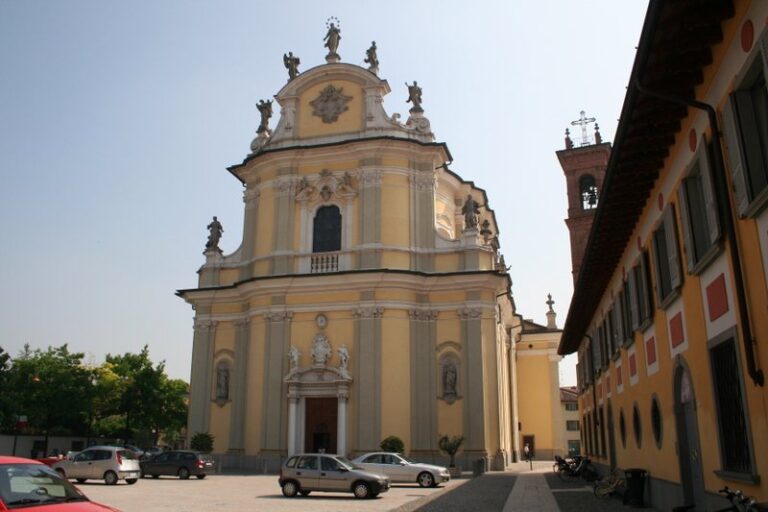
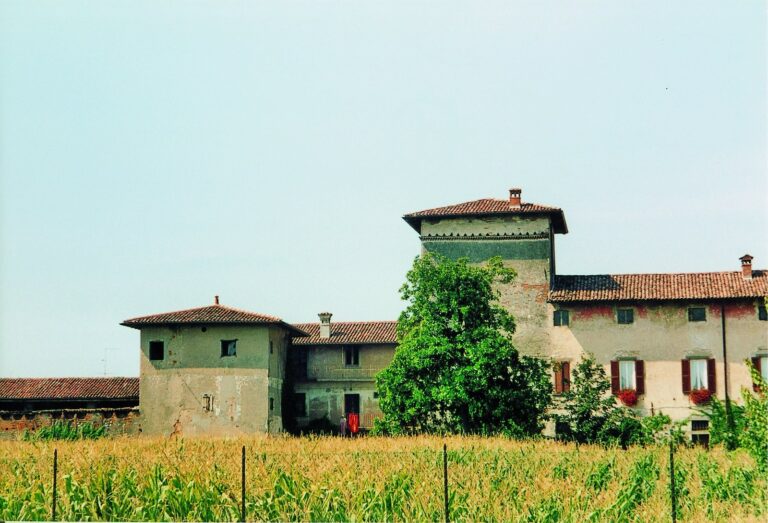
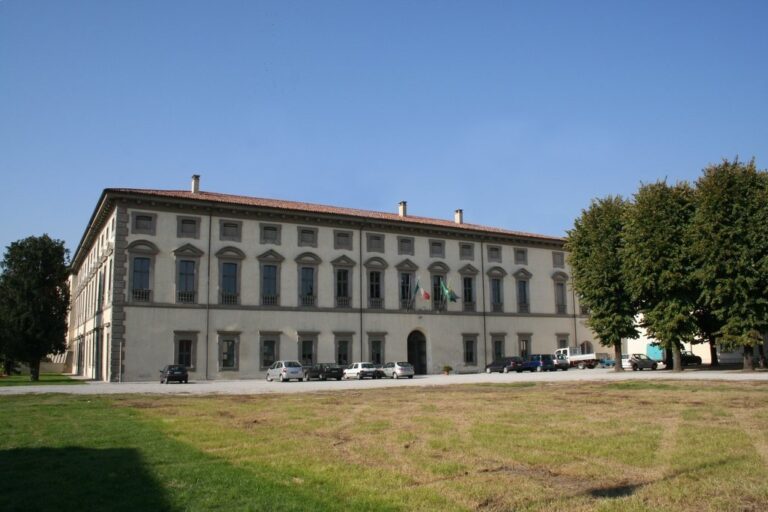
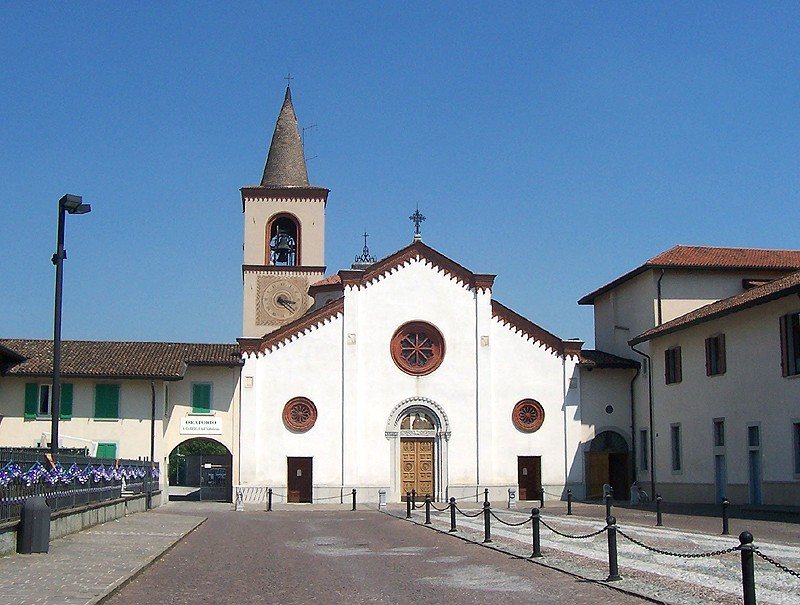
The façade is divided into three sections by four pilasters. Luigi Angelini designed the central entrance, which has a round arch with a fresco of the apparition in its niche. An original terracotta arch survives beside the main entrance. Above the central doorway is a large terracotta rose window; each smaller side entrance has a smaller one. The three circular openings form a triangle, representing the Trinity. A double-pitched roof completes the façade, a form associated with Lombard Gothic churches. A large monastic complex stands beside the church.
Nave and interior alterations
The interior has a single nave and has undergone repeated changes. A description from 1846 noted two altars. The altar of the Holy Rosary retains a medallion depicting the Madonna; some altars were removed by 1956, and later paintings covered many frescoes.
Fifteenth-century fresco
A fresco by an unknown artist at the rear of the right-hand nave is arranged in three scenes. At left, the Madonna and an angel wear red and cross their arms as a sign of martyrdom. Their waist cords are described as symbols of the Dominican Order of Preachers. At right, the Nursing Madonna, an image of Mary nursing the infant Jesus, sits enthroned beside Galeazzo II, shown as a pilgrim, and his richly caparisoned white horse. In the central scene, Mary appears in the Assumption, the Catholic belief that she was taken bodily into heaven. She wears red and a white mantle, holds a lily branch against a starry sky, and stands within a neo-Gothic structure decorated with red palmate leaves and supported by four angels. A heart and lotus flower express humanity and spirituality.
Crypt sculpture and family monument
Wooden group in the crypt
The crypt contains a wooden group made by sculptors from Ortisei. It shows the Madonna with a child old enough to give a blessing and holding fruit in his right hand. Marina kneels beside them, with two large angels completing the group. The sculpture was carried in procession through the hamlet.
Monument to Alessandro Martinengo Colleoni
Alessandro Martinengo Colleoni’s monument centers on a sarcophagus within a white architectural frame. Two pilasters, or flat column-like supports, are shaped in the Corinthian style. They support a horizontal entablature, the section above the columns, and a triangular pediment, the frame’s upper section, bearing the family coat of arms. A small chest-shaped urn of pink marble rests on a pink pedestal supported by three lion’s feet.