Church of St. Nicholas in Tropino: An Orthodox Parish Church in Russia
Site at a Glance
- Popularity
- Medium
- Country
- Russia
- Primary era
- Early Modern
- Eras represented
- Early Modern, Modern
- Civilizations
- Russian
- Site type
- Religious
- Remains
- Church
On this page8 sections
History
Early church and stone rebuilding
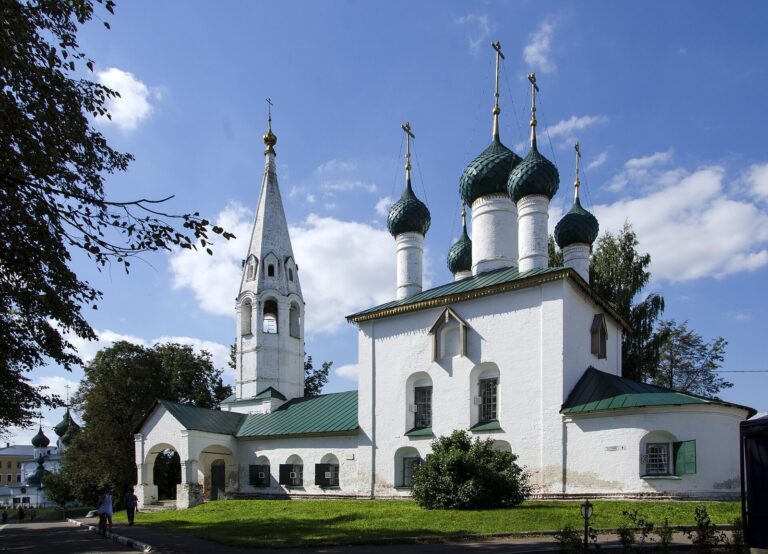
The Church of St. Nicholas in Tropino is an Orthodox parish church in Russia, with a foundation dated no later than the 16th century. It is dedicated to St. Nicholas, a Christian bishop of Myra venerated in Eastern Orthodox Christianity. The settlement of Tropino appears in records from 1628. A wooden parish church on the site burned in 1658, and a stone church was built there in 1660.
Nikon and the two-level church
Patriarch Nikon, a 17th-century Russian Orthodox leader and church reformer, died in the parish on 17 August 1681. He was returning from exile to Moscow and fell ill after crossing the Kotorosl River. His coffin was placed in the church.
Because the church stood on low ground that flooded each year, it was raised by an additional storey in 1722. The upper church was dedicated to St. Nicholas, while the heated lower church was dedicated to the Epiphany, the Christian feast of Christ’s manifestation. A side chapel there honored the Theodore Icon of the Mother of God, an Orthodox image of the Virgin Mary. In 1819, a Yaroslavl craftsman made a new icon screen for the lower church. A chapel for Peter and Fevronia of Murom, Russian Orthodox saints traditionally revered as an exemplary married couple, was established there in 1829 after a parishioner donated part of their relics.
Rebuilding and parish welfare
In 1883, a merchant who served as churchwarden from 1869 to 1894 led a major rebuilding in the Russian style, a 19th-century revival of historic Russian forms. The church was enlarged, and its side chapels were removed because they were cramped and damp. From 1903, a parish welfare committee collected money to help poor parishioners, large families, and people unable to work because of illness or old age.
Secular use and return to worship
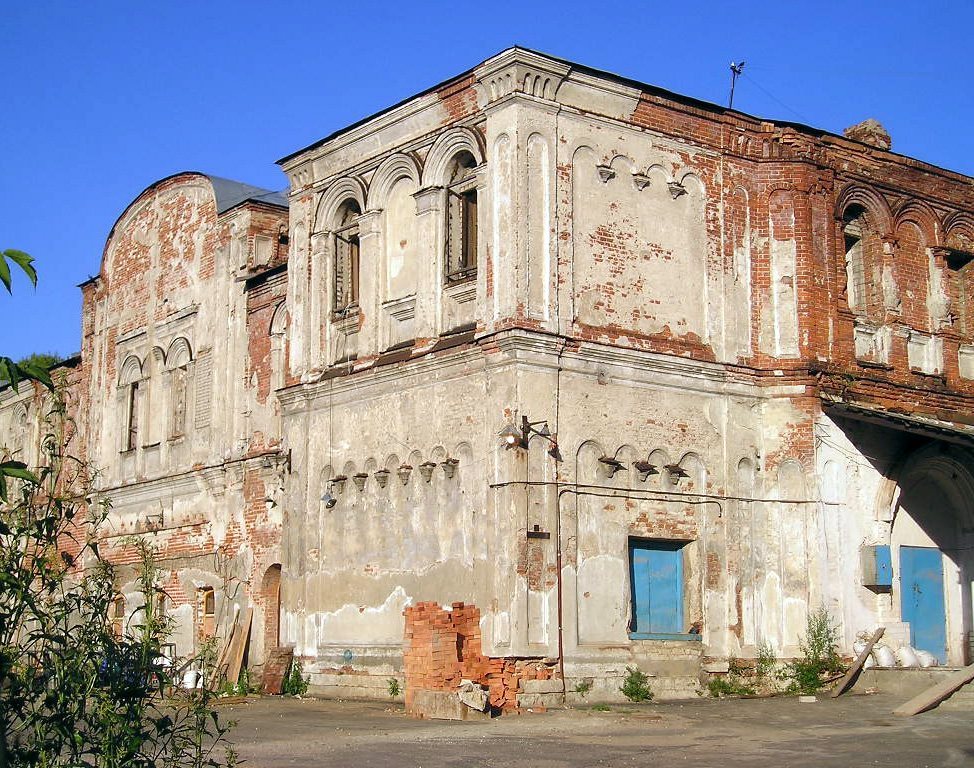
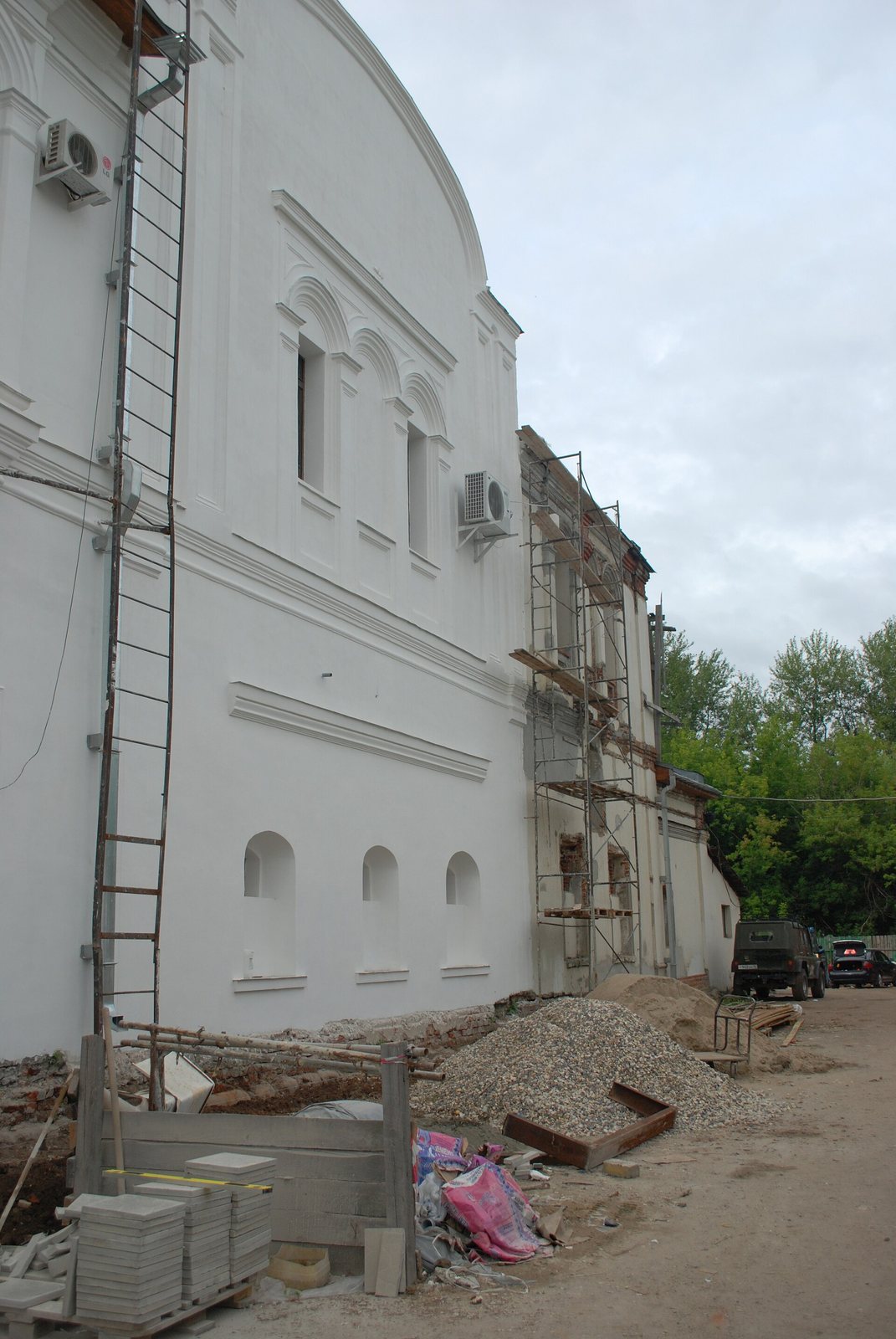
Soviet authorities took the church from its parish in 1931 and transferred it to a woodworking factory. It was later used as a club and dormitory, then as a warehouse during the second half of the 20th century. In the 2000s, an association stored fish products in the building. Repairs in 2013 accompanied its adaptation for offices. After a proposed sale fell through, the church was transferred to the Russian Orthodox Church, and services resumed in the lower church on 30 April 2021. The building is a regional cultural heritage monument in Russia.
Remains
Setting and arrangement
The church stands on low-lying ground on the right bank of the Kotorosl River. Its original stone form had one storey, with a 30-metre bell tower above the narthex, the entrance vestibule. The later arrangement placed an unheated upper church above a heated lower church. The 1883 enlargement added a covered entrance porch at the lower level, along with an altar and a refectory, a hall adjoining the worship space, on the upper level.
Interior and devotional images
The lower church was decorated with paintings set in gilded frames. Images associated with worship there included a church icon of St. Nicholas, traditionally said to have survived the 1658 fire; an image of Peter and Fevronia containing portions of their relics; and an image of the Sorrowful Mother of God, a devotional title for Mary as a grieving mother.