Church of the Nativity of the Theotokos: A Russian Orthodox Church
Site at a Glance
- Popularity
- Medium
- Country
- Russia
- Primary era
- Modern
- Eras represented
- Early Modern, Modern
- Civilizations
- Russian
- Site type
- Religious
- Remains
- Church
On this page11 sections
History
The Church of the Nativity of the Theotokos, dedicated to the Nativity of Mary, whom Eastern Orthodox Christians revere as the Mother of God, is an active Russian Orthodox church in an unidentified part of Russia. Its history is dated to the 15th century, while the first building at the present site specifically dedicated to this feast was erected around 1627. It replaced a dilapidated church dedicated to St Nicholas. The village, then called Velyaminovo, belonged to Prince Ivan Ivanovich Shuisky.
Early churches and the Vladykino estate
In 1653, the village became a patriarchal estate, meaning land held by a church patriarch, and took the name Vladykino. The name came from a Church Slavonic title for an Orthodox bishop. The estate belonged to Patriarch Nikon, the Russian Orthodox Church’s senior ecclesiastical leader, and later to his successors. After reforms under Peter I abolished the patriarchate, the land passed to Archbishop Theophan of Pskov and Porkhov, a close associate of the tsar. Following Theophan’s death, it went to Moscow’s Epiphany Monastery.
On 19 May 1690, Tsar Peter I attended a liturgy, or formal worship service, at the church and prayed with Patriarch Adrian. Patriarch Joachim had held services there three times, and Adrian twice.
Stone church and 19th-century rebuilding
A stone church was erected in 1770. Count Kirill Razumovsky, who owned neighboring Petrovskoye, built its bell tower. The church was rebuilt between 1854 and 1858 and consecrated in 1860, with Metropolitan Filaret leading the consecration of its main altar. Historian Ivan Snegirev’s diary names merchant Gavriil Matveyevich Tolokonnikov as the builder, while noting that the printed version of his surname may be incorrect.
In an entry dated 31 July 1860, Snegirev described the consecration celebrations. A large crowd gathered, tents were set up around the church, and the builder provided an outdoor meal for several hundred people. The gathering responded with cheers to toasts to the emperor and imperial family, and acclaimed Filaret and the builder. Two archimandrites, senior monastic clergy, assisted at the ceremony. Afterwards, Eustathius distributed religious books.
Preservation and continued worship
In the late 19th century, the parish rector, priest Joann Protopopov, oversaw extensive repairs. Worship continued at the church throughout the Soviet period. In the 1970s, parishioners prevented a plan to demolish it for an elevated road. The church was registered as a federal monument of cultural heritage on 4 December 1974.
Patriarch Kirill led the first patriarchal service there in the post-Soviet period in 2013. The church remains part of the Russian Orthodox Church’s Moscow Diocese and Sergievsky Deanery, a grouping of parishes within a diocese. It is also associated with three Russians honored in Orthodox tradition as New Martyrs, Christians commemorated as martyrs after persecution: priest Jan Chrustalew, senior deacon Sergius Stanisławlew, and reader Mikołaj Niekrasow.
Remains
Church structure
Plan and construction
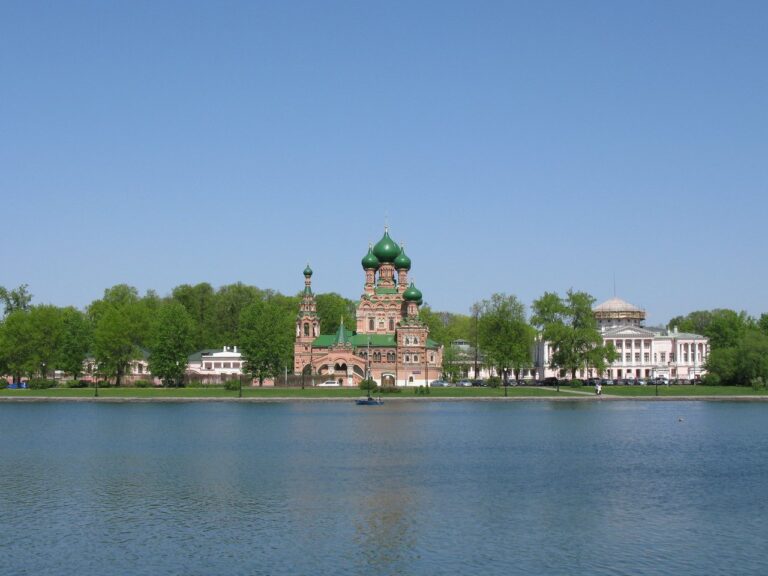
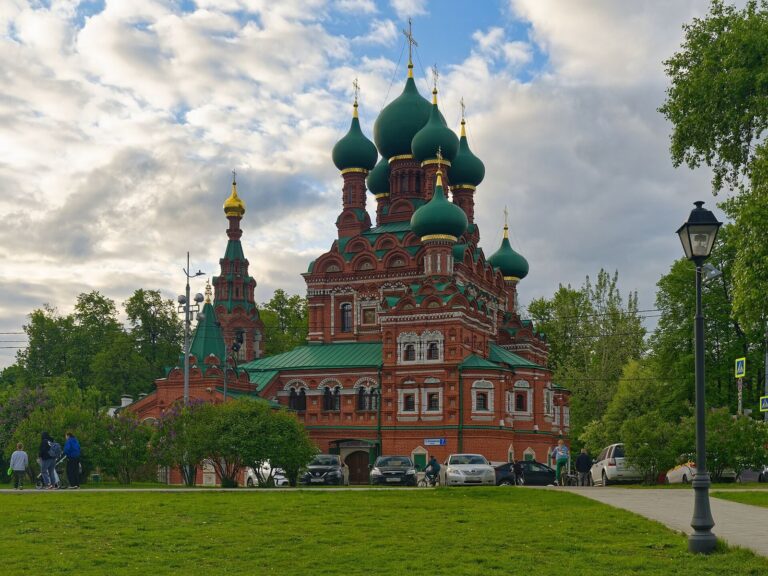
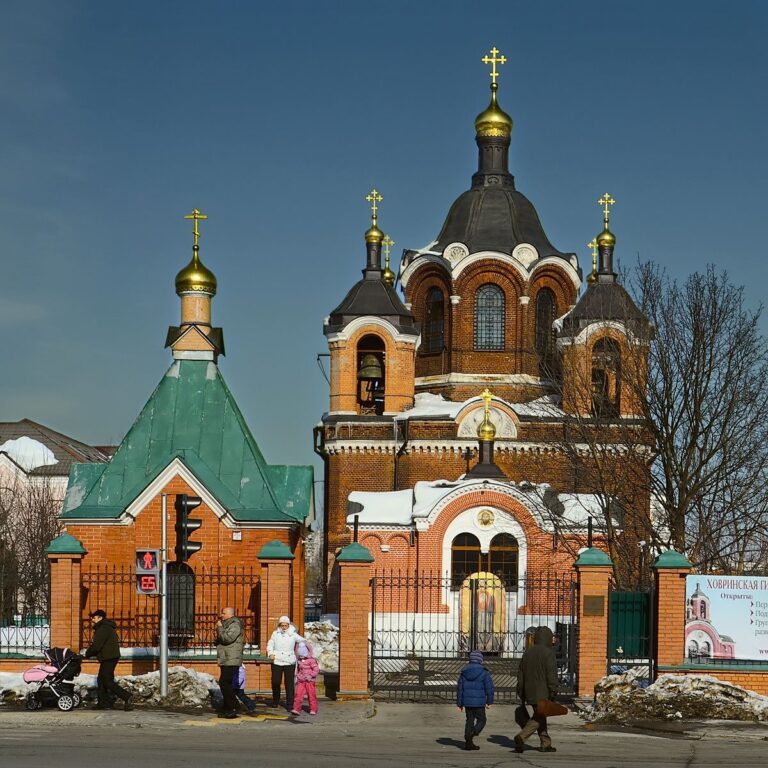
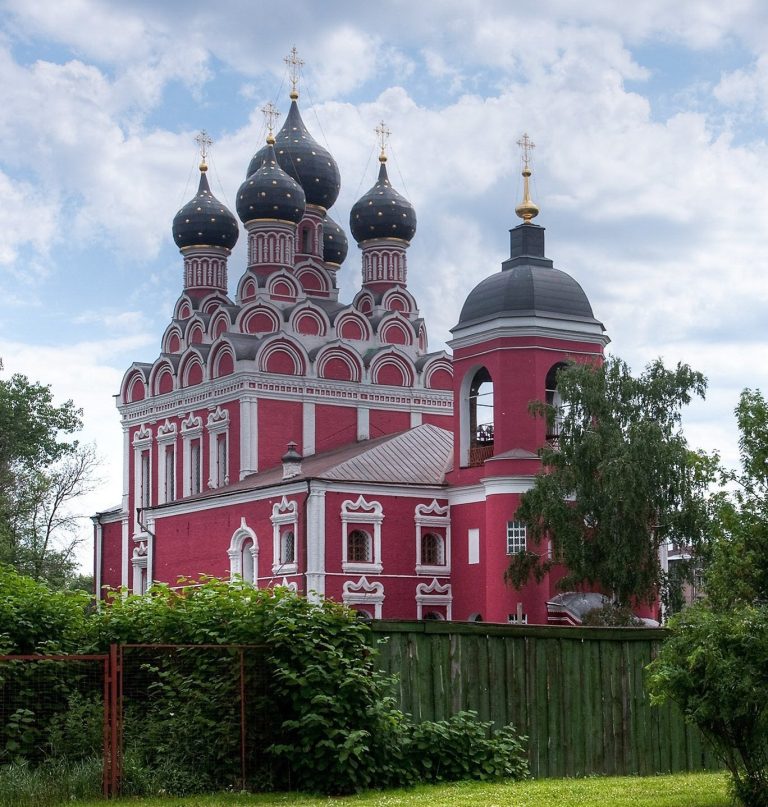
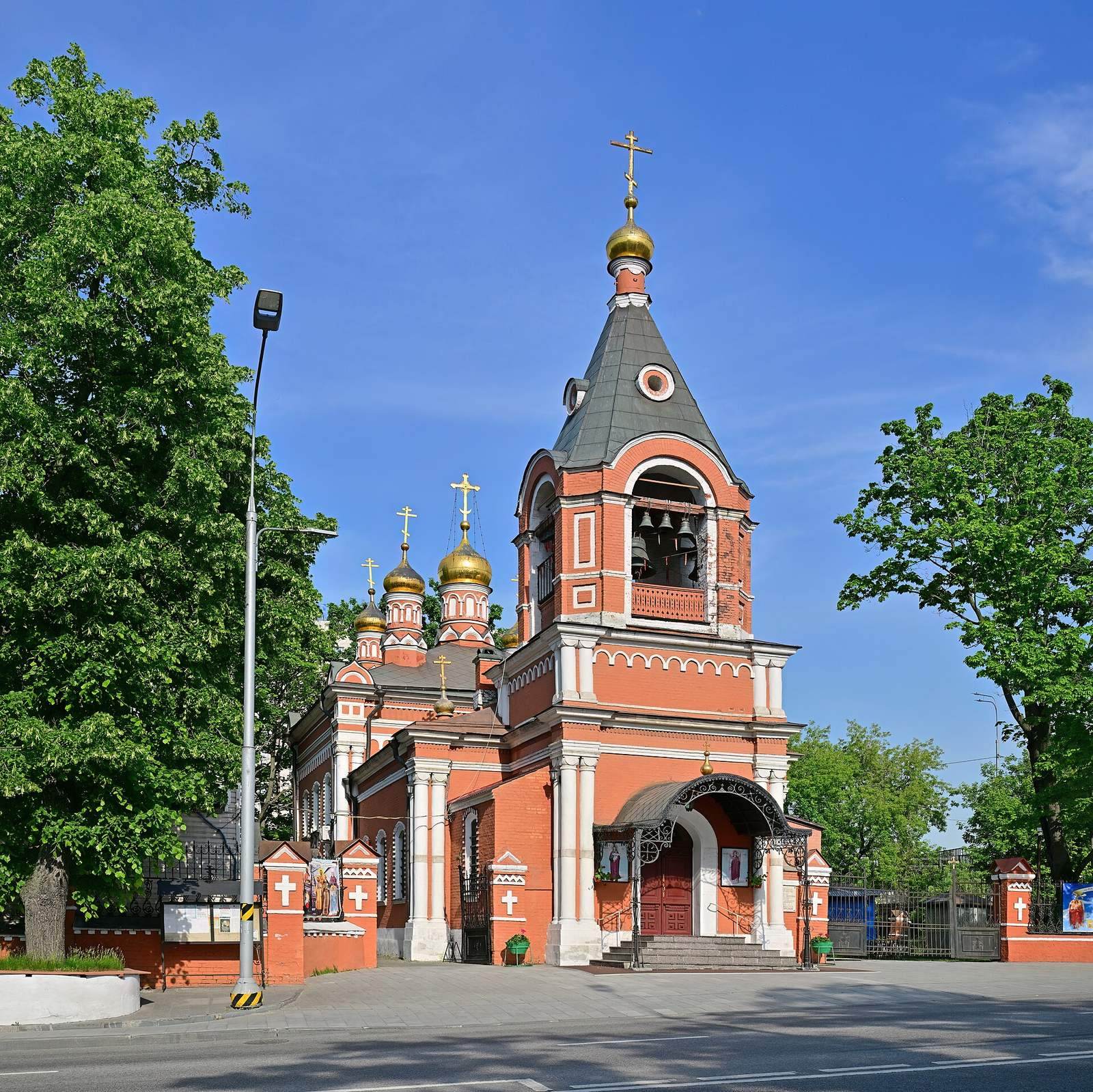
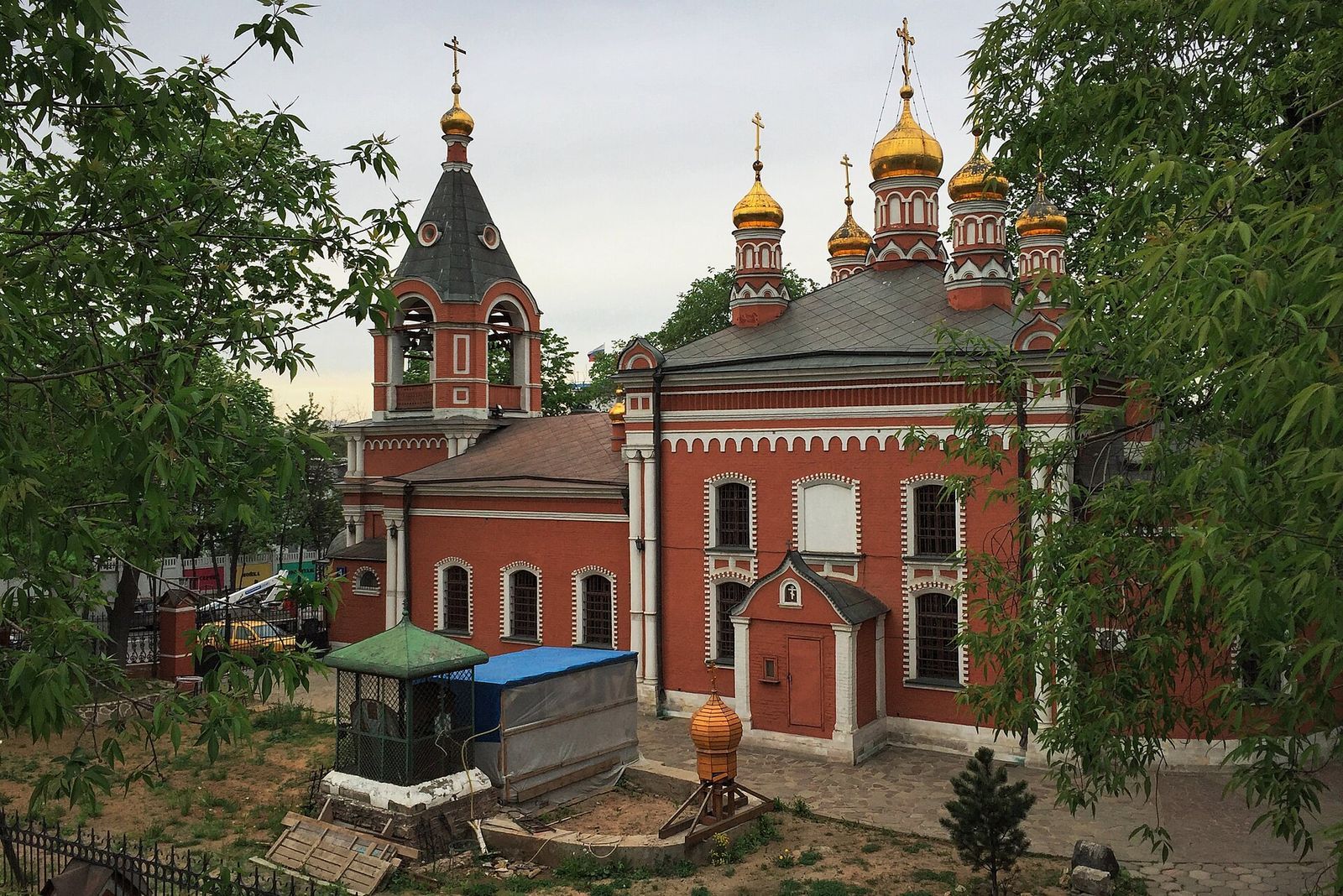
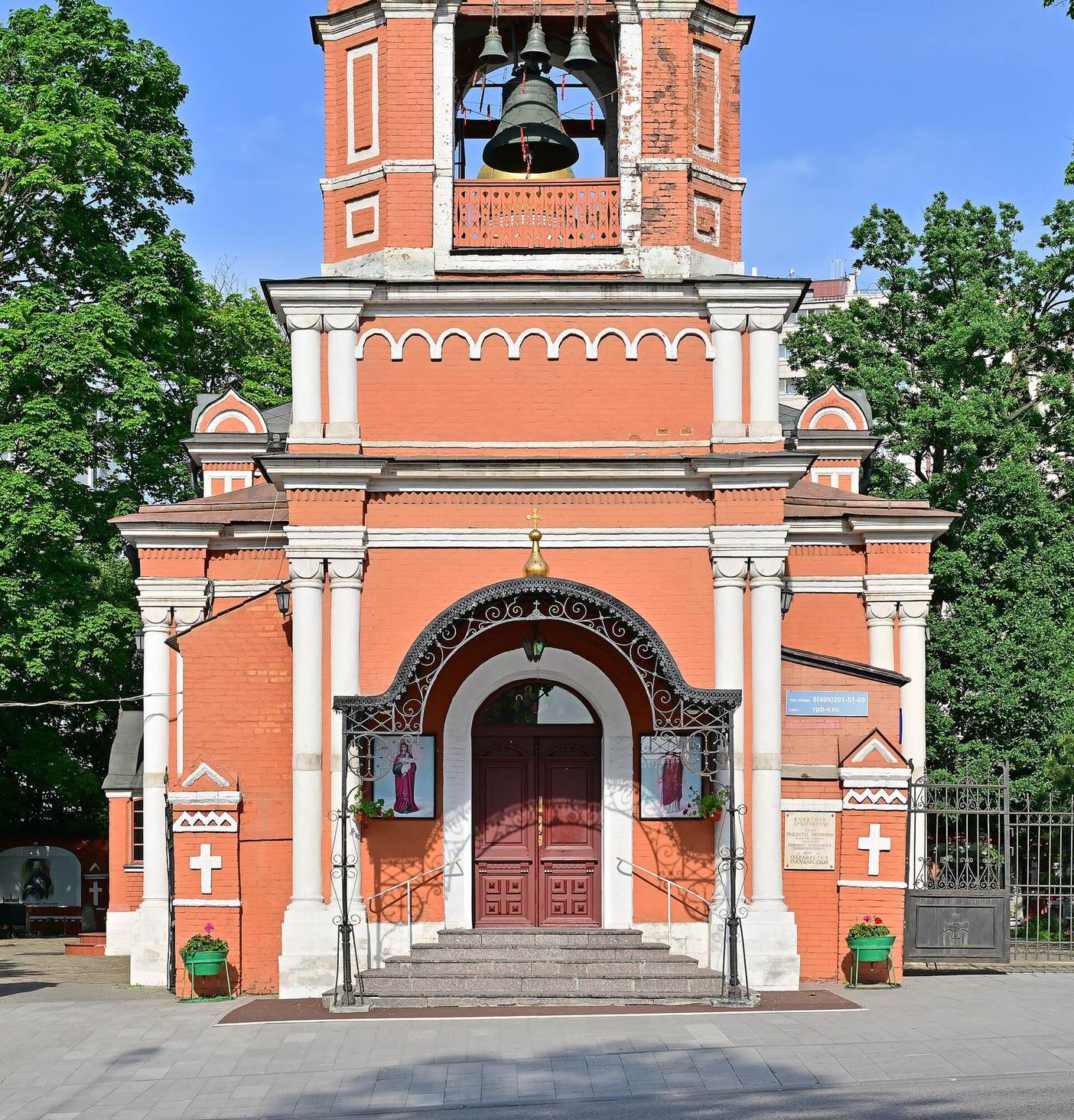
The present brick church stands on the site of earlier churches. It has one main worship space and a screen of icons separating that space from the sanctuary. The building is described as having six domes, while an 1860 diary description counted five and also mentioned a bell tower.
Altars and chapels
The church has three altars. The main altar is dedicated to the Nativity of the Theotokos, and the two side chapels are dedicated to the Archangels Michael and Gabriel.
Icons and church objects
Icons
The oldest icon kept at the church depicts St Nicholas the Wonderworker and is dated to the late 16th or early 17th century. It shows 16 scenes from his life. The church also holds 17th-century icons of St Nicholas, the Nativity of the Theotokos, Christ the Savior, and the Mother of God in the Smolensk and Kazan traditions. The Smolensk icon is venerated as wonderworking. Other venerated images include the Smolensk Hodegetria, a traditional image of Mary associated with guidance, the Mother of God known as ‘Quick to Hear’ and ‘Joy of All Who Sorrow,’ and images of Theodosius of Chernigov and Anna of Kashin. A 16th-century icon of the church’s patronal feast, the Nativity of the Theotokos, is also kept there.
Gospel and relics
The church preserves a 17th-century Gospel given by Patriarch Adrian, as well as fragments of relics belonging to several saints.