Palazzo Guasco Gallarati di Bisio: A Historic Palace in Alessandria
Site at a Glance
- Popularity
- Low
- Country
- Italy
- Primary era
- Early Modern
- Eras represented
- Medieval, Early Modern
- Civilizations
- Duchy of Milan, Holy Roman Empire, Kingdom of Sardinia, Spanish
- Site type
- Domestic
- Remains
- Elite Residence
On this page7 sections
History
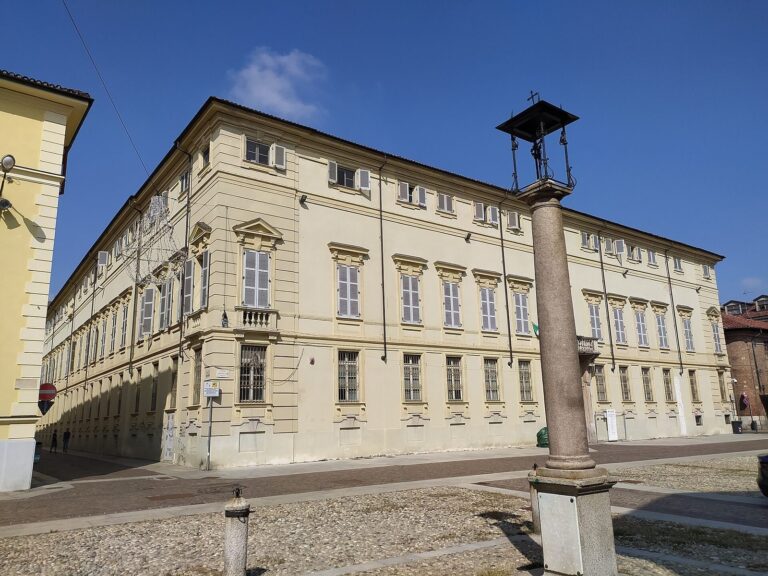
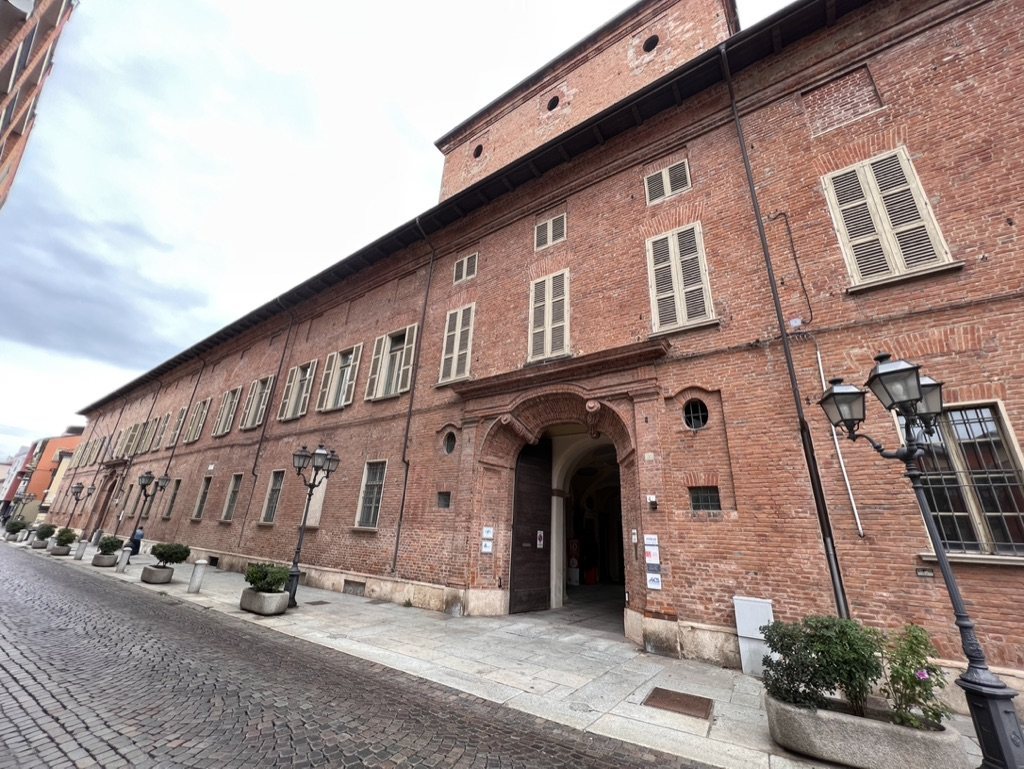
Palazzo Guasco Gallarati di Bisio is a palace in Alessandria, Italy, whose history reaches back to the city’s early centuries. Its construction is dated to the 13th century and the 17th and 18th centuries. Marquis Lodovico Guasco-Gallarati di Solero (1723-1784) commissioned the 18th-century remodeling that gave the building its present configuration.
Remodelling and the first city theatre
After the 1713 Treaty of Utrecht, the agreements that ended the War of the Spanish Succession and reshaped Europe’s political settlement, civic life in Alessandria gained new momentum. In this setting, Marquis Don Filippo Guasco Gallarati di Solero incorporated a small public theatre into the palace, establishing the city’s first theatre.
On 27 March 1729, King Vittorio Amedeo II of Sardinia granted Filippo royal patents, formal authorization from the monarch, to open and manage the theatre. It was inaugurated that September with an opera attended by Crown Prince Carlo Emanuele, later King Charles Emmanuel III. The contemporary Cronaca Bolla, the sole testimony from that period, remarked that the marquis might have done less for the public good had he put his money and abilities toward a more profitable venture.
Several successful seasons presented both serious and comic opera. The theatre also met sustained opposition from Alessandria’s bourgeoisie, or urban middle class. Contemporary chronicles condemned the performances as dissolute and criticized the expense of their productions. In 1766, opposition from the bourgeoisie and clergy led the Solero marquises to close the theatre after a final performance of Metastasio’s Semiramide. They handed the royal patents to Alessandria’s decurions, members of the city’s governing body, for a municipal theatre planned for the future.
Inheritance and later use
When Lodovico died on 20 March 1784, the palace passed to Paolo Guasco di Bisio e Francavilla. Paolo’s death in 1800 brought it to his son Francesco, an Alessandrian notable who held senior civic offices during French rule. The property passed to Emilio in 1814, then in 1847 to Marquis Francesco Guasco Gallarati di Bisio e Francavilla (1847-1926).
In a handwritten will dated 28 December 1919, Francesco left the palace to the Municipality of Alessandria for use as a museum, art gallery, and library. Published on 7 September 1926, the bequest was formally declined by the municipality, and the palace returned to the heir, Prince Emilio Guasco Gallarati, Marquis of Bisio and Francavilla, born in 1878.
The palace remains in use. Its right wing accommodates provincial administration, including the Directorate of Economy and Development, the Provincial Library of Local Publications, the Institute for the History of the Resistance and Contemporary Society, and the Carlo Carrà modern art gallery. The Province of Alessandria owns the palace, while the left wing is privately owned.
Remains
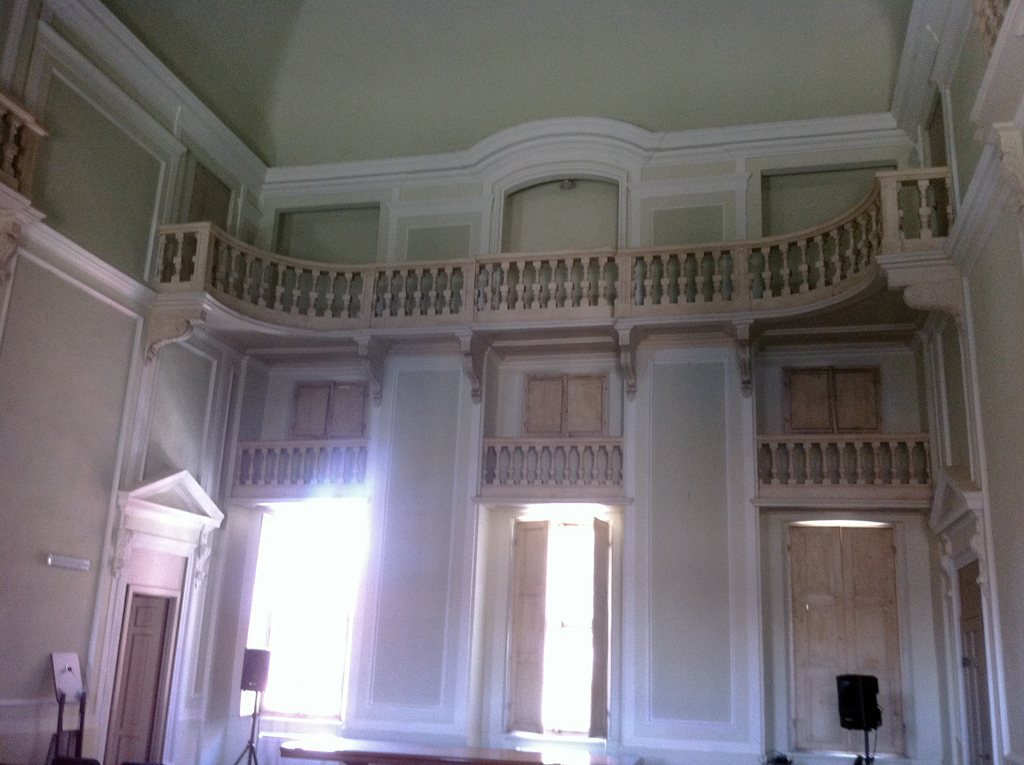
The palace is divided into right and left wings. Its documented interior features include the former theatre and salons that retain their 18th-century architectural structure.
Wings and interiors
Former theatre
An entrance in the left wing provided access to the theatre incorporated into the palace. The central box in its first row was decorated with the coat of arms of the House of Savoy, the ruling dynasty of the Kingdom of Sardinia.
Salons
Some salons preserve their 18th-century architectural structure and are awaiting restoration.