Koroni Monastery: An Orthodox Monastery and School in Greece
Site at a Glance
- Popularity
- Medium
- Country
- Greece
- Primary era
- Early Modern
- Eras represented
- Early Modern
- Civilizations
- Ottoman
- Site type
- Religious
- Remains
- Monastery
On this page12 sections
History
Byzantine foundation
Koroni Monastery is an Orthodox monastery in the Agrafa region of Greece, between the villages of Mesenikolas and Moschato. Byzantine emperor John II Komnenos founded it in 1123 after a miraculous icon of the Virgin Mary was discovered at the site. Dedicated to the Nativity of the Virgin, it became a religious and educational center in the region.
Decrees from the patriarchs of Constantinople John IX Hieromnemon, Leo Styppes, and Michael II Kourkouas recognized the monastery as patriarchal and stavropegial. Stavropegial status placed it under a patriarch’s direct authority rather than that of the local bishop. The original Byzantine monastery later declined and was destroyed, an event attributed to a major earthquake in the sixteenth century.
Re-establishment and Ottoman-era life
Andreas Bounos re-established the monastery in the early sixteenth century, when work on the present complex began. After the Treaty of Tamasi in 1525, the Agrafa region flourished as an educational center for Greeks, and the monastery maintained a school. By the eighteenth century it operated as a higher-level monastic school. Its teachers included Anastasios Gordios, a scholar, and Kosmas the Aetolian, an Orthodox missionary and preacher.
Seraphim lived at the monastery in the mid-sixteenth century before becoming Metropolitan of Phanari and Neochori, a senior bishop responsible for an ecclesiastical region. Ottoman authorities tortured and killed him on 4 December 1601. His skull is kept at the monastery, and his feast is observed on the anniversary of his death. In 1600, the uprising against Ottoman rule led by the Orthodox bishop Dionysius the Philosopher prompted accusations that the monks had helped the insurgents. The monastery was spared.
The monastery was once called the Monastery of the Cold Spring. The name Koroni appears in a document of 1718. In 1929, the Metropolitan of Thessaliotis proposed that the name referred to the monastery’s distant appearance like a crown. The architect and archaeologist Anastasios Orlandos suggested a possible connection with the crow.
War, abandonment, and restoration
During the German occupation, the monastery aided resistance forces. On 3 December 1943, German troops set fire to its church. The fire destroyed books and choir stalls, while the carved icon screen, icon stands, and icon of the Virgin escaped serious damage. World War II and the Greek Civil War, including fighting nearby, left the monastery badly affected and abandoned.
The monastery had no monks after its abbot died in 1967, the year it was declared a historic preserved monument. It was restored in the twenty-first century. Its annual observances include the Nativity of the Virgin on 8 September and the feast of Saint Seraphim on 4 December.
Remains
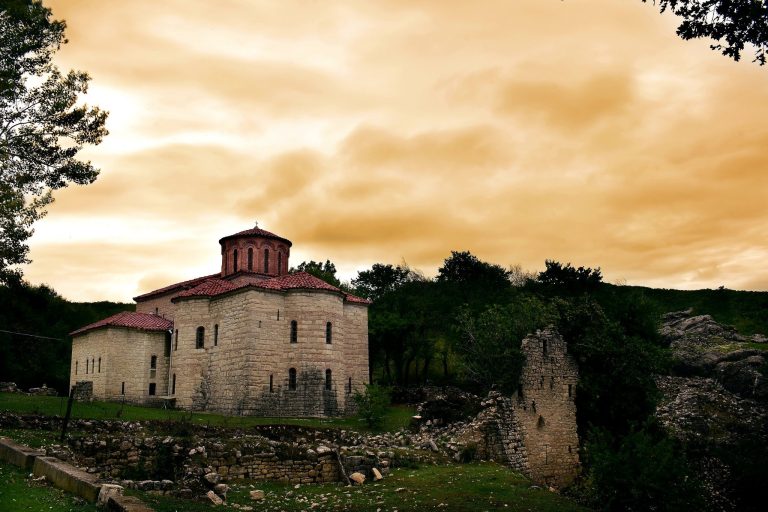
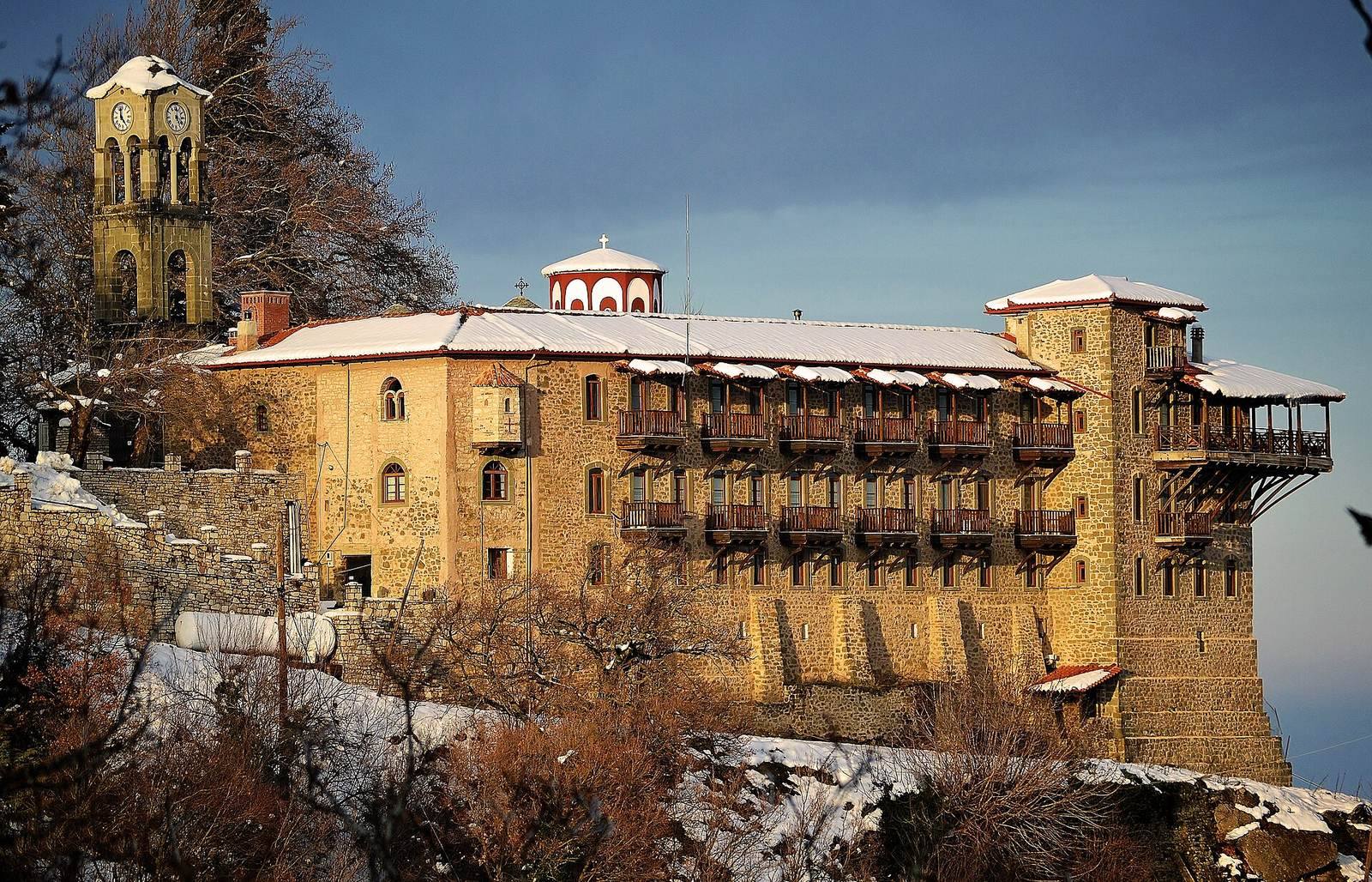
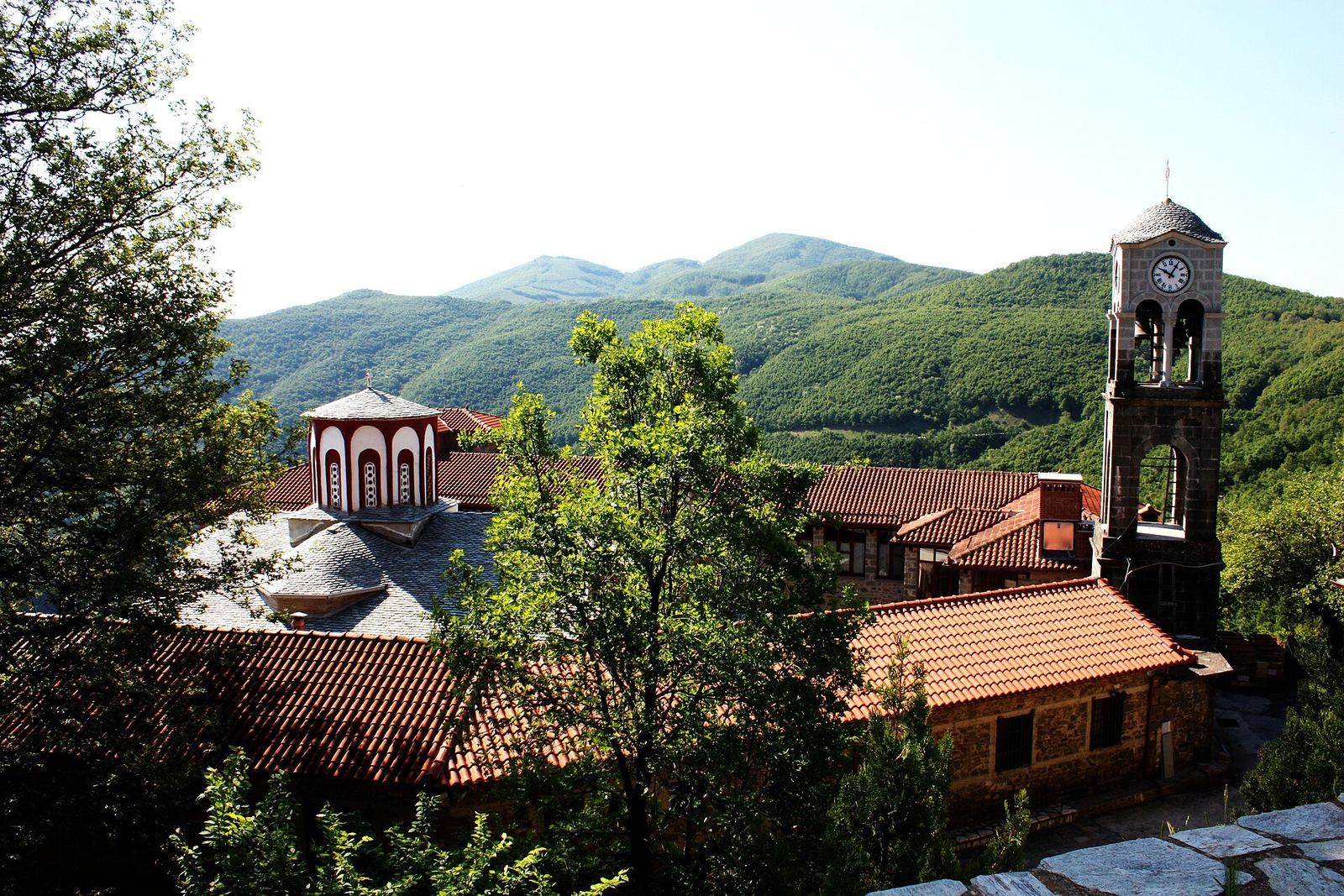
The monastery stands at about 800 metres above sea level on a slope covered with oak and chestnut trees. Its approximately rectangular compound has two-storey monastic cells along the enclosure, with wooden balconies. The principal church stands at the centre of the courtyard and is in excellent condition.
The principal church
Plan and structure
The church is a domed, cross-in-square building, meaning a square plan organized around a central dome, following an Athonite tradition associated with Mount Athos. Four columns support the dome, while arches span the arms of the cross-shaped plan and vaulted ceilings cover the corner spaces. Niches extend the arms of the cross. The sanctuary ends in three semi-hexagonal apses, or projecting spaces. On the west side, the narthex, an entrance area, is divided into three compartments by arches resting on half-columns.
Paintings and carved screen
Wall paintings cover the church interior. An inscription dates them to August 1587 and names the monk Daniel as their painter. The wooden iconostasis, a screen of icons separating the sanctuary from the main worship space, dates to the early eighteenth century. Its floral and animal carvings include reliefs of the first humans lamenting and leaving Paradise, and of Abraham’s sacrifice. The icons on the screen date from the sixteenth and eighteenth centuries.
Chapels and Byzantine remains
Chapel of Saint John the Forerunner
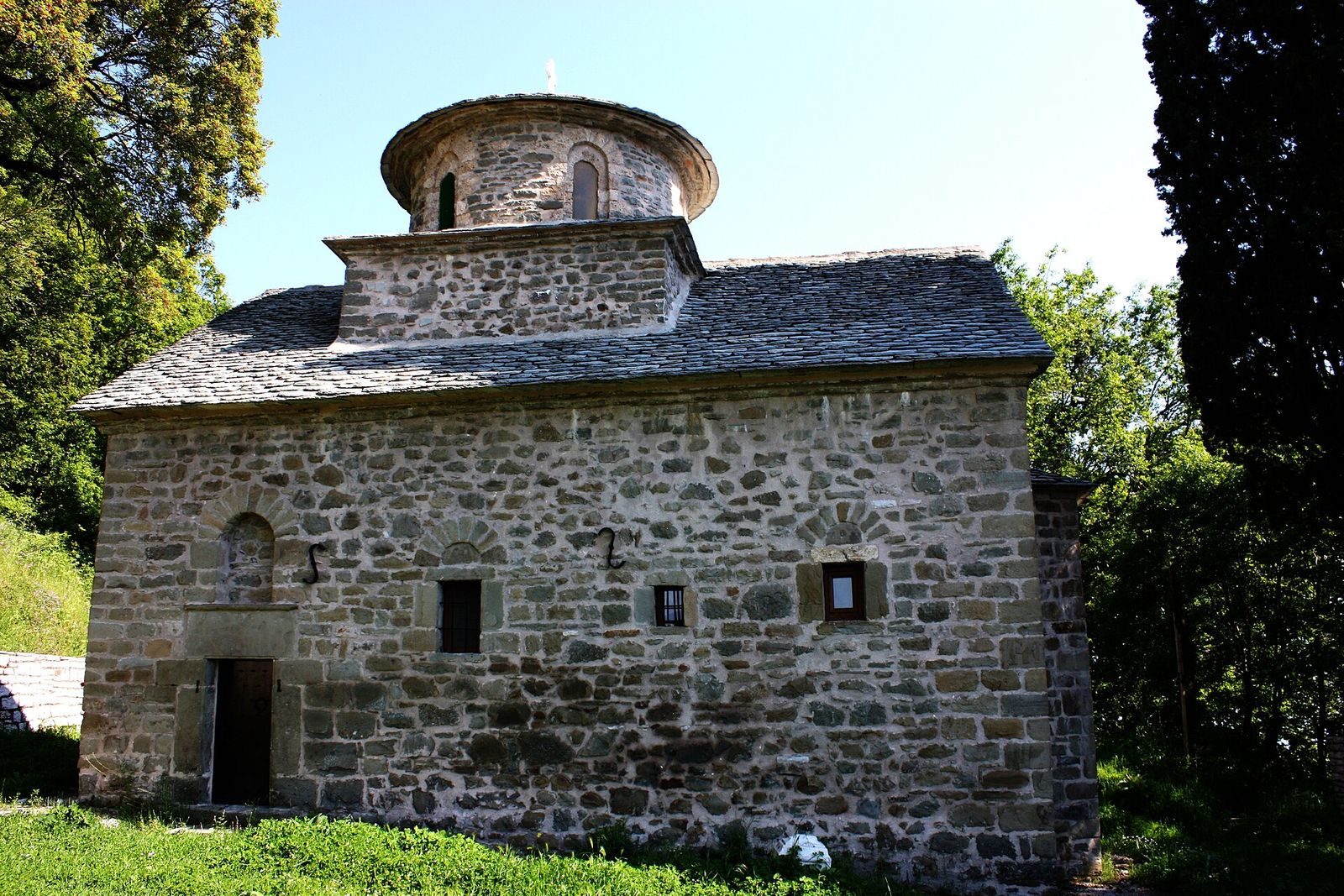
Attached to the church at its northwest corner, this single-nave chapel has a spherical dome and is dedicated to Saint John the Forerunner, also known as John the Baptist. Its foundation inscription names Apostolakis of Vraniana as its founder and gives 1735 as the completion date. The founder appears in a painting wearing embroidered ankle-length garments and a red coat edged with black fur. Other paintings depict local saints, including Seraphim the New Martyr, Bessarion of Larissa, Dionysius of Olympus, Charalambos Charitovlitis, Damianos the New, a venerable martyr, and Michael of Granitsa.
Chapel of Our Lady of the Angels
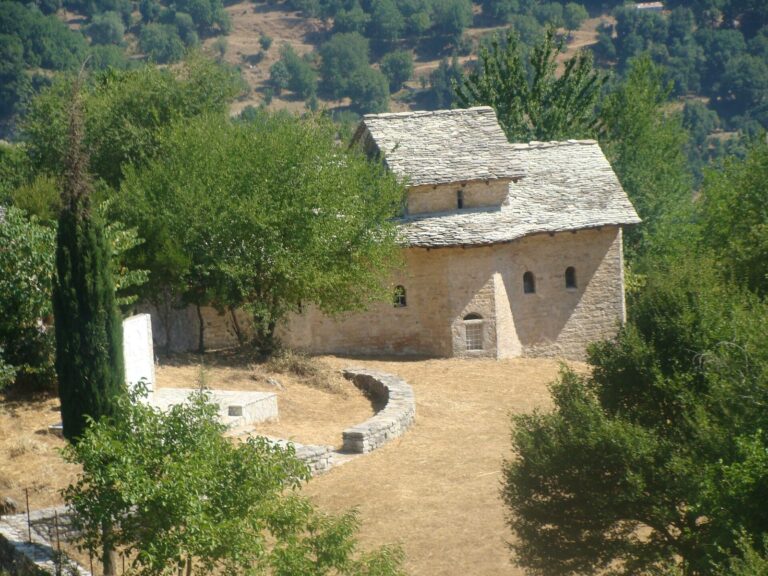
A separate chapel occupies the place where the icon of the Virgin that prompted the monastery’s foundation was discovered.
Carved fragments
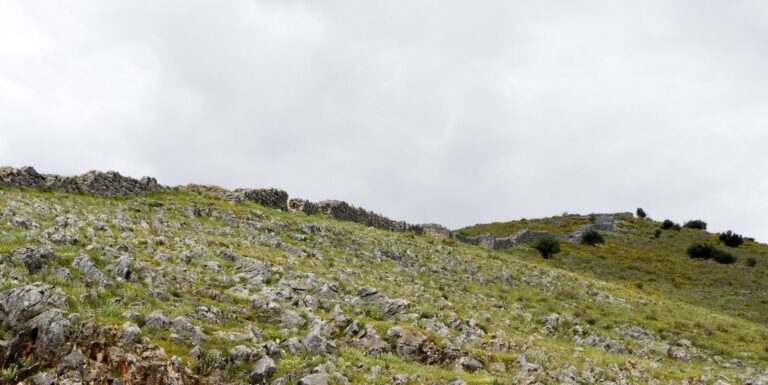
Fragments of carved decoration from the original Byzantine monastery survive at the site.