Church of the Holy Spirit in Książ Wielki: A Gothic Roman Catholic Church
Site at a Glance
- Popularity
- Low
- Country
- Poland
- Primary era
- Early Modern
- Eras represented
- Medieval, Early Modern, Modern
- Civilizations
- Kingdom of Poland, Polish–Lithuanian Commonwealth, Russian
- Site type
- Religious
- Remains
- Church
On this page13 sections
History
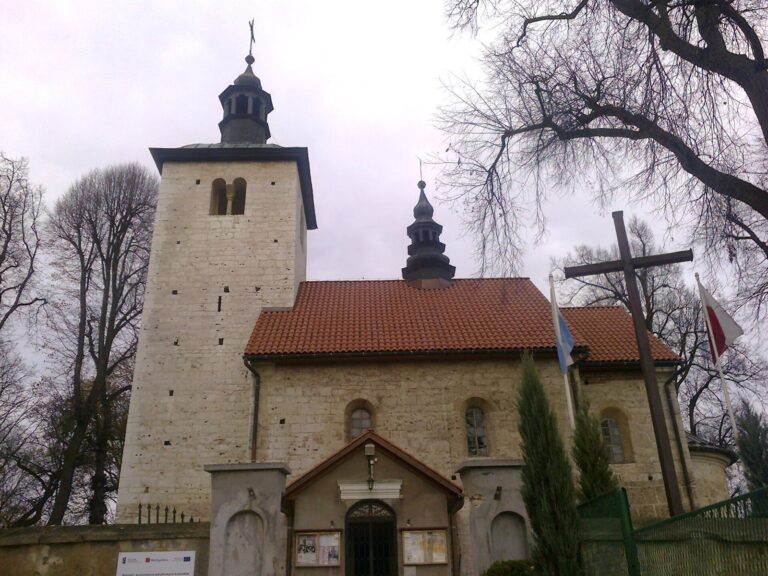
The Church of the Holy Spirit in Książ Wielki, Poland, is a Roman Catholic church founded by Spytko of Melsztyn as the town was established. Construction took place from 1372 to 1381, and the church was built in the Gothic style. Spytko, a Polish nobleman and son of Jan of Melsztyn, regional governor of Kraków, dedicated it to the Holy Spirit. It belongs to the parish of St. Adalbert, Bishop and Martyr, and celebrates its feast on Pentecost, the Christian commemoration of the Holy Spirit’s descent upon the apostles.
Foundation and Augustinian community
Spytko brought Augustinians, members of a Catholic religious order following the Rule of St. Augustine, to serve the church. They lived in a monastery beside it. As Calvinism, a Reformed Protestant tradition, spread, the monks left Książ. They returned 125 years later, when the town was ruled by Piotr Myszkowski, bishop of Kraków.
Rebuilding and the monastery’s suppression
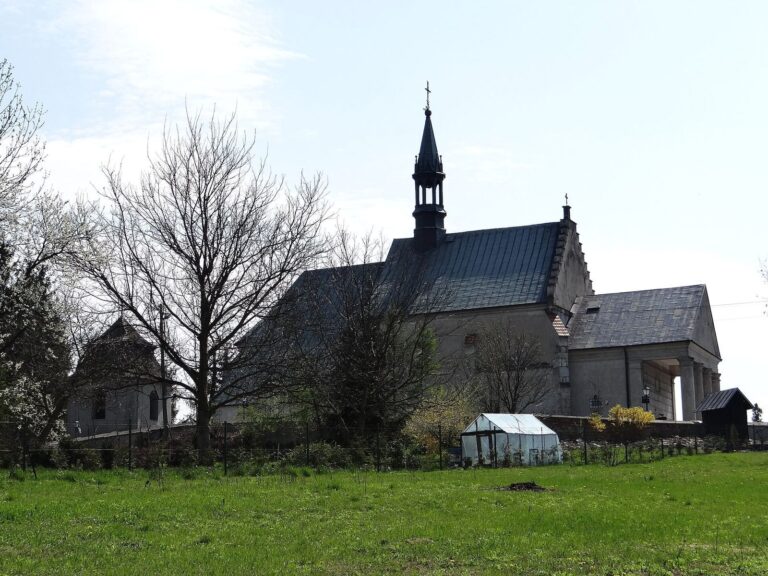
Fires and earthquakes repeatedly damaged the monastery south of the church. After a fire in 1741, the church’s present main body was built, and a classical-style façade followed around 1840.
In 1864, the January Uprising, a Polish revolt against Russian rule in 1863–64, directly prompted the suppression of the local monastery and many others. Under a Tsarist order, troops surrounded monasteries at 8 a.m. on 27 October. Most of the Książ monks were sent to Wieluń, and their monastery became a poorhouse. Father Antoni Franciszek Śliwiński was the only member of the order to remain in town and its last local representative. He died on 24 August 1894 and was buried in the local cemetery.
Wartime loss
On 30 September 1941, German occupying forces took the church’s two bells.
Remains
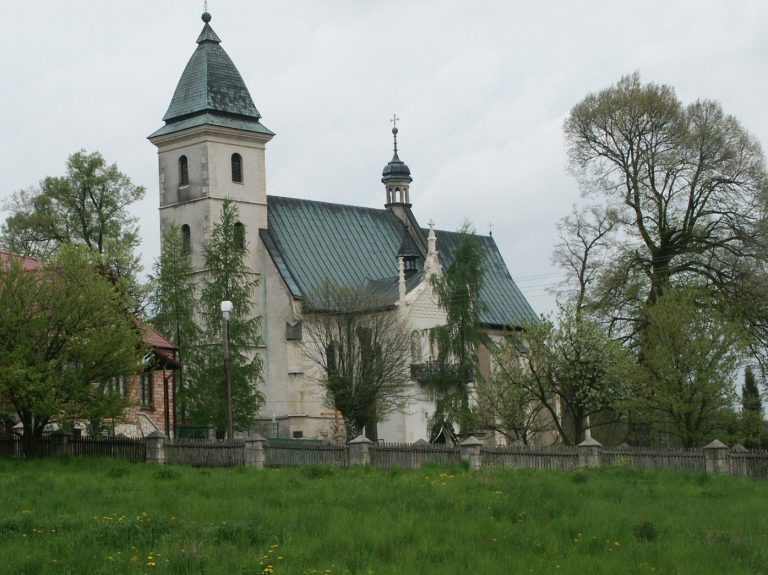
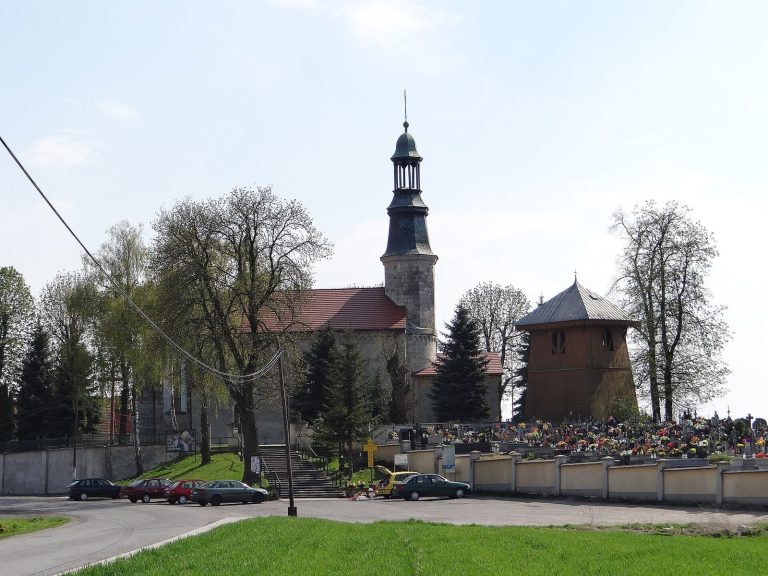
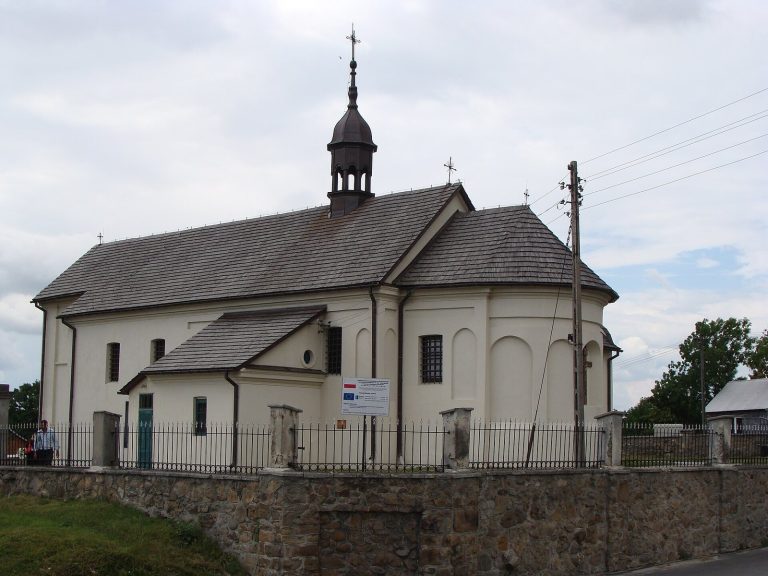
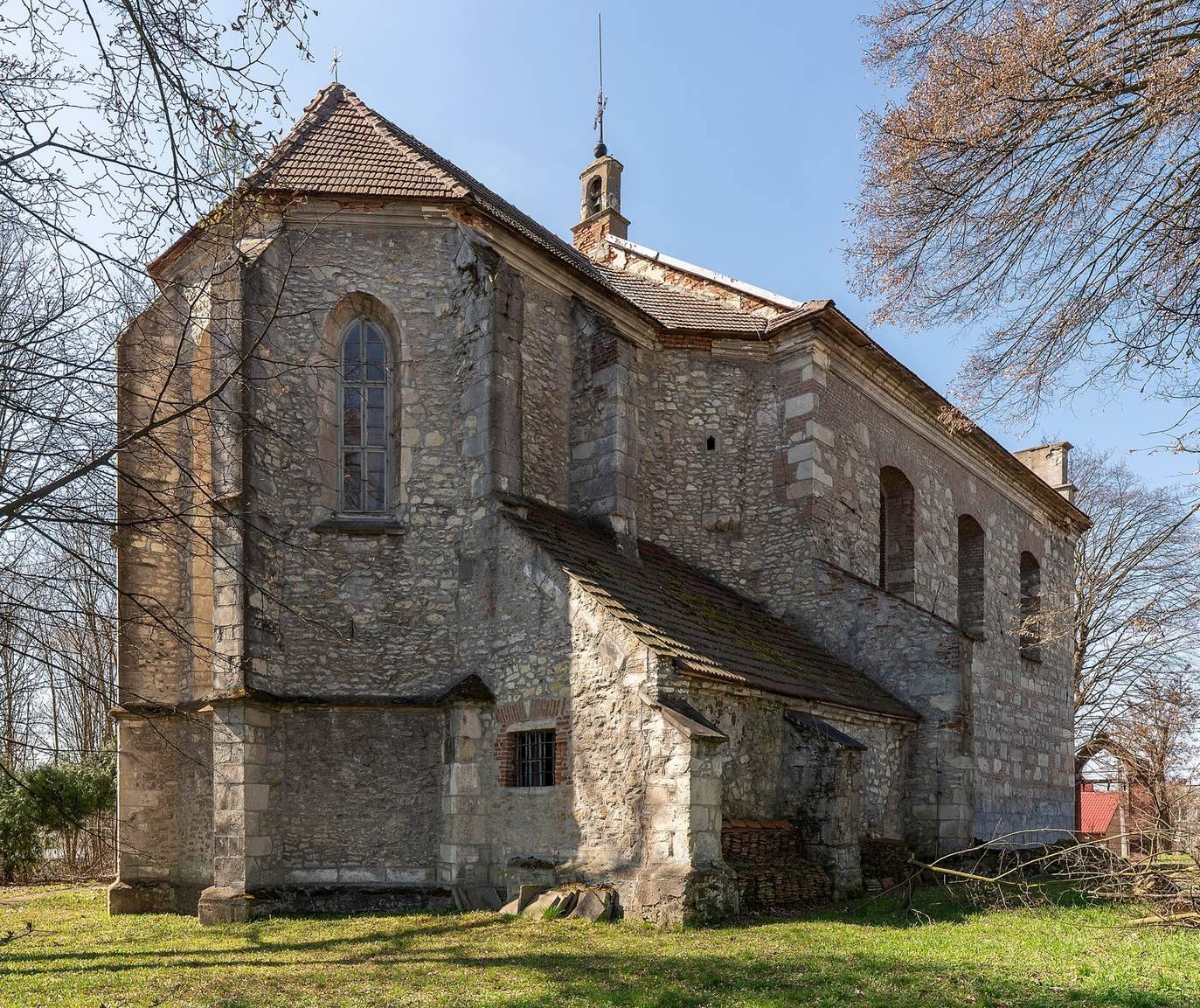
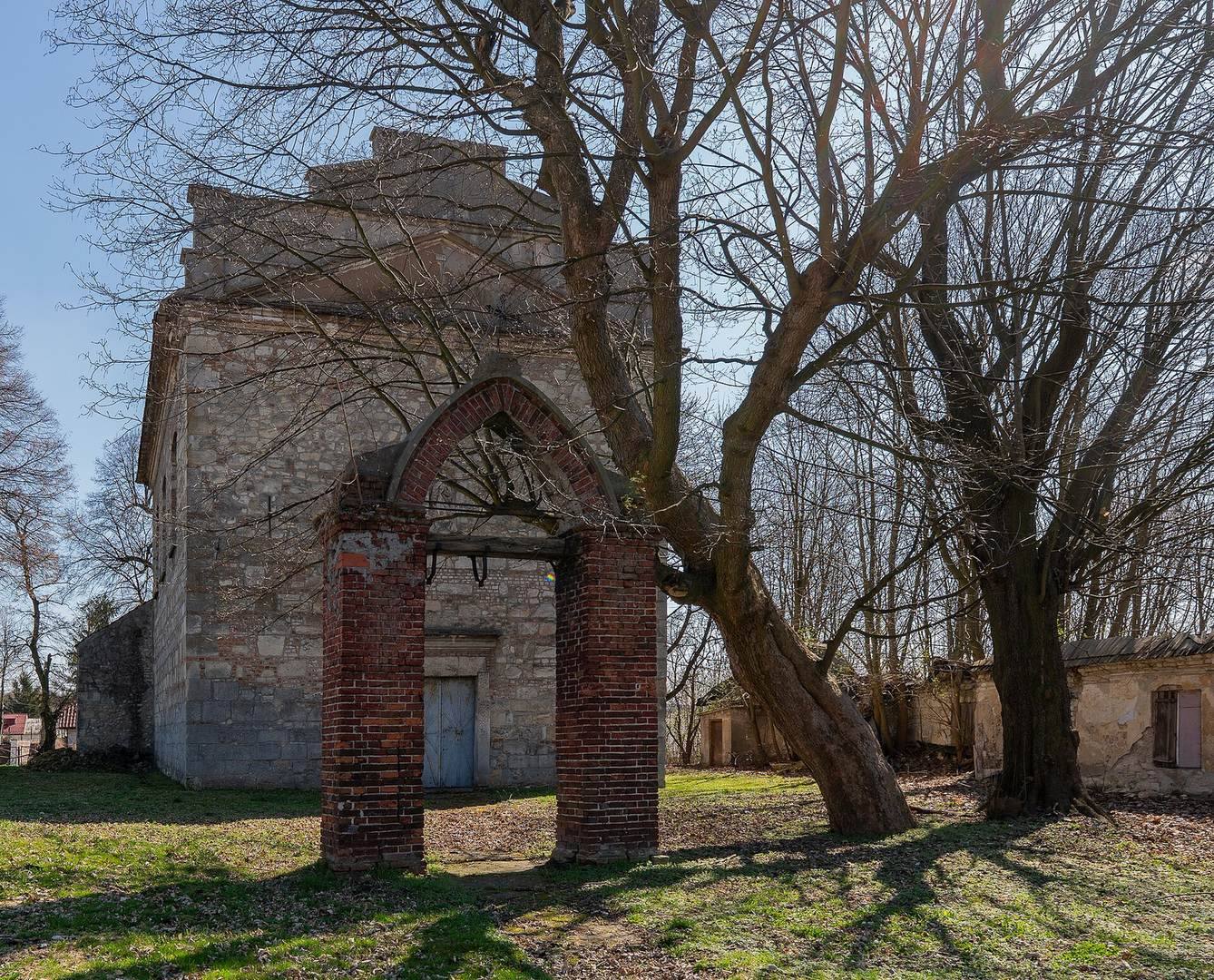
The church is a sandstone building arranged around a single nave, the main space for worship, with one tower. Its surviving features combine parts of the original Gothic structure with later additions and furnishings. The sanctuary end, sacristies on the north and south sides, and a brick belfry form the principal described elements.
Church fabric and exterior features
Main body and sanctuary end
The church’s main body reflects the rebuilding that followed the 1741 fire. Only part of the original Gothic sanctuary end survives, preserving a fragment of the earliest structure.
Sacristies
The older sacristy, a room for clergy and church furnishings, stands on the north side and dates to the turn of the fifteenth and sixteenth centuries. A second sacristy, formerly used as a treasury, was added on the south side, probably after 1611.
Belfry
The present belfry, an open structure for hanging bells, was built of brick in 1836 in the Gothic Revival style. Its form is a broken arch topped by an iron cross, with two small bells once hung from the arch. The larger bell measured 40 centimetres across and carried an inscription dated 1901 honoring the Blessed Virgin Mary and naming Michael Sławeta as church rector.
Interior and devotional furnishings
Main altar
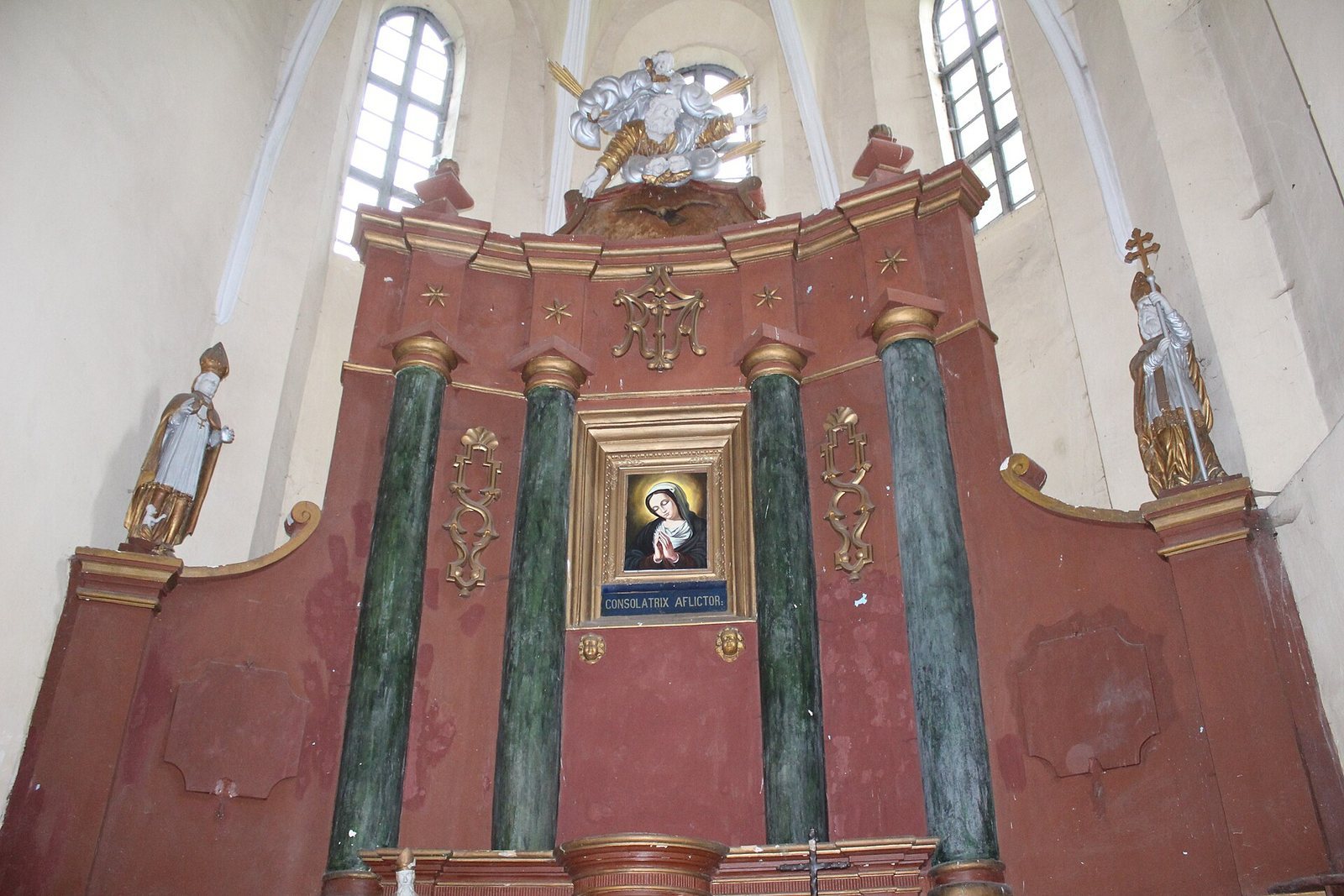
The late-seventeenth-century main altar is crimson with restrained gilding. It includes statues of St. Adalbert and St. Stanislaus, both venerated as patrons of Poland, and a gilded late-Baroque tabernacle, a container for the Eucharist. Its central image is Our Lady, Comforter of the Afflicted, painted by the Italian artist Giovanni Battista Salvi and regarded as miraculous. Side doors lead behind the altar: one bears a painting of St. Casimir, a Polish prince, and the other depicts St. John Cantius, a Polish priest and theologian.
Other altars
The church has five altars in all. The second is dedicated to St. Thecla, an early Christian martyr, and the third to St. Augustine, a bishop and theologian. A sculpture of Ecce Homo, showing Christ presented before his crucifixion, is in the fourth altar; the fifth is dedicated to St. Anthony of Padua, a Franciscan preacher. Relics of St. Anthony are also associated with the church.
Choir
Completed in spring 1751, the choir was painted sapphire blue with a finish imitating marble. By February of that year, it held a wooden harmonium with ten stops, controls that alter the instrument’s sound; the stops had been adjusted. A painting above the choir shows St. Anthony with the infant Jesus and a lily.