Silesian Ostrava Castle: A Medieval Frontier Stronghold in Czechia


Site at a Glance
- Rating
- 4.4
- Popularity
- Medium
- Country
- Czechia
- Primary era
- Early Modern
- External website
- Open
- Eras represented
- Medieval, Early Modern, Modern
- Civilizations
- Holy Roman Empire
- Site type
- Military
- Remains
- Castle
On this page13 sections
History
Silesian Ostrava Castle in Czechia was founded in the second half of the thirteenth century on the initiative of the Opole line of the Silesian Piasts, a medieval dynasty that ruled several Polish and Silesian principalities. Its first written mention dates to 1297. Built as a frontier stronghold between Silesia and Moravia, it protected the trade route from Opava through Hlučín and Cieszyn to Kraków, in an area where the Ostravice formed the boundary.
Princely fortress and noble residence
The castle initially belonged to the princely rulers of Silesia. Its frontier function ended in 1327, when the Silesian duchies, including the Duchy of Cieszyn, became fiefs of the Bohemian Crown, the political framework of the medieval and early-modern Kingdom of Bohemia. In 1380, Duke Przemysław I Noszak exchanged the castle for the hereditary office of a local bailiff in Cieszyn. It then passed into the hands of the nobility and developed into a residential estate.
During the Hussite Wars, fifteenth-century religious and political conflicts centred in Bohemia, the castle was controlled by the Orphans, a radical Hussite military faction. Jan Čapek of Sány, one of the faction’s military commanders, is recorded as its owner between 1419 and 1439.
Jan Sedlnický of Choltice bought the castle in 1508 and transformed it into a representative Renaissance palace between 1534 and 1548. The interiors were decorated with paintings by Bernard of Polish Ostrava. The castle also hosted important visitors and political gatherings. In 1543, Archduchess Elizabeth of Austria passed through it with a large entourage while travelling to her wedding with King Sigismund Jagiellon of Poland. Jan Sedlnický, then lord and military commander of the castle, arranged her pre-wedding banquet at the princely court in Fryštát.
On 30 July 1590, the lords and knights of the Duchy of Cieszyn assembled at the castle and adopted a declaration on the duchy’s administrative order. The declaration included the legal confirmation of Czech as the duchy’s sole official language.
War, ownership, and decline
The Thirty Years’ War, a European conflict fought from 1618 to 1648 amid religious, dynastic, and political struggles, brought repeated attacks. Neapolitan troops commanded by Karel Spinelli plundered the castle and town in 1621, Danish troops did so in 1626, and Albrecht von Wallenstein’s army followed in 1628. In 1637, Archduchess Cecilia Renata, sister of Emperor Ferdinand III, spent a night at the castle while travelling to Poland for her marriage to King Władysław. Swedish forces occupied Ostrava and the castle from 1642 to 1649. Prussian soldiers later occupied the complex during the Silesian Wars, eighteenth-century conflicts in which Prussia contested control of Silesia.
The noble Wilczek family bought the castle and the town of Polish Ostrava from the Sedlnický family in 1714. The castle initially served as the seat of the Polish-Ostrava estate, but financial difficulties left it almost empty in the early nineteenth century. Only two rooms were then used for administrative work, and the Knights’ Hall was demolished in 1844.
A fire destroyed the left wing in 1872, after which it was rebuilt. The more serious long-term damage came from intensive underground coal mining. Subsidence lowered the structure by approximately 8 to 16 metres, cracking walls and damaging other parts of the complex. A special commission investigated the deterioration in 1895.
The effects of subsidence continued into the twentieth century. In 1921, 45 people still lived in the castle, which contained 34 rooms, 11 kitchens, 7 storerooms, 7 offices, and several other rooms. By 1930, 26 people occupied only eight usable rooms, and by 1934 just three rooms remained habitable. The complex became largely vacant in the second half of the 1930s and was used mainly as a night shelter by homeless people. During unauthorized demolition work in 1933, a worker was fatally injured in the oldest part of the castle. Proposals to convert the complex into a representative building on the Moravian-Silesian frontier were not carried out.
War damage and reconstruction
Bombing damaged the castle’s left side in 1944. A Czechoslovak state decree confiscated the property from the Wilczek family in 1945, after which a mining company administered it. A demolition order issued on 15 February 1954 placed the complex under further threat during the 1950s. The castle passed to the authorities of the Silesian Ostrava district in 1958, but its deterioration continued.
The castle was placed on the cultural-monument list in 1963. Even so, the only surviving Gothic bastion was bulldozed in 1965, while sections of the walls and other unsafe structures were demolished. Conservation advanced slowly in the following decades. A castle winery called Rotunda opened in 1981, the residential ruins were gradually cleared, and part of the walls was rebuilt. Some later construction, including a planned hotel section, proceeded without the required permits, documentation, or archaeological investigations. The ruins were removed from the cultural-monument list in 1989 and restored to it in 1990.
A private company bought the castle in 1992 with plans for a luxury hotel and a cultural and conservation centre, but the project failed. The city of Ostrava acquired the complex in 2001 and began intensive reconstruction. The tower received a roof in 2003, and the restored castle opened in 2004 for cultural and private events. The complex now includes an art gallery and a small historical exhibition in the tower covering the castle and city, the Hussite movement, and the Thirty Years’ War.
Legends of the castle
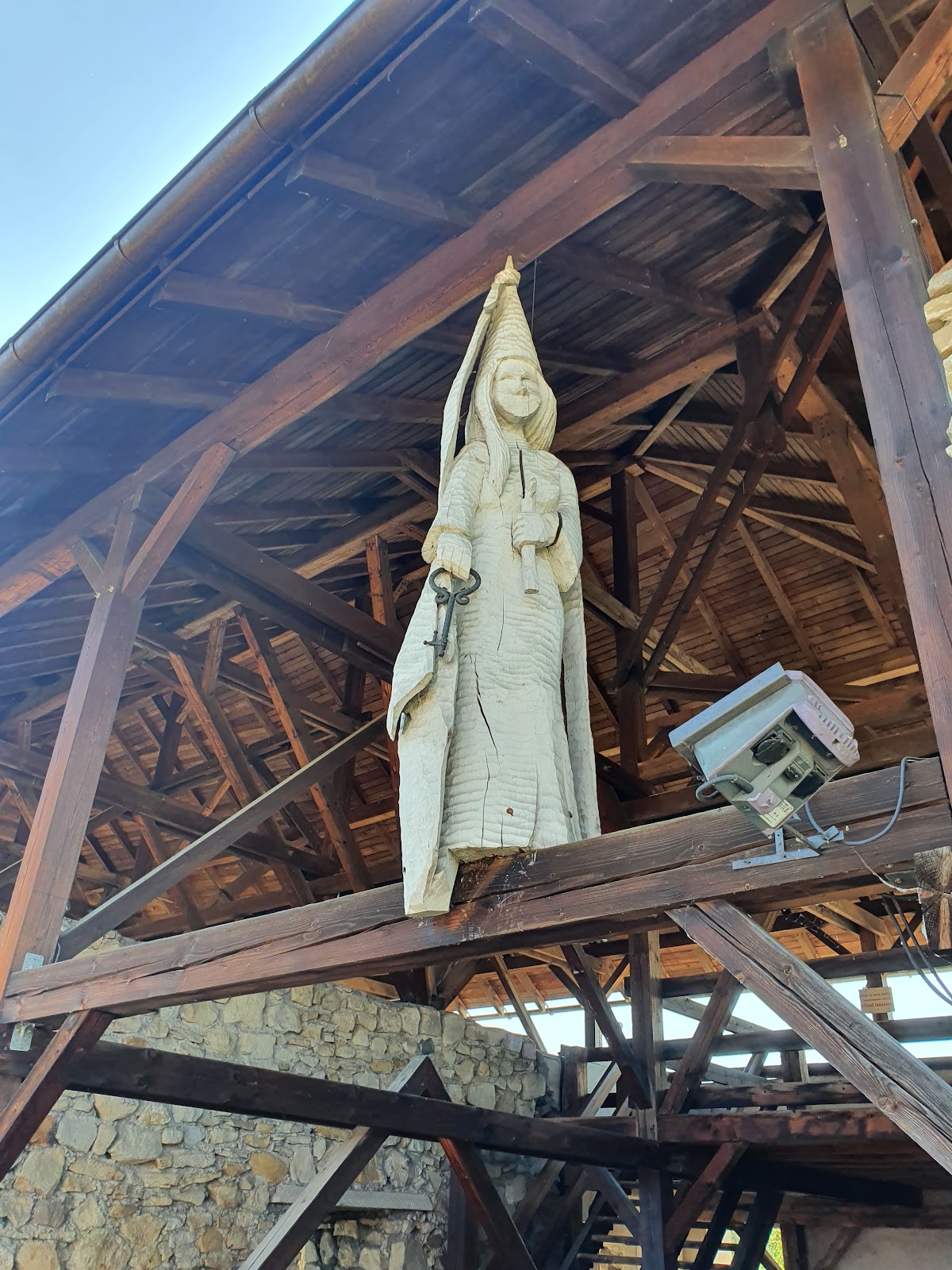
Local traditions associate the castle with hidden treasure beneath the buildings. According to one legend, the treasure could be seen only on Good Friday and was guarded by a man carrying an iron club. Another tradition tells of a White Lady who appeared before the death of a member of the castle owner’s family. She was said to have loose hair, a lit candle, and a golden object.
Remains
The castle stands in Silesian Ostrava near a ford and close to the confluence of the Lučina and Ostravice rivers. Its earliest form was a fortified settlement consisting of a two-storey building and a gate tower. Earthworks initially protected the site, which was soon enclosed by a stone wall approximately 4 metres high and 2.5 metres thick. The surviving complex combines Gothic and Renaissance elements, although its present architectural character is predominantly Renaissance.
Fortifications and entrance
Entrance gate and tower
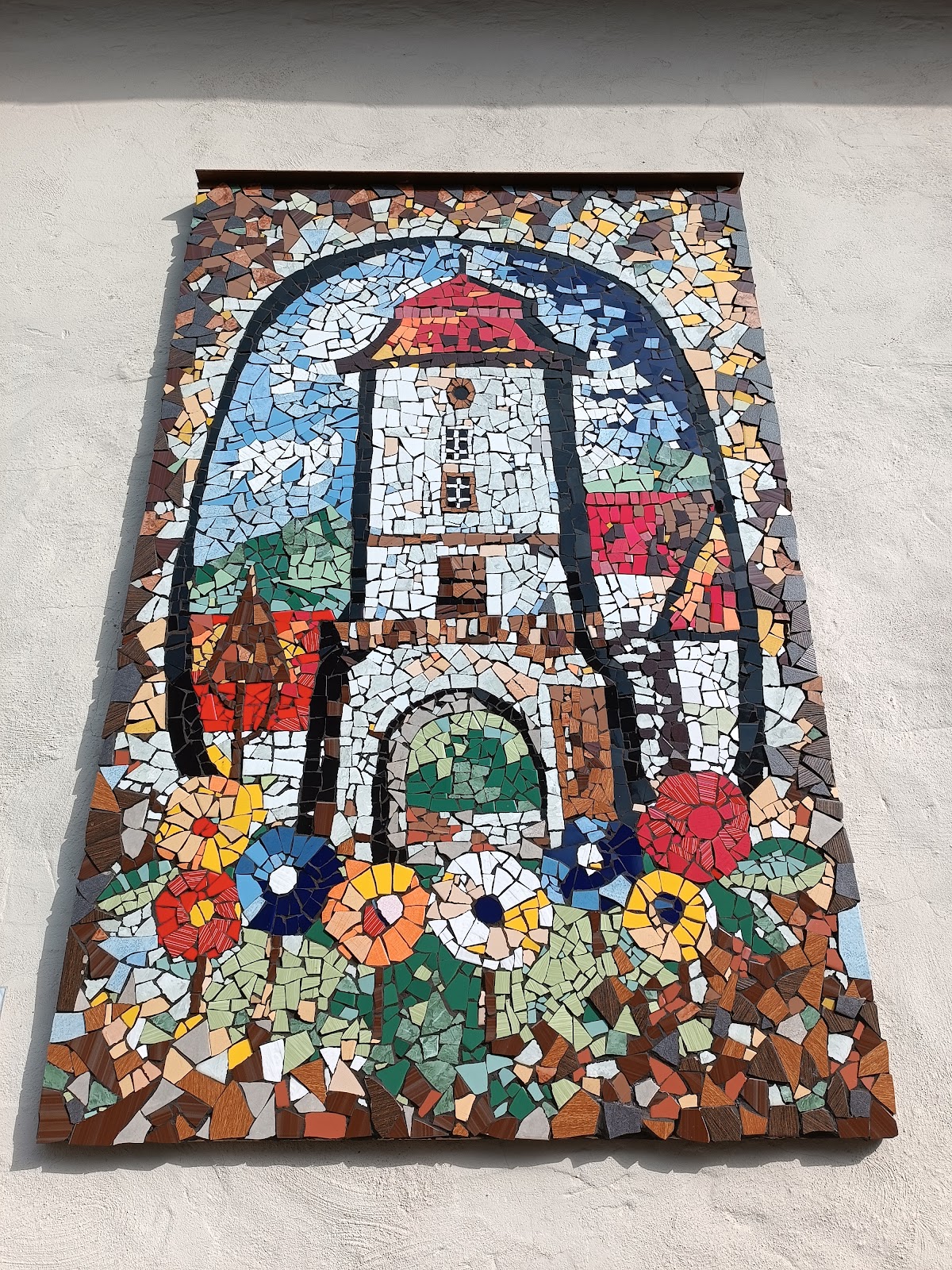
The Renaissance rebuilding of 1534 to 1548 created the main entrance and a new tower, which now form the highest part of the complex. The entrance gate and tower are the principal surviving elements from this rebuilding phase. A gallery space connected with the tower contains a small hall, while the upper level provides a panoramic view over Ostrava. The tower’s roof, installed during reconstruction in 2003, forms part of the building’s restored appearance.
Bastion and enclosing walls
The Renaissance works also included a new bastion, a projecting fortification designed to allow defensive fire along the face of a surrounding wall. The earlier Gothic bastion was destroyed by bulldozing in 1965. Mining subsidence altered the entire structure and contributed to the loss of walls and other buildings. Later conservation included the gradual clearing of the residential ruins and the rebuilding of part of the walls.
Courtyard and interior spaces
Fortified stronghold
The courtyard contains a fortified stronghold, a defended central structure within the castle complex. Its cellar now contains a themed haunted cellar and large freshwater aquariums. These spaces form part of the present arrangement of the complex, alongside the gallery and the tower exhibition.
Well and fountain
A castle well with a fountain stands in the courtyard. It belongs to the surviving courtyard features and helps define the internal arrangement around the central buildings.
Tower exhibition and gallery
The tower houses a small historical exhibition on the history of the castle and city, the Hussite movement, and the Thirty Years’ War. An art gallery occupies another part of the complex. Together, these spaces give the restored buildings a cultural use while retaining the entrance tower as the dominant architectural feature.