Shane’s Castle Ruins: A Gaelic Castle Estate in Northern Ireland


Site at a Glance
- Rating
- 4.6
- Popularity
- Low
- Country
- United Kingdom
- Primary era
- Medieval
- External website
- Open
- Eras represented
- Medieval, Modern
- Civilizations
- British
- Site type
- Military
- Remains
- Castle
On this page12 sections
History
Shane’s Castle ruins in the United Kingdom are the remains of a castle founded in 1345 by a member of the Clandeboy O’Neill dynasty, a major Gaelic ruling family of north-eastern Ireland. Located near Randalstown in County Antrim, the site was originally called Edenduffcarrick, meaning “brow of black rock.” Its present name is associated with Shane McBrian McPhelim O’Neill, who ruled Lower Clandeboy between 1595 and 1617.
From Gaelic stronghold to Plantation-era castle
The original castle belonged to the O’Neill dynasty before the estate was reshaped during the Plantation era, the period of English and Scottish settlement in Ireland, especially during the seventeenth century. The castle that later stood on the estate was described as a Plantation-era building, connecting the site’s medieval Gaelic origins with later political and architectural changes.
John Nash’s rebuilding scheme
In 1809, the decision was taken to rebuild the castle to a design by John Nash, a prominent British architect associated with influential nineteenth-century Picturesque and Regency designs. A terrace had already been added in 1800, and the rebuilding work began in 1812.
A major fire in 1816 left the castle in ruins, ending the planned reconstruction. The family papers were saved, while Nash’s house, also known as the Camellia House, survived. John Nash later restored the house. The destruction was commemorated in John Neal’s poem “Castle Shane,” published in The Portico in the same year.
Victorian mansion and railway era
During the 1860s, a separate Victorian-Gothic mansion was built on the estate for the 1st Lord O’Neill under the direction of Charles Lanyon and William Henry Lynn. Victorian Gothic was a nineteenth-century revival style that drew on medieval Gothic forms and details. This later castle remained until the IRA, a republican paramilitary organisation involved in the conflict over Irish independence and Northern Ireland’s constitutional status, burned it in 1922.
The estate covers approximately 2,600 acres along the shores of Lough Neagh. A 2-foot-gauge railway operated in the grounds from 1940 to 1956, carrying the British Army to and from a bomb dump. A later tourist railway, operated by Raymond O’Neill, 4th Baron O’Neill, opened on 30 April 1971. Northern Ireland Railways staff laid the line in their spare time. It closed on 31 October 1995 because of declining visitor numbers.
Remains
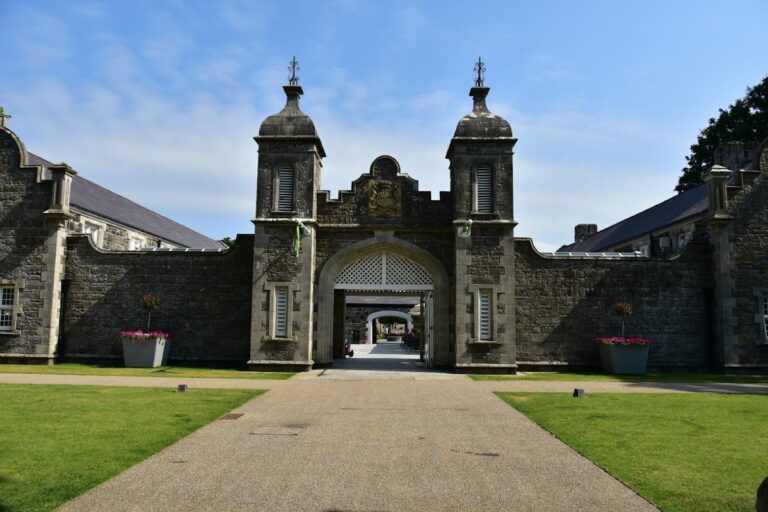
The remains stand on the north-eastern shore of Lough Neagh, near Randalstown in County Antrim and approximately 2.7 miles from the town. The surviving site includes the ruins of the original castle, Nash’s surviving house, and the estate associated with the later Victorian-Gothic mansion and railway lines.
Castle buildings
Original castle ruins
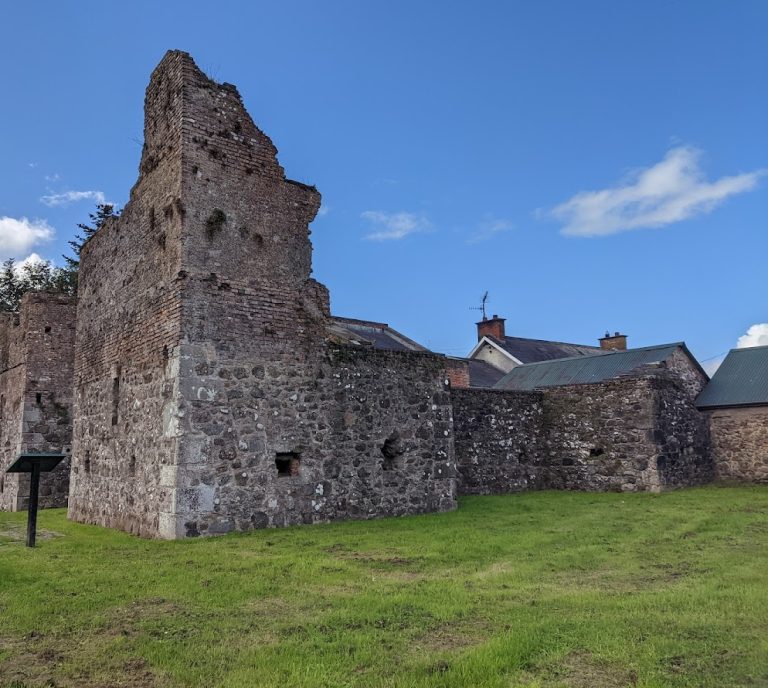
The principal ruins are those of the original Shane’s Castle, founded in 1345. The building was later associated with the Plantation era and became the subject of John Nash’s rebuilding scheme from 1812. The 1816 fire left this castle in a ruined state, and the planned reconstruction was abandoned.
Camellia House
Nash’s house, also called the Camellia House, survived the 1816 fire and was restored by Nash afterward. It is distinct from the ruined original castle and from the separate Victorian-Gothic mansion built elsewhere on the estate during the 1860s.
Victorian-Gothic mansion
The later mansion was constructed for the 1st Lord O’Neill under the direction of Charles Lanyon and William Henry Lynn. It was a separate building from the original castle ruins and was burned by the IRA in 1922.
Railway features
Military railway
The earlier railway in the castle grounds used 2-foot, or 610-millimetre, gauge track. It operated from 1940 to 1956 for the movement of the British Army to and from a bomb dump.
Shane’s Castle Railway
The later Shane’s Castle Railway used 3-foot, or 914-millimetre, gauge track and extended for approximately 1 mile 40 chains, equivalent to 2.4 kilometres. The track weighed 75 pounds per yard, or 37 kilograms per metre. Its curves followed the standards of the County Donegal Railways Joint Committee, and the line had three stations named Antrim, Millburn, and Shane’s Castle. It operated from 30 April 1971 until 31 October 1995.