Hillsborough Castle: Government and Royal Residence in Northern Ireland


Site at a Glance
- Rating
- 4.7
- Popularity
- Medium
- Country
- United Kingdom
- Primary era
- Early Modern
- External website
- Open
- Eras represented
- Early Modern
- Civilizations
- Irish
- Site type
- Domestic
- Remains
- Palace
On this page10 sections
History
Hillsborough Castle is an eighteenth-century Georgian country house in the United Kingdom, serving as an official government and royal residence in Northern Ireland. Built for the Hill family, Marquesses of Downshire, it later became the residence of the Governor of Northern Ireland and is now the official residence of the Secretary of State for Northern Ireland and the British monarch in Northern Ireland.
A Georgian country house
Despite its name, Hillsborough Castle was built as a country house rather than as a fortified medieval castle. The Georgian style associated with the reigns of the British kings George I through George IV shaped many residences of the period, including houses created for landed families. The Hill family retained ownership of Hillsborough Castle and its grounds until 1922, when Arthur Hill, the 7th Marquess of Downshire, sold the property to the British government.
Government House
The purchase followed the Government of Ireland Act 1920, a British law that established separate devolved institutions for Northern Ireland and Southern Ireland. After the Anglo-Irish Treaty of 1921, the office of Lord Lieutenant of Ireland was abolished and the Irish Free State was established. Northern Ireland instead received its own office of Governor, the Crown’s representative and constitutional head of the territory.
The Viceregal Lodge in Dublin was no longer available as a residence, both physically and politically, so Hillsborough Castle was selected as a suitable home for the new governor outside Belfast. The house underwent renovations before the first Governor of Northern Ireland, James Hamilton, 3rd Duke of Abercorn, moved in during 1925. It was then officially renamed Government House. The property served as the governor’s official residence from 1924 until the office was abolished in 1973.
Political and royal use
In March 1972, devolved government in Northern Ireland was abolished and direct rule was introduced, meaning that the territory was governed by the UK government from London rather than through devolved institutions. The offices of Governor and Prime Minister of Northern Ireland were abolished, and the Secretary of State for Northern Ireland assumed their effective combined role while moving into Hillsborough Castle as the monarch’s representative.
The castle continued to host major political meetings and conferences. The Anglo-Irish Agreement, a 1985 agreement between the governments of the United Kingdom and Ireland concerning cooperation and Northern Ireland’s political affairs, was signed there on 15 November 1985. In January 2010, the castle hosted talks involving British Prime Minister Gordon Brown, Irish Taoiseach Brian Cowen, and representatives of the Democratic Unionist Party and Sinn Féin during a policing crisis that threatened power-sharing and the Northern Ireland Executive.
Royal use continued alongside its governmental functions. Queen Elizabeth II and Prince Philip, Duke of Edinburgh, stayed at Hillsborough Castle during the Queen’s 2002 Golden Jubilee visit to Northern Ireland, which marked fifty years since her accession. United States President George W. Bush visited in 2003. In April 2014, the then Prince of Wales held an investiture at the castle, the first ceremony of its kind in Northern Ireland since the property became a royal residence. On 13 September 2022, King Charles III visited with Queen Camilla and responded to an official message of condolence from the Northern Ireland Executive following Queen Elizabeth II’s death.
Management and continuing role
Since April 2014, Hillsborough Castle has been managed by Historic Royal Palaces, an independent charitable organisation responsible for several historically important royal buildings for public benefit. The castle is owned by King Charles III in right of the Crown and continues to function as a government residence, royal residence, guest house, and venue for political and ceremonial events.
Remains
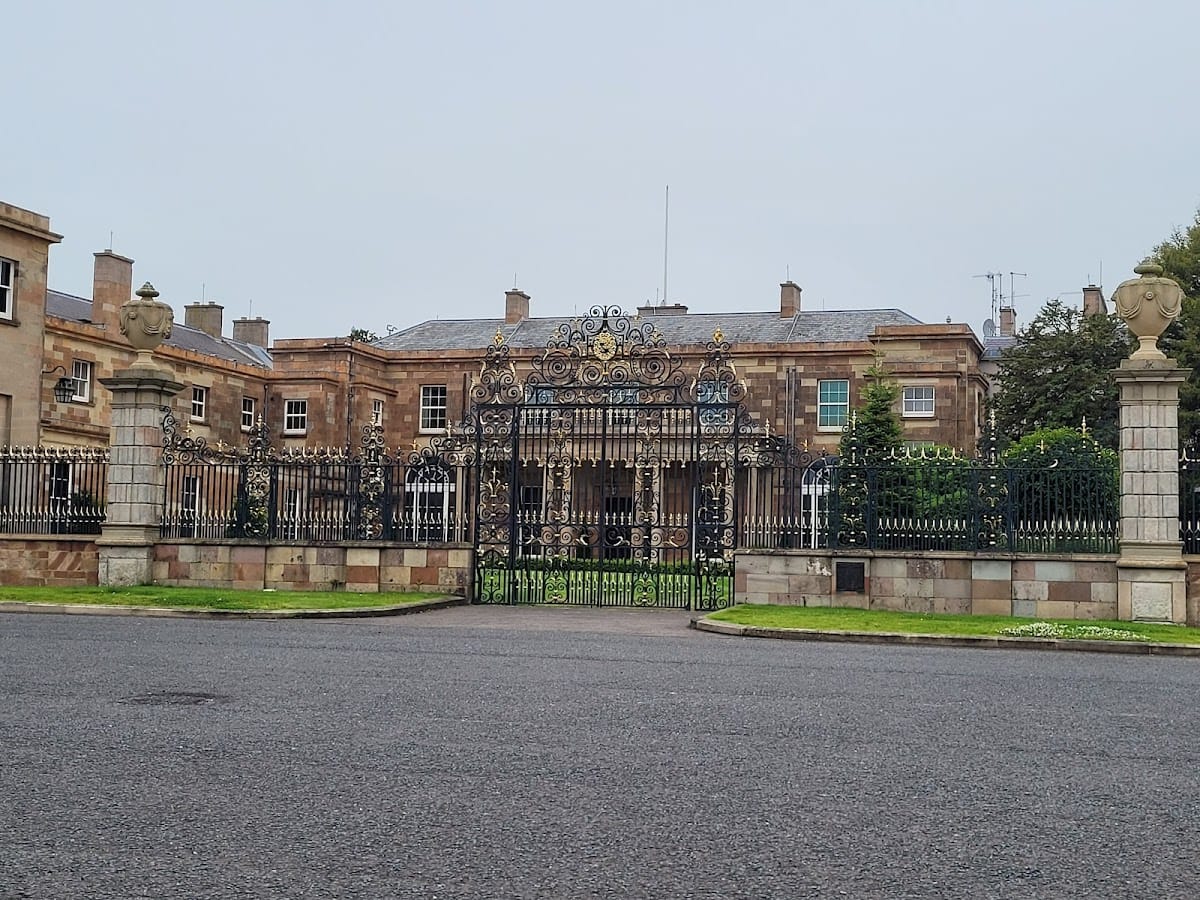
Hillsborough Castle consists of the mansion, its grounds, and a formal entrance gate. The surviving estate reflects the character of an eighteenth-century Georgian country house and its later adaptation for governmental and royal use. Renovations carried out before the governor took up residence in 1925 formed part of the property’s transition from a private family house to an official residence.
Mansion and entrance
The country-house mansion
The principal building is the eighteenth-century Georgian mansion. Its form belongs to the tradition of country houses built for landed families, rather than to medieval military architecture. The house has subsequently accommodated governmental and royal residents, international guests, political meetings, conferences, and an investiture ceremony.
Formal entrance gate
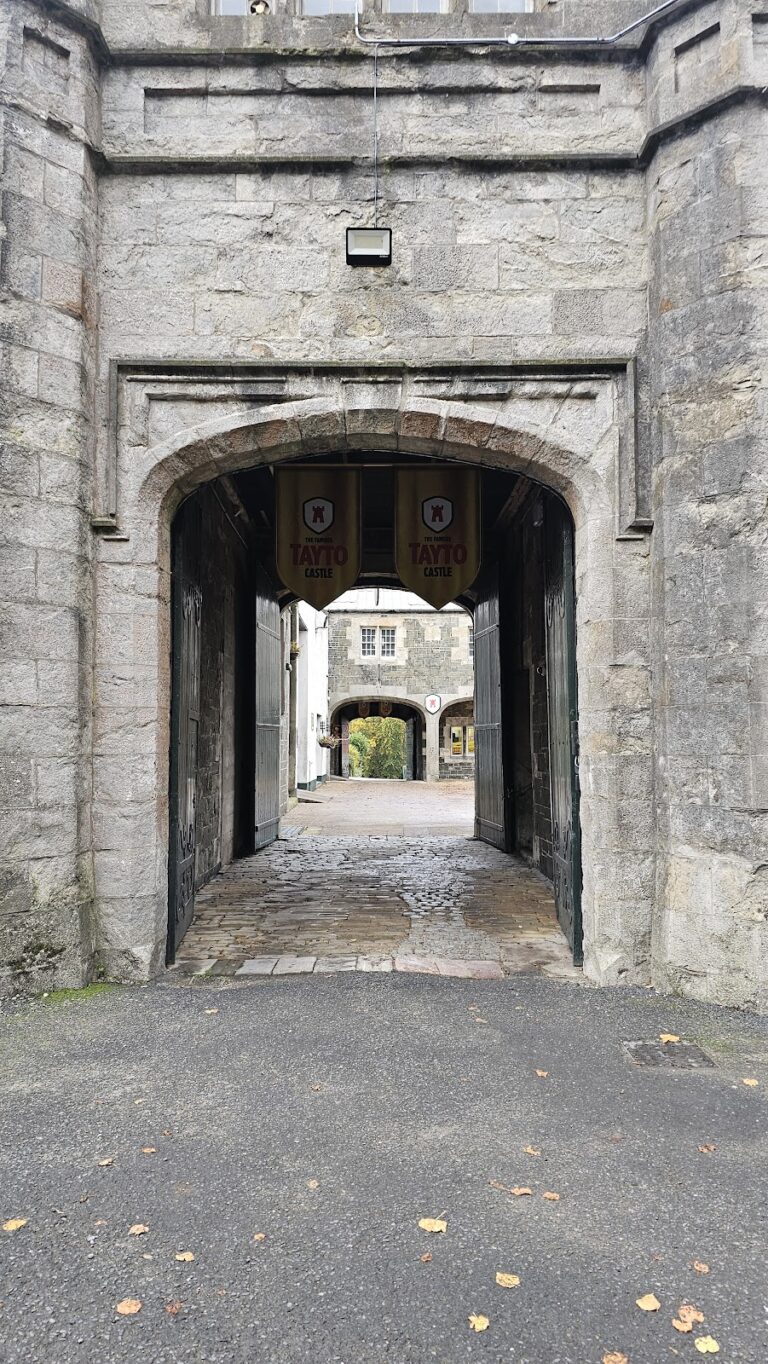
A formal entrance gate forms part of the site. Together with the mansion and grounds, it remains an element of the estate’s architectural composition and its presentation as an official residence.
Grounds and planted estate
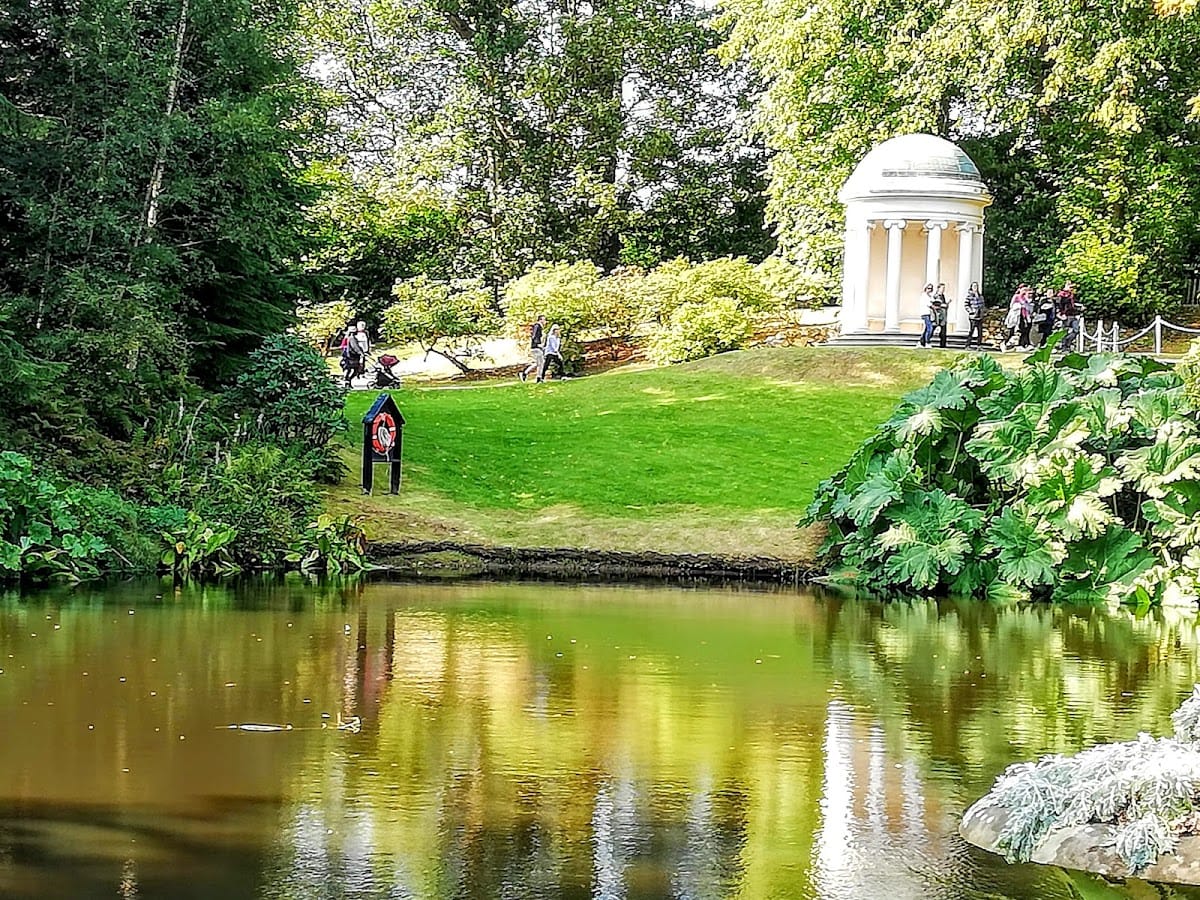
The extensive grounds contain trees planted by residents and visitors over the history of the property’s governmental and royal use. One recorded tree is an Abies albertiana, a fir planted by James Hamilton, 3rd Duke of Abercorn, in October 1925, the year he became the first Governor of Northern Ireland and moved into the renovated house.