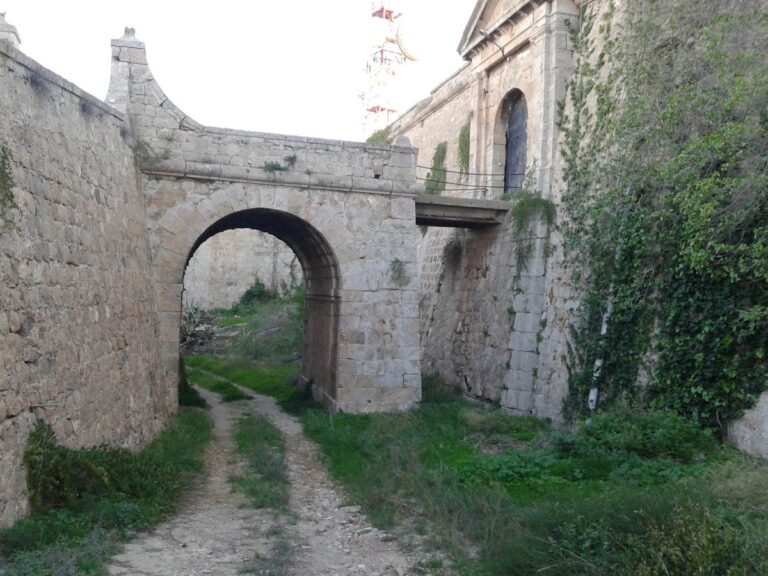
Castle of La Concepción: A Medieval Fortress in Cartagena


Site at a Glance
- Rating
- 4.3
- Popularity
- Medium
- Country
- Spain
- Primary era
- Medieval
- External website
- Open
- Eras represented
- Classical, Medieval
- Civilizations
- Almohad, Crown of Castile, Roman
- Site type
- Military
- Remains
- Castle
On this page7 sections
History
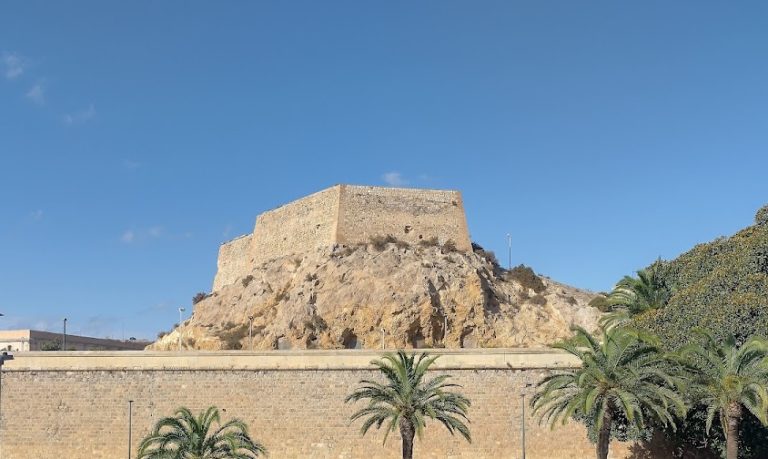
The Castle of La Concepción is a medieval fortress in Cartagena, Spain, built on the hill above the city and its port during the thirteenth or fourteenth century. Later research places its construction during the thirteenth-century Reconquest, the long expansion of Christian kingdoms into Muslim-ruled territories in the Iberian Peninsula. The castle is represented on Cartagena’s coat of arms and occupies the site of an earlier Muslim citadel.
Before the Castilian conquest
The earliest activity on the hill remains uncertain. The Greek historian Polybius associated the Roman-period hill with a temple dedicated to Asclepius, the Greek god associated with healing. Archaeological investigation found Roman-built cisterns beneath the castle’s first floor. These may have belonged either to the temple or to a building from the Byzantine period.
Cartagena retained importance under Muslim rule from the tenth century, particularly during the twelfth. Parts of the present walls incorporate towers from a twelfth-century Muslim citadel, also known as an alcazaba, or fortified citadel within a Muslim city. An Arabic-period lantern later served as a lighthouse.
Construction under Alfonso X
After Alfonso X of Castile, known as Alfonso the Wise, conquered Cartagena in the thirteenth century, he ordered the restoration of the former episcopal see of the Diocese of Carthaginensis. He also directed the fortification of the city with a castle at its highest point, built over the earlier citadel.
Cartagena became Castile’s only outlet to the Mediterranean and stood between the Crown of Aragon, a medieval composite monarchy centered on Aragon and associated territories, and the Kingdom of Granada, the last major Muslim-ruled state in Iberia. The port’s strategic position formed an important part of Alfonso X’s military policy.
During Alfonso X’s reign, the Order of Santa Maria of Spain was established at Cartagena for naval warfare against Muslim forces. A succession of naval disasters in which almost all the order’s ships were lost led to its dissolution. Cartagena then became less strategically important, and the castle was left unfinished. Its arrangement has been compared with those of Aledo and Lorca, which share some masons’ marks.
Decline and modern transformation
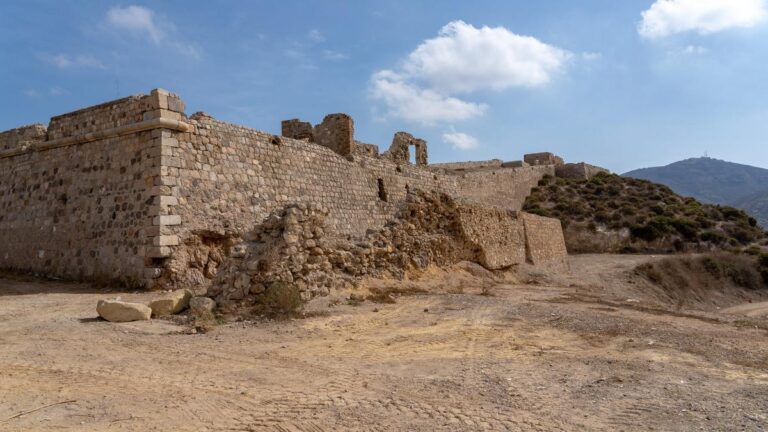
After losing its defensive function, the castle declined and gradually fell into ruin. In the early twentieth century, municipal authorities considered demolishing it, but the proposal was not carried out. During the dictatorship of Primo de Rivera, the entire enclosure was converted into a public park with gardens, ponds, and animals. It became popularly known as the “Castle of the Ducks,” while the fortress itself remained in ruins.
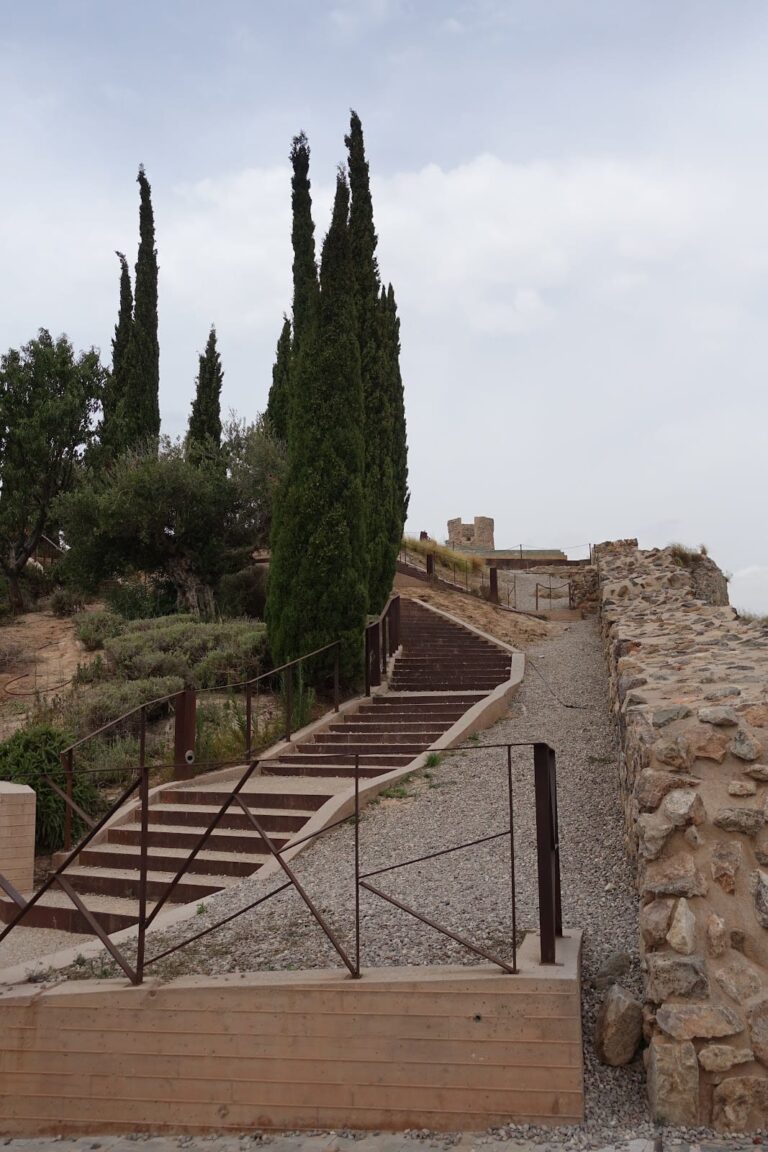
After the formation of the Cartagena Puerto de Culturas consortium, the castle underwent partial restoration. The keep was converted into an interpretation centre devoted to Cartagena’s history. The site has protected cultural-heritage status as a historic-artistic monument, with designations recorded in 1931 and 1997.
Remains
The fortress occupies the summit of Cerro de la Concepción above Cartagena and its port. Its surviving fabric combines medieval fortification with earlier construction materials and features. Twelfth-century Muslim towers form part of the present walls, while the principal tower, entrance, reused Roman cisterns, and Arabic-period lantern preserve evidence of the site’s successive phases.
Walled enclosure and entrance
Access to the walled enclosure was provided by the Puerta de la Villa, a large monumental arch framed by two towers. The gateway opened into the entire fortified area, whose walls incorporate towers from the earlier Muslim citadel. The Arabic-period lantern also survives as part of the fortress. It formerly functioned as a lighthouse, giving the defensive complex a maritime role connected with Cartagena’s port.
El Macho
The principal tower, or keep, is known as El Macho. It was built with large ashlar blocks, regularly cut stone, of grey limestone from Cabezo Gordo in Torre-Pacheco and pink travertine, a limestone deposited by mineral-rich water, from Mula. Roman building materials were extensively reused in the tower, including ashlar blocks and inscribed slabs.
A large inscribed slab bearing the name of Lucius Aemilius Rectus, a Roman-era individual identified by the inscription, forms the lintel over the keep’s entrance. The first floor was constructed over reused Roman cisterns. Other surviving elements include a thirteenth-century corbel and a thirteenth-century vault keystone.
Some historians consider that the keep lacks an entire second storey. If that storey had been completed, it would have given El Macho an appearance similar to the Alfonsine Tower at Lorca Castle. The keep now houses the interpretation centre created after the castle’s partial restoration.