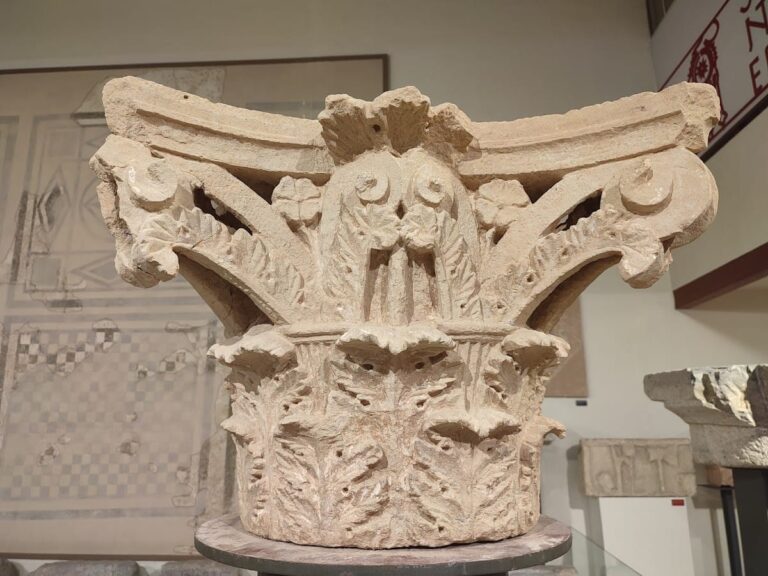
Cerro del Molinete Park: The Ancient Citadel and Archaeological Hill of Cartagena

Site at a Glance
- Rating
- 4.4
- Popularity
- Low
- Country
- Spain
- Primary era
- Classical
- External website
- Open
- Eras represented
- Classical, Early Modern
- Civilizations
- Carthaginian, Iberian, Roman, Spanish
- Site type
- Religious
- Remains
- Sanctuary
On this page14 sections
History
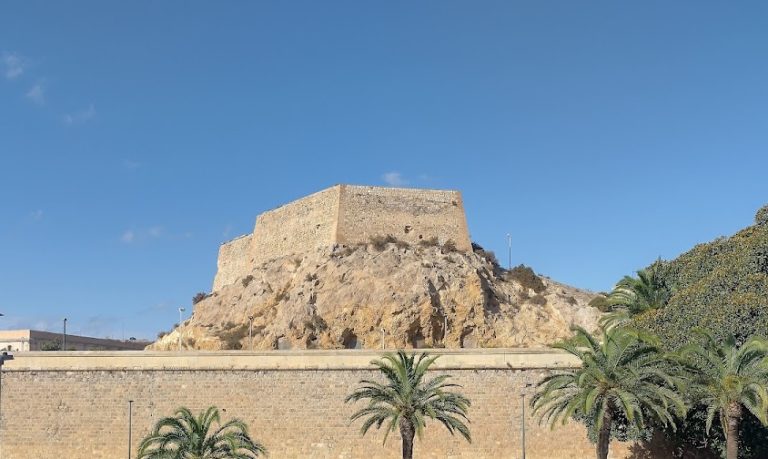
Cerro del Molinete Park in Cartagena, Spain, occupies the hill identified with Arx Asdrubalis, the “Citadel of Hasdrubal,” within the ancient Carthaginian city of Qart Hadasht. Founded in Iberia by the Carthaginian general Hasdrubal the Fair, Qart Hadasht later became the Roman city of Carthago Nova. The hill was one of five heights enclosed by the city, and its long history includes Iberian-Punic, Roman, early modern, and modern archaeological phases.
The Carthaginian and Roman city
The Greek historian Polybius placed Hasdrubal the Fair’s palace on Arx Asdrubalis, but the palace itself has not been located. In 2015, archaeologist Iván Negueruela argued for the existence of a Carthaginian palace complex on the hill in a book published by the Royal Academy of History. This interpretation concerns the palace traditionally associated with Hasdrubal, while the physical remains of that building remain unidentified.
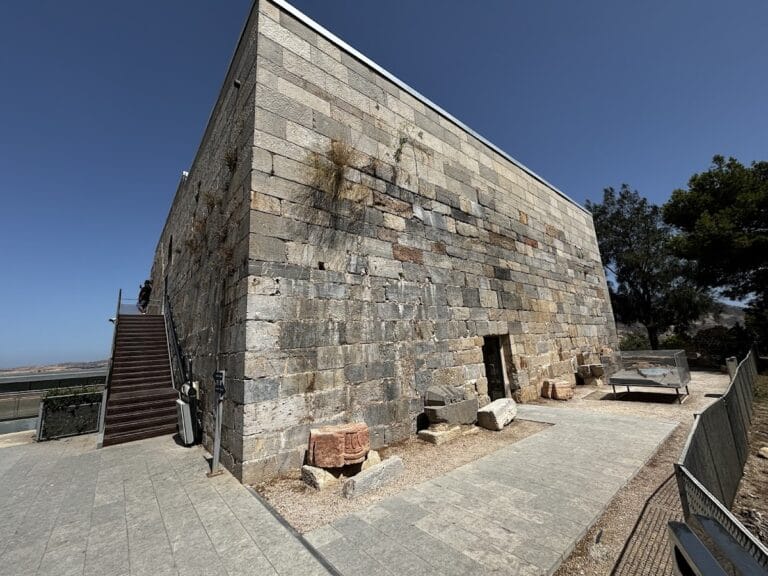
The hill preserves remains from both the Iberian-Punic and Roman periods. They include a possible Carthaginian sanctuary, water-supply installations, baths, a Republican-period Roman temple, the Roman forum, and an apparent Capitolium. A Capitolium was a Roman temple complex devoted to Jupiter, Juno, and Minerva, the three principal deities of the Capitoline Triad in Roman state religion.
Fortification and later occupations
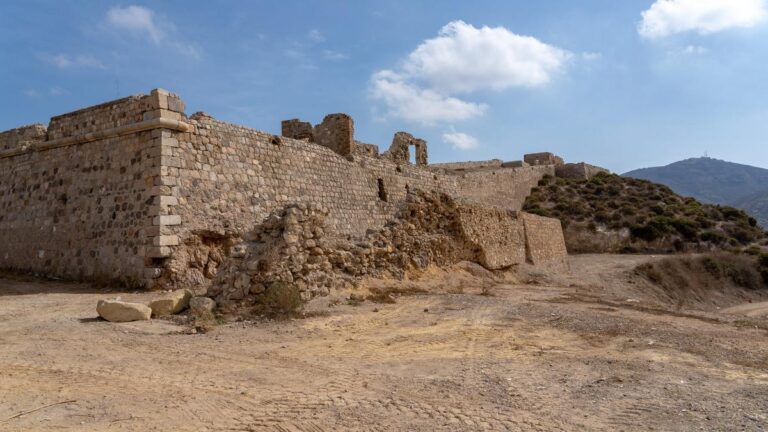
Cartagena had previously been undefended when King Philip II commissioned Vespasiano I Gonzaga to fortify it in 1568. Following plans by the military engineer Juan Bautista Antonelli, Gonzaga built a wall across the hill from east to west. The fortifications used poor-quality materials and soon fell into ruin. During the works, Gonzaga also took possession of Roman sculptures discovered on the site.
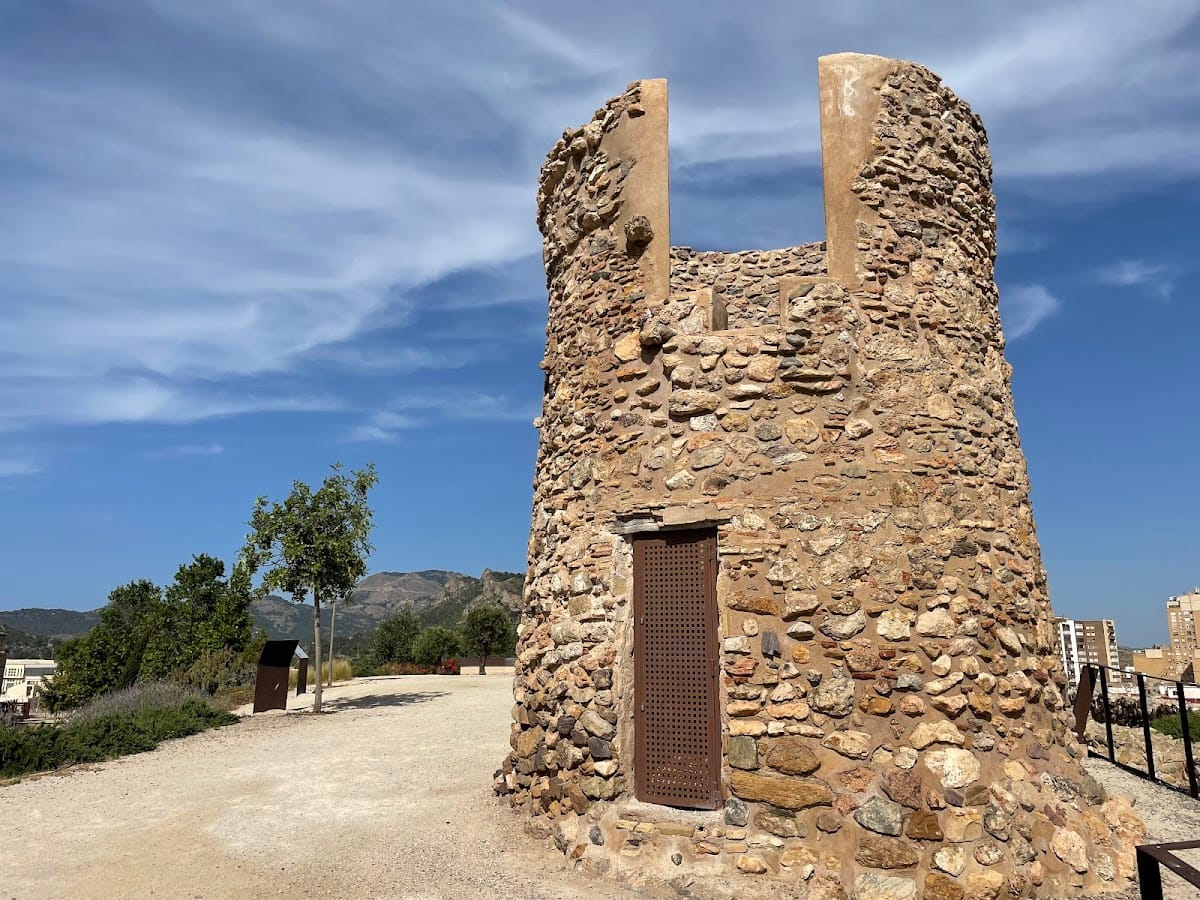
Grain mills occupied the hill during the seventeenth century. In the eighteenth century, brothels followed, encouraged by the arrival of workers and other outsiders connected with major construction projects in Cartagena during the reign of Charles III. These projects included the arsenal, walls, castles, and barracks.
Excavation and archaeological protection
Until the second half of the twentieth century, the hill was largely neglected. Chance discoveries drew the attention of Pedro Antonio Sanmartín Moro, director of the Municipal Archaeological Museum, who conducted excavations in 1977 and 1978. The results prompted municipal authorities to recognize the archaeological importance of the hill and fence it to protect the remains from looting, which had already damaged the site.
Cleaning and consolidation campaigns in the upper part of the hill, supported by the Municipal Archaeological Museum, produced further isolated finds and pointed to the possibility of additional remains beneath the surface. The area was later cleared after residents were expropriated, allowing the archaeological park to be established on the hill.
The Roman forum had been discovered in 1984 and was estimated to measure approximately 30 to 40 metres across. On 5 April 1995, the public announcement of ruins apparently belonging to a Roman Capitolium brought further attention to the Roman civic complex. Excavations in December 2002, carried out during construction of a health centre at the foot of the hill, identified the remains of the local curia, a municipal council house or meeting place. A large statue of Emperor Augustus was found nearby and was initially displayed at the Municipal Archaeological Museum from December 2003. In 2008 it was transferred to the Roman Theatre Museum, where it is exhibited.
Remains
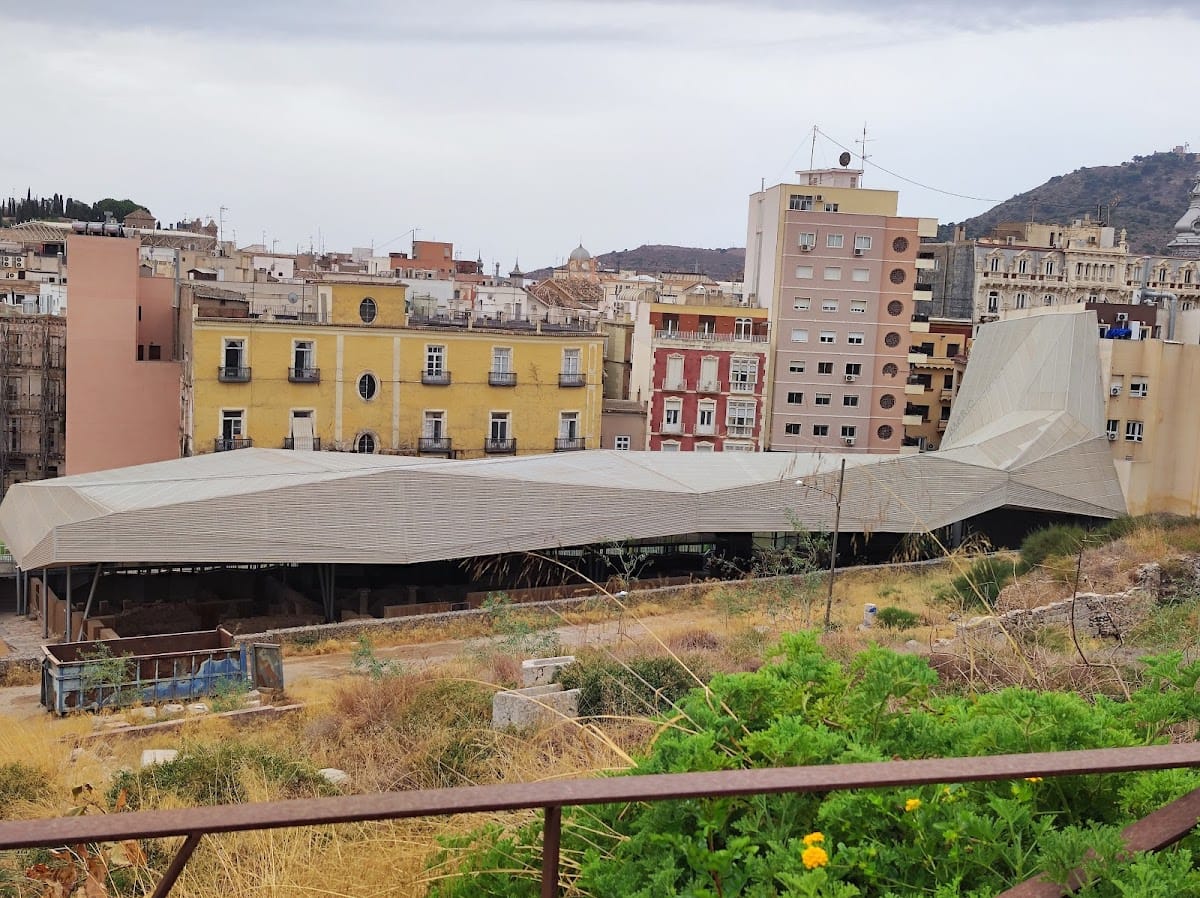
The archaeological park lies on the hill at approximately 19 metres above sea level. The ground around it is relatively flat to the north and hillier to the south, while the sea lies to the southwest. The surviving remains occupy different levels of the hill and include structures connected with Punic religious activity, Roman civic and religious life, urban water supply, bathing, and later occupation.
Punic religious remains
Possible Carthaginian sanctuary
Substantial walls approximately two metres high lie beneath later constructions and have been interpreted as part of a Carthaginian sanctuary. Its altar is formed by semicircular rows of terracotta bricks. Large quantities of clay bowls used for libations were found in association with the possible sanctuary. Their ceramic composition has been linked to pottery from Punic colonies in Sicily and to production in the Carthaginian capital of Iberia. This evidence has led to the hypothesis that fire rituals took place there. If its chronology and interpretation are confirmed, the sanctuary would be the largest recognized building associated with the Barcid period, the era of Carthaginian rule in Iberia linked to the Barcid family.
Upper-hill shrines
The upper part of the hill contains an aedicule of Derceto, a small shrine-like structure dedicated to a deity of ancient Near Eastern origin who was worshipped in the western Mediterranean. The site also includes other Iberian-Punic remains, alongside a Roman temple from the Republican period.
Roman civic and religious complex
Forum and Capitolium
The Roman forum occupied a central level of the complex and measured approximately 30 to 40 metres across. Above it stood the ruins interpreted as a Capitolium. The complex consisted of three temples dedicated to Juno, Jupiter, and Minerva, forming a sacred group associated with the Capitoline Triad.
Curia and statue of Augustus
The remains of the local curia were identified at the foot of the hill. Near this council house lay a large marble statue of Augustus, carved in the first century from Carrara marble. It follows the model of the Augustus of the Via Labicana, a statue type showing the emperor in a ritual role, wearing a toga with his head covered.
The statue was first recovered without its head and hands. In February 2003, the left hand, the right forearm, and two fingers from the right hand were found and associated with the figure. The comparable Via Labicana statue in Rome is also missing its two hands. The reconstructed association of these fragments helped clarify the form of the Cartagena statue, which is now exhibited at the Roman Theatre Museum.
Water supply, baths, and later structures
Water reservoirs and bathing complex
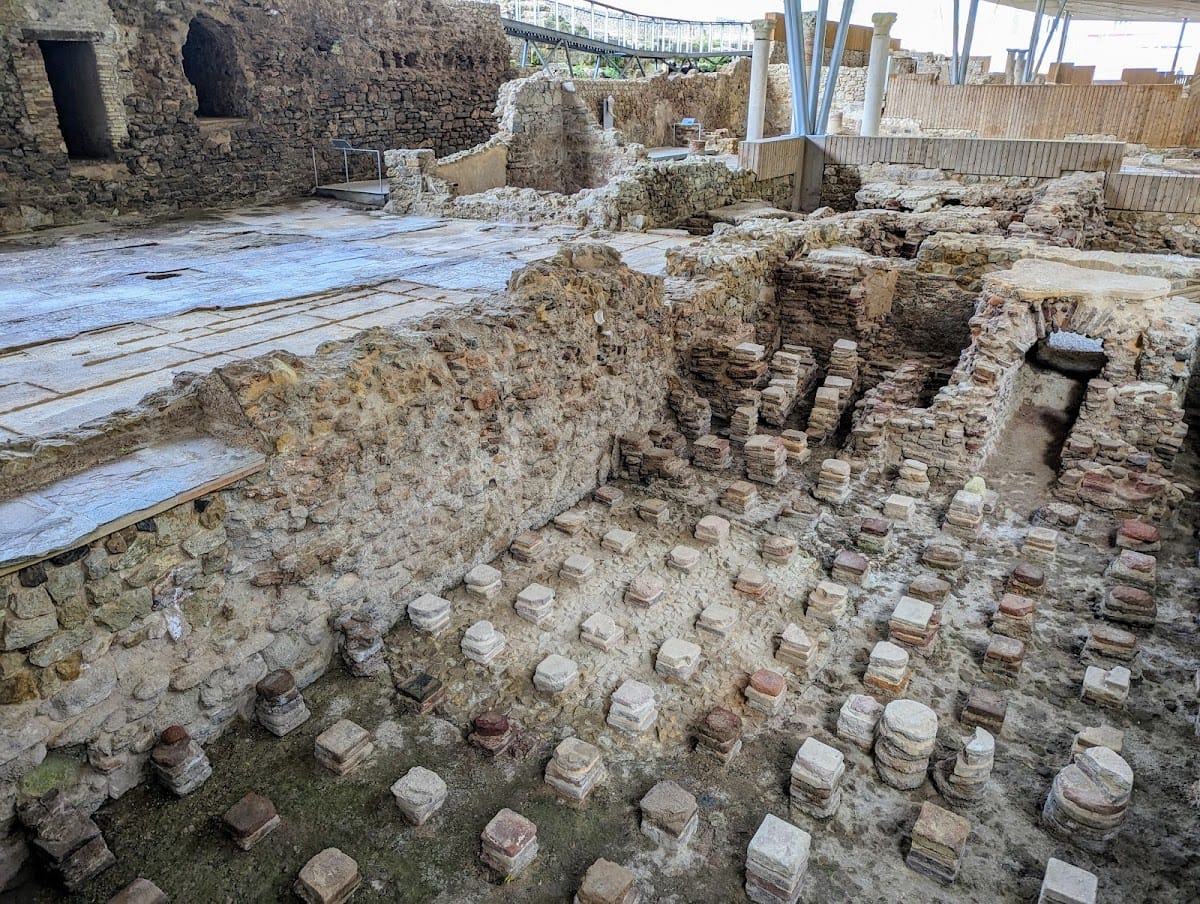
Several reservoirs, or castella aquae, lay beneath a seventeenth-century grain mill later converted into the Hermitage of Saint Christopher. A castellum aquae was a Roman reservoir or settling tank used to distribute water through an urban system. These installations supplied Carthago Nova with water. The baths lay immediately below them, suggesting that the same water system also served the bathing complex.
Sixteenth-century fortification
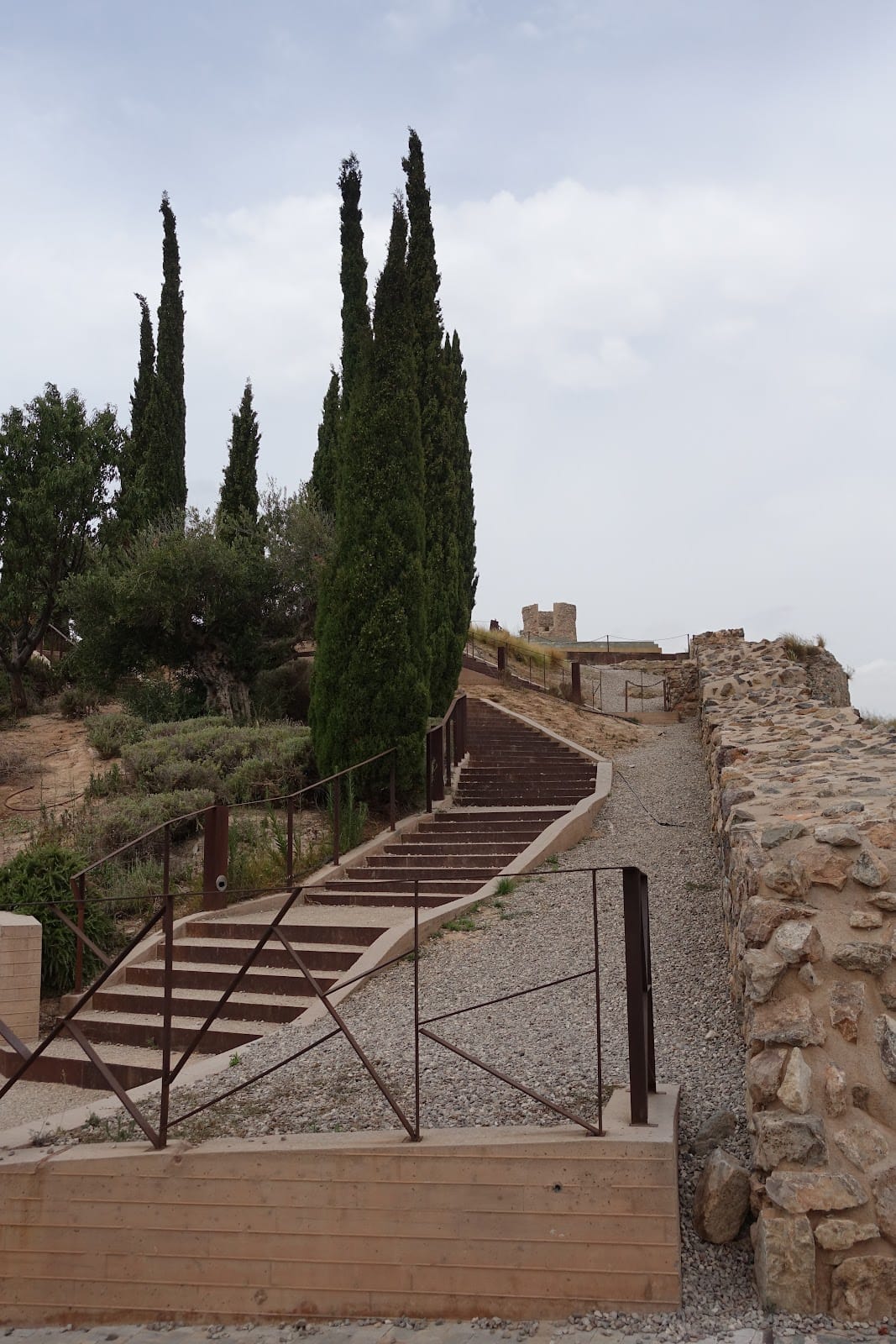
A wall from the sixteenth-century fortification crossed the northern slope on an east-west alignment. Built during Gonzaga’s defensive works for Cartagena, it later fell into ruin, leaving a later military layer within the archaeological history of the hill.