Castell de Milmanda: A Residential Castle-Palace in Catalonia


Site at a Glance
- Rating
- 4.1
- Popularity
- Low
- Country
- Spain
- Primary era
- Medieval
- External website
- Open
- Eras represented
- Medieval, Early Modern
- Civilizations
- Crown of Aragon, Spanish
- Site type
- Domestic
- Remains
- Castle
On this page7 sections
History
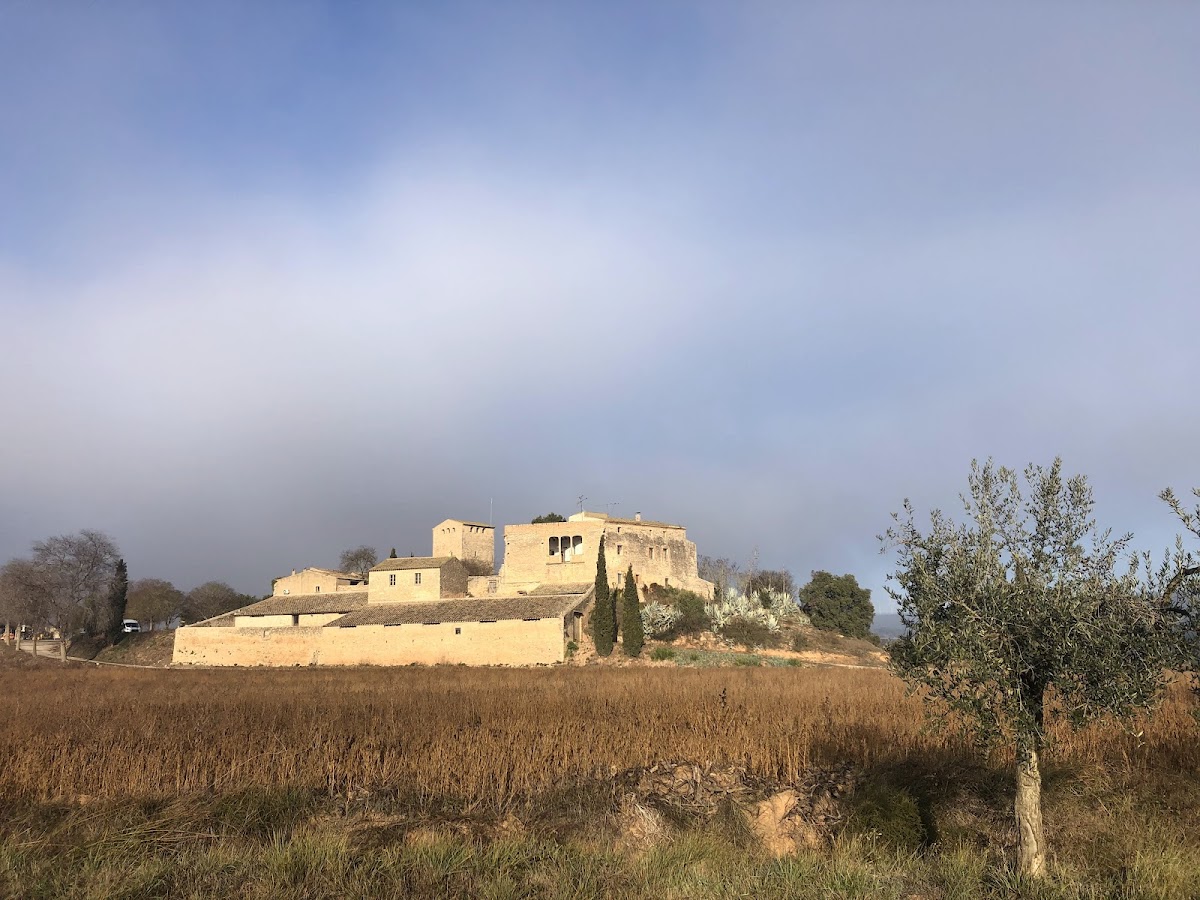
Castell de Milmanda is a castle-palace in Spain, near Vimbodí in the municipality of Vimbodí i Poblet, built in the fourteenth century with Gothic and vernacular architectural characteristics. It functioned primarily as a residence rather than as a strategically important frontier fortress, since Muslim strongholds in the Prades and Siurana mountains had been conquered in 1153.
Origins and Poblet’s control
The site first appears in records in 1148 or 1149, when Guerau de Granyena and his wife, Sança, granted it as a castellany, a territorial jurisdiction linked to the custody of a castle, to Arnau de Montpaó and his wife, Lloreta. The grant included the surrounding territory, its rights, and authority to populate the area.
In 1163, Castell de Milmanda passed to the monks of the Monastery of Santa Maria de Poblet, a major Cistercian monastery in Catalonia. The monks established a farm at the site, which is mentioned in 1172. King James I, known as James the Conqueror, confirmed the property in 1272.
Rebuilding and conversion into a residence
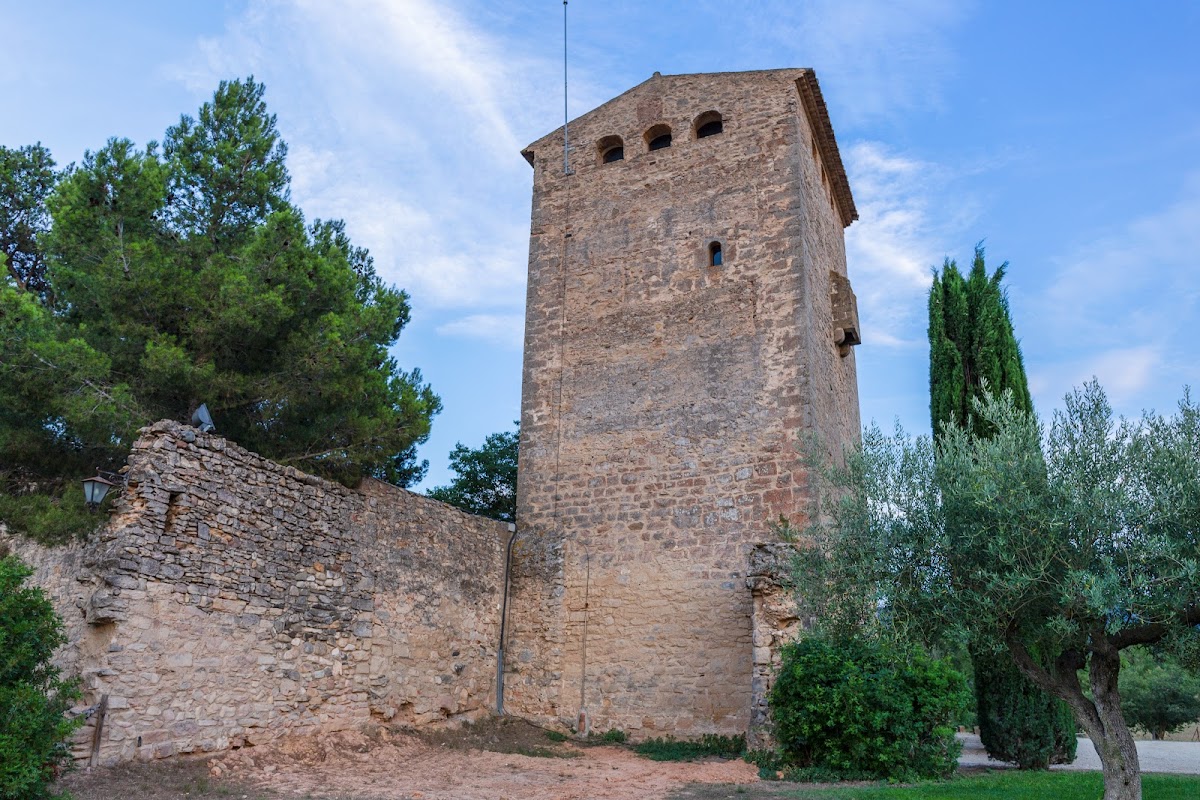
The abbots of Poblet ordered several rebuilding and enlargement campaigns. Important works took place between 1316 and 1348 and again between 1564 and 1583. During the abbacy of Ponç de Copons, the tower defending the entrance was constructed between 1316 and 1348.
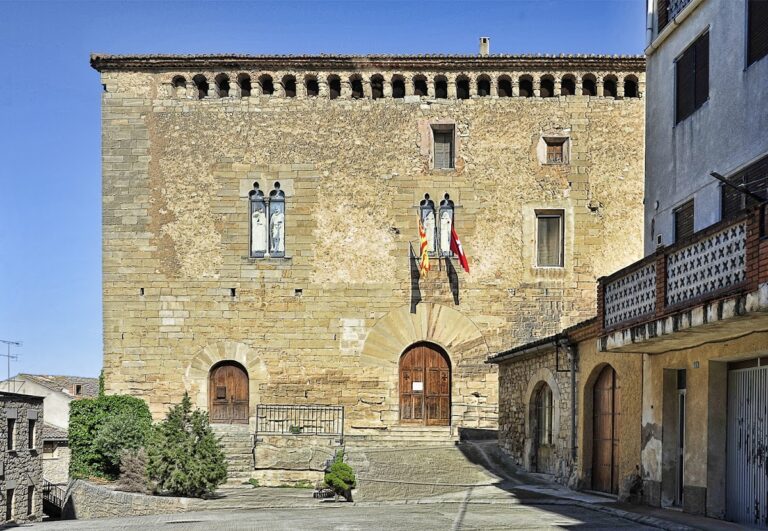
At the beginning of the seventeenth century, Abbot Felip Genovès transformed the castle into a residential manor. The enlarged residence included a chapel, spacious halls, and a gallery with arches, reinforcing the palace’s domestic character.
Abandonment and later protection
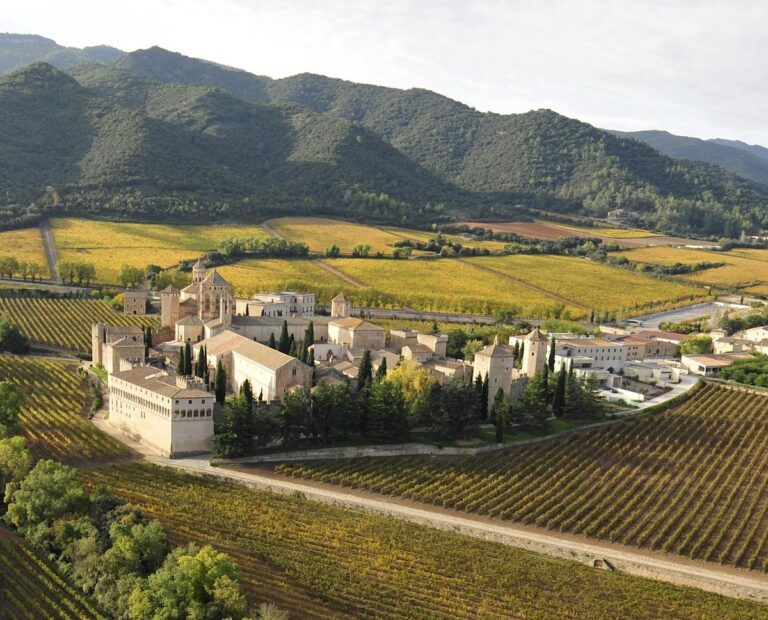
After the nineteenth-century disentailment, a state process that confiscated and sold institutional properties, the castle was abandoned and gradually deteriorated. During the twentieth century, the Torres wine company acquired Castell de Milmanda and its lands, allowing the site to become visitable. The surrounding land is planted with vineyards used by Torres to produce white wine. The castle has been protected as a Cultural Asset of National Interest and as a Spanish Asset of Cultural Interest since 1988.
Remains
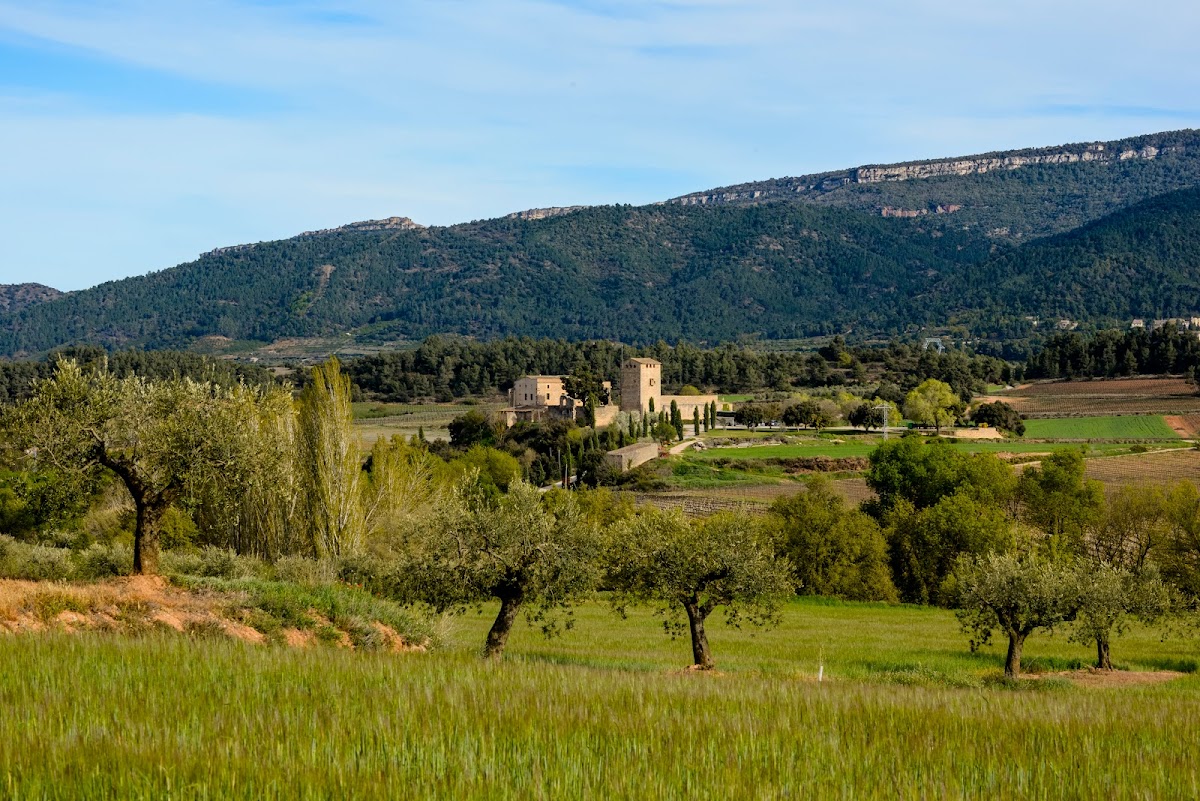
Castell de Milmanda stands about 2 kilometres from Poblet beside the Francolí River, on level ground between Vimbodí and L’Espluga de Francolí, at approximately 452 metres above sea level. The complex occupies a position above earlier Iberian, Greco-Phoenician, and Roman settlements. Its surviving architecture combines Gothic and vernacular characteristics, reflecting its development as a medieval castle-palace and later residence.
Entrance tower
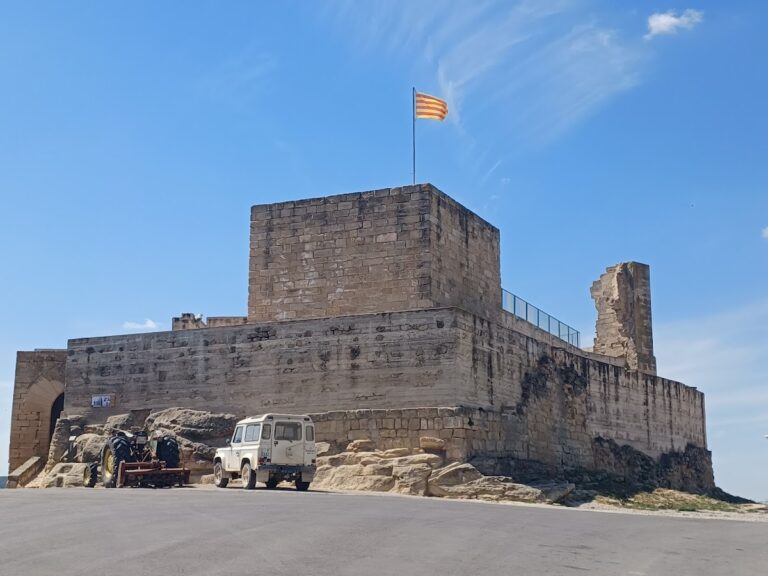
The entrance is marked by a defensive tower built between 1316 and 1348 during the rebuilding ordered by the abbots of Poblet. It forms the principal military element identified in the surviving complex and records the castle’s medieval phase, even though the site’s continuing purpose was residential rather than strategic.
Residential complex
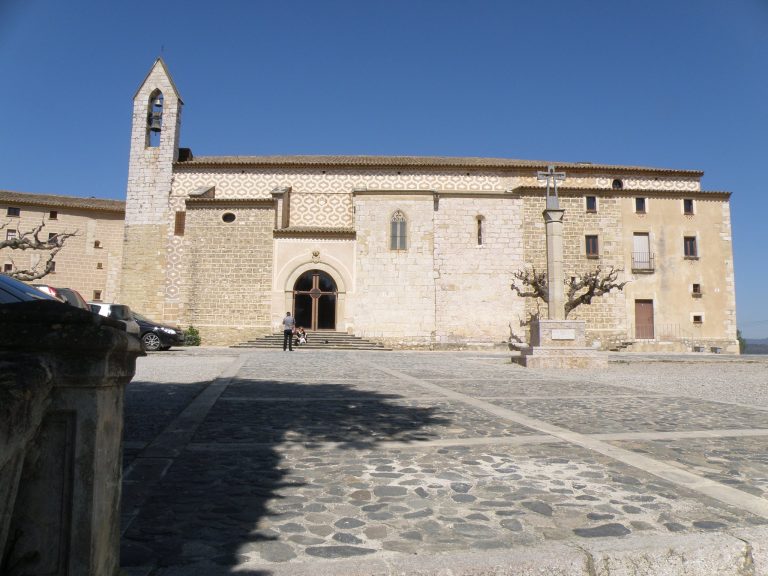
The residential buildings include a chapel, spacious halls, and a gallery with arches. These elements belong to the transformation of Castell de Milmanda into a manor residence, particularly the work associated with Abbot Felip Genovès at the beginning of the seventeenth century. Together they express the complex’s role as a place of habitation under Poblet’s control.