Castles in the United Arab Emirates: Explore Oasis Forts, Watchtowers and Courtyard Residences
Castles in the United Arab Emirates include forts built beside oases, watchtowers overlooking mountain routes and fortified houses used by ruling families. Their enclosed courts contained reception rooms, kitchens and stores as well as defensive positions. The collection brings these buildings together through examples in Al Ain and Fujairah, where mud walls, stone masonry and timber roofs supported different military and domestic needs.
Primary Function: All
Type: All
Civilization: All
Popularity: All
Rating: All

Fujairah Fort is a historic defensive complex built between the sixteenth and seventeenth centuries on a rocky hill in the old Fujairah area. Its…
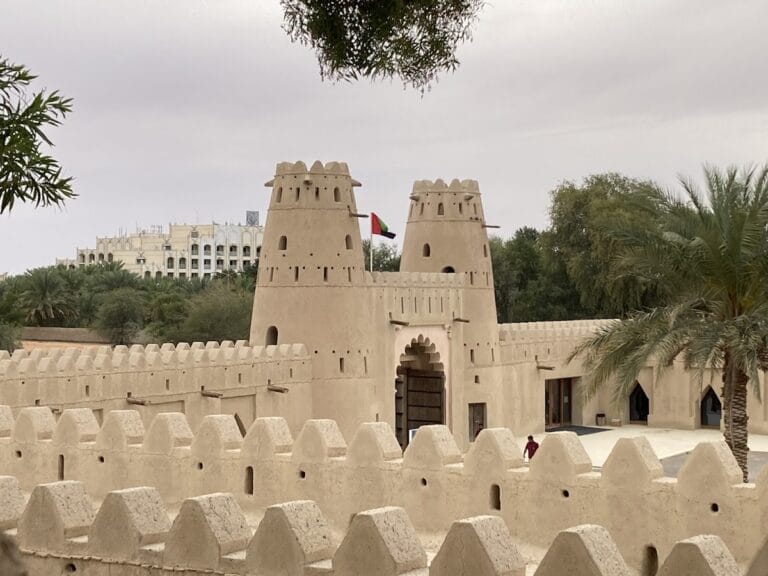
Al-Jahili Fort was established around Al-Jahili Oasis in 1891 to defend Al Ain and protect its date-palm plantations. Later used by the Trucial Oman…
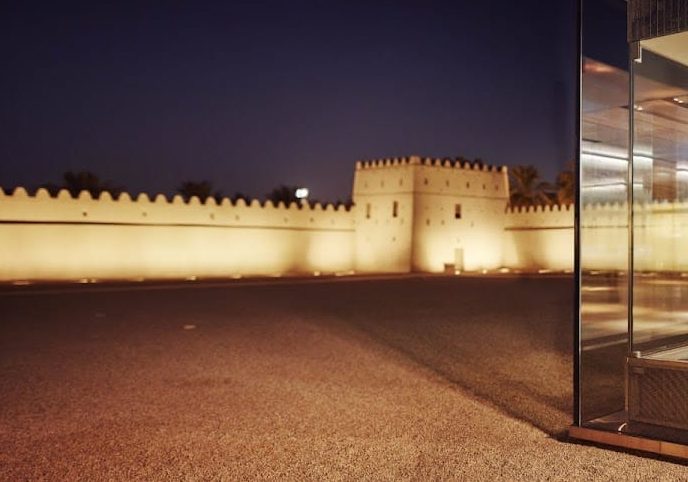
Qasr Al Muwaiji is an early twentieth-century fort in Al Ain connected with the Al Nahyan family, the administration of the Eastern Region, and the…
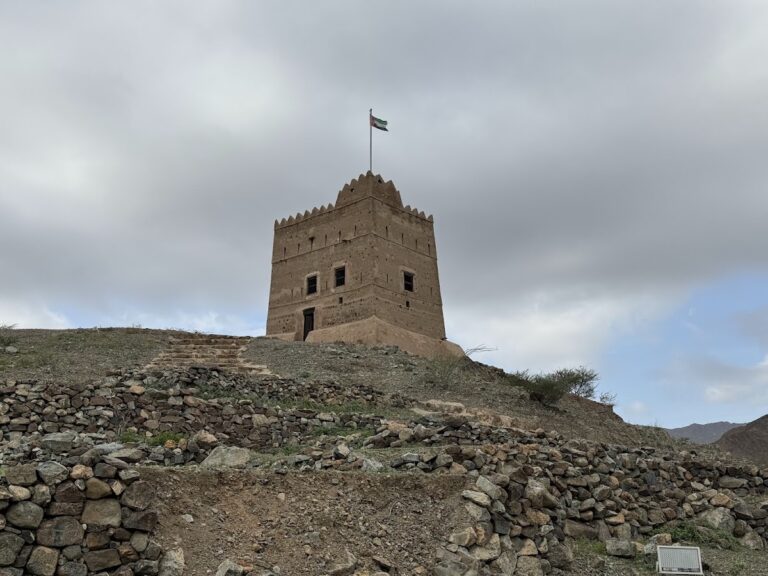
Al Hayl Castle in Wadi Hayl, west of Fujairah, was built in 1932 as a defensive fort, lookout, and residence for Sheikh Abdullah bin Hamdan Al…
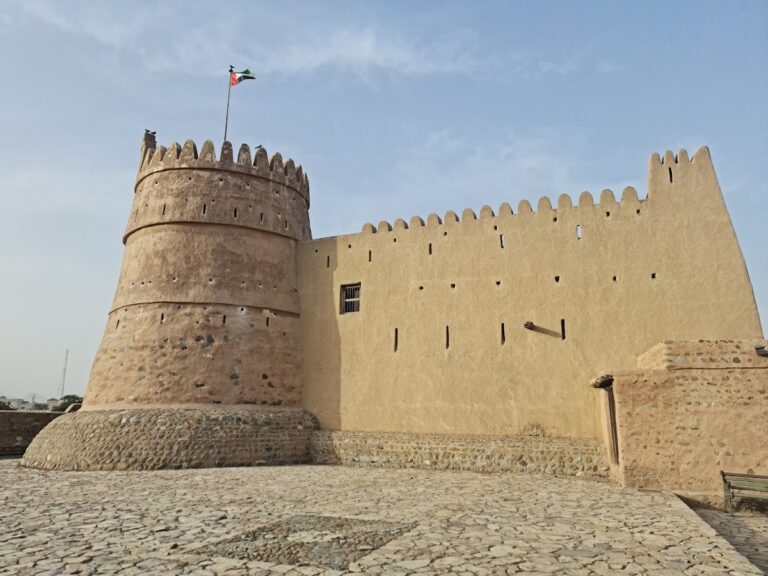
Al Bithnah Fort controlled the historic route through Wadi Ham between Fujairah’s coast and the interior, playing a central role in the political…
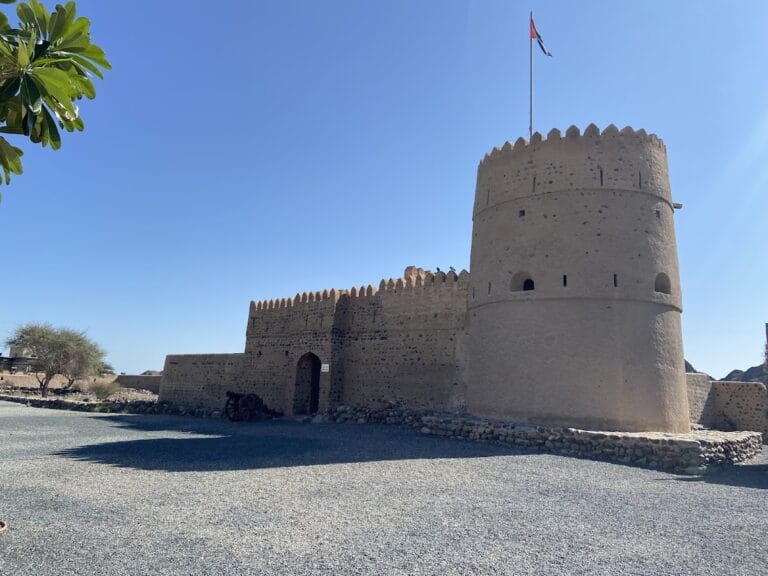
Awhala Fort in Fujairah preserves a late Islamic structure built over substantial Iron Age fortifications, with archaeological evidence of occupation…
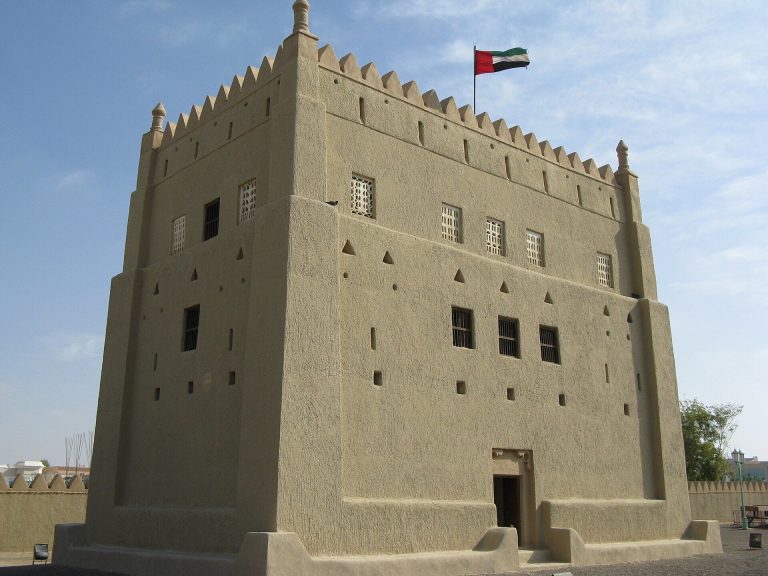
Built in 1948 on the order of Sheikh Zayed bin Sultan Al Nahyan, Al-Murabba Fort served as Al Ain’s police headquarters and now contains a museum…
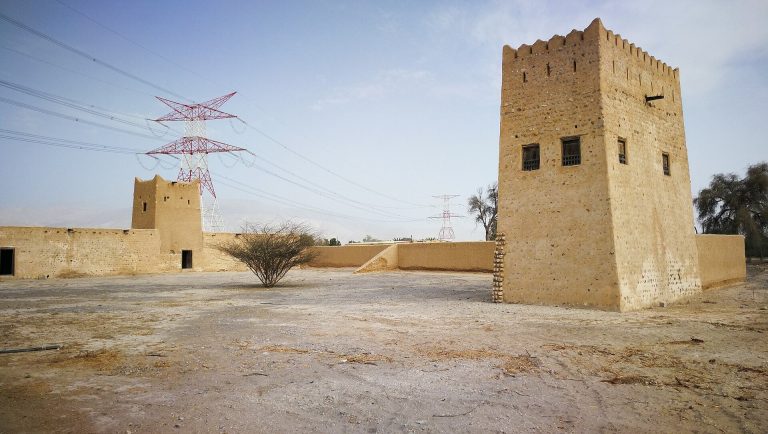
Al Fulayyah Fort in Ras Al Khaimah was an Al Qasimi summer residence and rest house that became a venue for treaty signings in the process leading to…
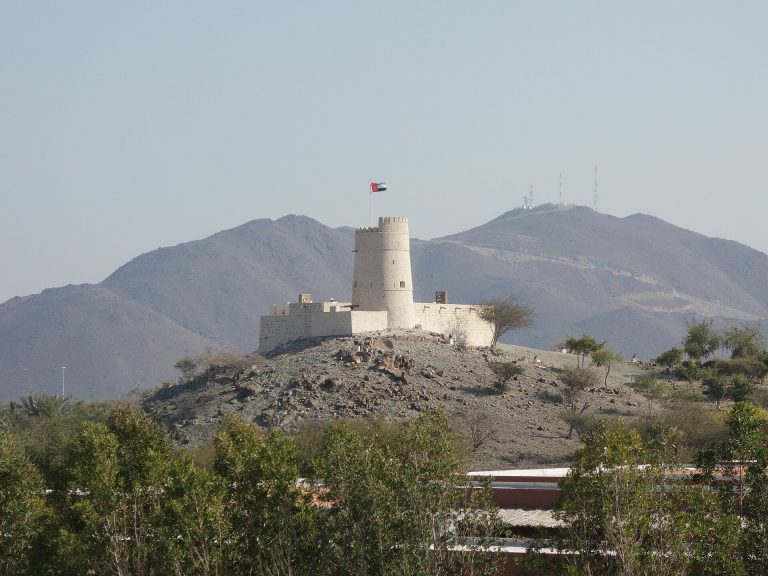
Ghayl Fort in Sharjah’s Ghayl village served as a defensive and surveillance post overlooking the eastern coast, nearby hills, and the lower reaches…
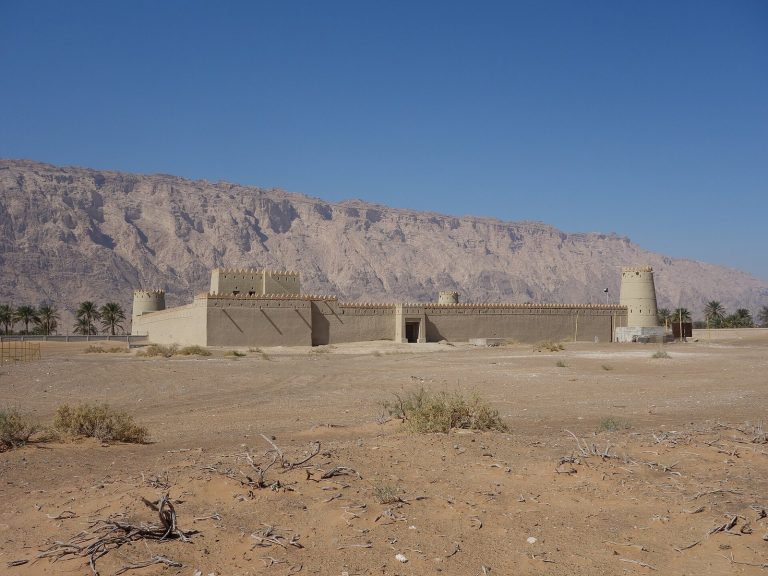
Mezyad Fort is a nineteenth-century fort in Al Ain, United Arab Emirates, built by the Al Mazayida and restored as an important regional heritage…
For details on how to use the maps, which sites are included, how popularity and ratings are determined, and how sites are classified, see the help page.
On this page6 sections
Al Jahili: a square fort and a stepped round tower
Al Jahili Fort in Al Ain combines a square, high-walled enclosure with a separate circular tower. The tower rises through four narrowing tiers, producing its distinctive stepped outline. The main fort has corner towers and a residential area that included the ruler’s reception space.
The late nineteenth-century complex served as a summer residence and a centre of authority. Later military occupation added barracks and other structures within a larger compound. Conservation repaired the traditional buildings and adapted parts for exhibitions. Its different enclosures and separate tower therefore belong to a site that expanded beyond the original residential fort.
Reception and family rooms at Qasr Al Muwaiji
Qasr Al Muwaiji is another Al Ain residence enclosed by mud walls and projecting corner towers. A prominent gate leads into the compound. Built in the early twentieth century, the fort occupied an oasis settled before the standing building was constructed.
Its accommodation included a diwan, or reception room, a mosque, kitchens and guest rooms. The diwan and family quarters were enlarged during Sheikh Zayed’s residence. Restoration retained earlier repairs where possible, acknowledging the repeated maintenance required by earthen construction. The court and adjoining rooms explain how official reception and household life shared a fortified enclosure.
Fujairah Fort: a residence fitted to a rocky hill
Fujairah Fort follows an irregular rocky prominence rather than a square ground plan. Three circular towers and one rectangular tower connect with defensive walls and a central two-storey building. Observation and firing openings face the surrounding approaches.
The lower level contains a courtyard and rooms, with a stair leading to upper accommodation. A majlis, or reception room, and a corridor connect with the towers above. Stone, mud-based materials and timber were used in the complex, which underwent major restoration around the turn of the twenty-first century. The arrangement places residential and meeting spaces directly within the defensive structure.
Al Bithnah: a guarded route and a date-processing room
Al Bithnah Fort overlooks Wadi Ham and nearby agricultural land. Before the modern road was built, traffic between the coast and interior passed through the wadi below. The fort’s roughly rectangular enclosure and round towers protected a position overlooking that route.
Restoration recovered evidence of a date-processing installation in a lower room. Channels in its floor collected liquid from stored dates, connecting the building with the produce of the surrounding oases. Timber beams and mud-based finishes accompanied its stone and earthen masonry. The towers had collapsed before earlier restoration, and further work in 2008–2012 repaired the complex, so rebuilt fabric forms a substantial part of its standing appearance.
Al Hayl: a courtyard house beneath a watchtower
Al Hayl Castle combines a fortified residence with a separate tower on the higher ground. The tower overlooks the house, village and wadi, extending observation beyond the walls of the domestic compound. The residence contained halls for receiving visitors, meeting rooms, bedrooms, stores and a kitchen.
Columns stand within the courtyard, while firing openings pierce the enclosing wall. Local dark stone set in mud mortar, plastered interiors and timber roof elements formed the building. Restoration included the watchtower in 2009. Its relationship with the courtyard house makes the distinction between a lookout position and the rooms occupied by the household especially clear.
Explore the collection
Explore sites on the map or in the grid. Map icons reflect each site’s primary function, helping you identify different kinds of places at a glance. Narrow this collection by primary function, by a site type within the castle and residence group, or by civilization and era. Additional filters cover popularity and rating. Select a map marker to view the site’s details and open its article, or open the article from its grid entry.