Santa Marta das Cortiças Archaeological Site: A Multi-Period Settlement in Portugal
Site at a Glance
- Rating
- 4.5
- Popularity
- Medium
- Country
- Portugal
- Primary era
- Bronze Age
- Eras represented
- Bronze Age, Iron Age, Classical, Medieval
- Civilizations
- Unclassified
- Site type
- Military
- Remains
- Fortified Town
On this page11 sections
History
The Santa Marta das Cortiças Archaeological Site, also known as the Falperra Archaeological Site, occupies the summit of Mount Falperra in Esporões, Portugal, about three kilometres from Braga. Its fortified settlement was inhabited from the Late Bronze Age, the final phase of the Bronze Age before the Iron Age, until at least the Roman period. The site also preserves evidence of early Christian and later medieval activity.
The fortified settlement
People lived in the fortified settlement from the Late Bronze Age through at least Roman times. Its long span of occupation makes it the earliest known phase at the site.
Early Christian and Suebian period
A three-aisled early Christian basilica, a long building divided into aisles, may date to the fifth or sixth century. A nearby large building is cautiously interpreted as a Suebian palace because of its plan and construction quality. The Suebi had established a kingdom in the northwestern Iberian Peninsula. The building may have been violently destroyed around 585, during the Visigothic conquest of that kingdom in the sixth century.
Medieval and early modern phases
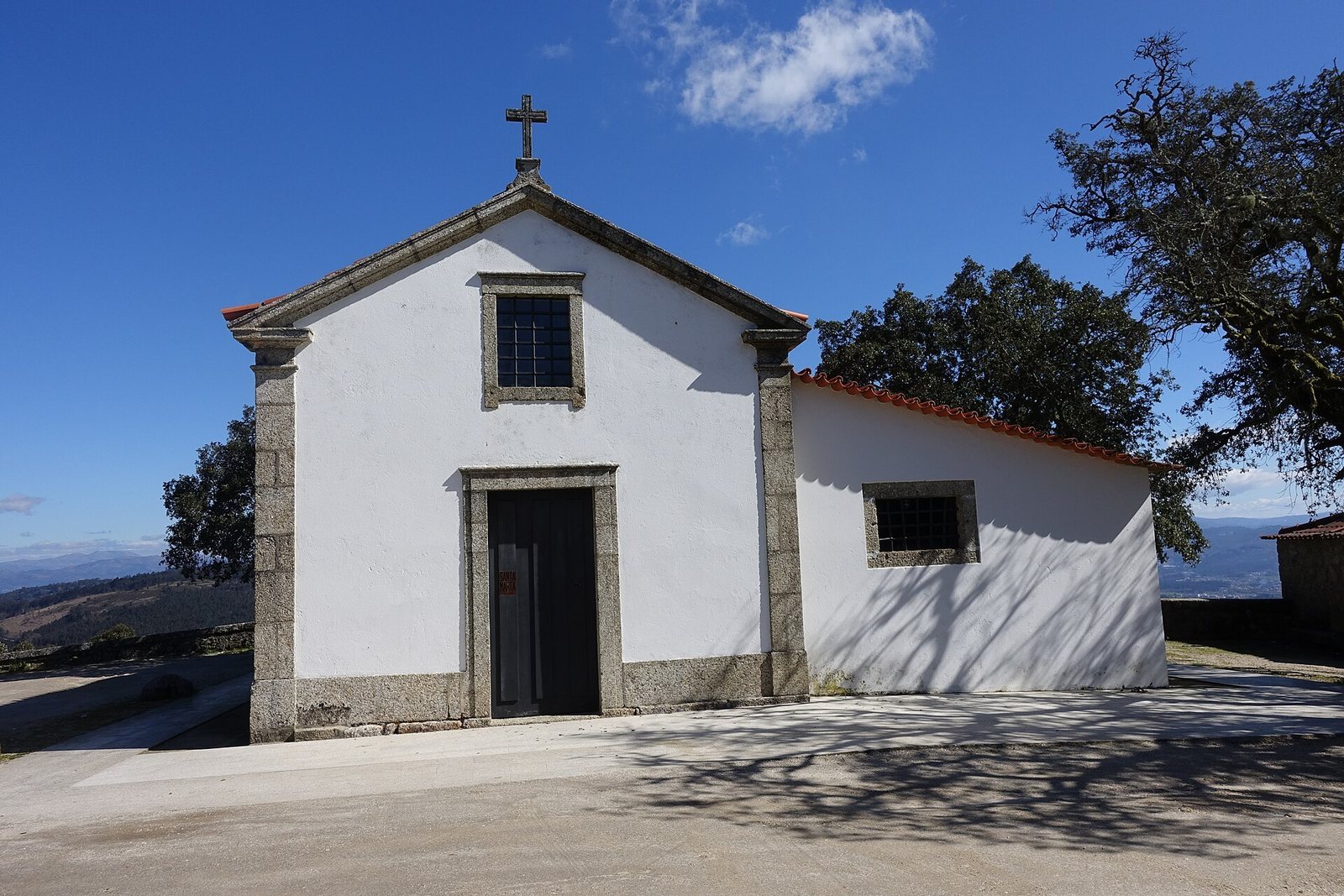
Forty-six written references place a castle on Mount Falperra between 900 and 1147. It may have been a simple fortification on a rocky outcrop. In 1520, Diogo de Sousa, Archbishop of Braga, commissioned the Chapel of Santa Marta das Cortiças.
Excavations and protection
Belino led excavations of the fortified settlement in 1899. Further investigations took place in 1953–1956 under Father Arlindo da Cunha and Russell Cortez, in 1966–1968 under Domingos de Pinho Brandão and J. J. Rigaud de Sousa, and in 1973–1974 under da Cunha. Manuela Martins of the University of Minho’s Archaeology Unit directed work in 1984–1985. The site was classified as a Property of Public Interest on 20 October 1955 and is now completely abandoned.
Remains
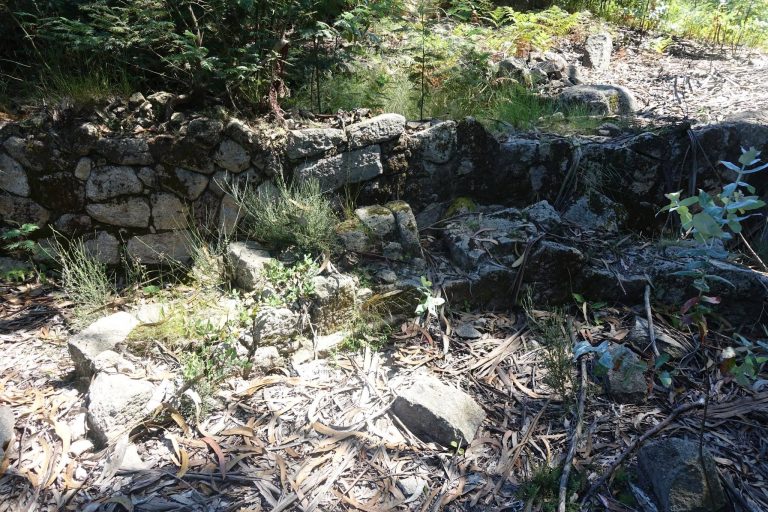
At an elevation of 522 metres on Mount Falperra, the site includes a fortified settlement with three large-stone walls, an east–west church, and a large rectangular building interpreted as a possible palace.
The fortified settlement
The settlement’s small circular houses stood within three defensive walls made from large stones. Excavations in 1984–1985 found Late Bronze Age layers confined to the mountain’s upper platform.
Early Christian and possible palace buildings
The basilica
The basilica measures 25 metres long by 16 metres wide externally. Its central aisle is 7.2 metres across, while each side aisle is 3.5 metres wide. A semicircular apse, a recessed curved end, sits within the eastern end of the rectangular exterior plan. The building follows a model associated with Syria that spread to North Africa and the Iberian Peninsula.
The possible palace
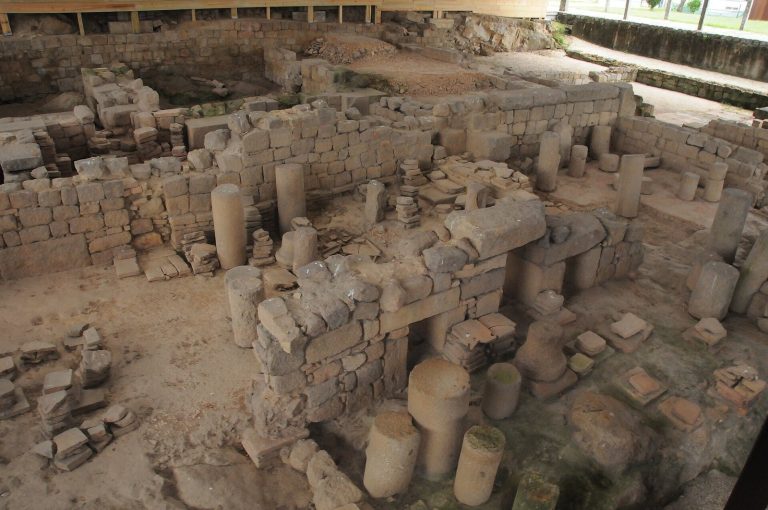
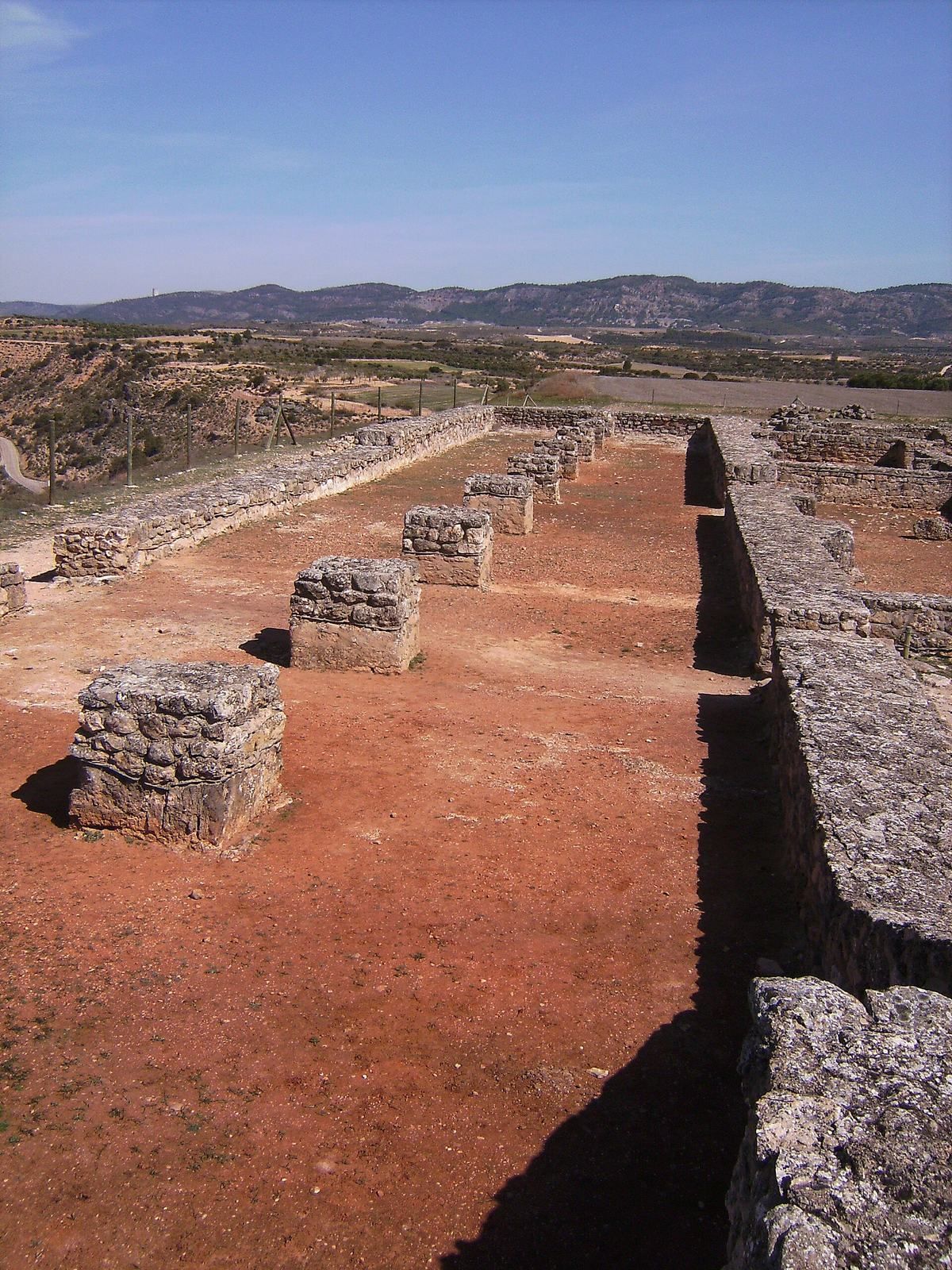
The rectangular building measures 34.2 by 12.6 metres. Its large hall has two aisles and seven pillars down the centre, with two elongated rooms alongside it. At one end, two further rooms and a corridor open to the exterior. Several capitals, the tops of columns, were found here, including examples of the classical Ionic and Corinthian orders. The plan resembles that of the Visigothic palace at Recópolis, a Visigothic settlement in central Spain.
Other foundations and excavated finds
Below the present monument to Our Lady of the Assumption, a group of wall foundations forms a complex layout. They may belong to a dwelling, although their function is uncertain. Excavations in 1973 uncovered numerous Roman cremation burials with grave goods.