La Draga: An Early Neolithic Lakeshore Settlement in Spain
Site at a Glance
- Popularity
- Medium
- Country
- Spain
- Primary era
- Stone Age
- Eras represented
- Stone Age
- Civilizations
- Unclassified
- Site type
- Domestic
- Remains
- House
On this page15 sections
History
La Draga is an Early Neolithic lakeshore settlement on the eastern edge of Lake Banyoles in Banyoles, Catalonia, Spain. Occupied from around 5300 BCE and used into the fifth millennium BCE, it was home to one of the earliest known farming communities in northeastern Iberia. The settlement belongs to the Cardial Neolithic, a western Mediterranean pottery tradition commonly decorated with impressions made by a shell’s toothed edge. La Draga is also the only known prehistoric lakeshore settlement of its kind on the Iberian Peninsula.
Settlement and community
At least two occupation episodes are represented at the site. Building materials differed between earlier and later phases, while technical practices and material culture show continuity. People reused some parts of the settlement, and the overall sequence does not point clearly to a settlement-wide abandonment. A possible break around 5000 BCE has been associated with recurring floods, but it is not statistically significant, and much of the settlement remains unexplored.
Farming and herding underpinned life at La Draga. People cultivated crops in small, permanent fields and kept livestock, while hunting, fishing and gathering supplemented their food. The lakeshore and its surrounding region offered a varied range of resources. Demand for firewood and building timber also changed the nearby landscape: woodland was cleared for cultivation and grazing, and other plants spread through disturbed areas.
Residents relied mainly on nearby materials but also obtained stone and other resources from distant places. Shared pottery designs and working practices connect the community to a wider network of Cardial Neolithic settlements around the western Mediterranean. Patterns of production and exchange have been interpreted as suggesting collective ownership of productive resources and redistribution of goods, possibly without political elites. Repeated production of ornaments may have helped express group identity.
Excavation and protection
A preventive excavation coordinated by the Banyoles archaeological museum began in 1990 and identified the settlement as Early Neolithic and Cardial. Systematic work followed from 1991 to 2005, including underwater excavation in sector C between 1994 and 2005. A further programme surveyed areas around the lake in 2008 and 2009, excavated sector D from 2010 to 2012, and returned to sector A between 2013 and 2015 to connect excavated areas. The work brought together local and Catalan archaeological institutions, a university and Spain’s National Research Council. In 2018, La Draga received Catalonia’s Cultural Asset of National Interest designation.
Remains
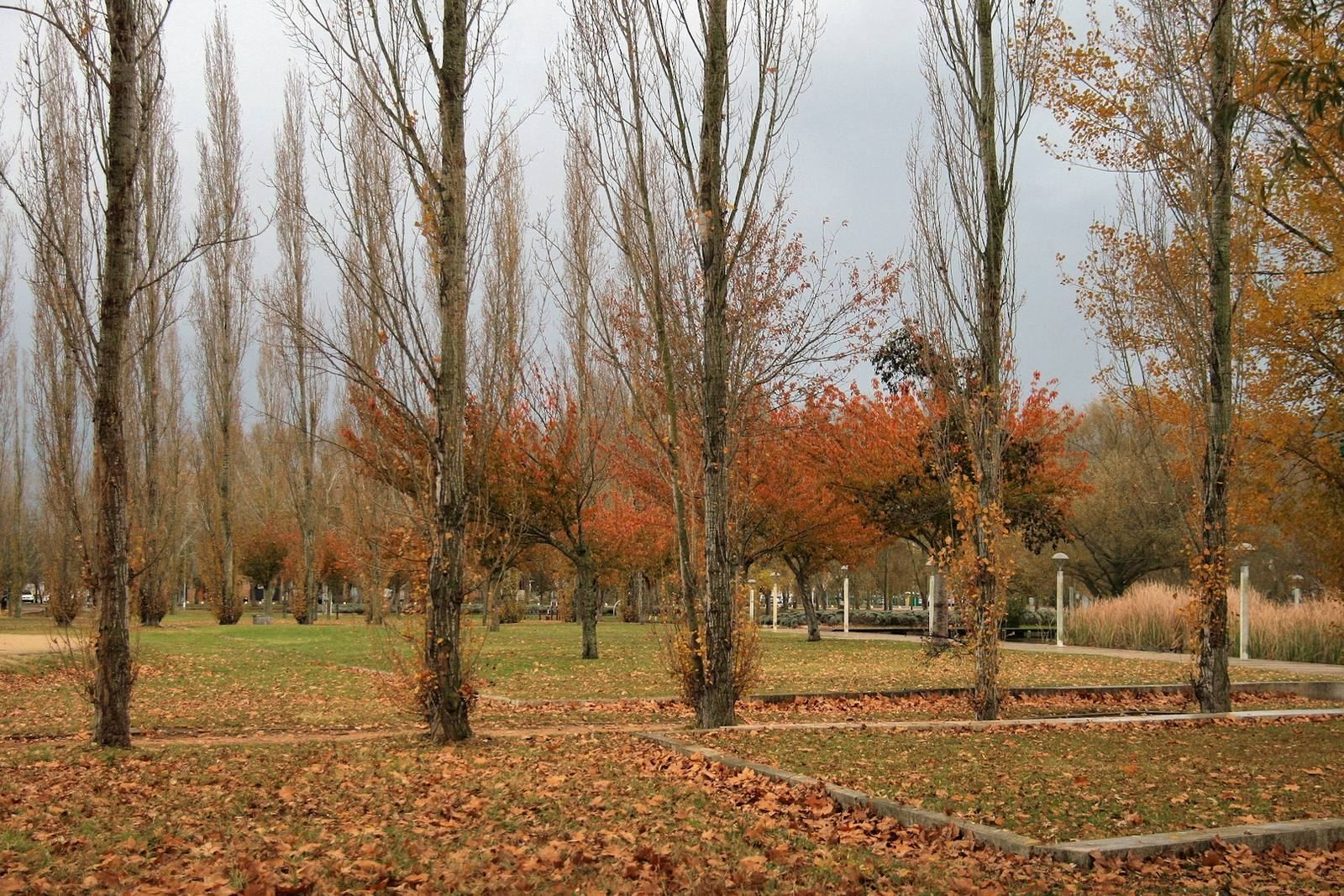
The settlement occupied a gently sloping peninsula beside Lake Banyoles and wetlands near the outlet of the Terri, the stream draining the lake. It covered an estimated 8,000 square metres, with part of the site now beneath the water. Its waterlogged, oxygen-poor ground has preserved timber, plant fibres and other organic material alongside stone and pottery finds.
Settlement layout and buildings
Lakeshore setting and preservation
La Draga lies beside a karstic lake, one supplied by groundwater that dissolves and reshapes the underlying soluble rock. Excavations have covered two areas along the shore and another in the water at the position of the former Neolithic beach. One excavated land area remained under water; another was about 60 centimetres above the water table. These differing conditions help explain why wooden structures are especially clear in sectors B and D, while postholes provide evidence for buildings in other areas.
Huts and hearths
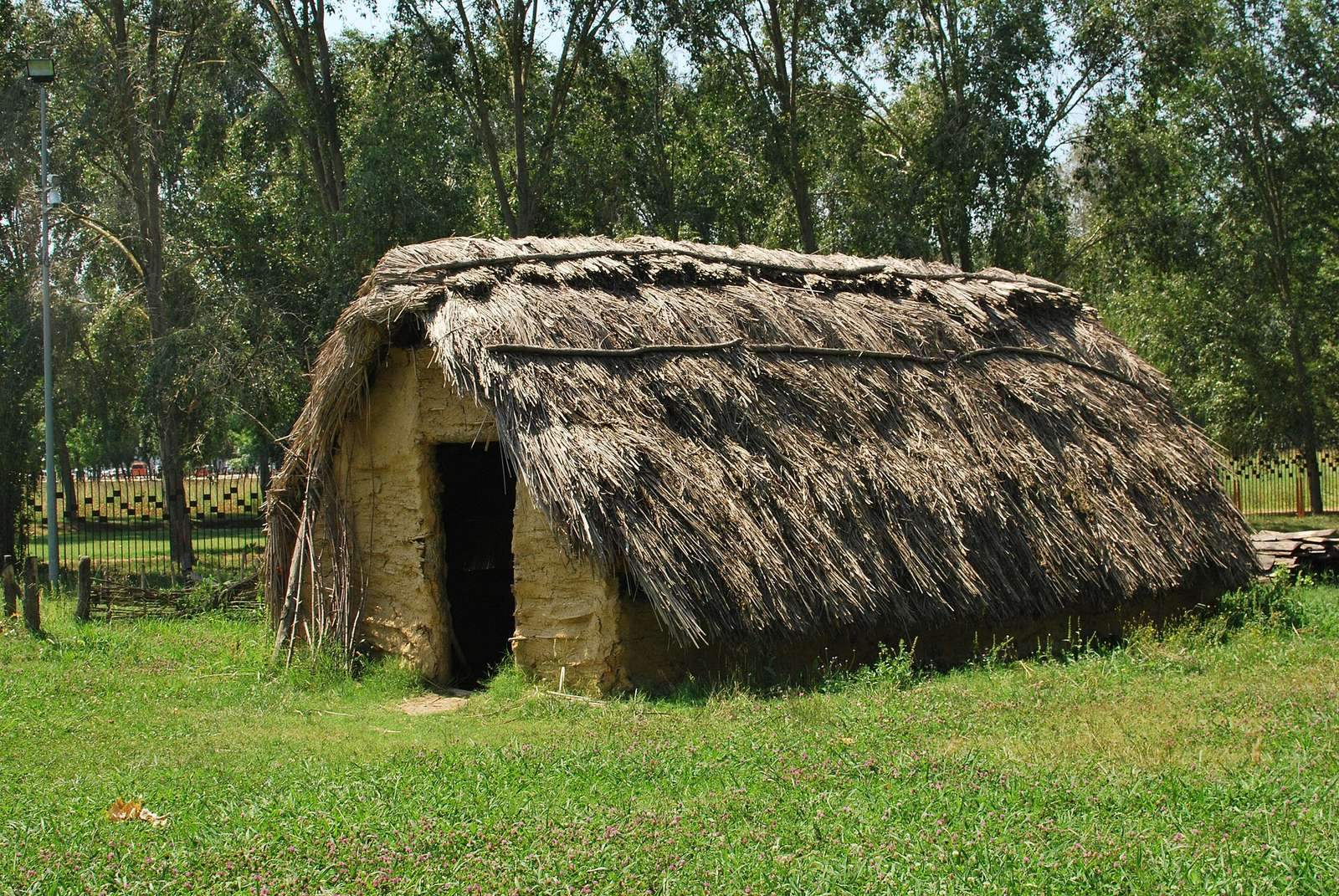
Excavators counted 892 hut posts, most made of oak. Timber building parts include upright posts, forked supports, beams, planks and latticework made from branches. The buildings had quadrangular plans rather than circular ones. Some surviving elements reach five metres in length and three metres in height. Ropes and forked supports helped hold structures together, and the buildings did not use elaborate interlocking joints.
In the earlier phase, large wooden huts measuring about four by twelve metres were partly raised above the ground. Hearths inside them rested on thick layers of clay. In the later phase, broad pavements of travertine, a limestone deposited by mineral-rich water, covered earlier timber structures. Sector A has small, well-paved oval areas measuring about three by four metres. Postholes around these areas, together with a central post, indicate roofs supported by poles and covered with plant material.
Numerous basin-shaped hearths, about 0.8 to 1.8 metres across, contained animal bones, cereals and mussel remains, as well as pottery, charcoal, quartz cobbles and sandstone slabs. Polished stone adzes, woodworking tools with blades set across their handles, were also found with hearth materials. The hearths’ contents have been interpreted as consistent with community activities taking place outdoors more often than inside huts.
Objects and materials
Wood, cordage and textile-making tools
Underwater excavation recovered about 50 wooden objects, including agricultural implements and tools made for different tasks. Wood was selected for its particular properties. Yew served for bows, which measured 108 centimetres, while willow was used for arrow shafts. Boxwood was shaped into combs, double-pointed needles, sickle handles and digging sticks; oak was used for containers and shovels. Handles for adzes were made from yew, oak, pine or boxwood. Oak and laurel were important fuel woods.
Fragments of two bows were recovered in 2002 and 2005, and another was found in 2012. Together, the three form one of Europe’s oldest known groups of Neolithic bows; the bow found in 2012 has been identified as Europe’s oldest Neolithic bow.
La Draga has also yielded some of the earliest evidence of textile production on the Iberian Peninsula. Finds include boxwood combs, bone awls, needles with eyes and three needle fragments. Some perforated wooden or bone tools may have served as spindle whorls, while other objects may have helped tension thread or prepare weaving. Possible fibres include nettle and sheep or goat hair.
Plant-fibre remains include a complete roll of clematis, rush- and sedge-based basketry, and cord fragments, some made from lime-tree fibre. A bundle and a knotted cord preserve evidence of cord-making. People used braiding, twisting and knotting, with twisting the most common method; many surviving cords consist of two strands twisted to the right.
Pottery
Most pottery consists of medium- or thick-walled fragments from vessels likely used for storing, cooking and eating food. The forms include rounded, hemispherical and subspherical pots, some with necks, as well as cylindrical vessels. Potters built the vessels from coils of clay, then smoothed and polished the surfaces before firing.
Many pots carry impressions or incisions. Cardium-shell impressions form jagged, gently curving lines, while dragged-shell marks create incised bands. Other decoration uses combs, fingernails, spatulas or awls, or takes the form of smooth raised cords. Decorated vessels may have made up about 70 to 80 per cent of pottery in the oldest, Cardial-period layer, with a lower proportion in the later layer.
Stone tools
Knapped stone blades served as inserts for sickles, drills, arrowheads and scrapers for working wood, bone, horn and hide. Some siliceous stone travelled more than 100 kilometres to reach the settlement. Sources included the Montjuïc area near Barcelona, about 115 kilometres to the south, and the Sigean–Narbonne basin in France, about 110 kilometres to the north. Flint came from roughly 100 kilometres away to the north. Blades, no longer than 10 centimetres, were struck from large cores using a small antler punch. Local vein quartz and clear quartz were also worked at the settlement into flakes and small blades.
Polished adze blades were made from metamorphic stones such as schist and hornfels, and several handles were recovered. Their asymmetrical cutting edges were fitted so that the working edge stood across the handle. Tools of granular basalt and granite were used to process plants, including grinding cereals. Finer sandstone and similar stones could be used to work, polish and sharpen bone and wood.
Food preparation and ornaments
Objects used in preparing and serving food include wooden bowls, ceramic vessels of different shapes and sizes, wooden ladles and spatulas, a bone spoon, a tortoise shell and a wooden beater. Hearth cobbles and slabs were used to roast, bake or stew food.
Ornaments include tusk-shell beads, beads and pendants made from Glycymeris, Cardium and Spondylus shells, perforated Columbella shells, rings of bone or horn, shell disk-rings and marble bracelets. A production area contained unfinished ornaments and working debris, including material from making circular shell beads and pendant beads. Shells used as raw material were available about 30 kilometres away. Horn traces and preforms, together with animal remains, suggest that some bone or horn rings were made at the settlement. Certain rings have incised patterns and protrusions, with comparable examples from other Neolithic sites in the region. The marble bracelets came from more distant areas.
Environmental and subsistence remains
Seeds, fruits and vegetation
About 400,000 seed and fruit remains form the largest assemblage of its kind from a Neolithic site on the Iberian Peninsula. They include durum wheat, two-row barley and poppy, along with gathered hazelnuts, acorns, blackberries and sloes. Cherry stones may have been used to make beads. The plant remains also preserve a picture of the landscape around the settlement. Oak, box and hazel grew locally, while mountain vegetation included pine, fir, yew and birch. Kermes oak, wild olive and mock privet were among the Mediterranean trees and shrubs. Wetland and lakeside plants included elm, ash, willow, sedges, rushes, bulrushes, watermilfoil, pondweed and water lilies. As woodland was cleared and timber used, pine, lime, hazel and box spread in disturbed areas.
Animal remains
Animal remains include sheep, goats, cattle and pigs, as well as wild aurochs, red deer, wild boar, roe deer, ibex, foxes, badgers, martens and wildcats. Bird remains include great and shag cormorants, woodcock and coot. Identified fish include chub, Mediterranean barbel and eel. The assemblage also contains the freshwater snail Cepaea nemoralis, marine mussels, cockles and Glycymeris shells, and freshwater turtle.