Tingstäde Fortress: Gotland’s Early 20th-Century Defensive Stronghold
Site at a Glance
- Rating
- 4.4
- Popularity
- Medium
- Country
- Sweden
- Primary era
- Modern
- External website
- Open
- Eras represented
- Modern
- Civilizations
- Swedish
- Site type
- Military
- Remains
- Fort
On this page6 sections
History
Tingstäde Fortress is a Swedish defensive complex in Tingstäde, built to protect Gotland and support the island’s military mobilization. Construction began in 1904, and the fortress entered service in 1914. Its development followed decades of debate over where to station the island’s forces and military stores.
Plans and the relocation of military stores
In 1885, W. Unge, chief of staff for Gotland’s military command, proposed Tingstäde as a base for Gotland’s National Militia, the island’s locally organized defense force. Three years later, Prince Carl and Lieutenant Axel Bergenzaun were asked to prepare a fortification plan. Bergenzaun favored Follingbo parish, while Carl proposed infantry positions and artillery batteries at Tingstäde. Hampus Elliot, head of Sweden’s fortification service, rejected both plans and recommended Fårösund instead, and the proposal was set aside.
A government-appointed Neutrality Committee called for a fortified strongpoint on Gotland in its 1890 report. The following year, King Oscar II visited with senior army officer Axel Rappe and Elliot. At a meeting in Myrvälder, Tingstäde, attended by Defence Minister Hjalmar Palmstierna, Carl’s earlier plan was presented and received support. Parliament debated the proposal in 1892, but considered its estimated cost of 4.4 million kronor, including stores, barracks, and barbed-wire defenses, too high and rejected it.
In 1895, Gotland’s military commander and parliamentarian Gustaf Björlin revived the case for a strongpoint at Tingstäde. He warned that an enemy gunboat entering Visby harbor could disrupt mobilization and weaken the island’s defense, since the mobilization stores were then in Visby, within the gunboat’s range. A state inquiry in 1897–1898 supported moving the stores and set aside 100,000 kronor for relocation, plus 123,000 kronor for fortification work and land. Parliament approved the move in 1898. The Visby–Tingstäde railway was completed in 1899, a formal royal decision followed on 22 March 1900, and the stores at Tingstäde were ready in 1902.
Construction and military service
Parliament first funded fortification work in 1902, and construction began in 1904. The initial design called for four infantry redoubts and one artillery redoubt. Costs rose quickly, standing 69.5 percent above the original estimate by 1905. Four armored gun turrets arrived aboard the Gustaf Vasa in 1911 and were installed and test-fired that year. The fortress was considered ready in 1914, although work on most of the infantry redoubts had not yet begun. With the outbreak of the First World War, an emergency parliamentary session approved a further 774,000 kronor to complete the defenses, and the first mobilized troops were assigned to the work.
The fortress served from 1914 and remained in military use during the Second World War. It was intended to accommodate 5,000 men from the Gotland garrison. The Home Guard continued using it into the 1970s.
Postwar use and museum
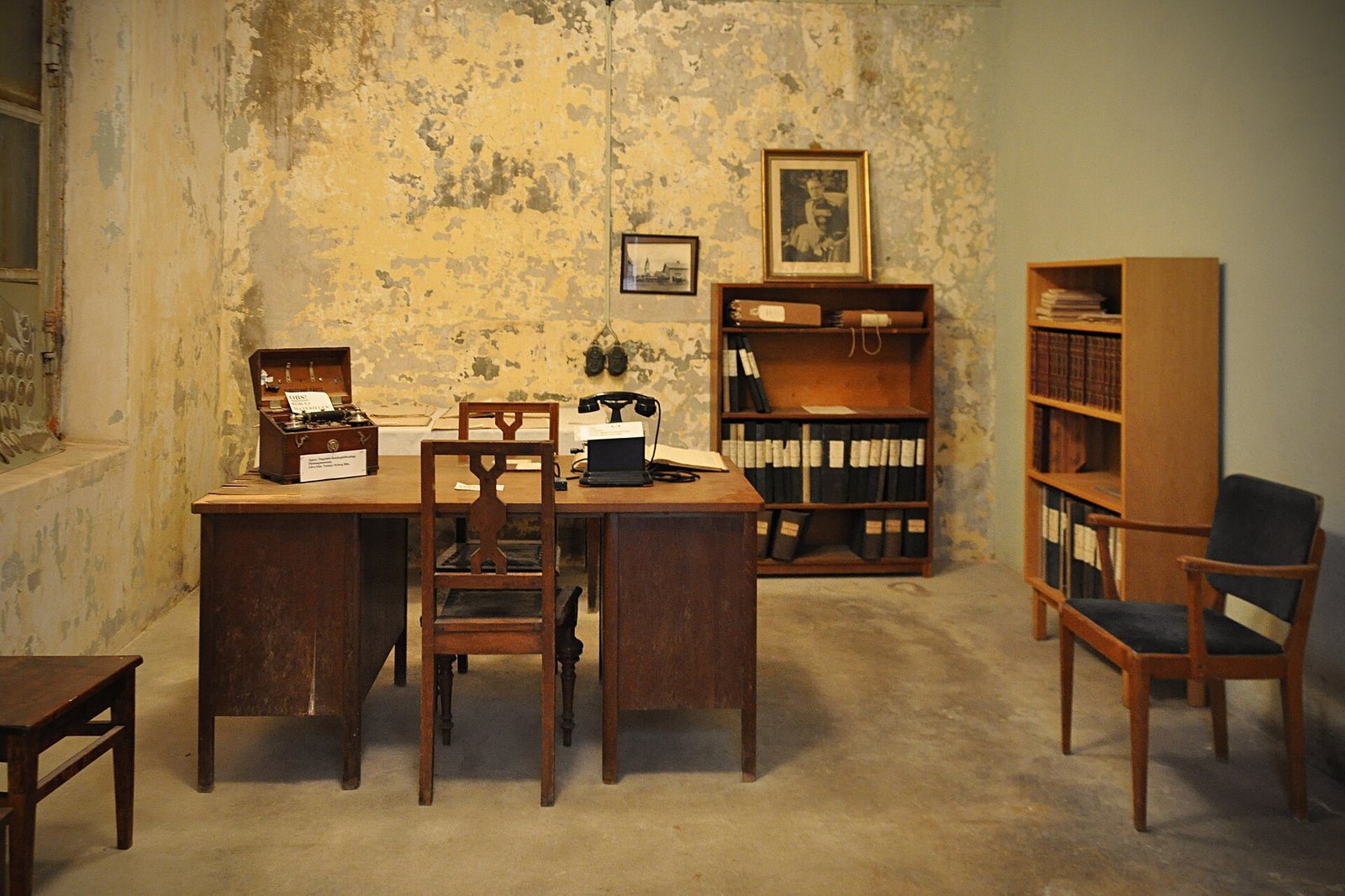
After the Second World War, the fortress no longer served a defensive purpose but remained a central store, particularly for ammunition and food. Its redoubts were used for storage from the war onward, and the stores began to be cleared in the early 1990s. In 1994, the Swedish National Property Board took over the operation and care of Skans 1. The fortress is now a museum, with Skans 1 opened to visitors by the Tingstäde Local Heritage Association.
Remains
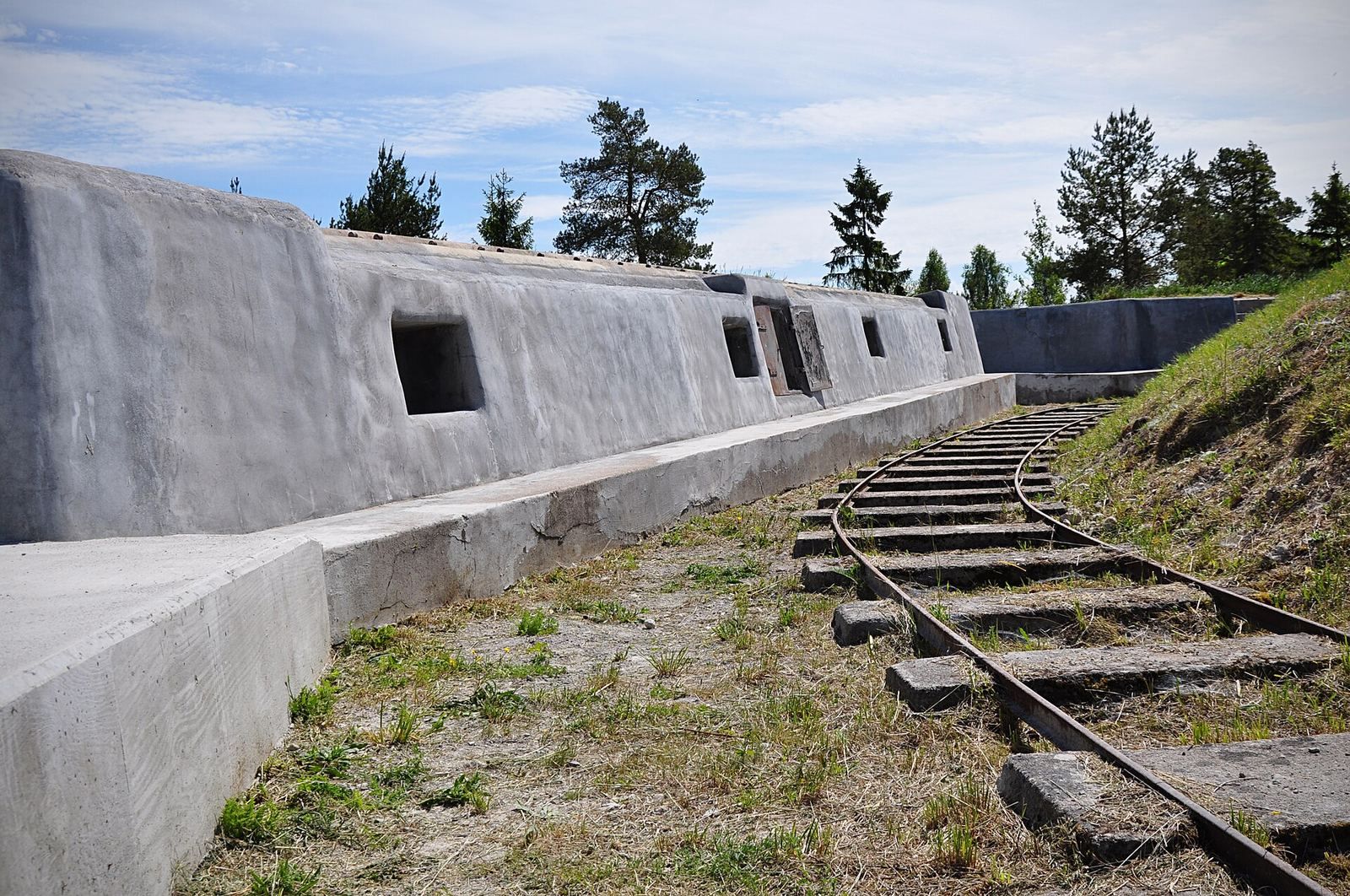
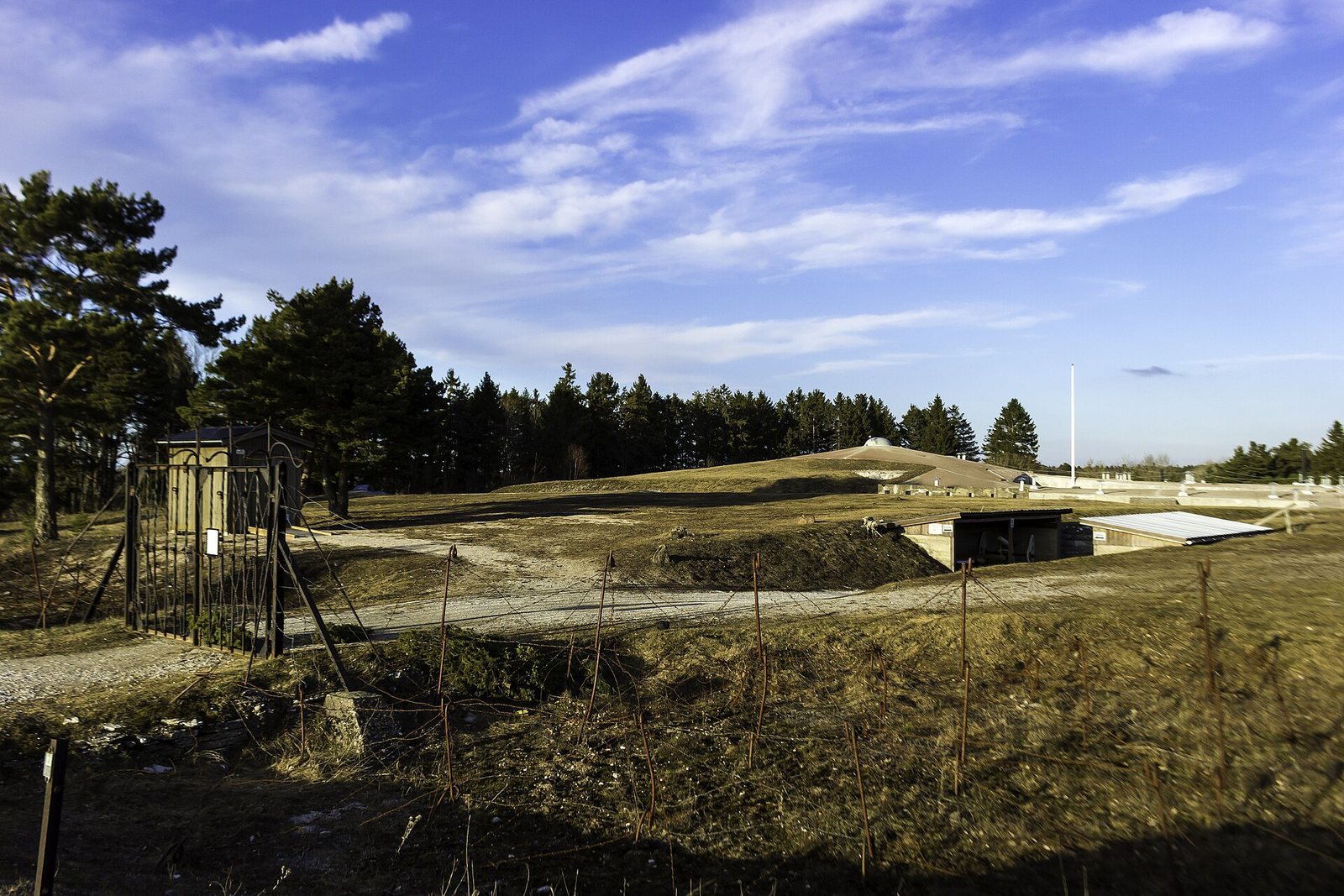
The fortress’s defensive area had a circumference of about six kilometres. Its network combined five redoubts, fortified defensive works, with two smaller intermediate works between principal positions. Of the redoubts, one was for artillery and four for infantry. Barbed wire ran between them, while five fire-control or observation works supported aiming and surveillance. The defenses also included three shelters, a casemate, a fortified chamber for guns or troops, and a telephone exchange used during wartime.
Skans 1
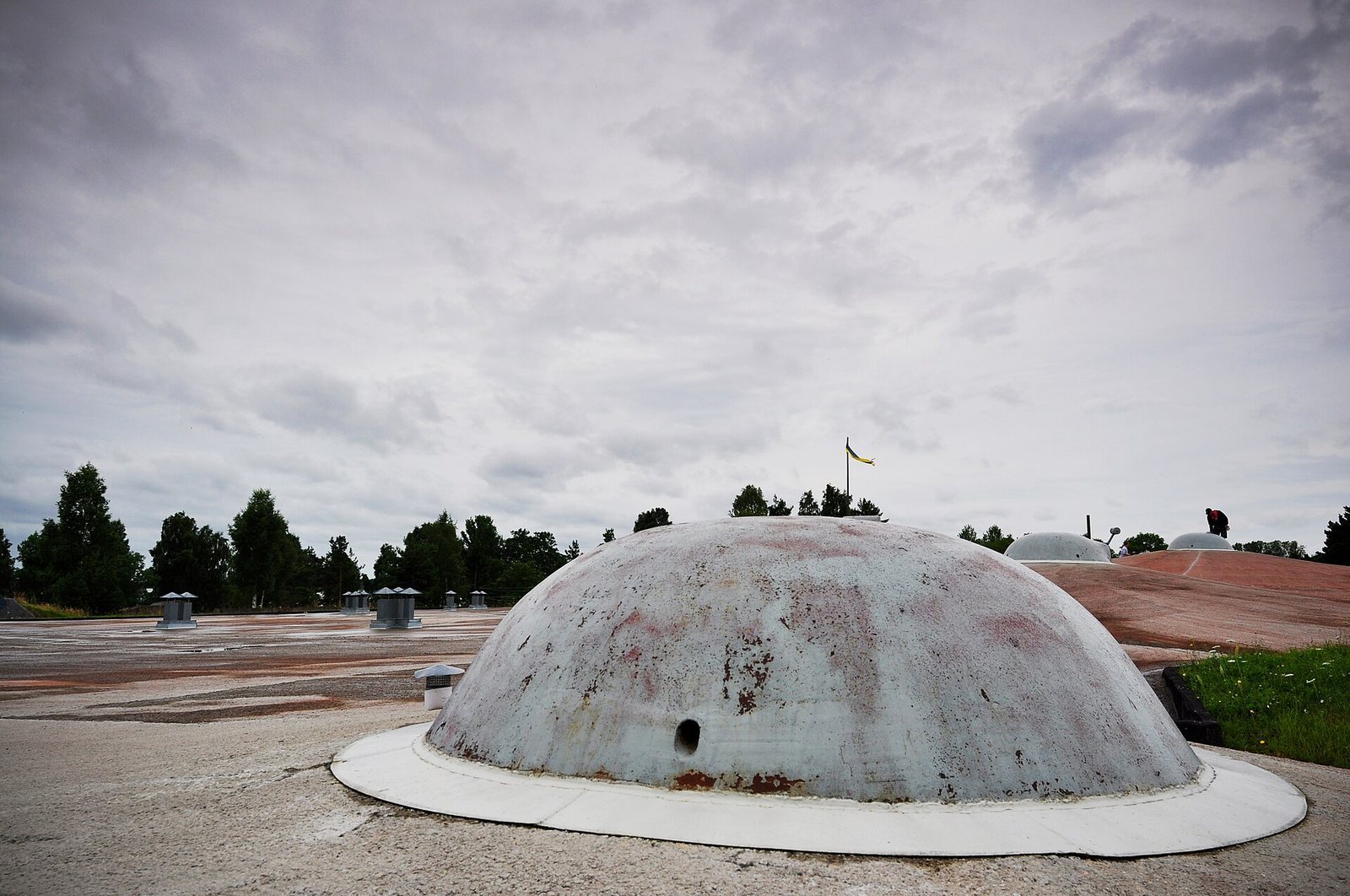
Skans 1, the largest redoubt, stands near the church and opposite the bathing place. Its underground passages can be explored, and it contains four 8.4 cm guns mounted in armored, rotating turrets. The wider fortress also had positions for Hotchkiss m/1900 machine guns and numerous prepared artillery firing positions.