Martebo Church: A Medieval Gothic Church in Sweden


Site at a Glance
- Rating
- 4.3
- Popularity
- Very Low
- Country
- Sweden
- Primary era
- Medieval
- External website
- Open
- Eras represented
- Medieval, Early Modern
- Civilizations
- Danish, Swedish
- Site type
- Religious
- Remains
- Church
On this page8 sections
History
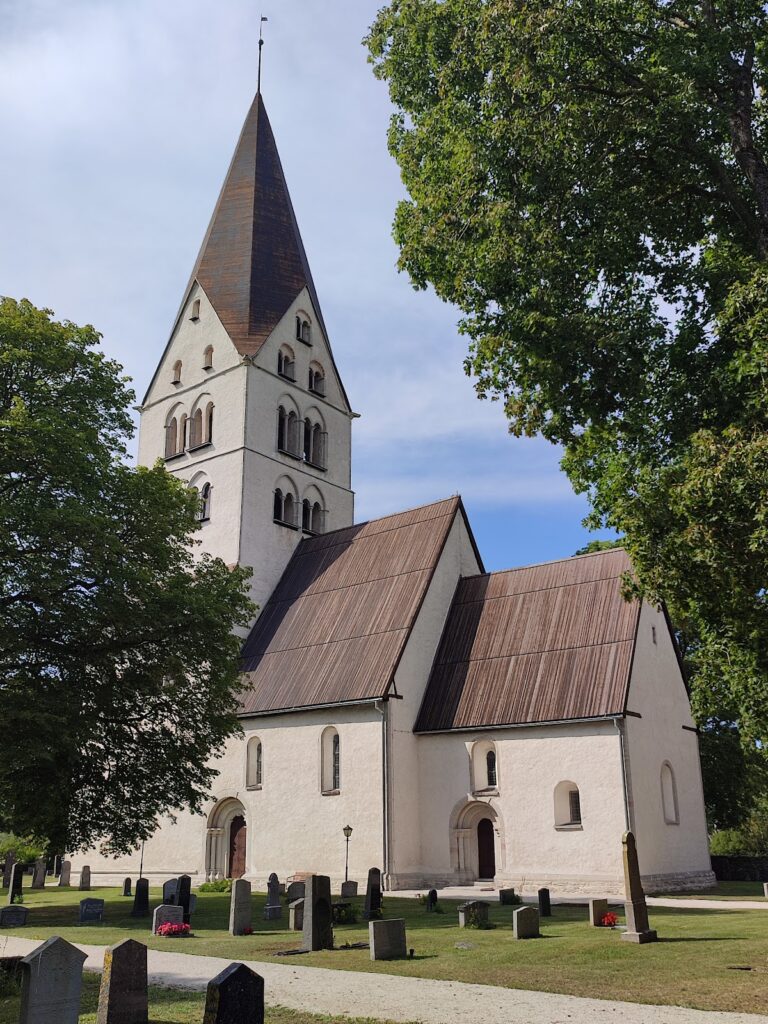
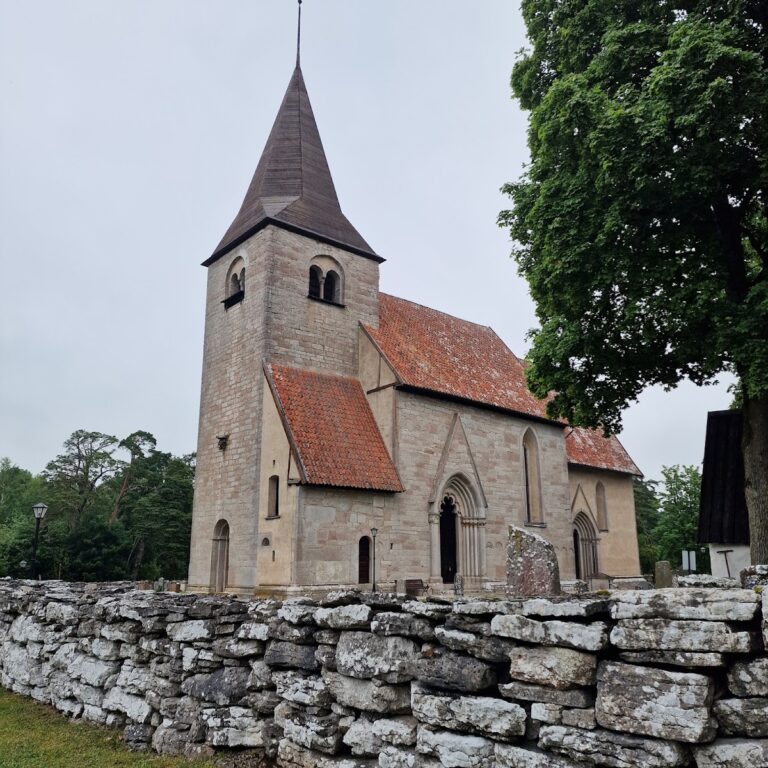
Martebo Church is a medieval church in Sweden, rebuilt around 1330 in the Gothic style on the site of earlier Romanesque parts. It belongs to the Church of Sweden, Sweden’s Evangelical Lutheran church, and forms part of the Diocese of Visby, the administrative area covering Gotland. The church is especially noted for its three high-Gothic portals, which are regarded as an exceptional monument of medieval sculpture on the island.
Early church and medieval rebuilding
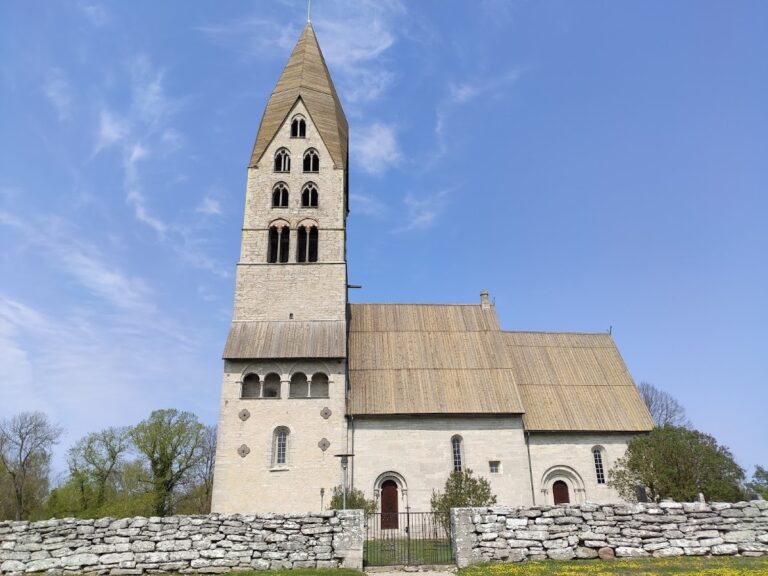
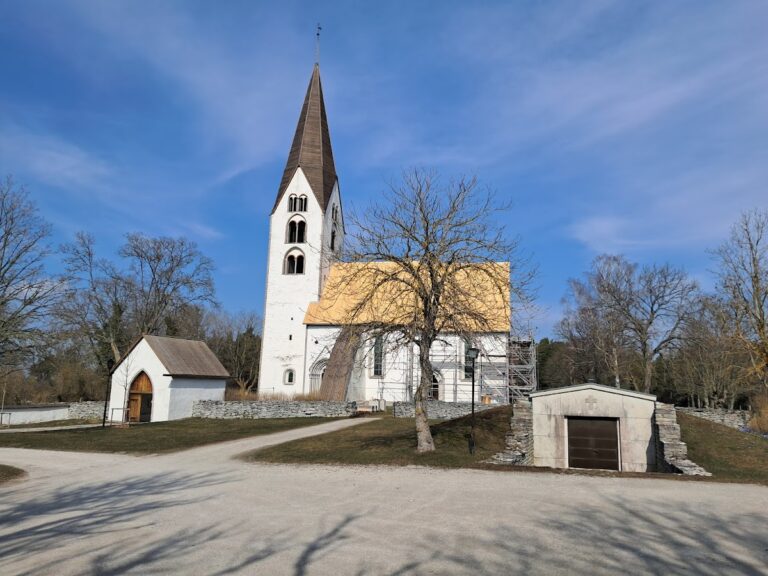
Little is known about Martebo Church’s origins or earliest history. A stave church, a medieval timber church built with upright wooden posts supporting its walls, may have stood before the present stone building. The surviving tower dates from the middle of the thirteenth century. In the early fourteenth century, more specifically around 1330, the nave and choir were rebuilt in the Gothic style, replacing smaller Romanesque sections. Romanesque architecture generally used massive forms and round-arched openings, while Gothic architecture favored taller proportions and pointed arches.
The rebuilding produced a high nave, a slightly lower choir, and a sacristy attached to the older tower. The tower was retained instead of being reconstructed in the new Gothic manner, leaving a marked contrast between its earlier form and the substantially taller church around it. A small chamber beside the tower was also added during the fourteenth century. It probably served sick members of the congregation or people who were not permitted to worship with the rest of the community.
The medieval portal sculpture is associated with Master Fabulator, the conventional name for an unidentified sculptor, and is probably connected with the local stonemason’s workshop known by the nickname Egypticus. The three portals present scenes from the life of Jesus in chronological sequence, creating a continuous sculptural narrative across the exterior of the church.
Later history and discoveries
Martebo Church preserves evidence from several later periods. Its pulpit dates from the middle of the sixteenth century and is among the oldest in Sweden. The altar was made in 1675, an epitaph dates from 1658, and the organ façade was produced in 1682. Medieval frescoes, including dragon imagery, were discovered in 1970. During restoration the following year, a picture stone was found, adding further evidence of the long history of the site.
Two fragments of picture stones belong to the oldest Gotlandic tradition and date approximately to AD 400–600. One fragment was removed in 1902 and first exhibited in Stockholm. It is now preserved at Gotlands Fornsal in Visby. The church remains part of the Diocese of Visby and continues to represent the interaction of earlier local traditions with medieval and later Christian building phases.
Remains
Building and chamber
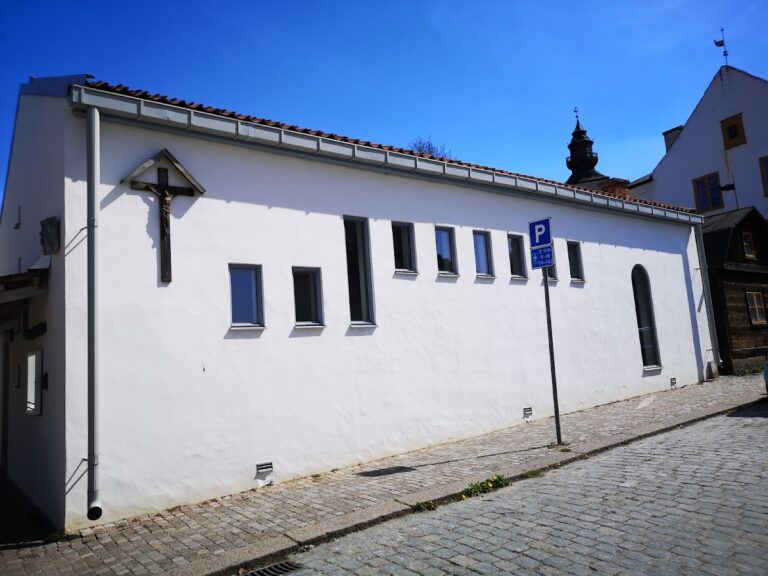
The church consists of an older Romanesque tower joined to a much taller Gothic nave and choir. Because the tower was retained when the fourteenth-century rebuilding took place, it now appears unusually short in proportion to the rest of the building. The small chamber beside the tower has no separate entrance. It connects with the nave through a four-lobed hagioscope, an opening that allowed someone outside the main worship space to see the altar. This arrangement relates the chamber physically to the church interior while preserving its separation from the congregation.
Sculpted portals
Three fourteenth-century portals shape the church’s most distinctive exterior feature. The north and choir portals include the Annunciation, the Nativity, the Adoration of the Magi, the Massacre of the Innocents, and the Flight into Egypt. The nave portal continues the sequence with the Baptism of Christ, the Passion, the Burial, and Christ in Limbo, where a bound devil appears. Traces of the original paint survive on some sculptures. A statue of Saint Dionysius, a Christian martyr and saint traditionally associated with the early church in Paris, stands in a niche beside one of the portals.
Interior furnishings and medieval surfaces
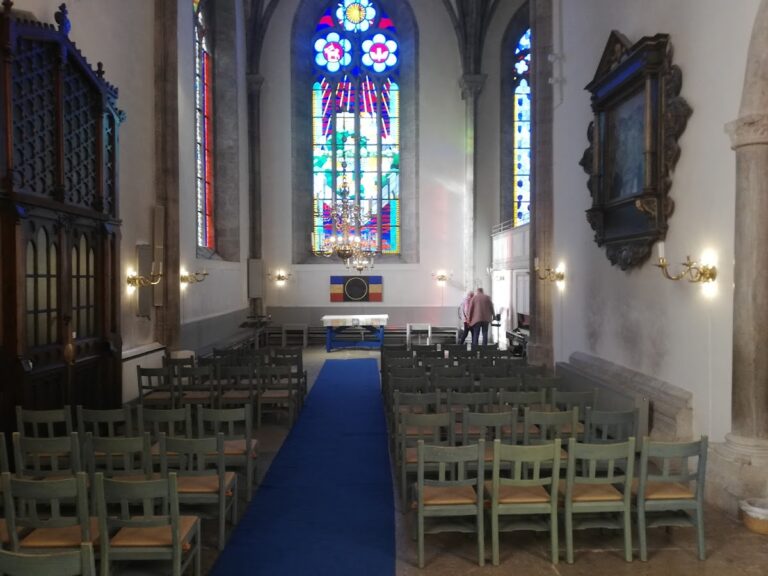
Remains of medieval murals survive inside the church, while the nave vault carries a decorative canopy in a traditional Gotlandic Gothic style. A thirteenth-century baptismal font has a shell-cup bowl, shaped with shell-like fluting or scalloping. Two medieval tombstones lie in the choir floor, including one dated 1392. Later furnishings include the sixteenth-century pulpit, the 1675 altar with the Last Supper below and the Resurrection above, the 1658 epitaph, and the organ façade made in 1682.
Picture stones
Two older picture-stone fragments are built into the church. Picture stones are decorated monuments characteristic of prehistoric and early medieval Gotland, with carved symbols, animals, figures, and narrative scenes. One fragment carries a spiral motif and the other a whorl-wheel motif. The unusually rune-marked fragment is preserved at Gotlands Fornsal in Visby rather than in the church.
The picture stone found during the 1971 restoration was cut into a rectangular form and is now 128 centimetres high. Its imagery continues a motif found on a stone in the neighboring parish of Hangvar. It is one of only two picture stones with a dragon motif found on Gotland. One sign, showing two animal heads, has a parallel in a contemporary type of metal brooch. The stone is displayed in the church’s Karnhaus, a charnel house traditionally associated with the storage of human bones.