Archbishop’s Palace of Lima: Archdiocesan Residence and Museum
Site at a Glance
- Rating
- 4.6
- Popularity
- Medium
- Country
- Peru
- Primary era
- Modern
- External website
- Open
- Eras represented
- Modern
- Civilizations
- Unclassified
- Site type
- Religious
- Remains
- Palace
On this page6 sections
History
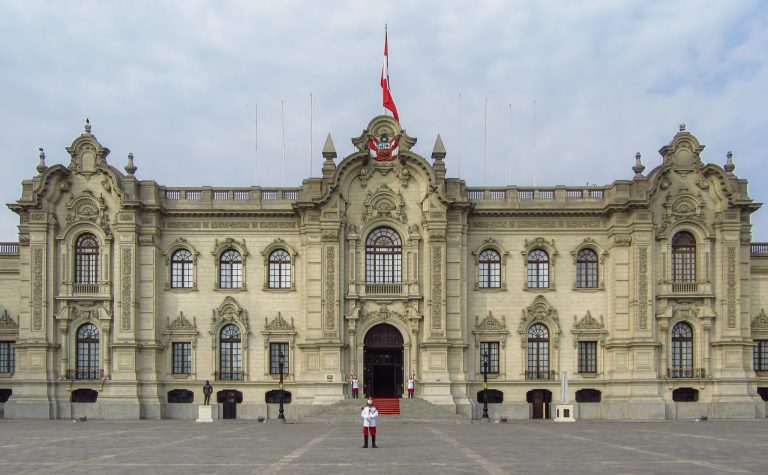
The Archbishop’s Palace of Lima is the residence of the Archbishop of Lima and the administrative headquarters of the Roman Catholic Archdiocese, on Jirón Carabaya in Lima, Peru. The present building was inaugurated in 1924 and is regarded as Lima’s first twentieth-century example of Neocolonial architecture, a reinterpretation of Spanish colonial forms, and a leading example of Spanish Colonial Revival architecture.
Colonial Foundations
When Lima was founded on 18 January 1535, Francisco Pizarro, who led the Spanish conquest of the Inca Empire, allocated this block for the residence of the city’s bishop. Lima’s cabildo, the municipal council in a Spanish colonial town, occupied the site from 1535 until 1548, when it moved across the square. A quarter of the block also housed Lima’s first police station and first jail.
Pope Paul III designated the church a primatial cathedral basilica, a cathedral associated with a primate, a senior bishop with precedence in the church hierarchy. The site later became the seat of the Archdiocese of Lima. The former Archbishop’s Palace was demolished in stages. Its façade was taken down in the late nineteenth century along with part of the Sagrario parish, and the rest of the palace was removed before construction of the present building.
Construction of the Present Palace
Architect Ricardo de Jaxa Malachowski designed the new palace with Lima’s Torre Tagle Palace, a historic colonial mansion, as a reference. Claude Antoine Sahut Laurent also contributed to the design, and civil engineer Enrique Mogrovejo constructed the building. It was inaugurated on 8 December 1924, the Feast of the Immaculate Conception, a Catholic observance of the belief that Mary was preserved from original sin from conception. The ceremony took place during Archbishop Emilio Lissón’s tenure and symbolized harmony between the Catholic Church and the state.
The palace also operates as a museum and forms part of Lima’s Archiepiscopal Museums. It lies within the Historic Centre of Lima, inscribed as a World Heritage property in 1991, and was designated Peruvian Cultural Heritage in 1972.
Remains
Present Palace
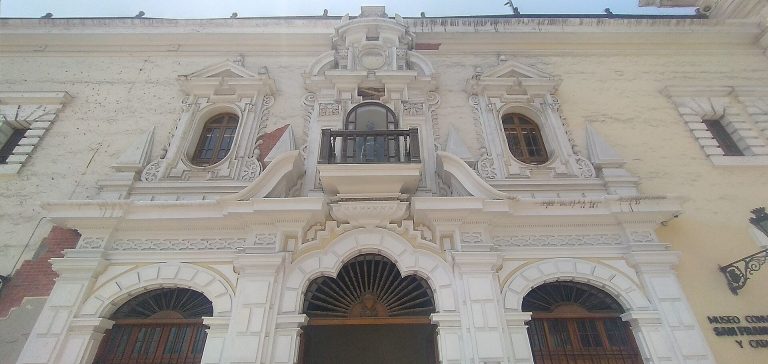
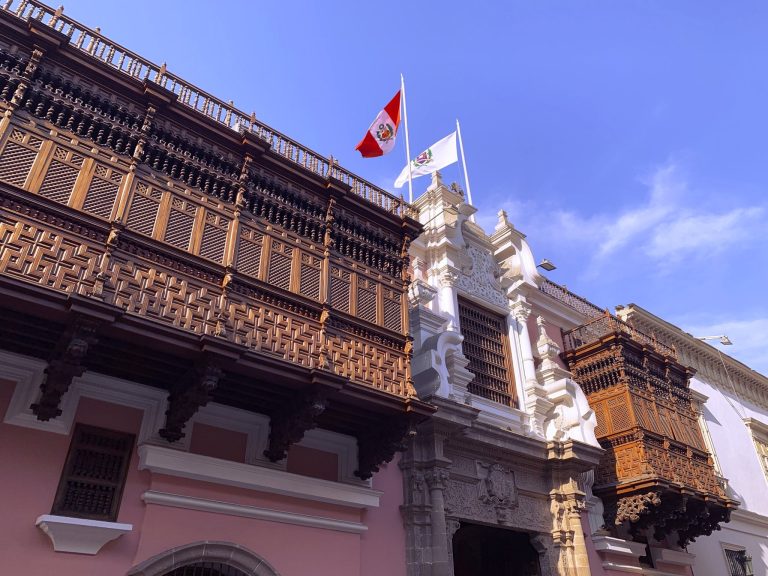
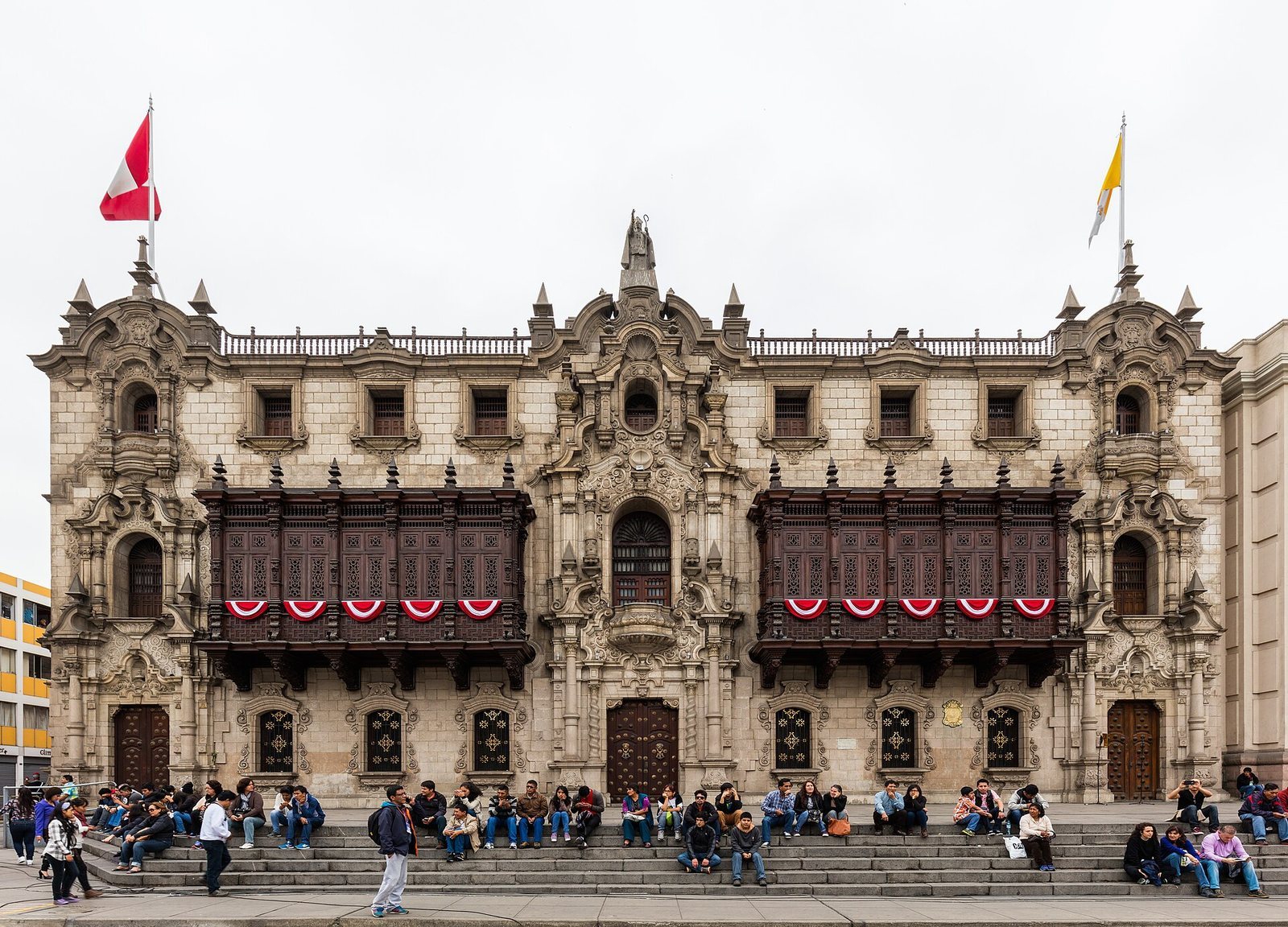
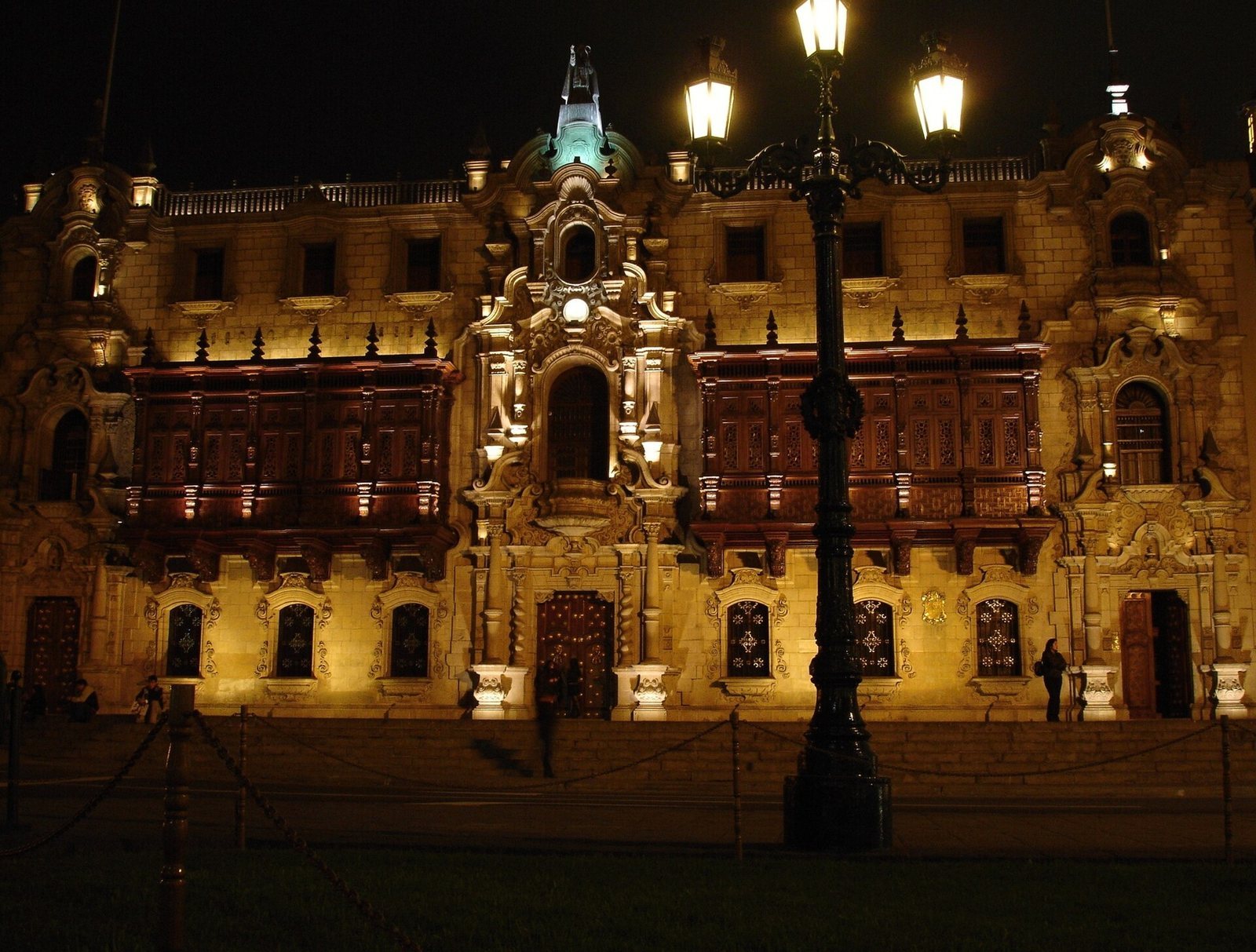
The present building stands at the northeastern corner of Plaza Mayor, where Junín and Carabaya streets meet, beside Lima Cathedral and the Sagrario church. Its façade is built entirely of stone and combines Neocolonial design with Baroque details. The central entrance draws on Plateresque, an ornate Spanish Renaissance style. Two large Neo-Baroque balconies, reviving Baroque forms, are carved from cedar and sit above the entrance. A granite sculpture of Saint Turibius of Mogrovejo, the sixteenth-century Archbishop of Lima later canonized as a saint, crowns the building; he is the Archdiocese’s patron protector. Two flagpoles carry the flags of Peru and the Vatican. Inside, the ornamented rooms include a sculpture of Saint Barbara, identified as Cuba’s patron saint, and French stained-glass panels that illuminate the ceiling. A marble staircase with wooden handrails, in Empire style, a Neoclassical style associated with Napoleon’s empire, leads to the second floor and its chapel with a Baroque altar.
Former Palace
The former palace had a façade facing Plaza Mayor, with six balconies of differing designs and several entrances. The Archdiocese’s coat of arms appeared above the main entrance. In its courtyard, an arched gallery ran along the first level, while slender wooden columns supported the gallery on the second.