Fort Huger: A Confederate James River Defense
Site at a Glance
- Rating
- 4.6
- Popularity
- Medium
- Country
- United States
- Primary era
- Modern
- External website
- Open
- Eras represented
- Modern
- Civilizations
- Unclassified
- Site type
- Military
- Remains
- Fort
On this page7 sections
History
Fort Huger is a Confederate Civil War fort near Smithfield, Virginia, United States, begun in August 1861 and completed in March 1862 to help defend the James River. It was named for Major General Benjamin Huger, then commander of the Confederate Department of Norfolk, a regional military command.
Construction and Confederate service
In August 1861, Virginia engineer Colonel Andrew Talcott chose Harden’s Bluff for the fort and designed its defenses. Fort Huger was intended to strengthen the river line alongside Fort Boykin on the south bank and the Mulberry Point battery on the north bank. Captains E.T.D. Myers and John Clarke oversaw construction, which began soon after the site was selected.
The garrison was the 5th Virginia Infantry Battalion, commanded by Lieutenant Colonel Fletch Archer. Two companies served as artillery crews inside the fort, while three companies acted as infantry outside it. Disagreement over command between Archer and Captain De Lagnel, a former naval officer leading the artillery companies, was resolved through orders from Generals John B. Magruder and Robert E. Lee. Archer held overall command, with De Lagnel responsible for the artillery. Captain J.M. Maury took charge of the artillery in April 1862.
Assessments in March identified weaknesses in the defenses. Woods behind the fort had not been cleared, wooden structures were vulnerable to fire during bombardment, and the garrison had no protected shelters. The 32-pound guns lacked suitable fortress mountings, and their crews had not been drilled in reloading.
Union naval attacks
On May 8, 1862, during the Union’s Peninsula Campaign, an advance toward Richmond from the Virginia Peninsula, a naval squadron commanded by John Rodgers attacked Fort Huger and Fort Boykin. Fort Boykin’s guns could not reach the ships, and the fort was soon silenced and abandoned. After using much of its ammunition against Fort Huger, Rodgers’s squadron withdrew.
The Union ships returned on May 16 with the ironclads USS Monitor and USRC Naugatuck, warships protected by iron armor. Under the bombardment, Confederate defenders disabled their guns by blocking the ignition vents, a process known as spiking, and abandoned the fort.
Virginia added Fort Huger to its Landmarks Register in 2007, and the fort entered the National Register of Historic Places in 2008. Archaeological investigations are ongoing.
Remains
Fort layout
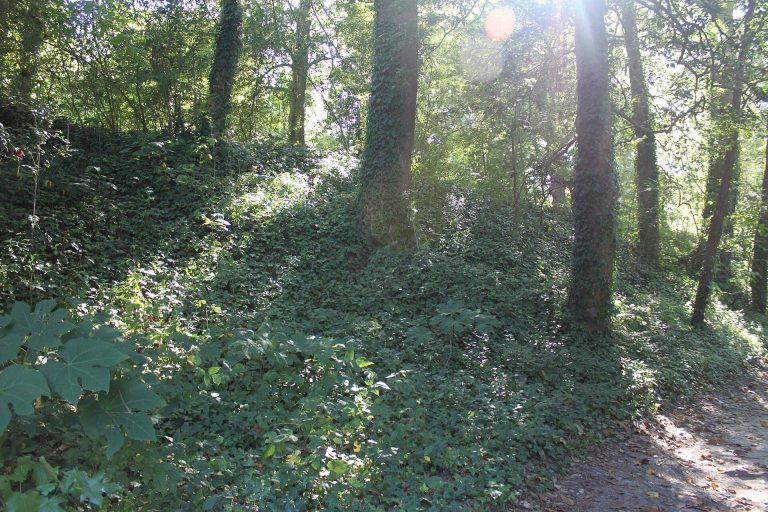
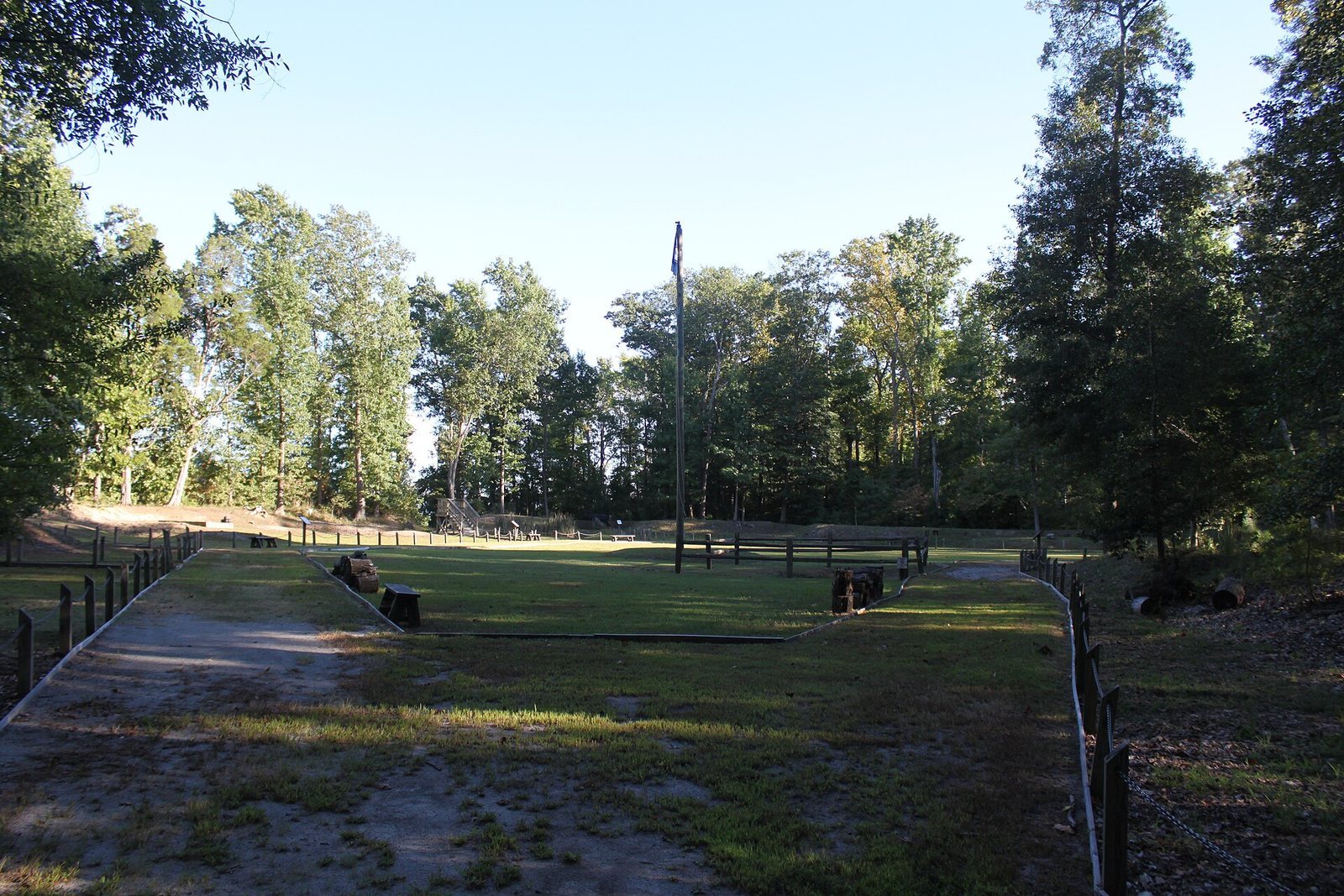
The archaeological site covers 22 acres on the south side of the James River, across from Fort Eustis and Mulberry Point on the north bank. At the rear, an earthen wall enclosed the fort on the side facing a swamp. Its defenses included positions for 15 guns; 13 were occupied when the fort was completed.
Gun positions and armament
A Confederate engineering report from March 12, 1862, listed one 10-inch Columbiad, four 9-inch Dahlgren shell guns, two 8-inch Columbiads, and six 32-pound guns intended for hot shot. A Columbiad was a large cannon that fired solid shot or explosive shells; the Dahlgren guns were naval weapons designed for firing shells. The Columbiads and Dahlgren guns used raised mounts that allowed them to fire over the fort’s parapet, while the 32-pounders stood on naval-style mounts. All the guns had smooth, unrifled barrels. A furnace at the fort heated cannonballs for incendiary use.
Protective works and replicas
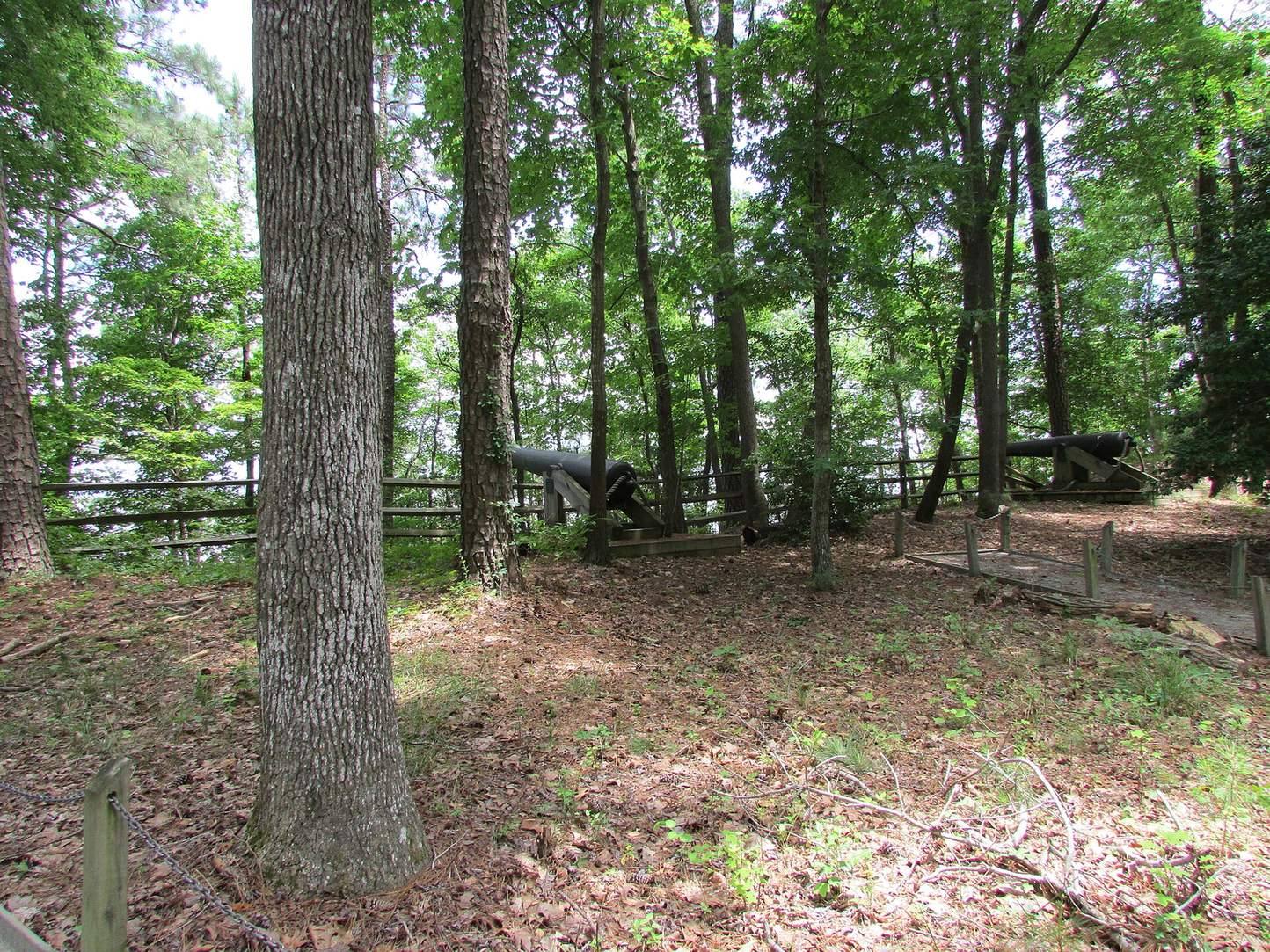
By the time Union Navy Lieutenant John Waters inspected the fort, the woods behind it had been cleared and bomb-proof shelters had been built to protect occupants from bombardment. Five replicas of Civil War-era cannons are now at the fort.