Dromesnil Castle: An Eighteenth-Century Château in France
Site at a Glance
- Rating
- 4
- Popularity
- Very Low
- Country
- France
- Primary era
- Early Modern
- Eras represented
- Early Modern
- Civilizations
- French
- Site type
- Domestic
- Remains
- Manor House
On this page8 sections
History
Dromesnil Castle stands in Dromesnil, in France’s Somme department. A castle existed here in the Middle Ages and was rebuilt in the fifteenth century after the Hundred Years’ War, a series of conflicts between England and France from 1337 to 1453. The present building replaced its predecessor in 1752 and was later altered in the nineteenth century.
The lordship and family ownership
The lordship of Dromesnil was elevated to a marquisate, a noble territory associated with a marquis, for the d’Hallencourt family. Charles d’Hallencourt, Marquis of Dromesnil, was the castle’s initial proprietor, and the family held it until 1749.
The property then passed to the Roussel de Belloy family and, in 1884, to the Beauvillé family.
Revolution, massacre, and protection
During the French Revolution, the political upheaval that began in 1789 and overthrew the monarchy, the carved coats of arms of the Roussel de Belloy and de Béry d’Essertaux families were hammered off the château’s pediment.
On 8 June 1940, during the Battle of France, German forces massacred Senegalese infantrymen serving with the 5th Colonial Infantry Division. Recruited mainly in French West Africa, these soldiers served in France’s colonial forces.
Orders dated 23 October 1980 classified the château as a historic monument, the stronger level of historic-monument protection in France. The manor’s façades and roofs, the farm buildings, and the pigeon house were registered under a lower level of protection. The château is privately owned.
Remains
The château and grounds
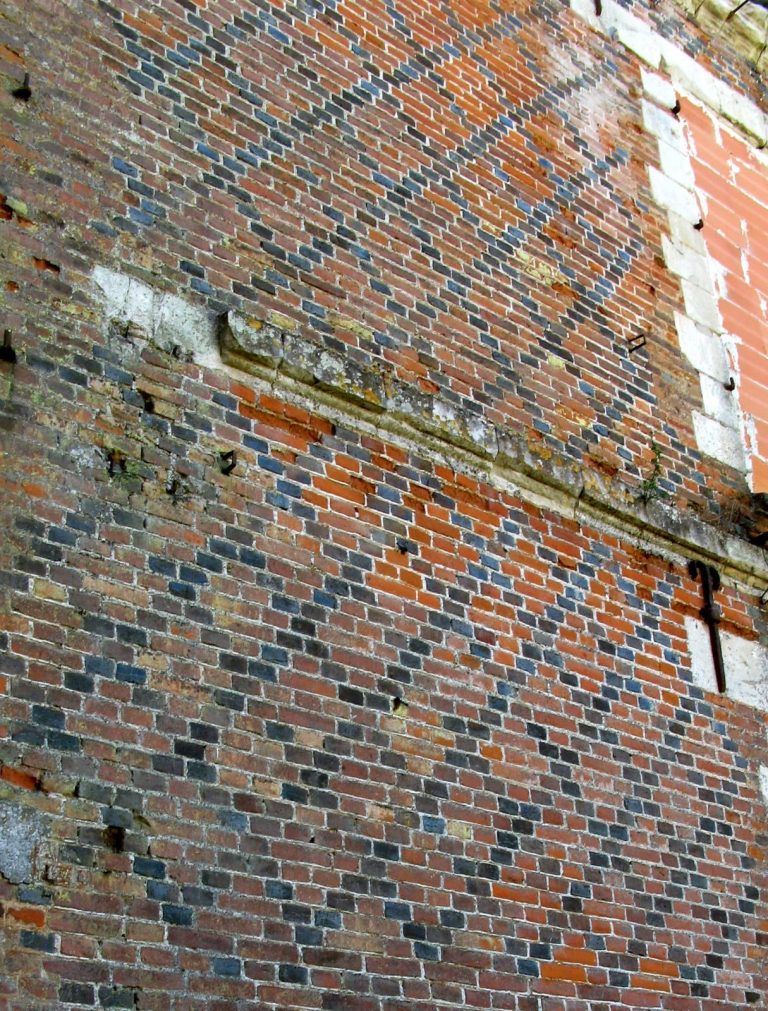
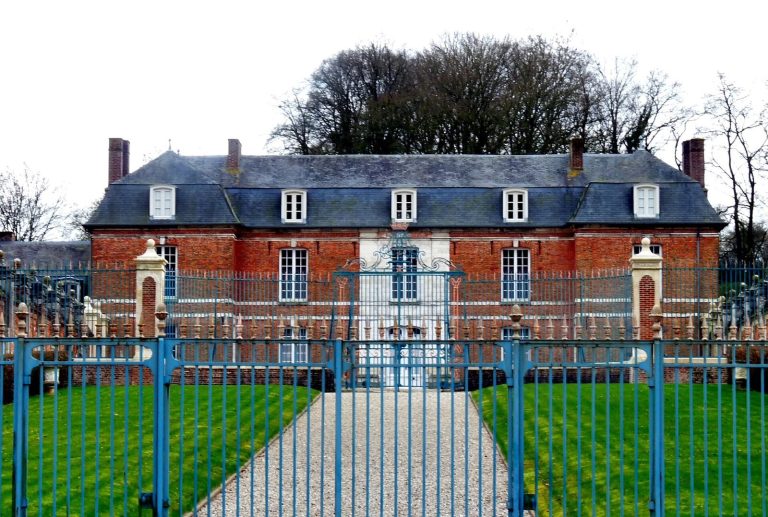
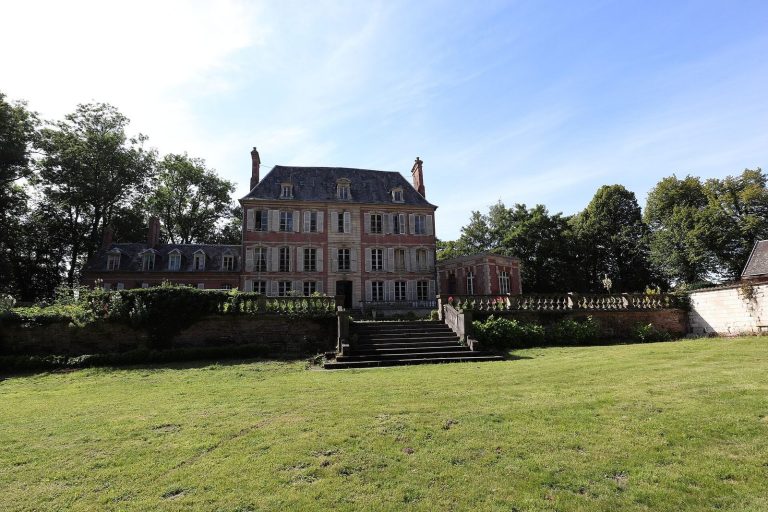
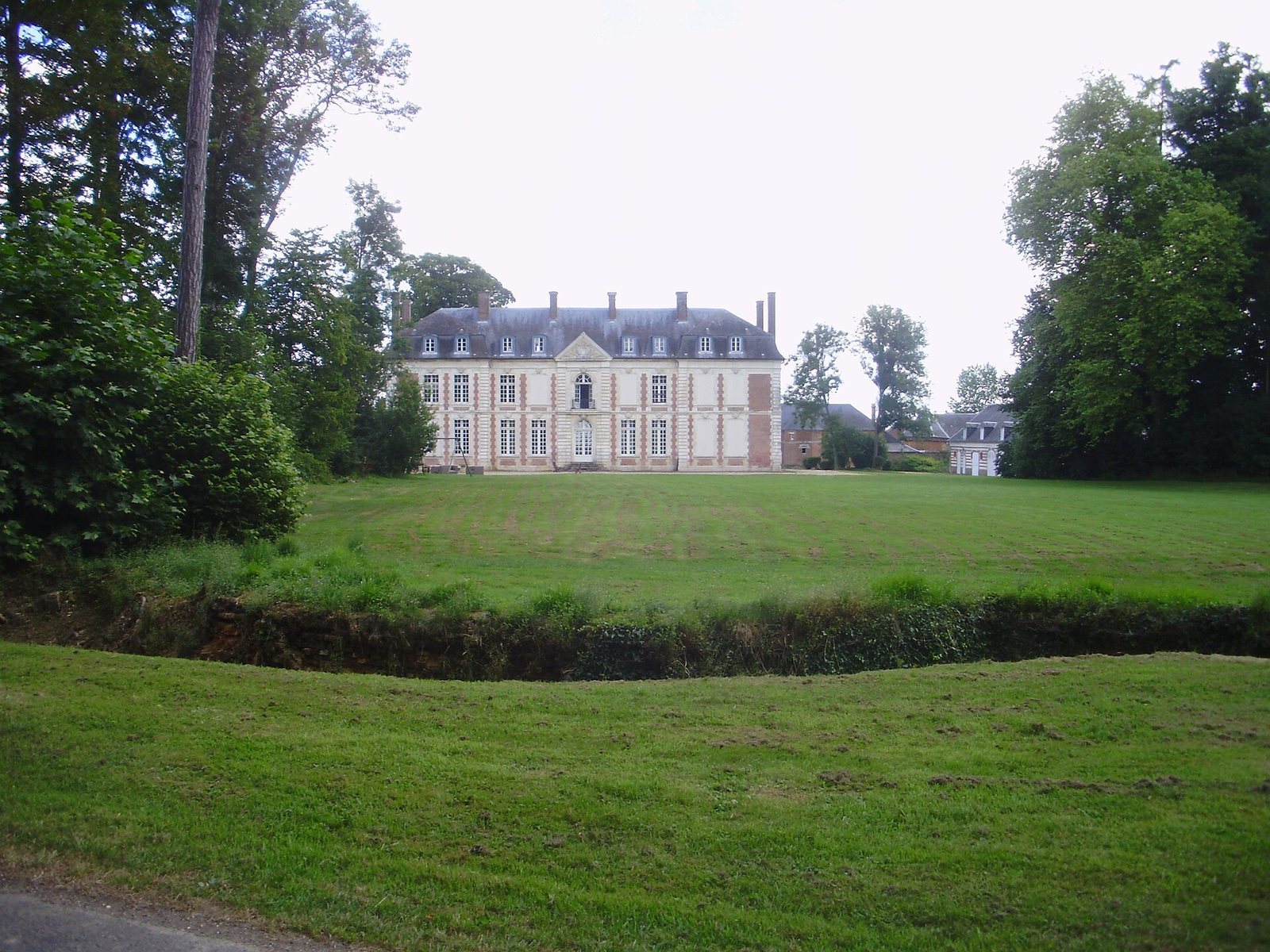
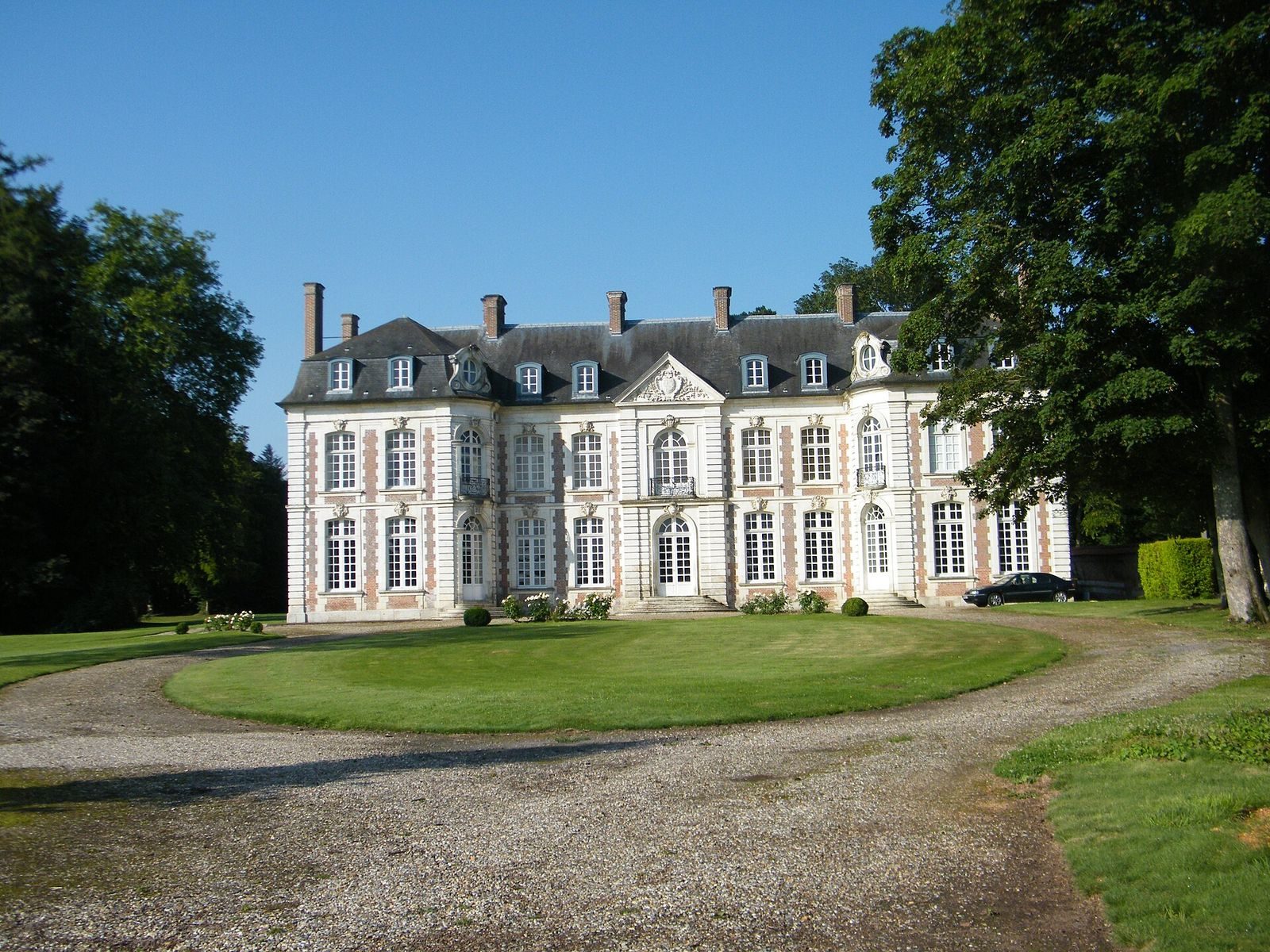
The château is built of brick and stone. Its central residential block is flanked by two wings that turn at right angles.
Exterior form
The building has three levels, including one within the roof. A central pavilion carries a triangular pediment, while its projecting stone front is made of roughly dressed blocks with deeply recessed joints.
Interior rooms
A large salon is decorated in the Louis XVI style, a French decorative style of the late eighteenth century named for King Louis XVI, who ruled from 1774 to 1792. The room contains two marble consoles, and a smaller salon is on the ground floor.
Park boundary and memorial
A stand of mature beech trees lies behind the château. A sunken ditch marks the park boundary, and a memorial stele stands near it at the place where the soldiers’ bodies were found.