Lersnersches Schloss: A Baroque Manor Estate in Frankfurt am Main
Site at a Glance
- Rating
- 5
- Popularity
- Very Low
- Country
- Germany
- Primary era
- Early Modern
- Eras represented
- Medieval, Early Modern, Modern
- Civilizations
- German, Holy Roman Empire
- Site type
- Domestic
- Remains
- Castle
On this page12 sections
History
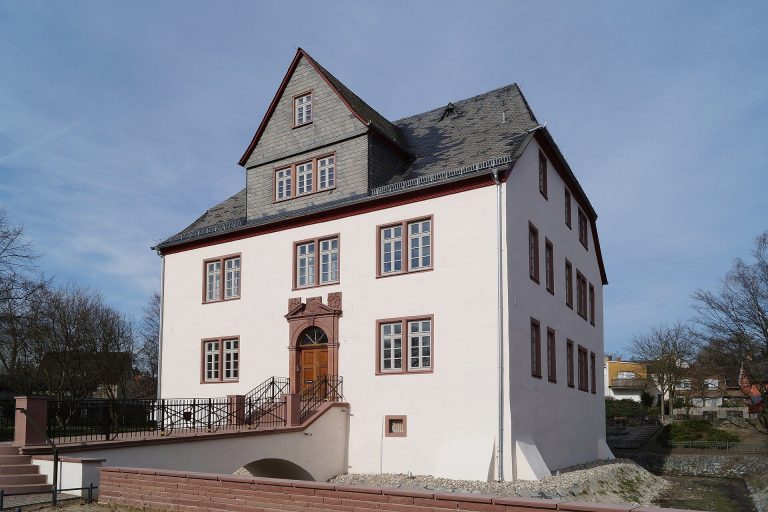
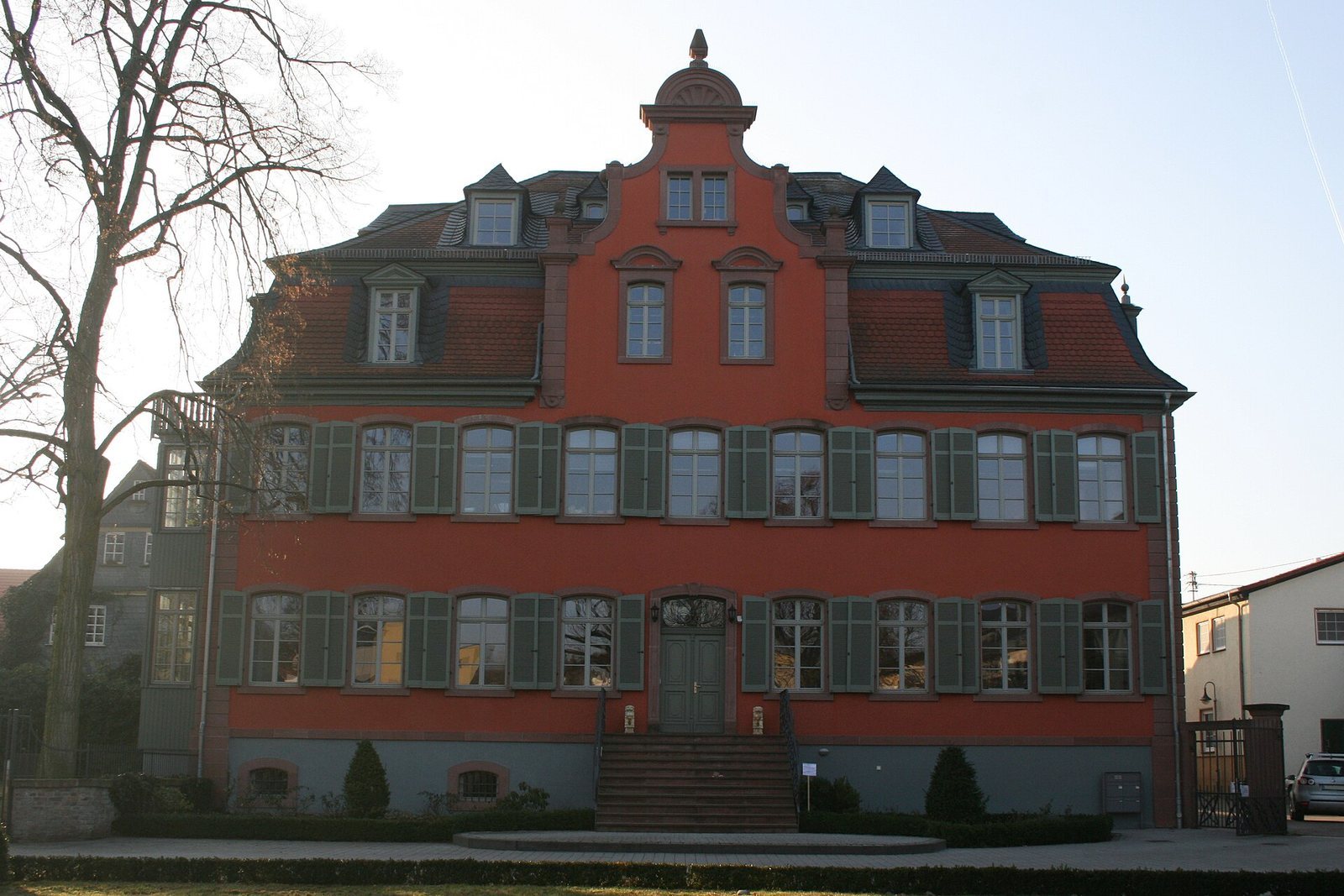
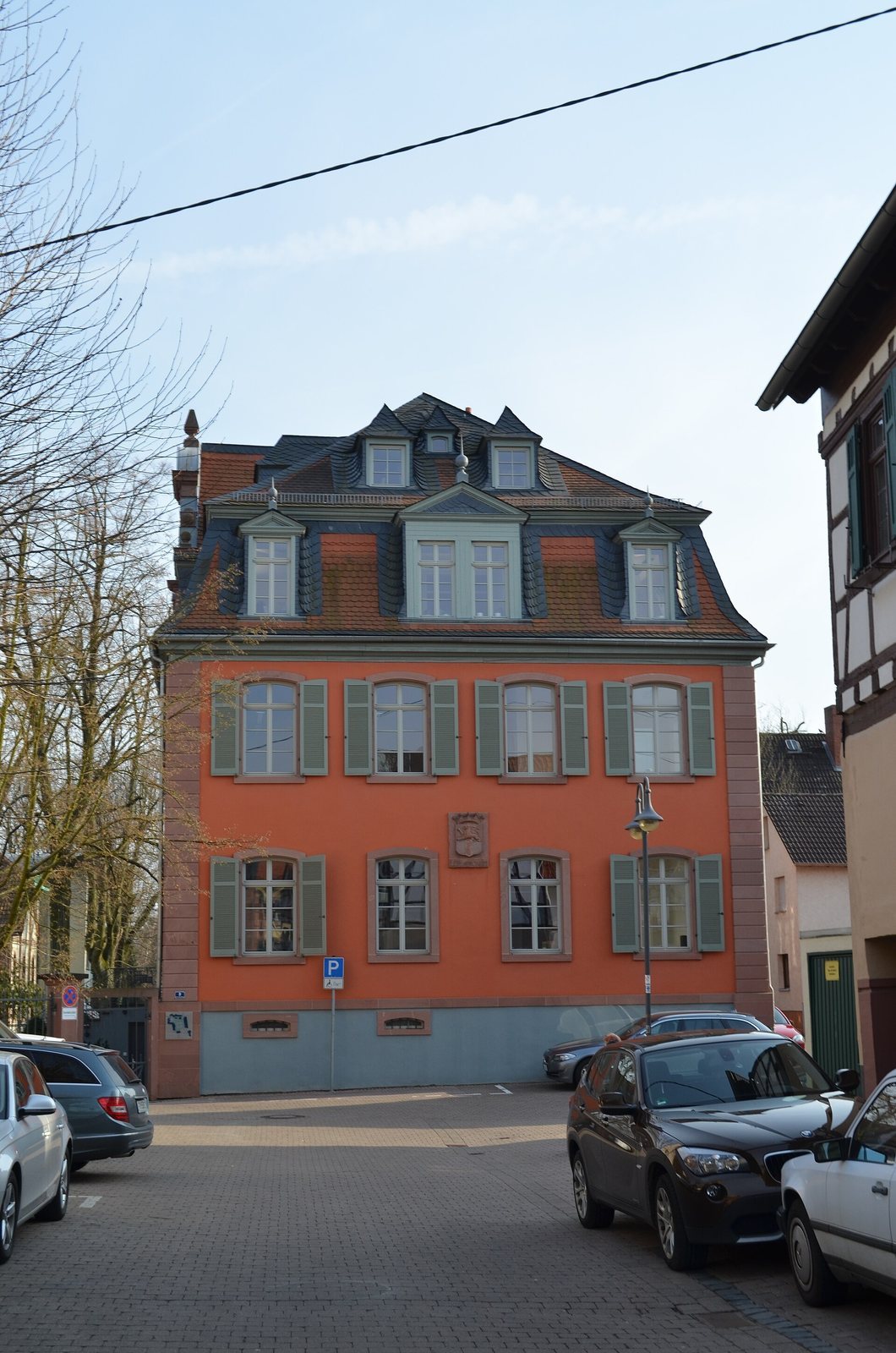
Lersnersches Schloss, also known as Charlottenburg, is an agricultural estate in Nieder-Erlenbach, Frankfurt am Main, Germany. Its Baroque manor house was built in 1746, after Friedrich Maximilian von Lersner enlarged the Sandhof property. The estate developed beside an older castle that had once served Frankfurt’s local administration.
The medieval castle and Frankfurt rule
Nieder-Erlenbach was first recorded in 779 in the Lorsch Codex, a medieval collection of records associated with Lorsch Abbey. During the Middle Ages, the settlement came under the control of Frankfurt, then an imperial city, meaning a self-governing city within the Holy Roman Empire. In 1376, Emperor Charles IV granted Frankfurt the right to appoint local chief officials and lay judges, who were non-professional participants in judicial proceedings. A castle was built soon afterward, perhaps replacing an earlier one. It is first mentioned in 1403, when a ditch was dug around the settlement. Frankfurt stationed officials from the lower nobility at the castle.
The older castle may have fallen into disrepair during the Thirty Years’ War, a major European conflict fought from 1618 to 1648. In 1698 it was sold to Johann Hieronymus von Glauburg, a member of a prominent Frankfurt civic family. From 1700, he had a manor house built in Nieder-Erlenbach; that house now accommodates the private Anna-Schmidt School.
Sandhof and the Lersner family
By the mid-seventeenth century, the land south of the older castle was known as Sandhof. On 7 October 1651, it passed to the von Cronstetten family in an exchange involving Gerhard Adam von Staffel and Johann Philipp Steffan von Cronstetten. Johann Philipp’s daughter, Euphrosyne Margaretha, married Heinrich Ludwig von Lersner in 1668. Much of the Lersner family’s land in Nieder-Erlenbach came through Heinrich Ludwig’s inheritance. By 1726, the family held 360 Morgen there, a historical land measure whose size varied by place and period.
Estate expansion and later changes
Between 1741 and 1746, Friedrich Maximilian von Lersner expanded Sandhof through purchases and exchanges with local residents and Philipp Ferdinand von Hundheim. The present Baroque manor house was built in 1746. In the second half of the eighteenth century, a shortage of agricultural buildings meant that the estate’s land was leased in three divisions.
Karl Ludwig von Lersner, who had lived in Nieder-Erlenbach since 1805, acquired neighboring properties. This allowed the farmstead to grow and the family to cultivate land directly rather than leasing it. Charlottenhof was built in either 1840 or 1845. During Karl Ludwig’s time, the estate was probably made a family entail, a legal arrangement tying property to family succession rather than allowing it to be freely divided or transferred. The castle was altered in 1893. The estate remained in the Lersner family until 25 September 1953, when it was sold to a farmer; a later restoration was completed.
Remains
The estate combines a castle-like Baroque manor house with an enlarged agricultural complex. Traces of an older moated castle remain beside it, while a park was laid out behind the manor.
Manor and earlier castle
Baroque manor house
The manor is the central building of the agricultural estate and has a castle-like form. The property now includes a residential complex.
Older moated castle
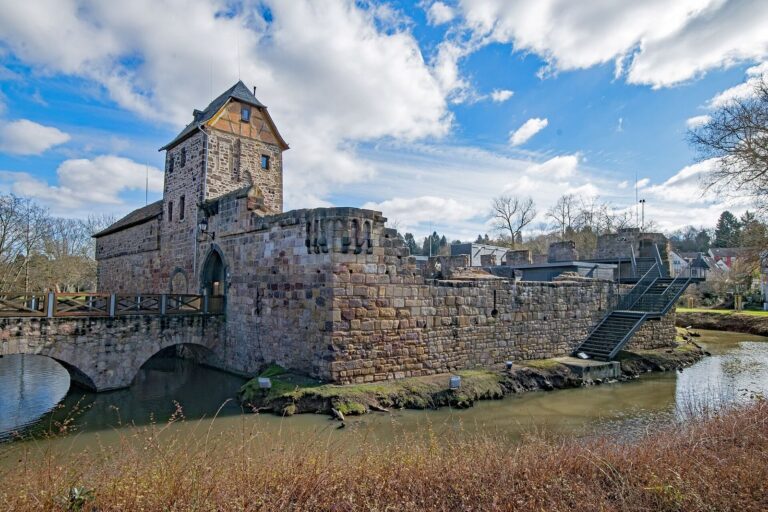
Traces of the earlier moated castle survive beside the manor.
Agricultural buildings and grounds
Three-sided farmstead
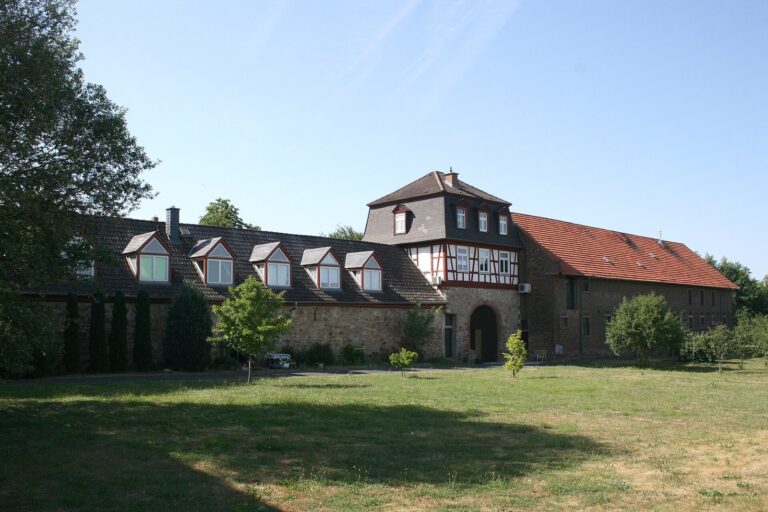
The estate’s farmstead consists of agricultural buildings arranged on three sides. This group was enlarged as the property expanded.
Charlottenhof courtyard and mill
At Charlottenhof, stables were arranged around a rectangular courtyard. A mill stood on the Erlenbach.
Landscape park
Behind the manor, the German landscape gardener Heinrich Siesmayer laid out a park in the English landscape style.