Maidenhead Bridge: A Road Crossing over the Thames
Site at a Glance
- Popularity
- Medium
- Country
- United Kingdom
- Primary era
- Early Modern
- Eras represented
- Early Modern
- Civilizations
- British
- Site type
- Infrastructure
- Remains
- Bridge
On this page6 sections
History
Maidenhead Bridge is a road bridge over the River Thames between Maidenhead, Berkshire, and Taplow, Buckinghamshire, in the United Kingdom. Its first wooden predecessor was built in 1280, while the present stone-and-brick crossing was constructed from 1772 to 1777 after centuries of deterioration and repair. The bridge redirected the Great West Road and helped shape medieval Maidenhead around its crossing.
Medieval origins
The first bridge stood at South Ellington, then a hamlet. The Great West Road towards Reading, Gloucester, and Bristol was diverted across it; before then, the route followed the Thames’s north bank and crossed the river by a ford at Cookham. A wharf was established near the bridge within a few years, and the settlement’s name changed to Maidenhythe, meaning “new wharf.” The new name appears in a record from 1296.
In 1297 the bridge was described as nearly broken down. At Will de Berford’s request, the Crown granted pontage, temporary authority to collect tolls for bridge repairs, for three years. Two men were appointed to collect the money, and a replacement bridge was built. Another three-year grant in 1335 allowed the town’s bailiffs, local officials, and other men to levy tolls on goods carried over or beneath the bridge. In 1337, a loaded barge passing under it or a loaded cart crossing it paid one old penny.
By the reign of Henry VI, the bridge had again become so unsafe that many travellers chose the ferry instead. From the bridge’s early years, an attached hermitage and chapel served travellers who prayed for a safe crossing or gave thanks afterward. A separate chapel in the town inspired the Guild of St Andrew and St Mary Magdalene, founded in 1452 to repair the bridge and maintain the chapel. The guild also collected bridge tolls.
Guild, corporation, and repeated repairs
Edward VI dissolved the guild in 1547 during the Reformation. Elizabeth I restored it in 1581, when she granted Maidenhead a charter of incorporation and transferred bridge maintenance to the town’s municipal corporation, its legally incorporated governing body. The charter permitted toll collection, a weekly market, and two annual fairs, but did not authorize rebuilding the town chapel. The corporation assigned upkeep and toll collection to a warden, two bridge masters, and eight burgesses, citizens with civic rights.
James I renewed the charter, adding a fair on Whit Wednesday and the right to take three oak trees each year from the Royal Forest of Bray. During the English Civil War, fought between supporters of Charles I and Parliament from 1642 to 1651, the bridge again fell into disrepair. On 25 September 1644, Edward Montagu, 2nd Earl of Manchester, reported that Parliamentary troops had to wait at Uxbridge because the bridge was broken. Colonel Whitcote, the Parliamentary commander at Maidenhead, secured seven oaks for repairs, but by 1660 the crossing was dangerous again.
In 1672 the bridge wardens petitioned Charles II for timber, and a warrant granting 20 oaks followed in 1679. After James II came to the throne, the privileges issued under James I were restored, and the senior bridge warden became mayor. In 1688, while the town remained loyal to James II, residents broke the bridge on the king’s orders to prevent William of Orange from crossing. The effort failed: William’s army crossed a few days later. William became William III in 1689.
Eighteenth-century rebuilding
In 1714 the corporation complained to the Lord Treasurer that the oaks it received were poor quality. It also argued that a toll-free bridge at Datchet had reduced Maidenhead’s toll income, but its request for compensation was refused. Eighteen years later, the Treasury authorized 23 oaks. After further deterioration, major repairs were contracted to Stiff Leadbetter of Eton in 1750. The work was estimated at £600, but the final bill came to £794 9s 2d. The burden of maintaining the old crossing led the corporation to commission an entirely new bridge.
The corporation selected a design for a new bridge over a timber proposal, then sought to reduce its estimated cost of £25,000. The revised plan used Portland stone for the arches over the river and brick elsewhere. Parliament authorized the rebuilding through the Maidenhead Bridge Act 1772, which received royal assent on 21 May that year. John Townsend of Oxford built the design for £19,000. Work began after a temporary ferry had been established, and the mayor laid the foundation stone on 19 October 1772. Ice, frost, and flooding slowed construction. The central arch was completed in 1775, and the bridge opened to traffic in 1777.
Tolls and later recognition
Bridge tolls remained a source of disputes. By the 1830s they yielded £1,245 a year. In 1843 the corporation sued the Great Western Railway for the statutory maximum of £2,500, arguing that its London-to-Bristol main line had diverted traffic and cut toll income. The railway disputed the claim because its London terminus was Paddington rather than Euston, as specified in its authorizing act. It paid before trial, avoiding interest and costs on a technicality.
In 1902 Eton resident Joseph Taylor petitioned the Charity Commissioners, arguing that the corporation had used toll income for purposes beyond bridge maintenance. The town clerk acknowledged that this had happened, and the commission agreed that the tolls were unlawful. Collection ended after 31 October 1903. At the start of 1 November, a crowd removed the toll gates and threw them into the Thames. Charges that year included one shilling for a coach and horses, sixpence for a car, and ten old pence for twenty sheep. The Maidenhead Bridge Act 1904 abolished the tolls in law and repealed the 1772 Act. The bridge is Grade I listed, England’s highest category for listed buildings. In 1966 architectural historian Nikolaus Pevsner included it in Buildings of Berkshire.
Remains
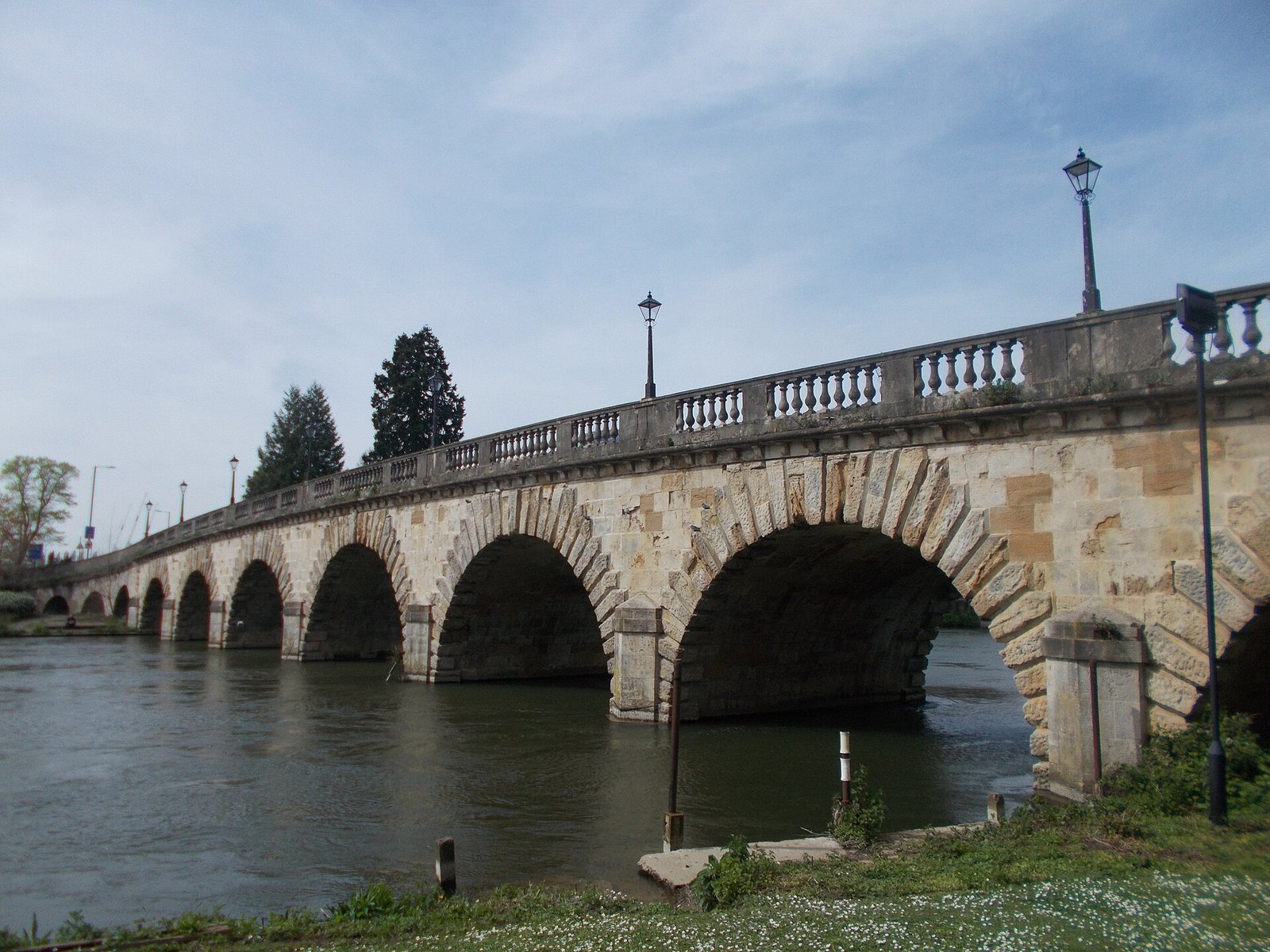
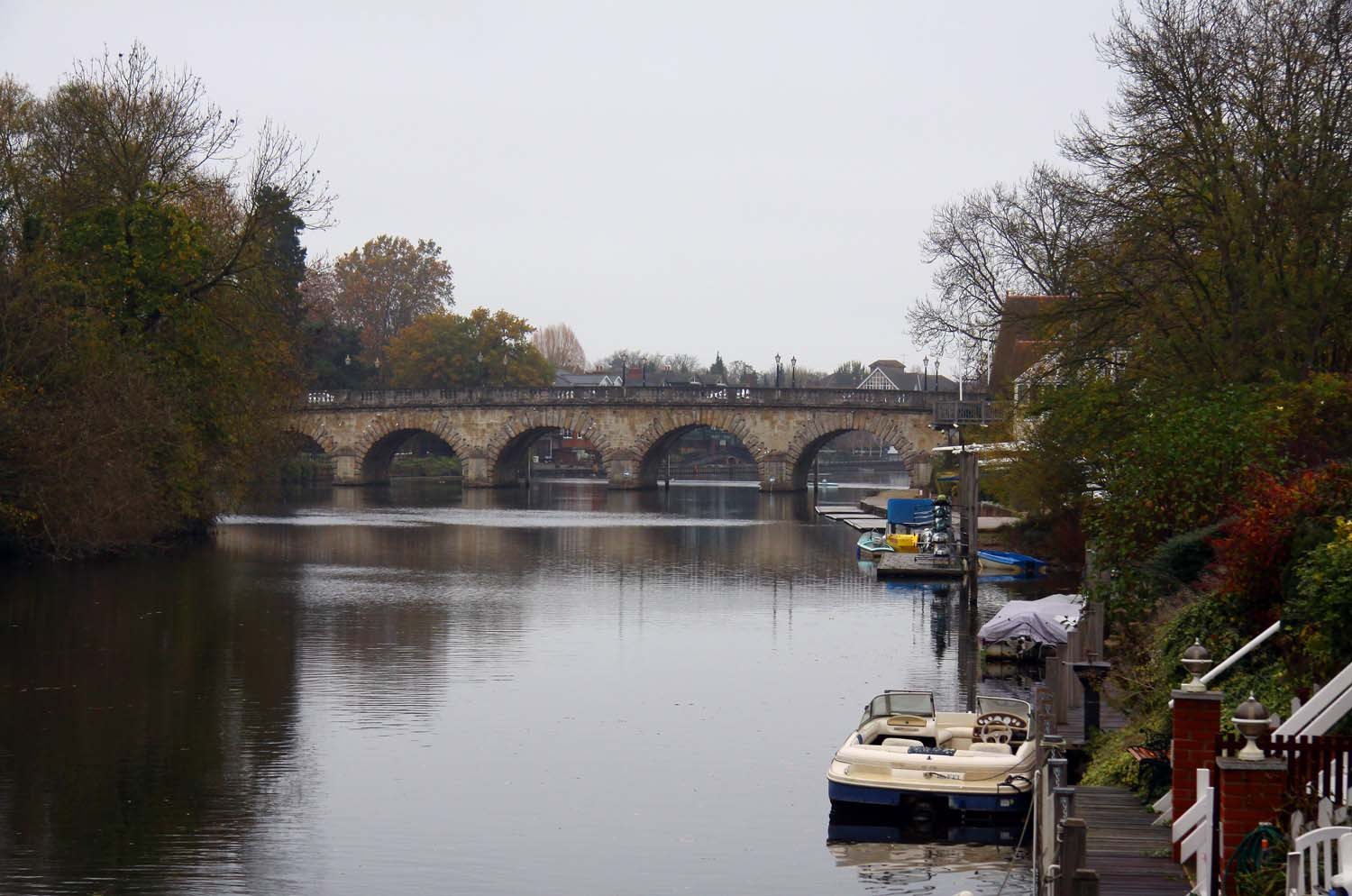
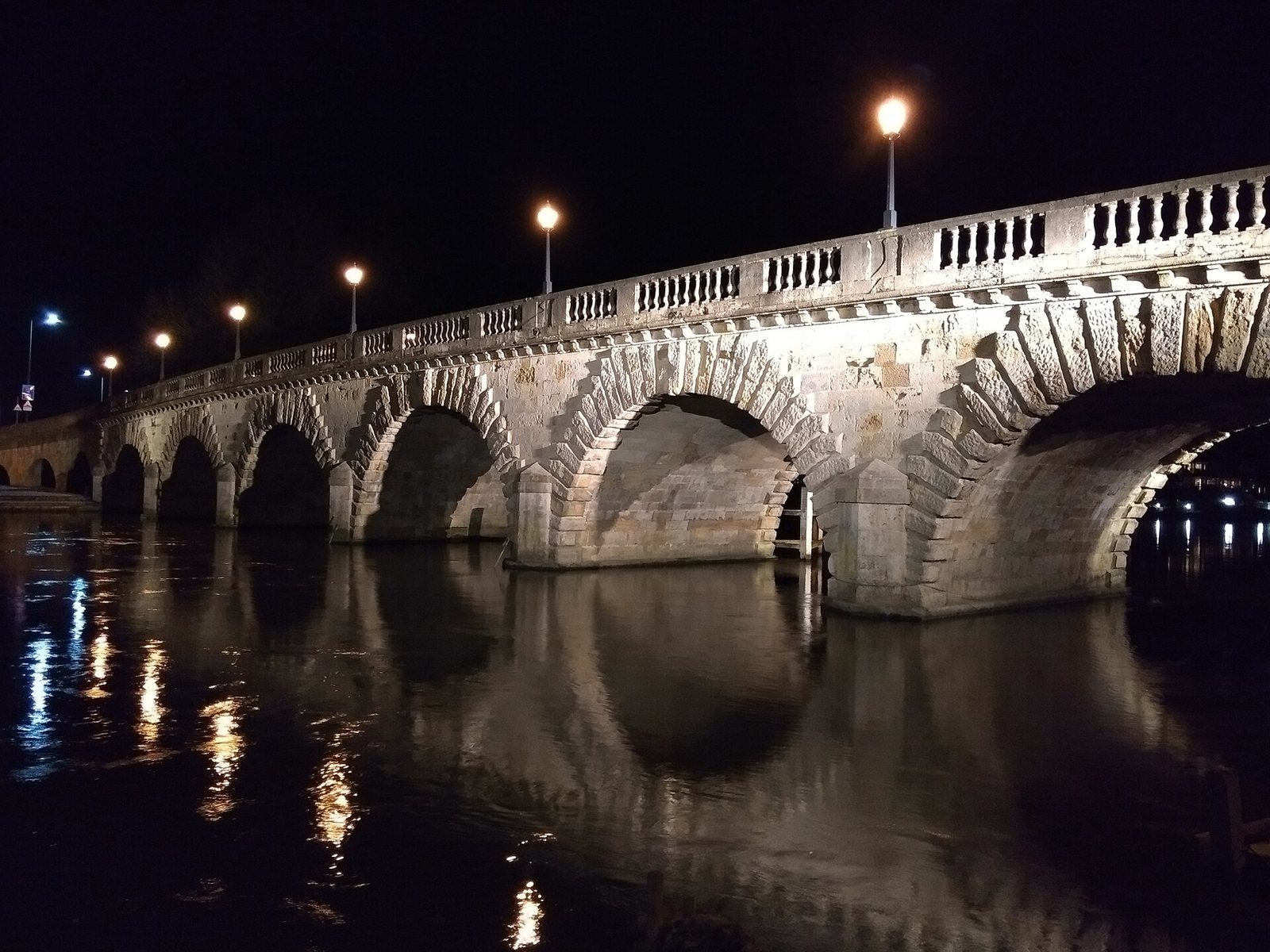
The bridge crosses a stretch of the Thames above Bray Lock, about half a mile below Boulter’s Lock. It carries the A4 road and the Thames Path between Maidenhead and Taplow. Its 13 arches stand 18 feet 7 inches (5.66 metres) high, with five piers in the water.
Portland stone forms the arches over the river, while brick was used for the other parts of the bridge. Nikolaus Pevsner described seven principal arches over the water, whose arch stones have rough, projecting faces, and noted the bridge’s balustrade.