Niedernondorf Castle: A Renaissance Castle in Lower Austria
Site at a Glance
- Popularity
- Low
- Country
- Austria
- Primary era
- Early Modern
- Eras represented
- Medieval, Early Modern, Modern
- Civilizations
- Habsburg, Holy Roman Empire
- Site type
- Domestic
- Remains
- Castle
On this page5 sections
History
Niedernondorf Castle is a Renaissance castle in Niedernondorf, within Waldhausen in Lower Austria, Austria. Niedernondorf itself is first mentioned in 1292, while the castle appears in records at the end of the fifteenth century.
Early records and the Lagelberg era
The earliest recorded castle lords were Heinrich Gayspitz (1491-1496), Johann Freytager (1496-1546), Johann Baron von Karling (1546-1558), Joachim von Lagelberg (1558-1590), Leopold Baron von Lagelberg (1590-1613), and Georg Christoph Baron von Lagelberg (1613-1647), Leopold’s son. Georg Christoph left no successor. From 1647 to 1653, the lordship was held by his cousins Rudolph, Adam Sigmund, and Hieronymus Barons von Lagelberg. Adam Sigmund formally acquired the castle in 1653 and held it until 1658. His son Franz Adam followed, then Franz Joseph, whose tenure ended at an uncertain point in the 1660s. Susanna Katharina Baroness von Pollheim is recorded through 1669.
Imperial troops burned the castle in 1622 during the Thirty Years’ War, a series of conflicts fought in Central Europe from 1618 to 1648. It was rebuilt soon afterward and furnished anew.
Successive owners, 1669-1819
Ferdinand Ernst Count von Abensperg und Traun held the castle from 1669 to 1692. His sister Margaretha Countess Stratmann-Bouquoy, born Countess von Abensperg-Traun, succeeded him (1692-1717), followed by her heir Otto Ehrenreich Count von Abensperg und Traun (1717-1722) and then Johann Adam Count von Abensperg und Traun (1722-1726). Later lords were Karl Joseph Count von Lamberg-Sprinzenstein (1726-1739), Johann Count von Khevenhüller (1739-1740), Ferdinand Franz von Thomasis (1740-1779), Heinrich Franz de Paula Count von Khevenhüller (1779-1792), and Guido Joseph Count von Sprinzenstein (1792-1793), who renovated the castle.
After Guido’s death, his widow Karoline Countess Sprinzenstein, born Countess Grundemann von Falkenberg, held the castle from 1793 to 1798. She was followed by Wilhelma Heeremann Countess von Wimpffen, born Countess Dyhrn von Urschkau (1798-1802); Maria Aloisia Countess von Spindler, born Countess von Füger (1802-1804); Emanuel Baron von Bartenstein (1804-1807); and Jakob, Duke of Corrigliano and Prince of St. Mauro (1807-1817). Johann and Christoph Barons von Bartenstein held it from 1817 until Niedernondorf was united with Rastenberg in 1819.
Later ownership and changes
Johann Baptist Baron von Bartenstein held the castle from 1819 to 1838, followed by his son Karl from 1838 to 1847. The Bartenstein family became extinct during Karl’s tenure. Georg Friedrich Count von Thurn-Valsassina-Como-Vercelli was recorded as lord until 1879, and Franz Johann from that year. The castle had passed into the possession of the Thurn-Valsassina family in 1872. Alterations between the seventeenth and nineteenth centuries changed its exterior.
Remains
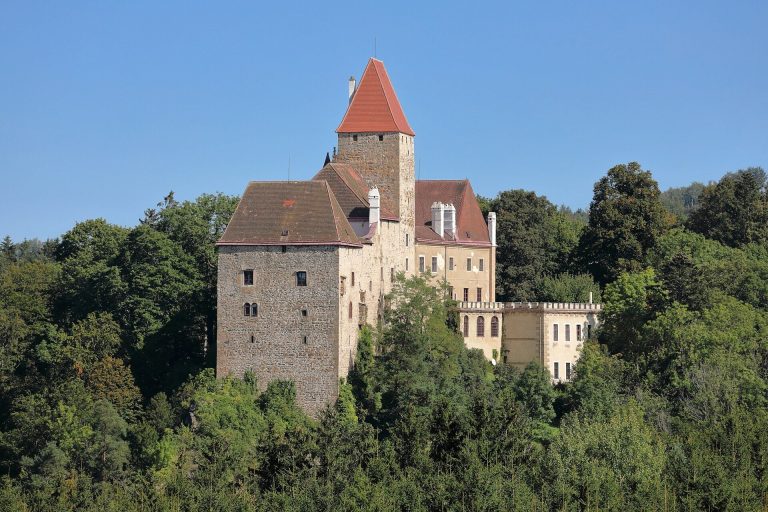
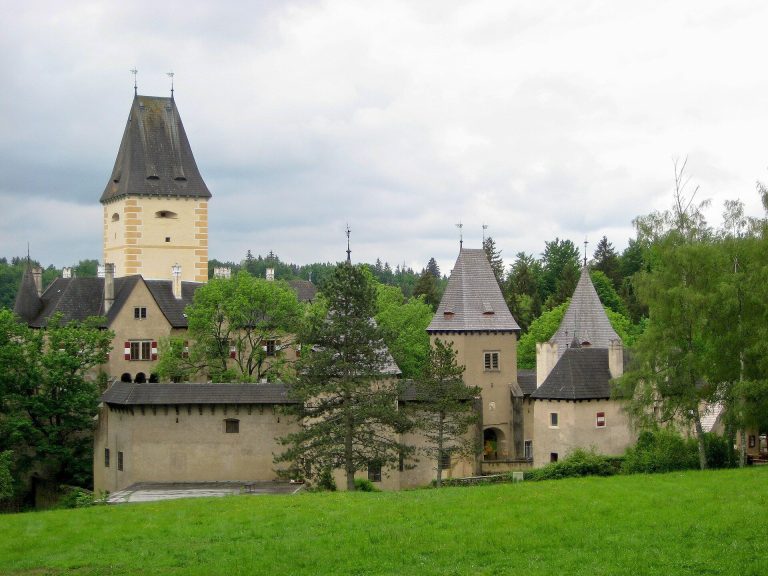
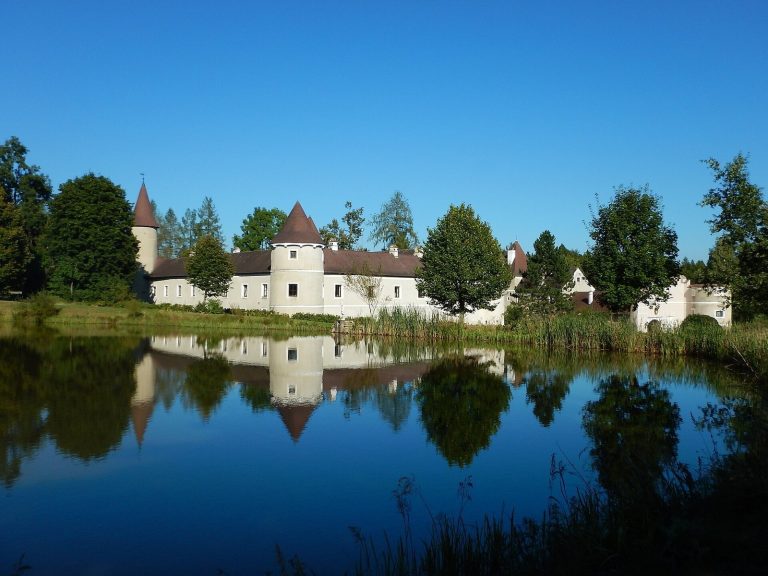
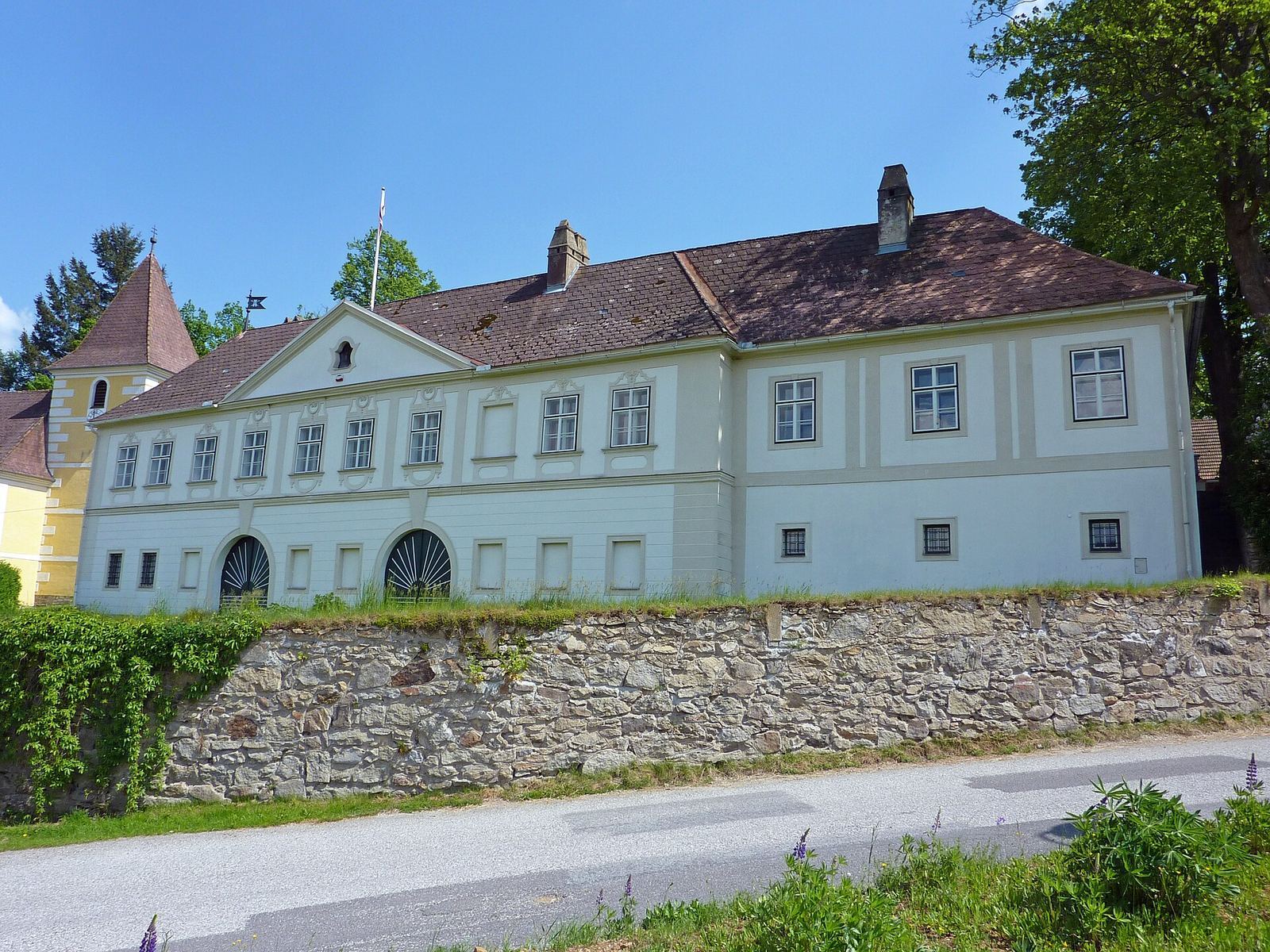
The castle is a two-storey building arranged in three wings. Its main facade has ten vertical bays and late Baroque decoration, a style associated with the later development of Baroque architecture. Slight traces of a medieval predecessor survive.
A description from 1655 presents the castle as a one-storey building with a gate tower. An illustrated regional survey made around 1672 by the Austrian cartographer Vischer depicts the same form.