Gorteens Castle: A 16th-Century Castle in County Kilkenny
Site at a Glance
- Popularity
- Low
- Country
- Ireland
- Primary era
- Early Modern
- External website
- Open
- Eras represented
- Early Modern
- Civilizations
- Unclassified
- Site type
- Military
- Remains
- Castle
On this page4 sections
History
Gorteens Castle is a ruined 16th-century castle at Gorteens in County Kilkenny, Ireland. It stood on land acquired by Raymond FitzGerald, an Anglo-Norman magnate who died in the late 12th century. The FitzGeralds were part of the Norman-descended elite established in Ireland after the Anglo-Norman arrival in the late 12th century, and became one of medieval Ireland’s most powerful aristocratic families.
FitzGerald ownership
The castle belonged to the FitzGerald family. John FitzGerald, a Catholic, is recorded as its last holder from the family. The FitzGeralds supported the Irish rebellion of 1641–1651. Following Oliver Cromwell’s conquest of Ireland, the Cromwellian Settlement, a policy of confiscating land and transplanting Irish landholders, led to their forfeiture of Gorteens. The family was moved to Connaught in December 1653.
Confiscation and later ownership
The 1656 Down Survey, a survey of Irish land and territorial divisions, listed Gorteens in Rathpatrick parish and associated it with the baronies of Ida, Igrim, or Ibercon. By 1677, the FitzGeralds had been assigned land at Turlough and later at Carra, County Mayo. Gorteens was reputedly held by the Protestant Samuel Skrimsheire, also known as Skrimshaw, by 1670. By 1700, it belonged to members of the Forstall family.
Excavations in 1993 indicated that the site was in use between the 16th and 18th centuries. The Irish form of its name is Caisleán na nGoirtíní; Gorteens has been interpreted as meaning either ‘little fields’ or ‘little garden’.
Remains
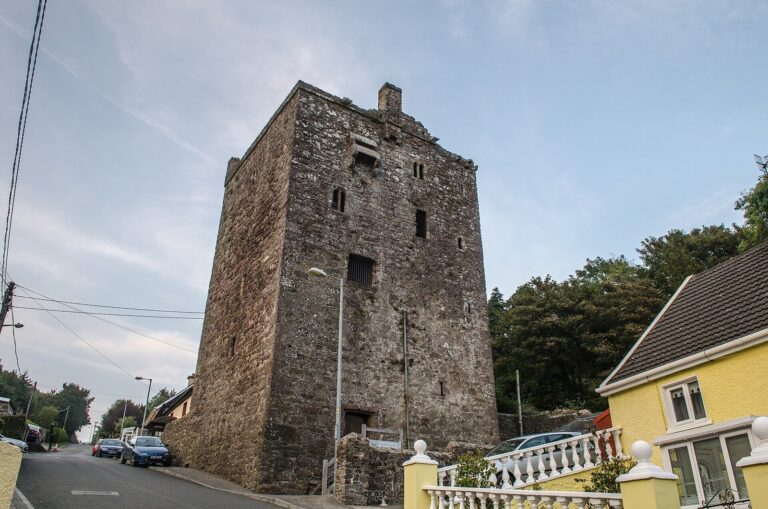
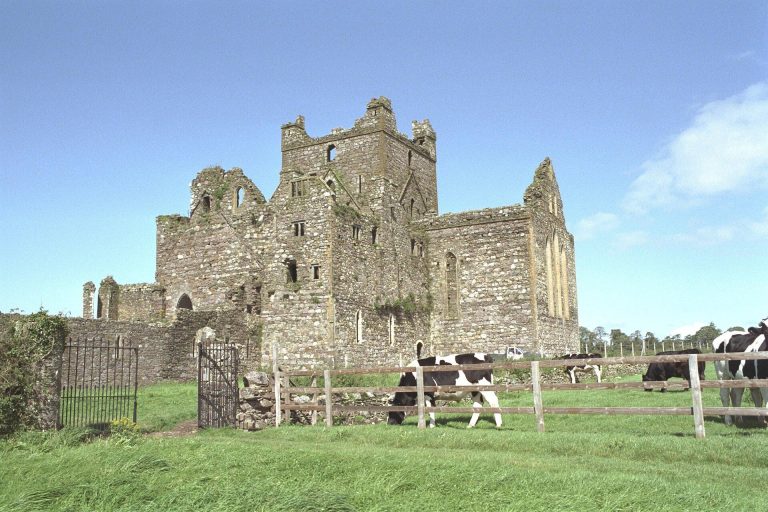
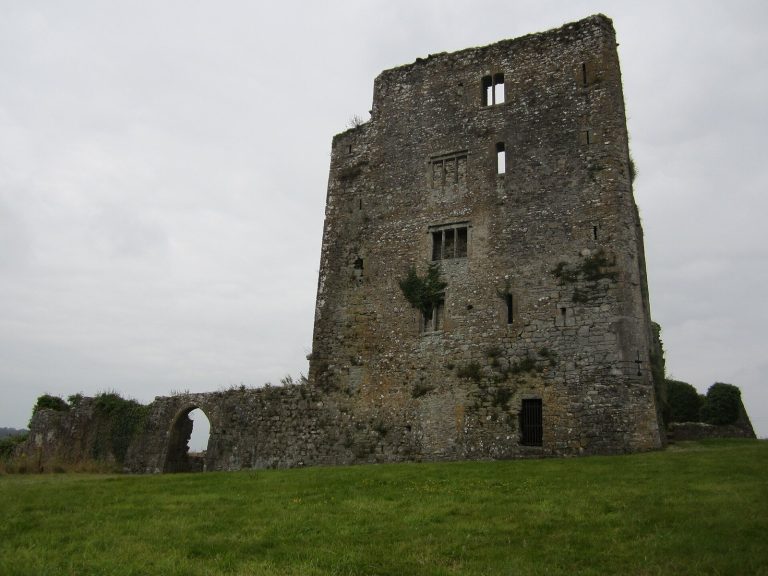
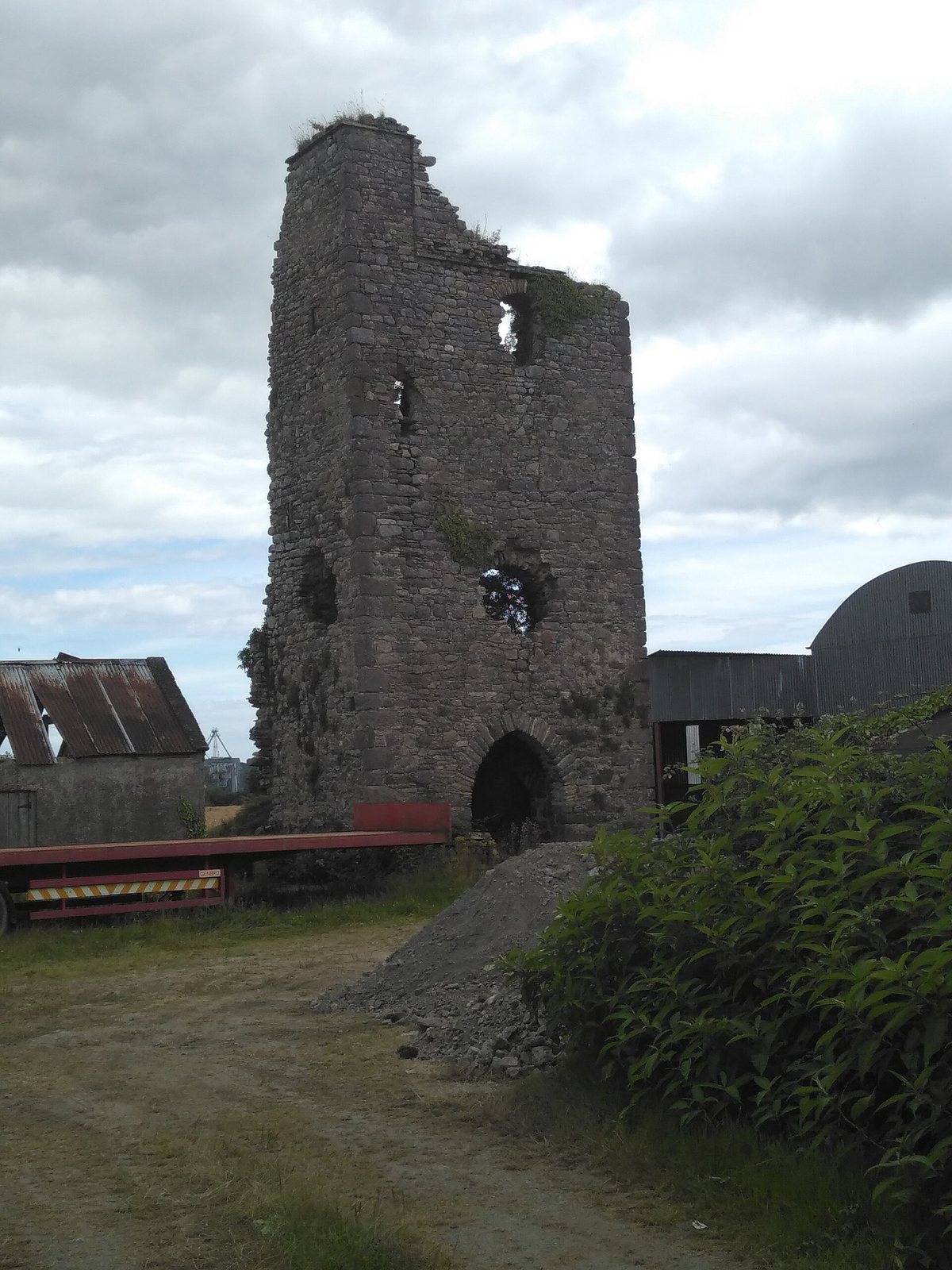
Gorteens Castle is a lowland ruin in Rathpatrick parish, near Slieverue and Waterford city. Its surviving structure is a gatehouse built of rubble masonry, set within a farm. The gatehouse may have formed part of a larger building complex.
Excavations in 2003 revealed further castle walls and outbuildings, extending the known remains beyond the surviving gatehouse.