Broholm: A Danish Manor House and Estate
Site at a Glance
- Popularity
- Medium
- Country
- Denmark
- Primary era
- Early Modern
- Eras represented
- Early Modern, Modern
- Civilizations
- Danish, Denmark–Norway
- Site type
- Domestic
- Remains
- Manor House
On this page7 sections
History
Broholm is a manor house and estate in Gudme parish on Funen, Denmark, about 10 km northeast of Svendborg. Its history includes centuries of noble ownership, architectural changes, antiquarian collecting, and the breeding of Broholmer dogs.
Ownership and architectural development
Broholm belonged to the Danish nobleman Absalon Jonsen Ulfeldt in 1326. From 1641, it passed by inheritance to the Skeel and Sehested families, and it served as their seat from 1759 to 1930.
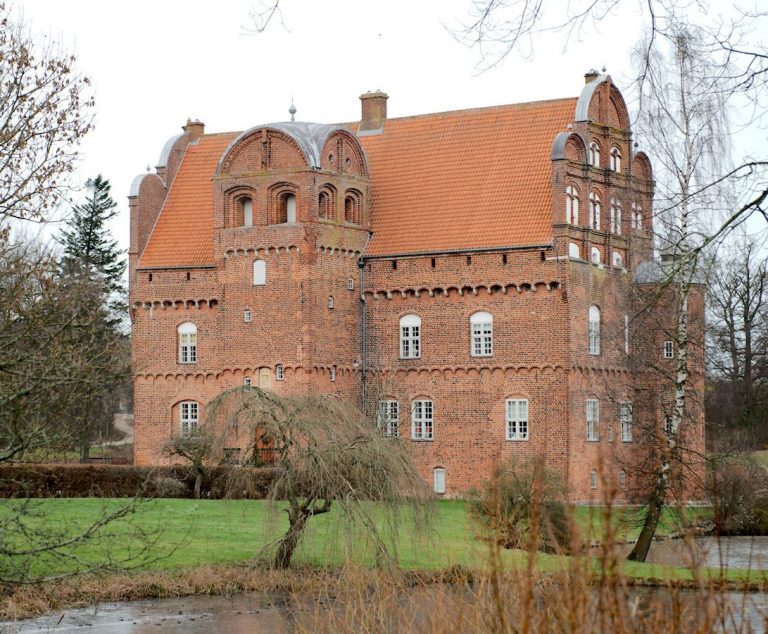
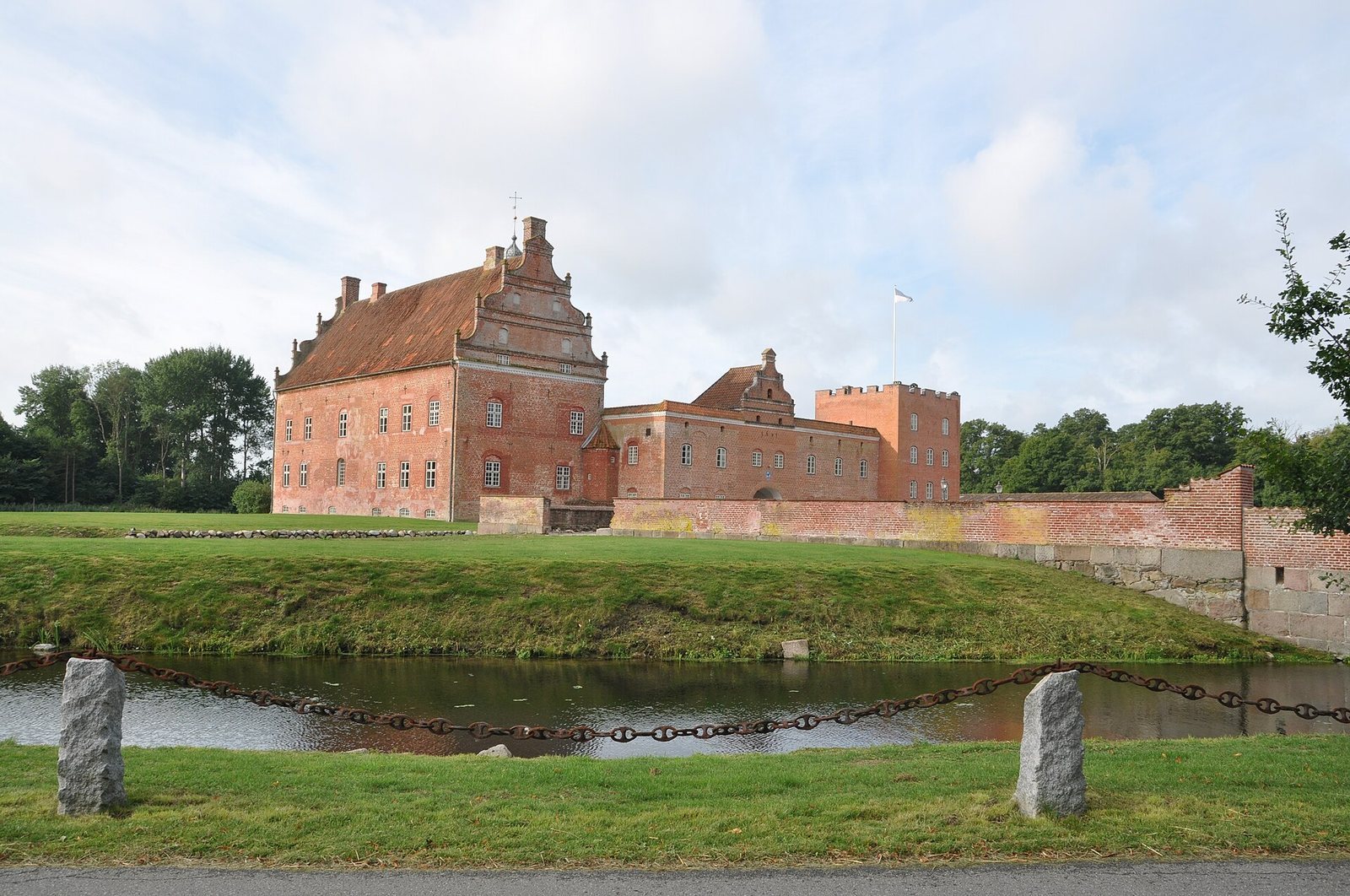
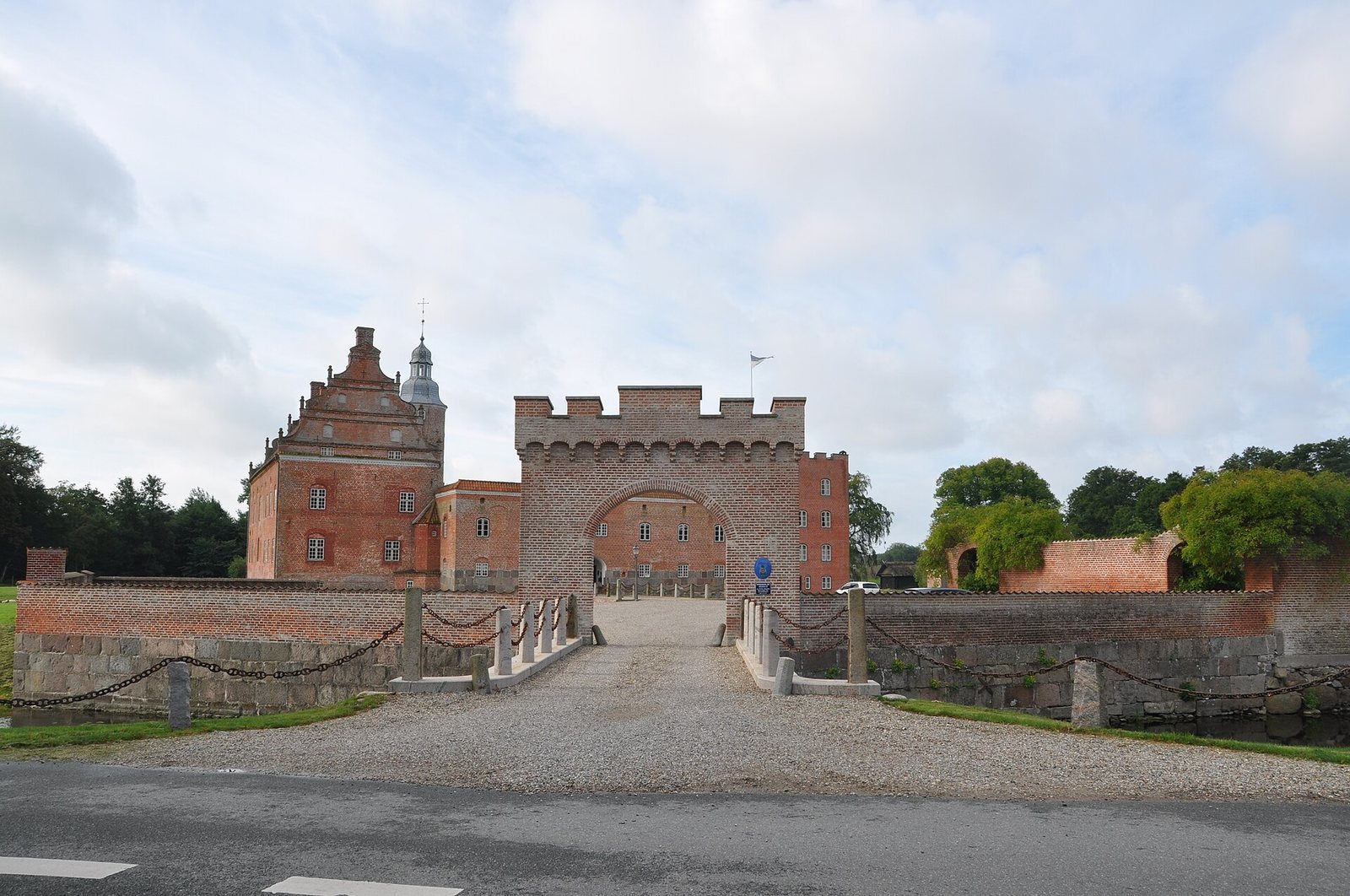
For Otte Skeel, the main wing and round tower were built in 1644. Architect Gustav Friedrich Hetsch renovated the manor in 1839. A corner tower was added in 1895, followed by a south wing in 1905. Substantial renovation and adaptation work took place in the 1920s and 1950s, and part of the premises was later converted into a hotel.
Antiquarian interests and Broholmer breeding
N.F.B. Sehested, a Danish nobleman and antiquarian, collected flint axes between 1878 and 1881. He used them as tools to construct a log cabin, completed in 1887 and later restored at Broholm. Excavations at the estate also uncovered a gold hoard from the Migration Period, a European era of extensive population movements conventionally dated from the fourth through seventh centuries. The hoard is considered Denmark’s largest from this period.
Broholm became known for breeding Broholmer dogs, which take their name from the estate. The Copenhagen Kennel Club was tasked with breeding the Danish national breed and establishing its pedigree. Broholmers are short-haired dogs of the St. Bernard type, with links to the German Bulldog lineage and a possible close relationship to the English Mastiff.
Remains
Manor house and estate grounds
The manor house’s main group consists of a main wing with a round tower, a corner tower, and a south wing. Its architectural treatment is Neo-Gothic, a revival style drawing on forms associated with medieval Gothic architecture. The surrounding estate covers 591 hectares, including 168 hectares of arable land, 395 hectares of forest, and 28 hectares of meadows. It also includes ten rental properties and an equestrian center with indoor and outdoor riding arenas.
Museum and archaeological finds
The Museum of North Antiquities forms part of the manor and holds about 10,000 antiquities collected by Sehested within 8 km of the house. The collection includes finds from the Stone, Bronze, and Iron Ages, periods named for materials widely used in making tools and weapons. The estate’s gold hoard weighs approximately 4.15 kg and includes gold bracteates, thin stamped pendants or medallions, along with necklaces and arm ornaments.
Log cabin
The restored log cabin is a surviving feature of the estate. Flint axes were used as tools in its construction.