Quarr Abbey: A Medieval Monastery and Modern Benedictine Abbey
Site at a Glance
- Popularity
- High
- Country
- United Kingdom
- Primary era
- Modern
- Eras represented
- Medieval, Modern
- Civilizations
- British, English
- Site type
- Religious
- Remains
- Monastery
On this page9 sections
History
Quarr Abbey is a Catholic Benedictine monastery on the Isle of Wight, United Kingdom, with a medieval foundation dating to 1132. Baldwin de Redvers, an Anglo-Norman nobleman and lord of the island, granted land near its northern shore to Abbot Geoffrey de Savigny for the monastery. Dedicated to Mary, the mother of Jesus in Christian belief, it was first called the Abbey of Our Lady and St John.
The medieval monastery
In 1147, Quarr joined the Cistercian Order, a Catholic monastic order following the Rule of Saint Benedict and emphasizing communal religious life and work. The monastery developed into a productive estate: it held Arreton Manor from the twelfth century until 1525. Tradition also associated the abbots with the office of warden or lord of the Isle of Wight. The name Quarr came from a nearby stone quarry that existed by the eleventh century. Its stone was used in medieval church and military buildings, including parts of the Tower of London.
Quarr’s medieval burial ground received members of the founding family and other prominent figures. Baldwin was buried there in 1155, as was his wife Adelize Ballon, who died around 1146. Among later burials were Cecily of York, a daughter of Edward IV and godmother to Henry VIII, who died in 1507, and her husband Thomas Kymbe.
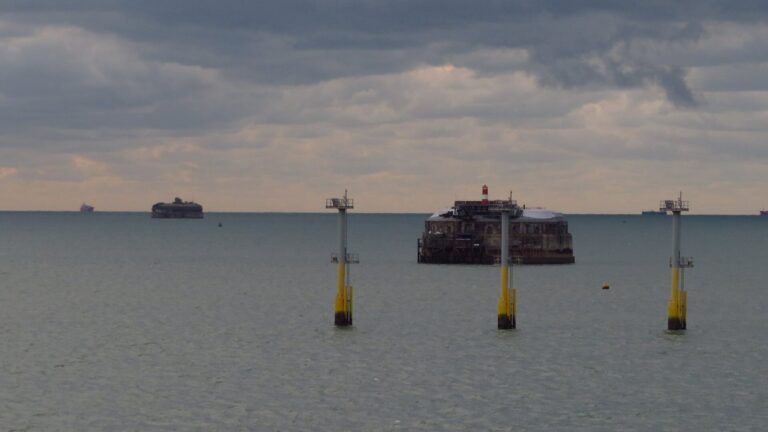
In 1340, concern about piracy in the area led to permission to fortify the monastery. Monastic life ended in 1536 during the Dissolution of the Monasteries, Henry VIII’s suppression of England’s monastic houses. The land passed to George Mills, a merchant from Southampton, who demolished most of the abbey. Its stone was reused in fortifications at Cowes and Yarmouth.
Exile and the modern community
French restrictions on religious orders prompted the Benedictine community of Solesmes, monks following the Rule of Saint Benedict, to seek refuge abroad. In 1880, congregations had been ordered to seek government authorization within three months, but protests led to a gradual easing of enforcement. A new law on 1 July 1901 ended that tolerance. Anticipating the change, Solesmes abbot Paul Delatte had already sent a monk to England to find shelter for the community.
The monks first settled at Appuldurcombe House on the Isle of Wight. The lease was signed on 19 August 1901, and nearly the whole community arrived on 21 September. As that arrangement approached its end, the monks moved to Quarr Abbey House. The first arrived on 25 June 1907 to prepare the grounds. Their community formed the modern abbey and remains affiliated with the Solesmes Congregation, a Benedictine monastic congregation centered on Solesmes Abbey in France. The new church was consecrated on 12 October 1912. Most of the Solesmes community returned to France in 1922; Quarr became a priory in 1925 and an independent abbey in 1937, with English monks joining the smaller community.
The community follows the Solesmes tradition of liturgical chant, sung music for religious worship, and became known for teaching it and sharing its technical expertise. The poet and novelist Robert Graves visited while convalescing on the Isle of Wight during the First World War. Quarr’s fresh produce helped change his previously negative view of Catholicism.
Abbots included Dom Marie-Gabriel Tissot (1937-1964), Dom Aelred Sillem (1964-1992), Dom Leo Avery (1992-1996), and Dom Cuthbert Johnson (1996-2008). Dom Finbar Kealy served as prior administrator from 2008 to 2013. Dom Xavier Perrin took up that role in 2013 and was elected abbot on 11 May 2016; he had previously been prior of Kergonan Abbey in Brittany.
As the community shrank and the buildings deteriorated, the World Monuments Fund included Quarr among the world’s 100 most endangered historic sites. Conservation work repaired the medieval remains and church, including measures against rain penetration; roof and window repairs were funded in 2021. The abbey’s church and monastic buildings are Grade I listed, England’s highest listed-building category, reserved for buildings of exceptional interest.
Remains
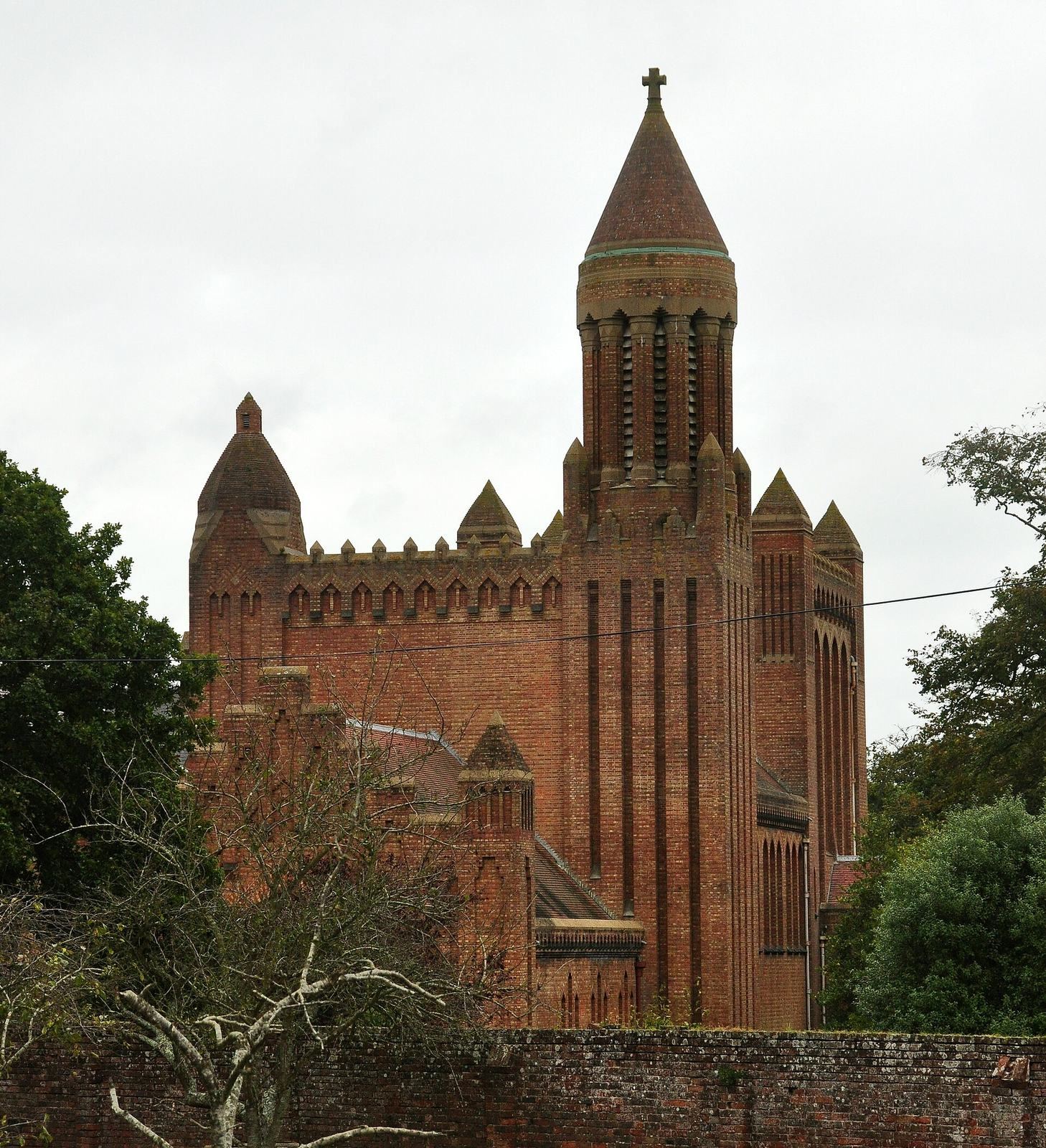
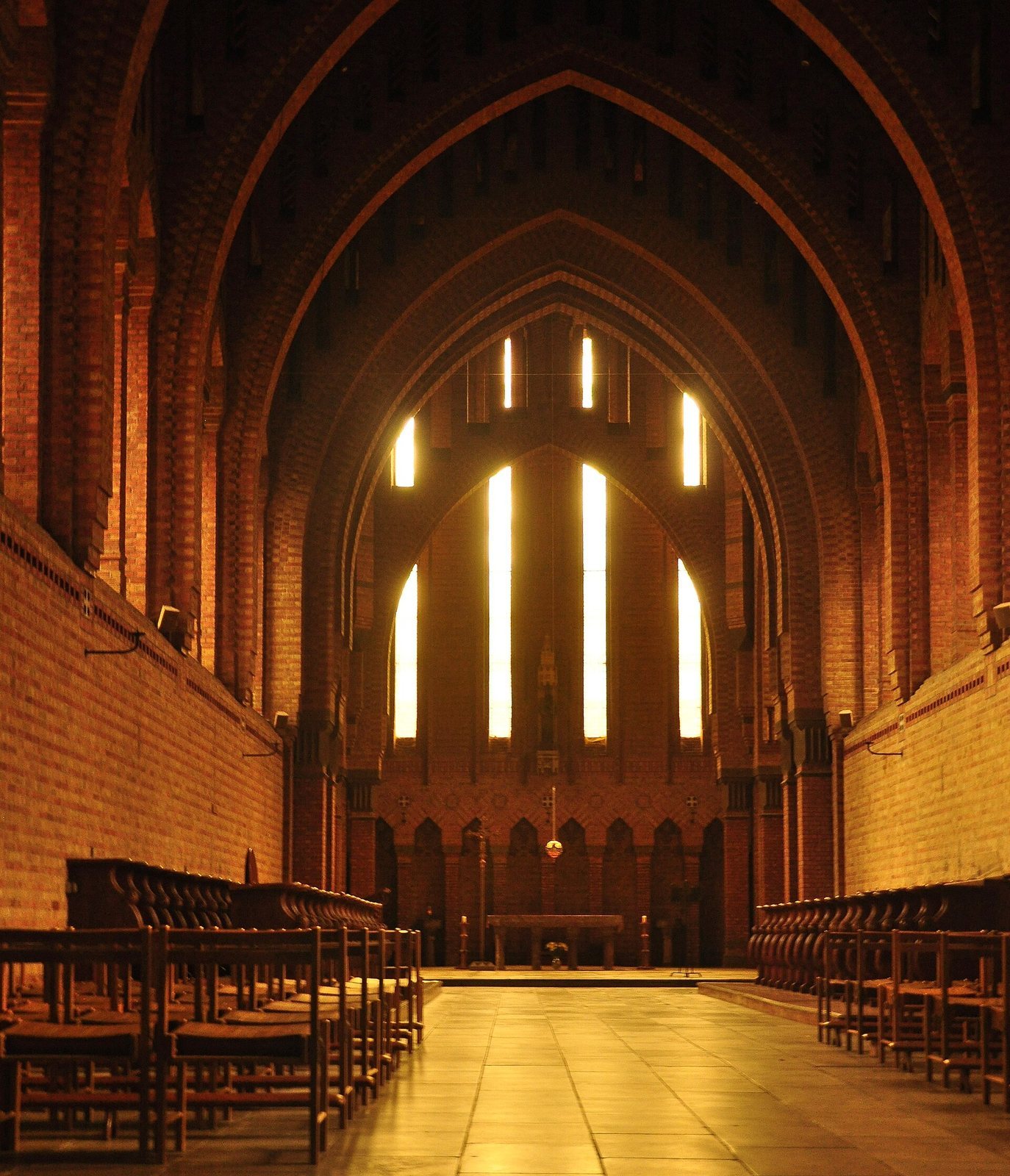
The site lies between Binstead and Fishbourne near the Isle of Wight’s north coast. Its medieval ruins are near, but some distance from, the modern monastic complex. The newer buildings are chiefly of Belgian brick and combine French influences with Byzantine elements associated with the Eastern Roman Empire and Moorish traditions associated with Muslim societies in North Africa and Iberia.
Medieval abbey remains
Visible remnants of the medieval defenses include a stone wall and a sea gate secured by a portcullis, a heavy gate that slides vertically to close an entrance. These features formed part of the fortifications built to protect the abbey.
Modern monastic complex
Quarr Abbey House
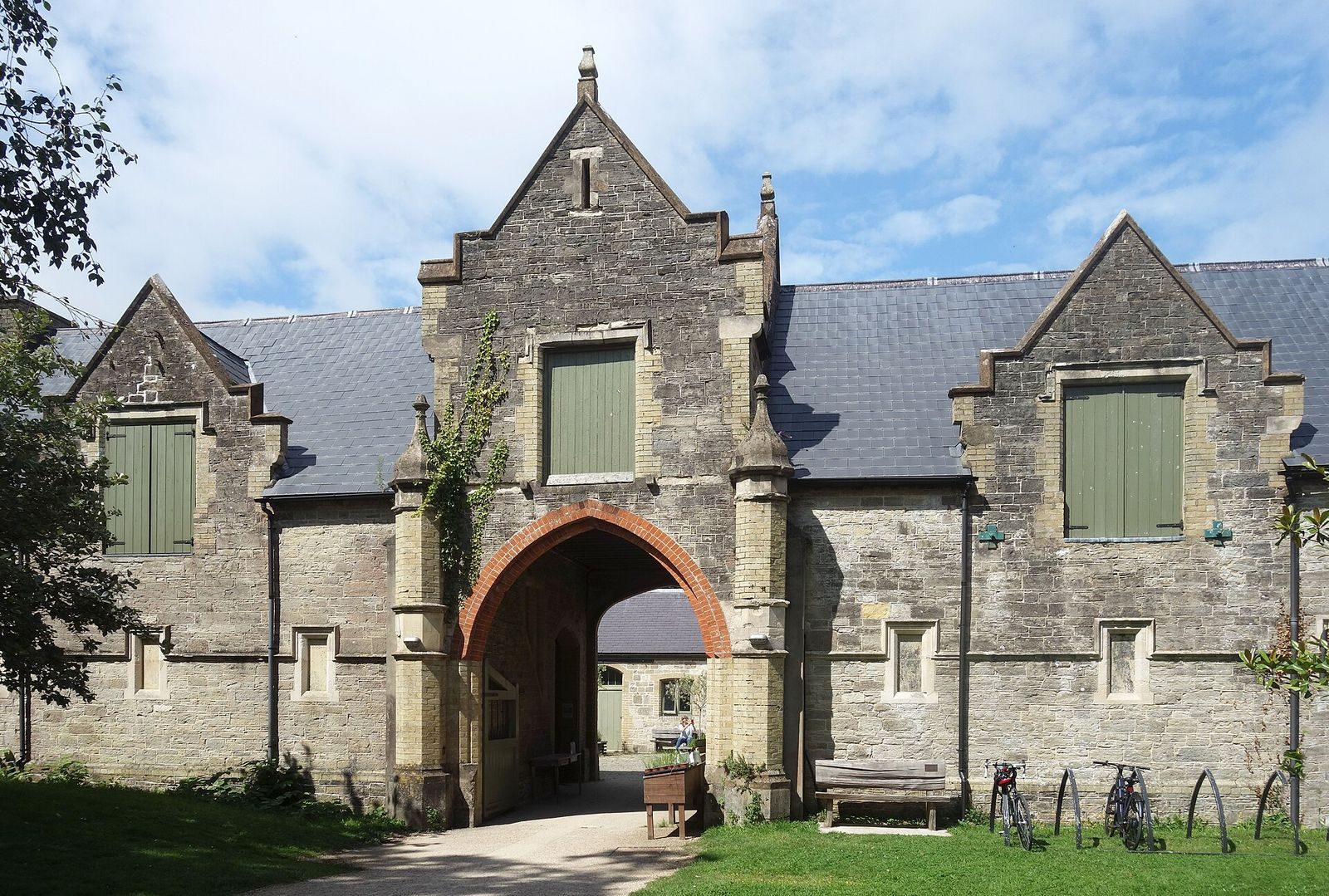
Quarr Abbey House was built with stone salvaged from the medieval monastery. The modern abbey incorporated and extended the house, linking material from the earlier site with the newer complex.
Church and monastic buildings
A monk who was also an architect designed the modern complex, which was built by about 300 workers from the Isle of Wight. Work on the refectory, or dining hall, and three sides of the cloister, a covered walkway enclosing a courtyard, began in 1907 and was completed within a year. Construction of the church started in April 1911, and the complex was completed in 1912. The church has tall, pointed towers of bright Flemish brick. The buildings were intended to house nearly 100 monks and lay brothers, non-ordained community members traditionally engaged in manual work. The guesthouse was completed in 1914.
Estate and associated features
The estate includes cultivable land, woodland extending toward the beach, and a short stretch of coast. The monks laid out a kitchen garden, enclosed the property, established a chicken farm, and planted an orchard; a farm remains attached to the monastery. The cemetery holds the graves of French founding monks and English monks. One of the medieval abbey’s three bells is kept in the bell tower of the nearby Anglican Church of the Holy Cross in Binstead, originally built by Quarr’s monks for their lay dependants.