Reinsburg: A Ruined Castle in Thuringia
Site at a Glance
- Popularity
- Low
- Country
- Germany
- Primary era
- Medieval
- Eras represented
- Medieval
- Civilizations
- Holy Roman Empire
- Site type
- Military
- Remains
- Castle
On this page6 sections
History
Origins and Medieval Use
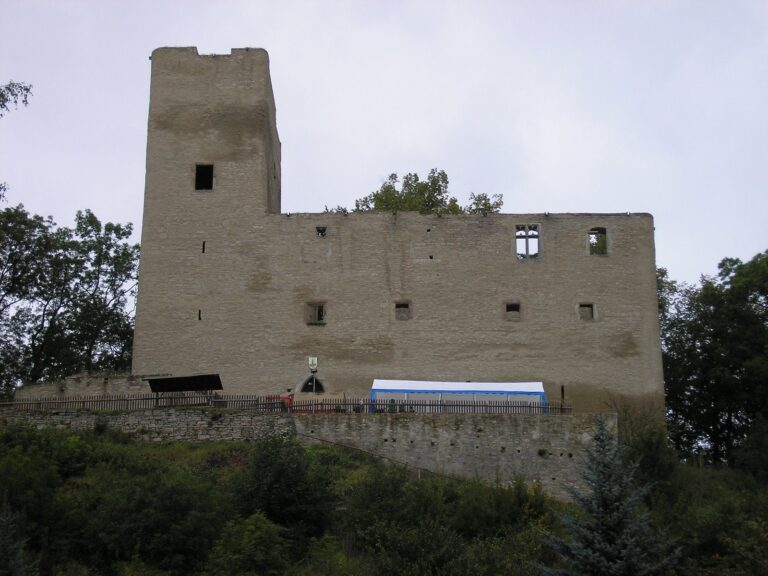
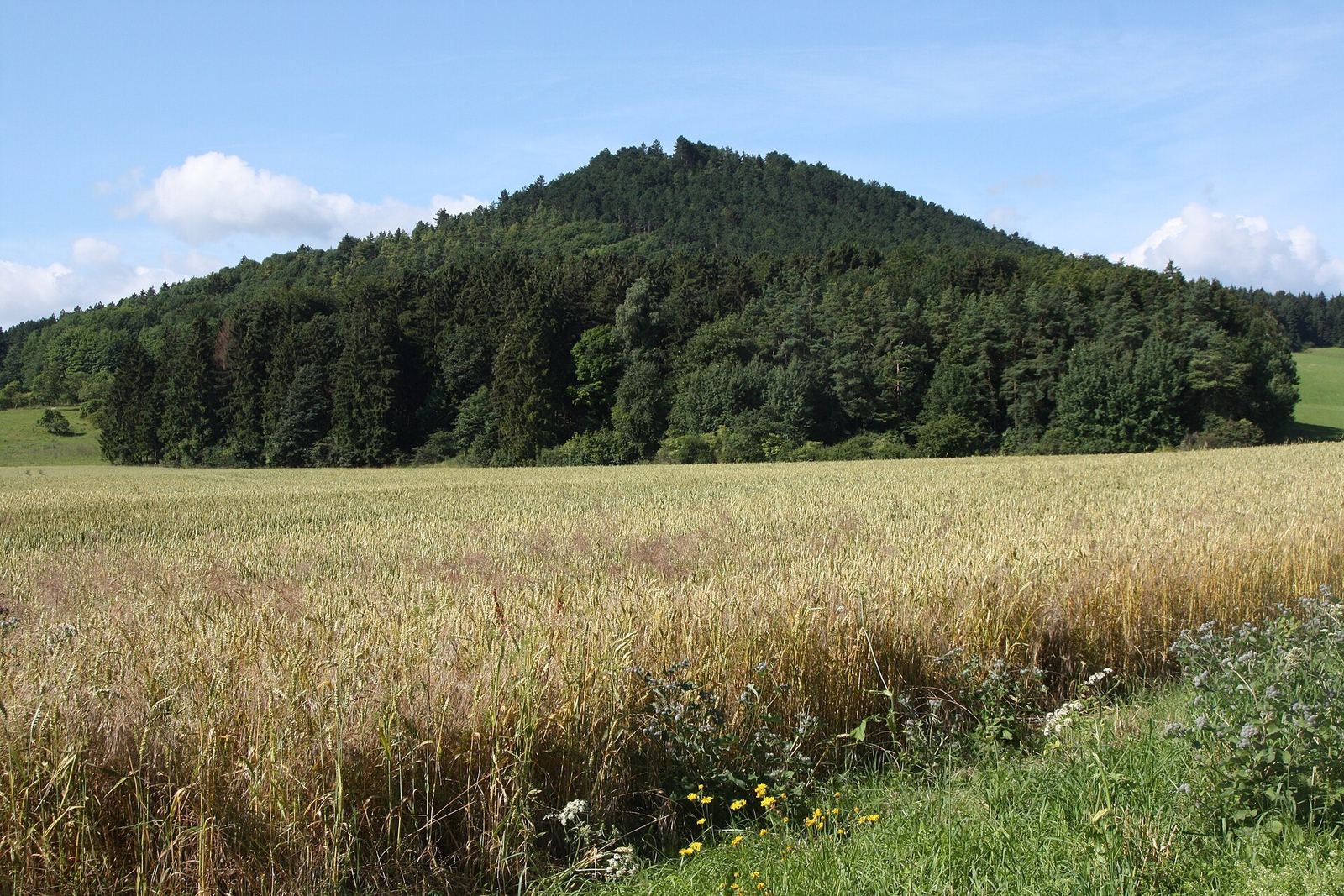
Reinsburg is a ruined ridge-top castle in the Reinsberge of Thuringia, Germany. Its construction date is unknown, but the age of its raised earth ramparts suggests that a hillfort occupied the site before the medieval castle.
For a time, Reinsburg belonged to the County of Kevernburg, a medieval territorial lordship in Thuringia, and guarded trade and military routes through the Gera and Wipfra river valleys. Ownership changed from the second half of the 13th century. Nineteenth-century writers repeatedly described the castle and its owners using the labels robber castle and robber knights.
Destruction and Local Traditions
Reinsburg was probably stormed for the last time in 1289 or 1290 during a campaign by Rudolf of Habsburg, a 13th-century ruler who held the title King of the Romans. The campaign sought to establish the Landfrieden, efforts to maintain public peace and curb private violence and feuding, and resulted in the destruction of 66 castles in Thuringia.
A local legend places feuding giants at Reinsburg and Singer Berg, supposedly moved from place to place by smaller beings. In one contest, the Reinsburg giant hurled a huge war hammer at Singer Berg but missed, striking the place where Hammersfeld later arose. The Singer Berg giant answered by throwing a great lump of Schmer, described as lard or mud, toward Reinsburg. It too missed, landing where Schmerfeld was later founded.
Another legend says that buried cellars at Reinsburg hold untouched stores of fine wine. One day, the wine is supposed to rise to the surface and flood all of Thuringia.
Remains
Plan and Surviving Fabric
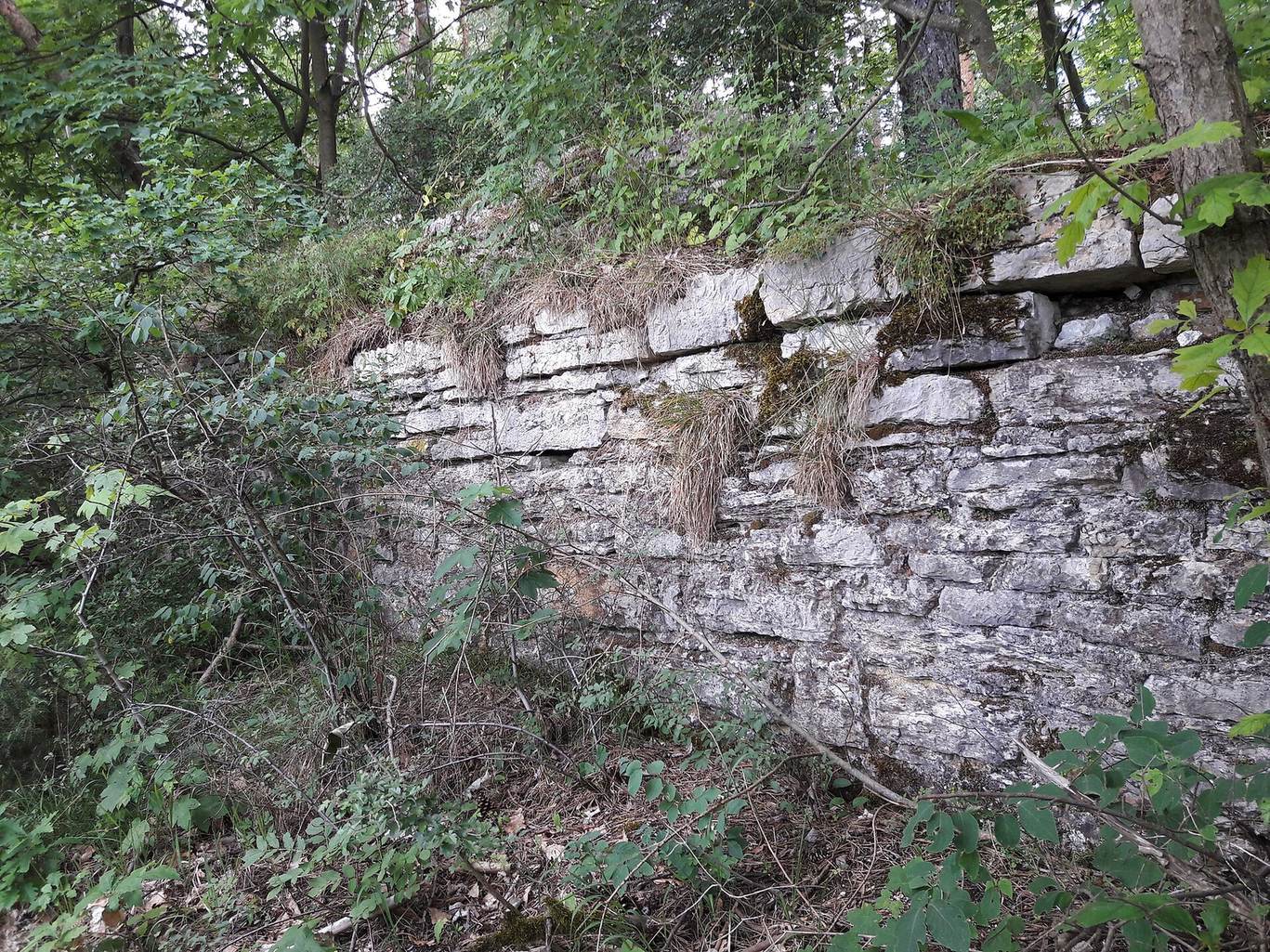
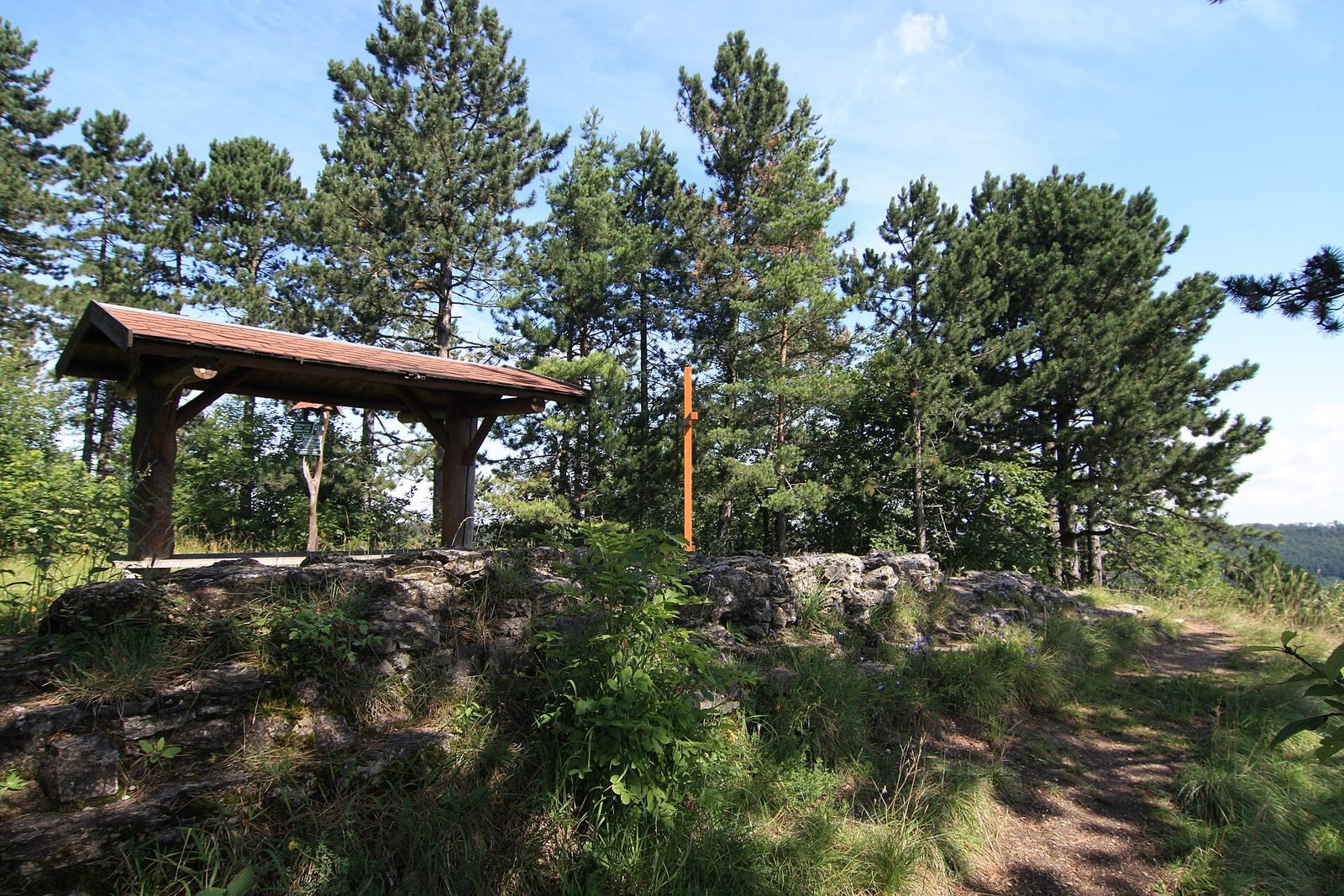
The ridge-top castle has an irregular, approximately oval plan, with foundation walls extending about 60 metres. Its area lies roughly 600 metres above sea level, and surviving remains include foundations, parts of ramparts and ditches, and building rubble concentrated in the southeast. Reinsburg was the largest of the castles on the slopes of the Gera.
Earthworks and Possible Passage
Relief data indicate that an outer earthwork barrier crossed one side of the castle, providing an additional line of protection. A possible underground passage linking Reinsburg with Plaueschen Ehrenburg has been suggested, but the connection is unconfirmed.