Bogor Palace: Indonesia’s Presidential Palace
Site at a Glance
- Popularity
- High
- Country
- Indonesia
- Primary era
- Early Modern
- Eras represented
- Early Modern, Modern
- Civilizations
- Dutch
- Site type
- Domestic
- Remains
- Palace
On this page15 sections
History
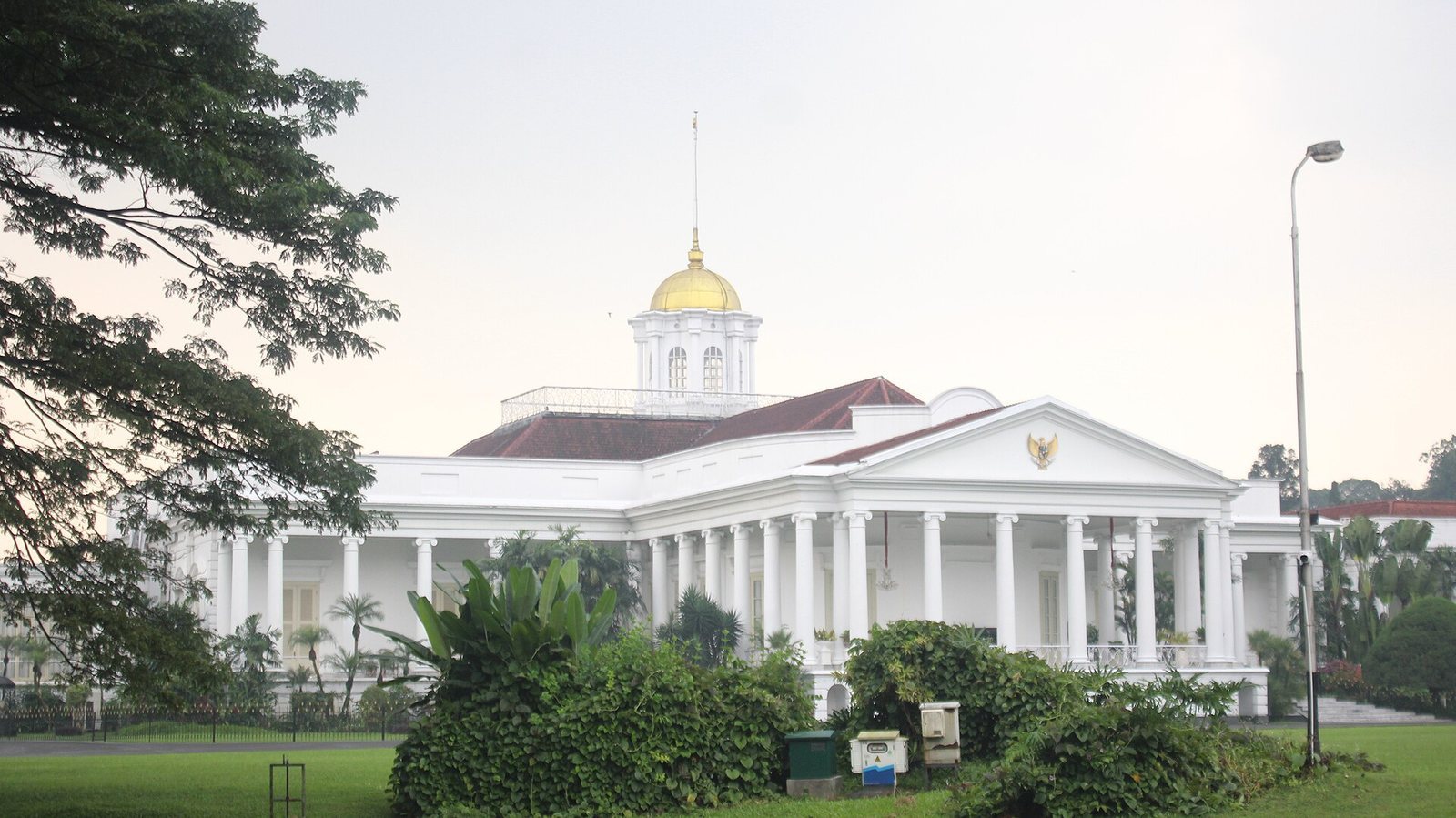
Bogor Palace is a presidential palace in Bogor, West Java, Indonesia, first developed by Dutch colonial officials as a country retreat named Buitenzorg. The original mansion dates to 1745, and the rebuilt main palace follows the Indies Empire style, a neoclassical style used in the Dutch East Indies.
Establishment and colonial changes
Governor-General Gustaaf Willem van Imhoff, the senior colonial official governing on behalf of the Netherlands, selected the site on 10 August 1744 and ordered a mansion in Kampong Baroe. Buitenzorg means “without a care” in Dutch. The retreat offered Dutch officials an escape from the heat and disease of Batavia, the colonial capital now called Jakarta.
Construction was still unfinished when Van Imhoff’s term ended in 1750, and his successor, Jacob Mossel, continued the work. Between 1808 and 1811, Governor-General Herman Willem Daendels enlarged the palace and added east and west wings. These alterations gave the earlier building a resemblance to Blenheim Palace in England. During the British occupation of Java from 1811 to 1816, British colonial administrator Thomas Stamford Raffles lived at the palace, drawn to Bogor’s milder hill climate. Most council meetings, however, took place at the Palace of Rijswijk in Batavia. Raffles also had the palace gardens arranged in the English style, later inspiring the adjoining botanical garden.
Governor-General Godert van der Capellen, in office from 1817 to 1826, added a small dome to the main building and established a botanical garden beside the palace grounds. An earthquake in 1834, triggered by the eruption of Mount Salak, severely damaged the old mansion. It was subsequently demolished.
Colonial government and wartime use
From 1870 to 1942, the palace served as the official residence of the governor-general of the Dutch East Indies, the Netherlands’ colonial territory in the Indonesian archipelago. State business was conducted mainly in Batavia, but Bogor’s milder climate made the palace a favored residence. Forty-four governors-general stayed there. During World War II, Japanese and Allied forces looted the palace’s historic art collection, leaving only five mirrors.
A hotel founded by J. Dibbets was built in Bogor in 1856 to accommodate guests associated with the palace. First called the Dibbets Hotel, it was also known as the Binnenhof Hotel and Bellevue Hotel. During the Japanese occupation from 1942 to 1945, it became the headquarters of the Japanese military police. After Indonesian independence, the government took it over and renamed it Hotel Salak The Heritage, preserving it as a historic building associated with the palace.
Indonesia’s presidential palace
The palace passed to the Indonesian state in 1950. President Sukarno used it as a residence, including for weekend stays, and it remained the official presidential residence until his removal in 1967. Renovations in 1952 altered the entrance and connections between the main building and its wings. The palace later fell into disuse under President Suharto.
President Susilo Bambang Yudhoyono initiated the idea for the Balai Kirti Indonesian Presidential Museum in the palace area in 2012 and inaugurated it on 18 October 2014. In February 2015, President Joko Widodo returned Bogor Palace to use for state affairs and moved his office there from Merdeka Palace.
Remains
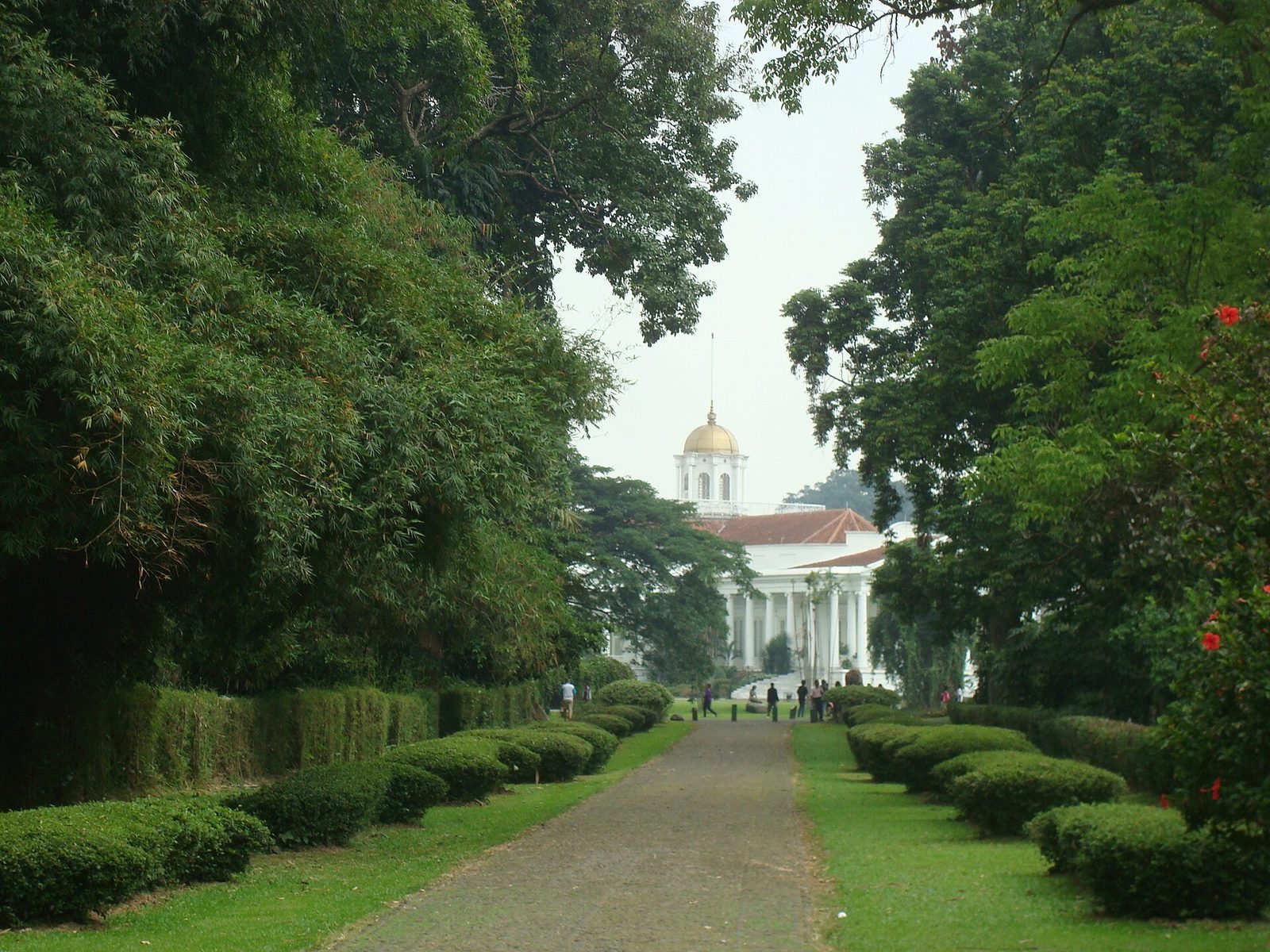
The palace estate is arranged around a main building and its east and west wings, with pavilions and gardens extending across 284,000 square metres, or 28.4 hectares. The grounds adjoin Bogor Botanical Gardens and contain buildings and collections from different periods of the palace’s history.
Palace buildings
First Buitenzorg mansion
The original complex was built in Dutch classical style. It consisted of two sections linked by a low central gallery and two blank front walls. A garden surrounded the buildings, which faced the navigable Tjidani River. A police post stood in the central area, where a market was held twice a week.
Main building
The replacement palace, rebuilt in 1856, has one storey, an elevated floor and columns. Its design followed the colonial public-works style used in the Dutch East Indies. Renovations in 1952 added a porch at the main entrance and corridors connecting the main building to its wings. The building contains the head of state’s private offices, a library, dining room, theater room and ministers’ waiting room, as well as the Teratai living room and Garuda reception hall.
East wing
The east wing serves as a guesthouse for foreign heads of state. In the colonial period, it housed guests of the governor-general.
West wing
The west wing contains a guesthouse for ministers accompanying state visitors and a conference room. During the colonial period, it accommodated the governor-general’s staff.
Pavilions and multi-purpose building
Six pavilions stand on the grounds: Paviliun Dyah Bayurini, Paviliun Jodipati, Paviliun Amarta, Paviliun Madukara, Paviliun Pringgondani and Paviliun Dwarawati. Built in 1964, Paviliun Dyah Bayurini is used by the head of state and family during stays in Bogor and includes a swimming pool. The other pavilions serve as guesthouses for ministers and government officials. A separate multi-purpose building dates to 1908.
Grounds and cultural collections
Gardens and sculpture
Spotted deer roam the palace gardens. Native to India and Nepal, the deer were brought to the grounds by Daendels for hunting and sport. Sculptures include a ninth-century Central Javanese figure identified as a Dhyani Bodhisattva, a meditative Buddhist figure seeking enlightenment for others. Other works include a replica of Carl Milles’s Hand of God, given by the Swedish government, a replica of The Little Mermaid, and a replica of The Archer, made by Zsigmond Kisfaludi Strobl in 1914.
Art collection
The palace collection contains 448 paintings, 216 sculptures and 196 ceramic objects. Sukarno accumulated 90 percent of these works.
Balai Kirti Indonesian Presidential Museum
The museum building contains historical objects and relics associated with Indonesia’s presidents, arranged in rooms dedicated to the country’s presidential leadership.