Batujaya: An Ancient Buddhist Temple Complex in West Java
Site at a Glance
- Rating
- 4.6
- Popularity
- Low
- Country
- Indonesia
- Primary era
- Classical
- Eras represented
- Classical, Medieval
- Civilizations
- Unclassified
- Site type
- Religious
- Remains
- Sanctuary
On this page10 sections
History
Batujaya is an ancient Buddhist temple complex in Segaran, West Java, Indonesia. It developed within the historical sphere of Tarumanagara, an early Hindu-Buddhist kingdom of western Java, and its monumental construction probably began during the kingdom’s prosperous period in the late fourth or early fifth century CE. The complex remained an inhabited and sacred place through the seventh century, when severe flooding probably led to its abandonment. Its presence within a Hindu kingdom indicates a degree of religious tolerance.
Prehistoric and early occupation
Batujaya contains two cultural layers. The earlier prehistoric layer is followed by a Hindu-Buddhist layer extending from the beginning of the Common Era to the seventh century. This sequence reflects changes in material culture while the area continued to serve both settled and sacred purposes.
Burials dated approximately to the first through third centuries CE contained pottery made locally and in southern India, together with beads, bracelets, earrings, rings, eye covers, iron machetes, knives, spearheads, bone and antler tools, and square axes. Menhirs, large stones of uncertain function, and sharpening stones were also found. Fragments of pottery associated with the Buni culture, a prehistoric culture of the northern coast of West Java, indicate an earlier cultural tradition in the area.
Tarumanagara and the Buddhist complex
Radiocarbon analysis of material from Blandongan gives a broad range from the second to the twelfth century CE. Inscriptions, ceramics, pottery, votive tablets, plaster, stucco ornaments, sculptures, and brickwork provide additional evidence for relative dating, but the chronology of the complex remains unresolved. Batujaya may have been a worship center from the second century, while the construction of its monumental Buddhist buildings probably began later, perhaps during the reign of King Purnawarman, who ruled Tarumanagara approximately from 395 to 434 CE, and continued under his successors.
The chronology of Jiwa remains debated. It has been assigned to the second century in some interpretations, while preliminary studies have placed it in the fifth or sixth century. Batujaya’s location near Cibuaya, about 15 kilometers away, has also helped frame its historical setting. Cibuaya was a Hindu site and a Buni-related pre-Hindu settlement. The relationship has been compared with the account of Faxian, a Chinese Buddhist monk and pilgrim who visited Java in 414 CE and described few Buddhists alongside many Brahmins and local religious practitioners. This comparison helps explain the religious environment but does not settle the dates of Batujaya’s buildings.
Jiwa served Buddhist worship, including pradaksina, the practice of walking clockwise around a sacred structure. Worshippers made three circuits with their hands joined in the anjali gesture, a sign of reverence, and moved with deliberate steps. Blandongan probably served a different purpose and may have been a memorial temple for Purnawarman. Although the king followed Vaishnavite Hinduism, a Hindu tradition centered on devotion to Vishnu, the proposed Buddhist commemoration suggests that Buddhists could also honor him.
Rediscovery and conservation
Archaeologists from the University of Indonesia first investigated Batujaya in 1984 after local residents reported antiquities around earthen mounds in rice fields. Residents called and revered these mounds as unur. Later work by the National Research and Development Center for Archaeology and the École Française d’Extrême-Orient expanded knowledge of the complex.
Investigations between 1992 and 2006 identified 31 building sites. A 2014 heritage-conservation report listed 40 temple remains, while 62 unur had been recorded by 2016, with 51 confirmed to contain building remains. The number of structures, their chronology, religious character, forms, and overall organization remain subjects of investigation. By 2014, Jiwa, Blandongan, Serut, and Sumur had been restored or were undergoing restoration. Batujaya became an Indonesian National Cultural Treasure in April 2019 and is administered by the Museum and Cultural Heritage authority of the Ministry of Culture.
Remains
Batujaya covers approximately five square kilometers among rice fields, settlements, and former wetlands near the north coast of West Java. The complex lies about six kilometers from the coast and approximately 500 meters north of the Citarum River. The former temple area was probably beside a lake or swamp created when the river changed course from northward to northwestward. The names Segaran and Telagajaya refer to bodies of water in Sanskrit.
Layout and construction
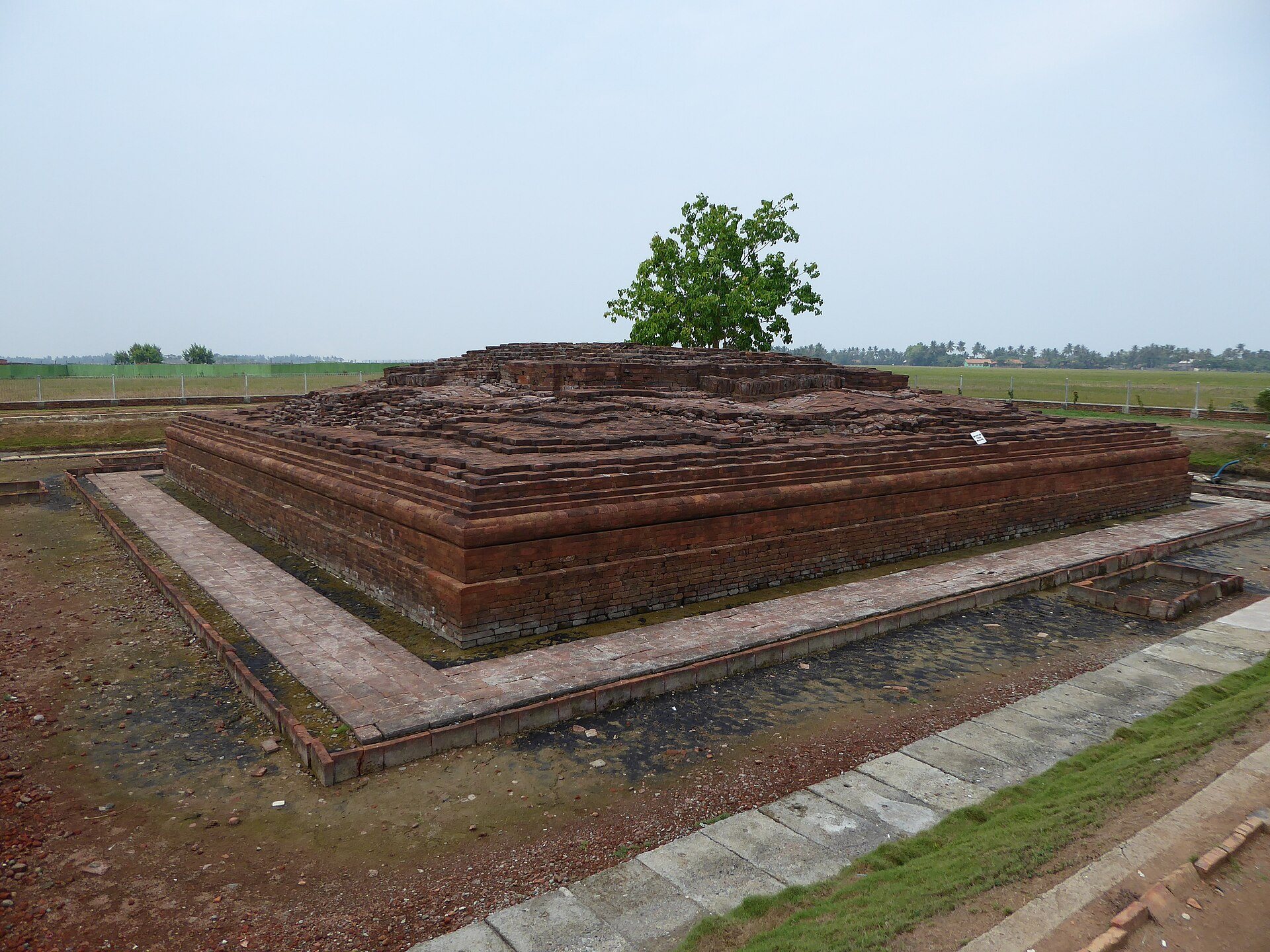
Surveys have identified approximately 30 sites across the complex. They are grouped into the Segaran area, with 14 sites, and the Telagajaya area, with 18 sites. Other cultural-heritage structures may still be unidentified. The remains generally survive as low foundations or bases, often still covered by earthen mounds called unur or hunyur. Their sizes and heights vary. Excavations reported 17 mounds, including three shaped as pools, while other investigations produced larger totals for mounds and building remains.
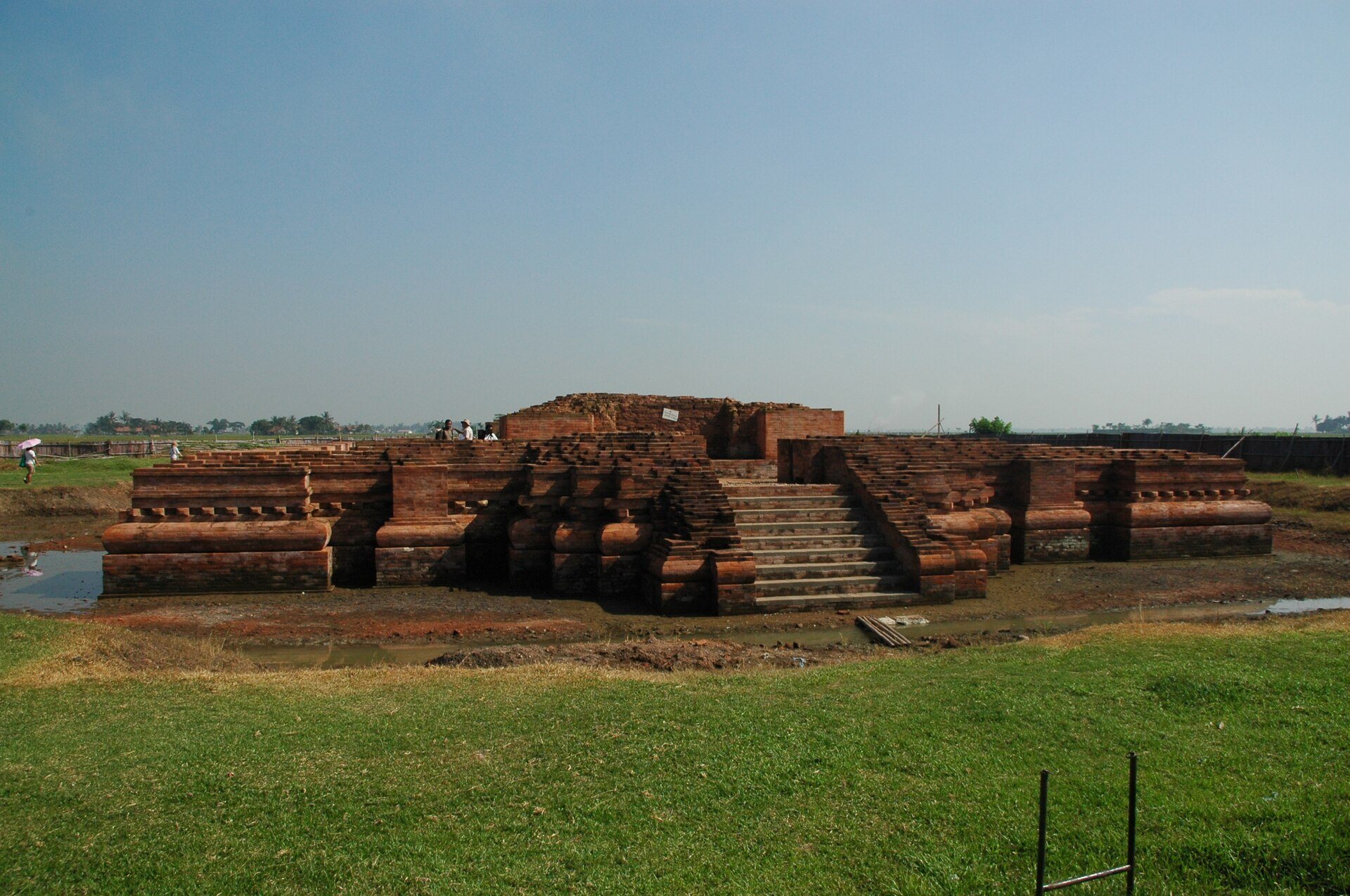
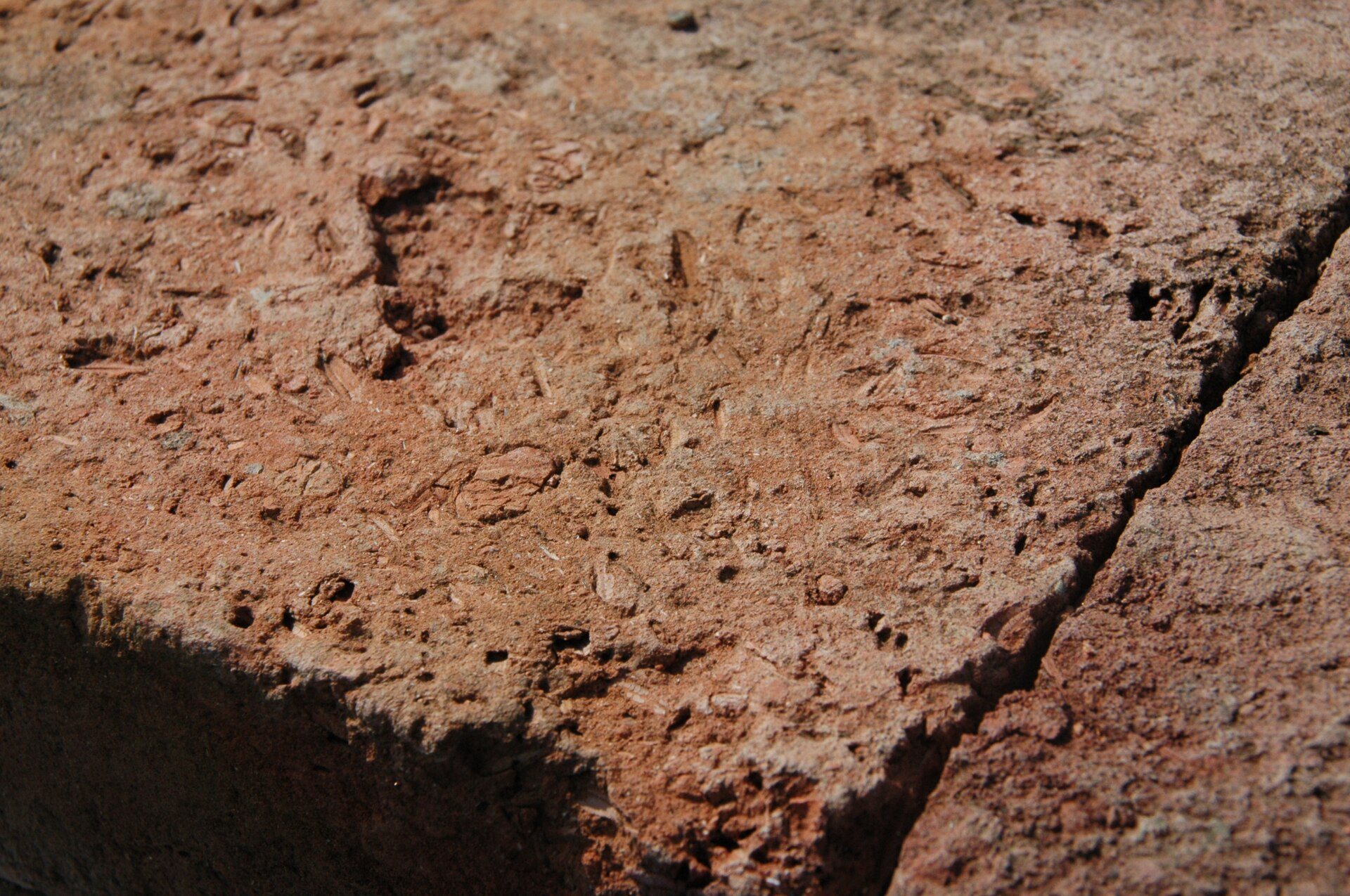
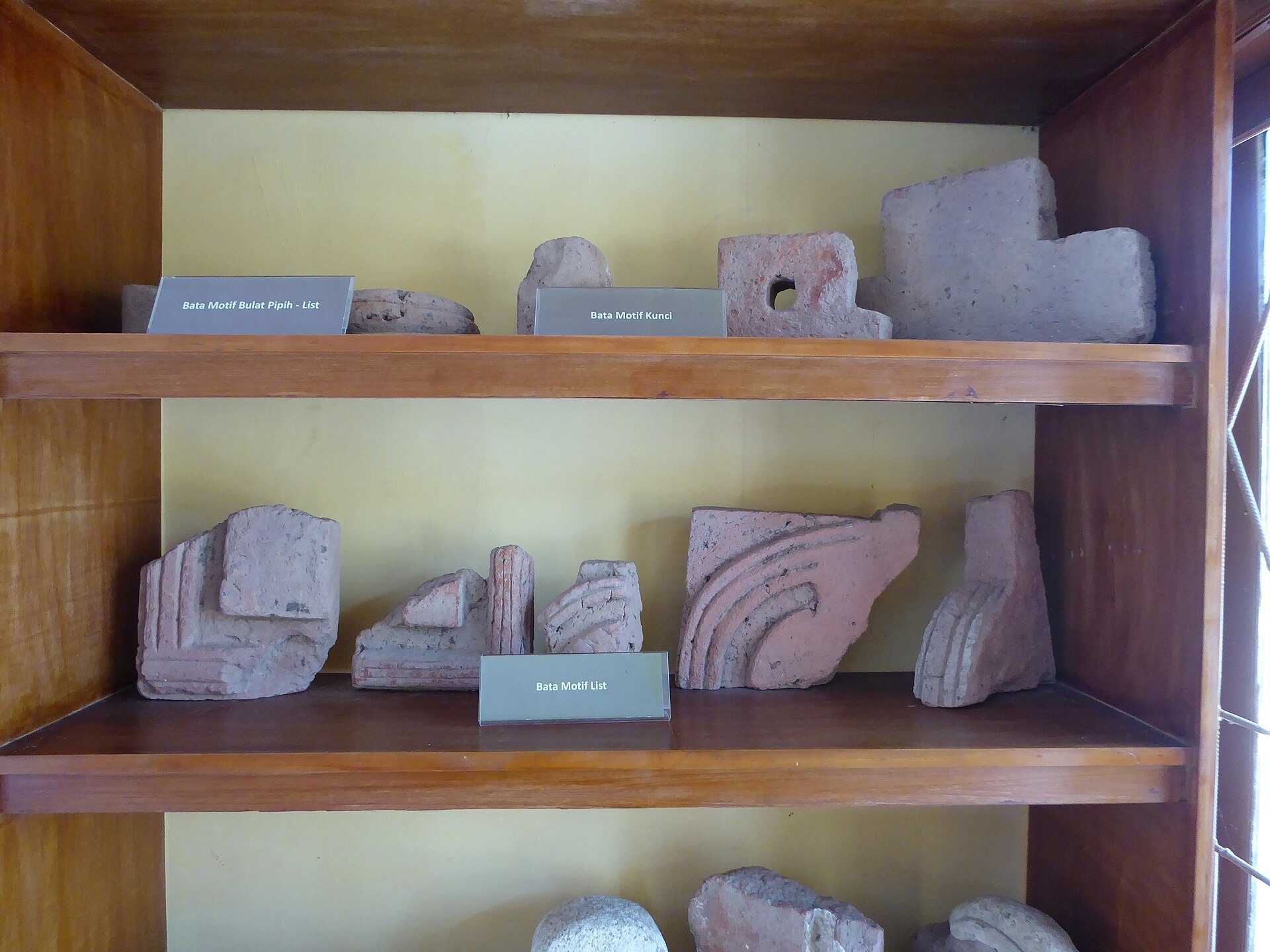
The temples were built chiefly from brick rather than the andesite commonly used in many Central Javanese temples. Some bricks were made from clay mixed with rice husks. Floors and structural sections were sometimes strengthened with unreinforced concrete containing gravel, sand, and lime, a material described as stucco concrete. Stucco plaster coated temple surfaces and was also used to form architectural details. Batujaya is the largest temple area in West Java and is among the oldest temple complexes in Indonesia and Java.
Principal temples
Jiwa Temple
Jiwa has an upper structure resembling an open lotus flower. At its center is a circular feature interpreted as the former base of a stupa, a Buddhist reliquary or commemorative monument, or of a Buddha image. No staircase has been found. The surviving form therefore appears as a stupa or Buddha image set upon a floating, blossoming lotus. This arrangement is described as unique among known Indonesian remains. Jiwa has been restored as one of the principal surviving structures of the complex.
Blandongan Temple
Blandongan stands approximately 100 meters from Jiwa and is larger. Four stairways, one on each side, lead to the building. A lower gallery separates the gallery walls from the raised central body. The structure produced amulets of identical form, size, and decoration, with differences only in whether writing appeared on their undersides. A 16-karat gold plate inscribed in Pallava script and Sanskrit was also found there.
Inscriptions, amulets, and sculptures
Excavations and surveys around Batujaya recovered inscriptions on gold, terracotta, and brick, along with votive tablets, stone and metal sculptures, stucco ornaments shaped as human and animal heads, earthenware vessels and tools, and Chinese ceramics from the Tang period, approximately the ninth to tenth centuries. A votive tablet is a small devotional object deposited or used in a religious setting.
The Blandongan amulets show six figures. Three seated Buddhas meditate above, using the dhyana mudra, a meditation hand gesture. Beneath them, another seated Buddha makes the abhaya mudra, a gesture associated with reassurance or protection, while Brahma Sahampati and Sakra, also called Sakka, stand on either side.
The scene represents the Buddhist Twin Miracle performed by Shakyamuni Buddha, the historical Buddha traditionally identified as Siddhartha Gautama, at Shravasti. Its imagery associates the Buddha with alternating miracles of fire and water, a lotus throne, Brahma Sahampati and Sakra, and three duplicated Buddhas in meditation. The episode appears in the Sanskrit Buddhist text Divyavadana, specifically the Pratiharya Sutra. The imagery has been used to associate Batujaya’s Buddhist community with the Mulasarvastivada, a Buddhist monastic tradition within the broader Sravakayana designation for traditions emphasizing the disciple’s path.