Beldringe: A Danish Manor House and Estate
Site at a Glance
- Popularity
- Low
- Country
- Denmark
- Primary era
- Early Modern
- Eras represented
- Early Modern, Modern
- Civilizations
- Danish
- Site type
- Domestic
- Remains
- Manor House
On this page9 sections
History
Beldringe is a manor house and estate about four kilometres southwest of Præstø, Denmark. Its ownership history reaches back to Joseph Nielsen Blad in 1360.
Medieval owners
Later owners included Tage Josephsen in 1421, Anders Jensen Basse in 1457 and Morten Andersen Basse in 1473. Jakob Jepsen’s tenure ended in 1512. The estate appears to have passed from Joseph to his son Anders Jensen Basse, then to Anders’s niece Dorthe Christoffersdatter Basse, who married Jacob Jensen Ravensberg of Kindholm. After Jacob’s death, his daughter Anne Jacobsdatter Ravensberg inherited Beldringe. She married Joachim Beck in 1522.
The Beck family and royal ownership
Joachim Beck already owned nearby Førslevgaard. In 1537 he became royal treasurer of eastern Denmark, an official responsible for Crown finances, and received extensive landholdings on Zealand. When he died in 1573, Beldringe and Førslevgaard passed to his son Lauge Beck, who succeeded him as treasurer. Lauge’s son Jacob inherited Beldringe in 1607, while his other son, Sivert, received Førslevgaard.
In 1621 Jacob Beck exchanged Beldringe with Christian IV, king of Denmark, for Gladsaxe in Scania, a region then under Danish rule and now part of Sweden. The estate then comprised the manor and 52 tenant farms. Christian IV used its land as hunting grounds.
The Crown estate and sale
In his 1665 will, Frederick III, king of Denmark, left Beldringe, Vordingborg Castle and Lekkende to his youngest son, Prince George. George’s death in 1708 returned the properties to the Crown. Beldringe then became part of the Vordingborg Cavalry District, a Crown territory whose farms and revenues supported mounted troops.
The decision to sell the district came in 1769. In 1774 it was divided into 12 estates and sold at public auction at Vordingborg Castle on 27 September. Frederik Sophus Raben bought Beldringe and Lekkende.
The Raben-Levetzau family and later ownership
After Frederik Sophus Raben died, Beldringe passed to his son Carl Vilhelm Raben. Carl Vilhelm had served for many years as a diplomat in The Hague before returning to Denmark to manage the estate. In 1834 he received royal permission to use the surname Raben-Levetzau; Lekkende went to his younger brother. Carl Vilhelm and his wife, Julia Adelaide Harriet Bornemann, had no children and established the Den Raben-Levetzauske Fond, a foundation that holds assets for stated purposes. After Julia died in 1888, Beldringe passed to Frederik Christoffer Otto Raben-Levetzau.
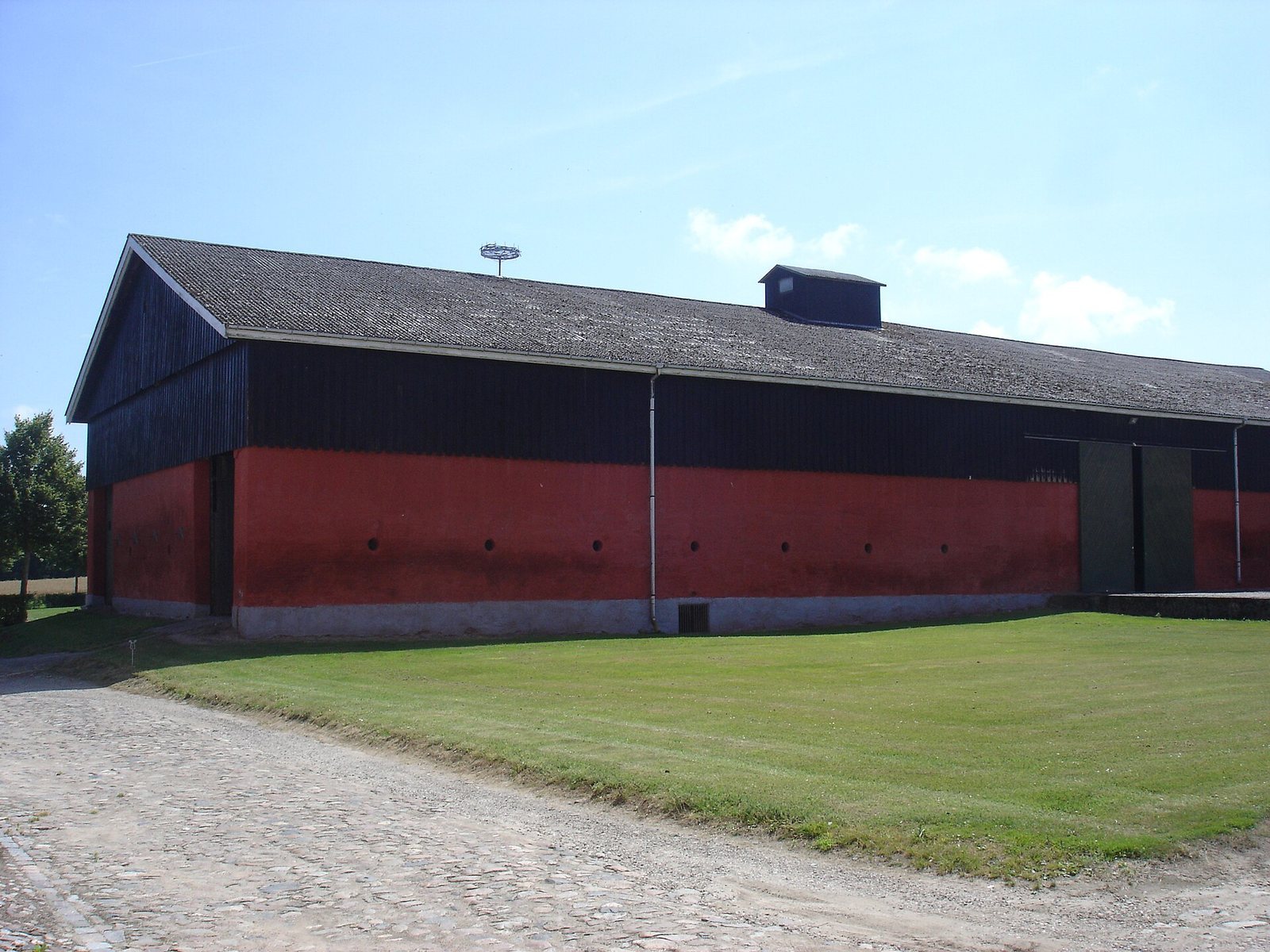
Later Raben-Levetzau owners included Johan Otto Raben-Levetzau and his daughter Nina Veronika Raben-Levetzau. She sold the estate in 1993 to the Hong Kong-based Jebsen family. As of 2020, Beldringe Gods Ejendomme A/S owned the estate, and Marie Sidonie Jebsen owned the company. A fire in 1910 destroyed most of the farm buildings. The main house and large barn received protected status in 1918, with protection expanded in 1990.
Remains
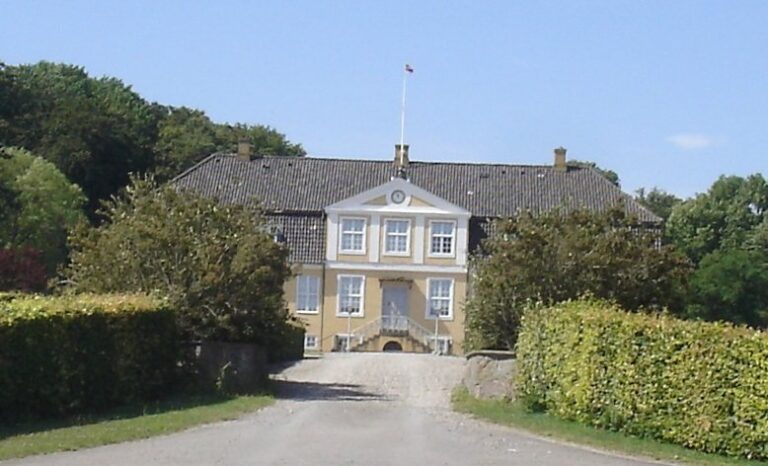
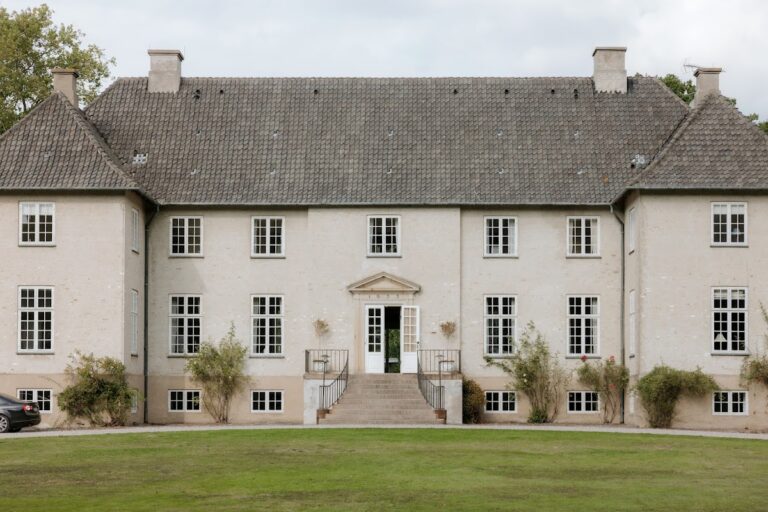
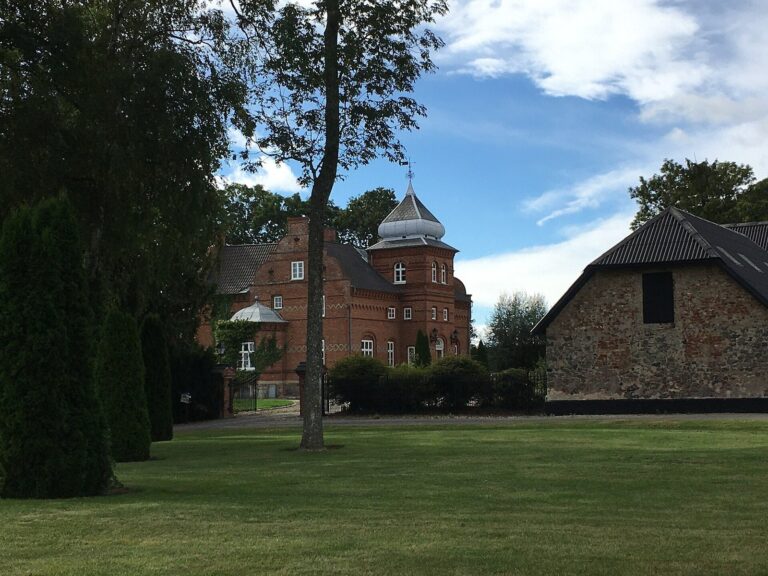
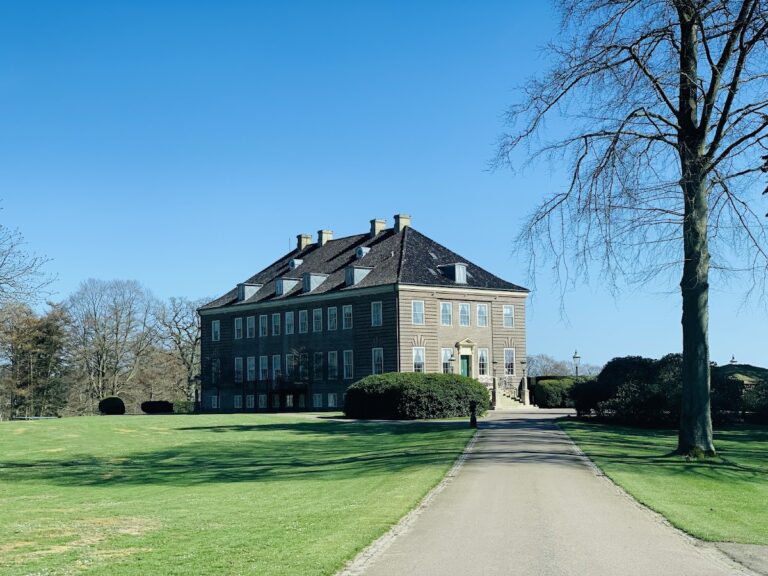
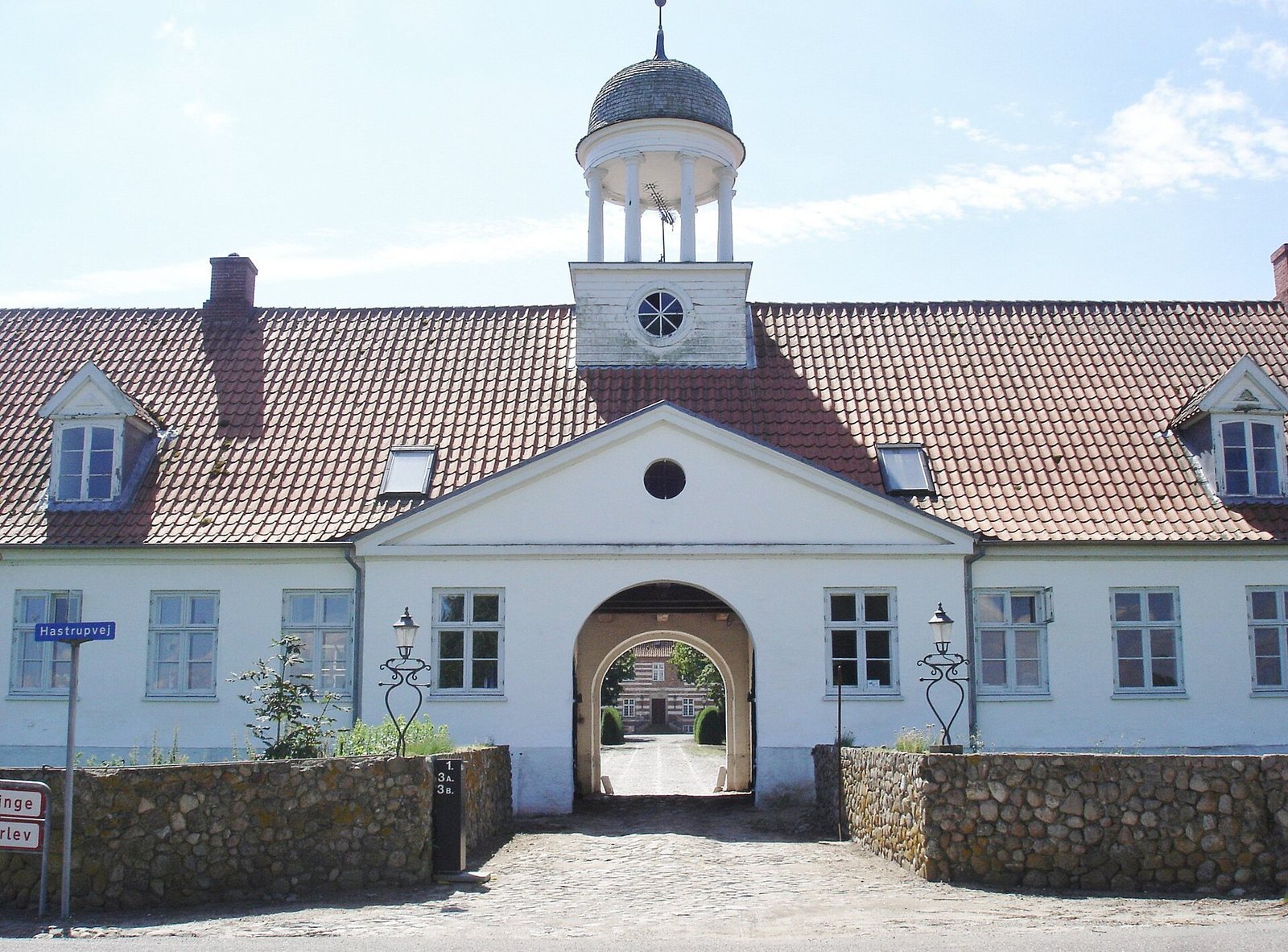
The surviving estate complex includes a two-storey manor house, a large barn, other farm buildings and a gatehouse at the entrance. The buildings reflect several phases of construction and rebuilding.
Manor house and farm complex
Main house
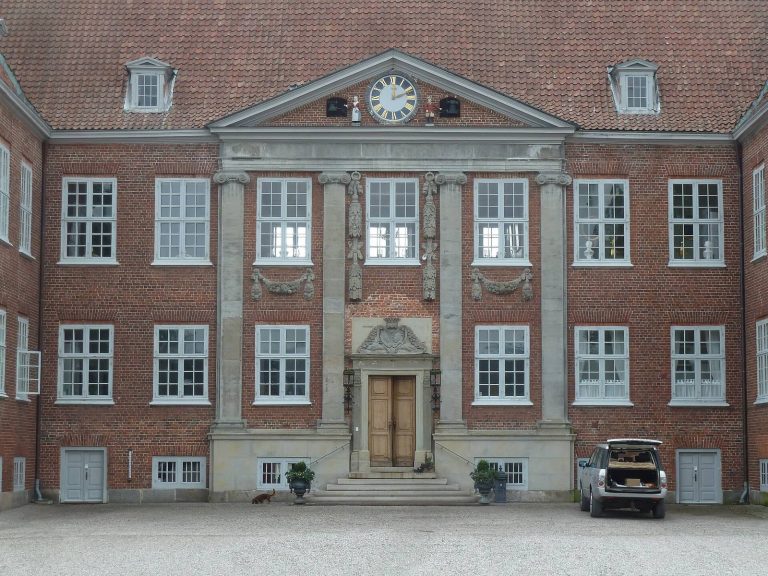
The main house dates to 1561. Built of red brick, it has bands of limestone that are partly whitewashed. It stands on a fieldstone foundation above a base of finely cut granite blocks. The building was expanded and renovated in 1622, then comprehensively refurbished after Frederik Sophus Raben acquired the estate in 1774.
Barn and farmyard
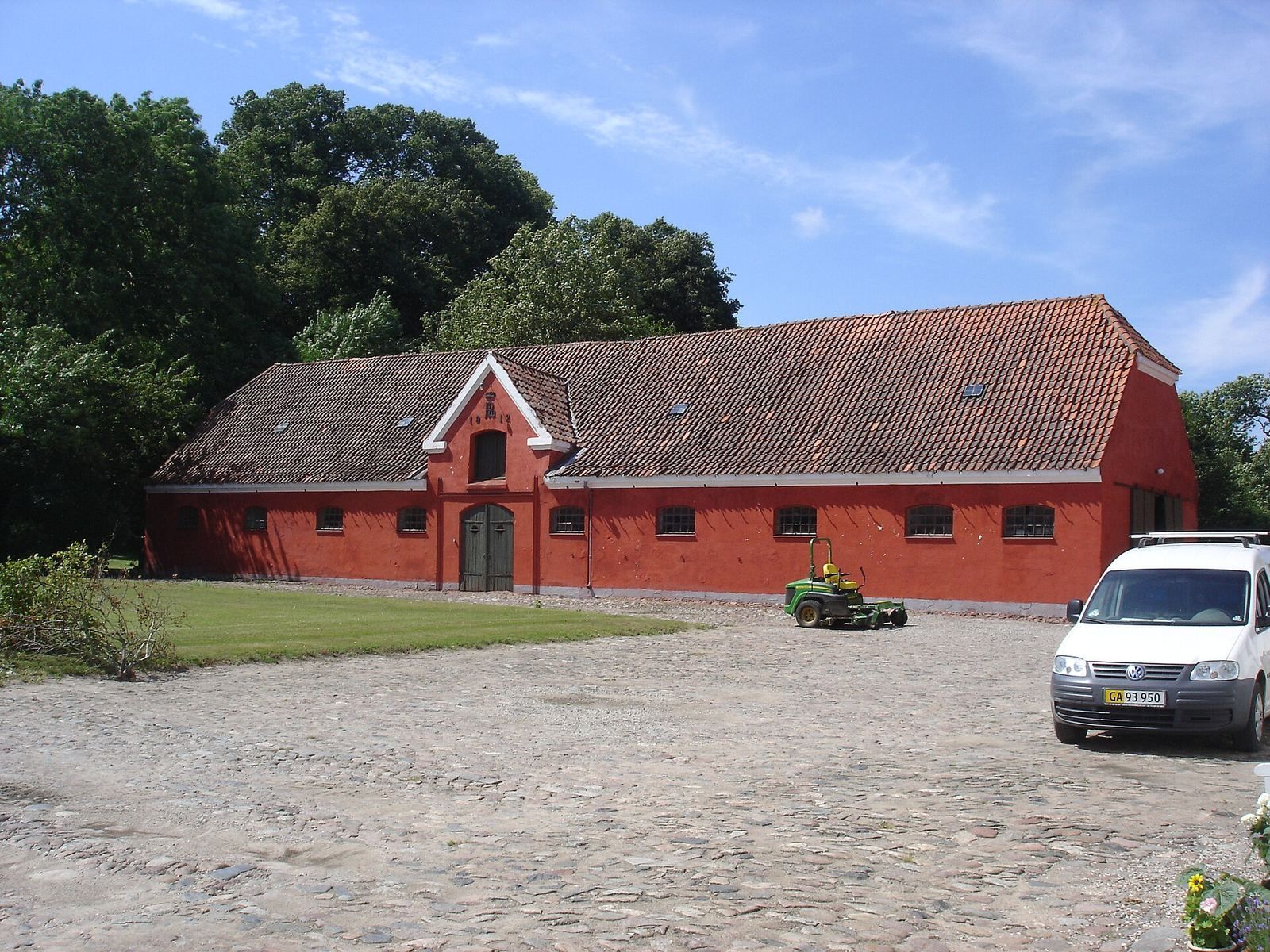
The large surviving barn was built in 1715. It is half-timbered, using a timber frame with infill panels, and measures 30 structural divisions long by 14 wide. Most of the other farm buildings date from after the 1910 fire. A gatehouse marks the entrance to the complex.